

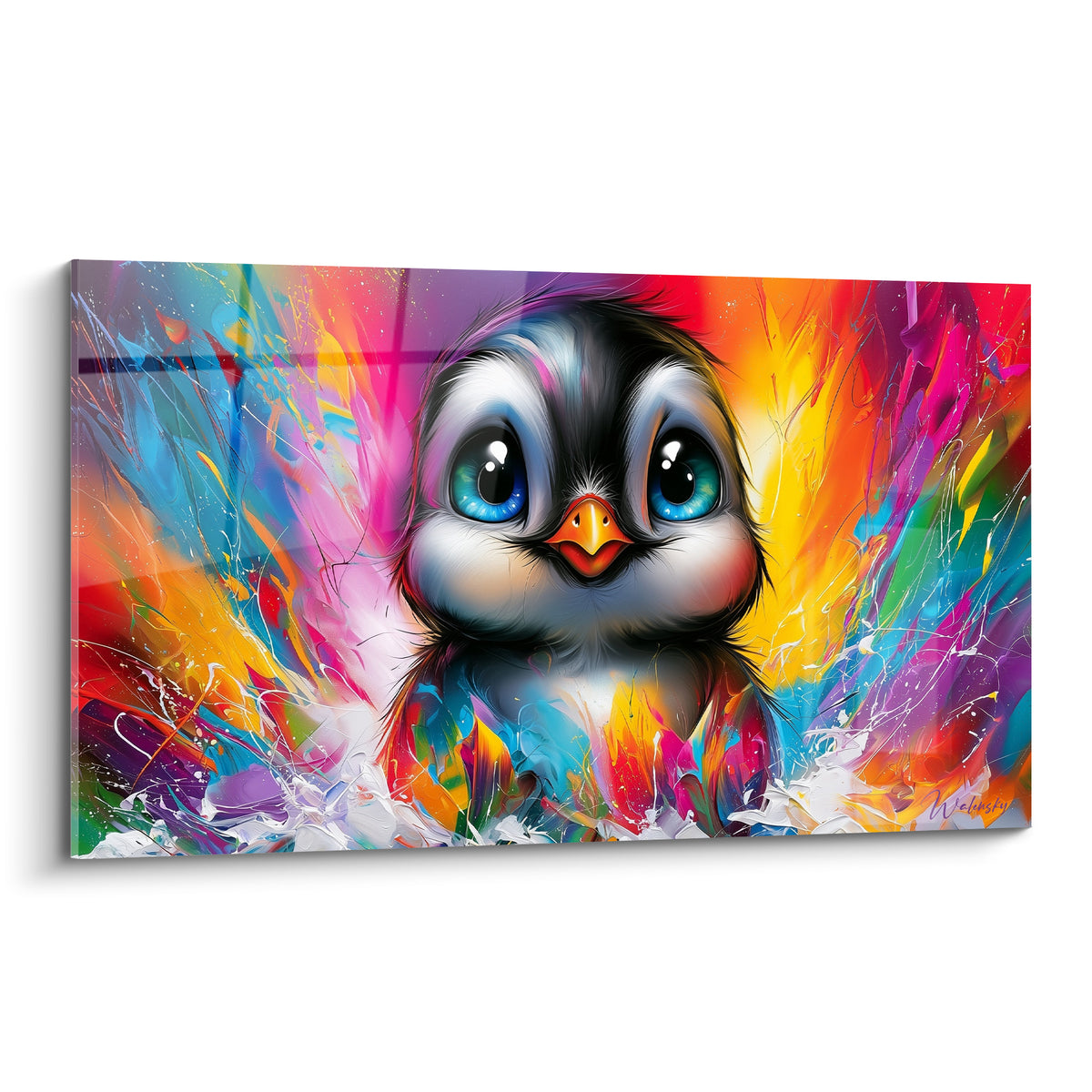






Wall art for home offices: boost concentration and motivation
11 October 2025 · 18 min read · by Walensky
You've been at your desk for two hours now, but you can't seem to really focus. Your gaze wanders over the blank and dull wall in front of you, your motivation slowly crumbles, and you feel that familiar weariness setting in.
The screen flickers, notifications pile up, but your mind wanders elsewhere. This feeling of being in a neutral, soulless space where nothing inspires or motivates you to be your best.
You've already tried changing the lighting, rearranging your desk, buying a new ergonomic chair... But the problem persists: your work environment doesn't support you, doesn't stimulate you.
That's perfectly normal! Most people underestimate the psychological impact of their visual environment on their performance. A desk without personality is like trying to cook a delicious dish in a kitchen without spices: technically possible, but much more difficult.
In 8 minutes, you'll know exactly how to transform your home office into a true engine of concentration and motivation with suitable wall art, and you'll be able to visualize the inspiring space you'll be working in next week.
Why does your productivity depend on what you look at 8 hours a day?
Imagine spending 8 hours a day in a restaurant with white walls, no music, no atmosphere. You would end up losing your appetite, wouldn't you? That's exactly what happens with your home office : a visually poor environment mentally exhausts you and reduces your cognitive performance by 15 to 25% according to neuroscience studies. If you wait any longer, you risk missing out on months of optimal productivity. It's like planting a garden: every day of delay is a delayed harvest.
🏠 Real testimonial: Sophie, a marketing consultant, had been facing a beige wall in her living room for 2 years. "I never managed to finish my projects before 7 pm, I constantly felt tired." By hanging a vibrant abstract triptych, she noticed an immediate improvement in her concentration the first week: "I now finish my important tasks before 5 pm, and I've regained enthusiasm for my projects."
Conversation with a decor expert
The golden rule of visual inspiration: Your brain needs varied visual stimuli to maintain optimal attention levels. It's like feeding a fire: without inspiring visual fuel, your motivation naturally fades. Observable result: a boost in energy and creative ideas within the first 3 days.

Our eye-catcher
Painting Au Cœur de la Brise - Abstract Boat Edition
233,90€
Discover this painting →Why do you feel exhausted even after a "normal" workday?
Do you recognize these situations? You yawn as early as 2 pm despite a good night's sleep. You procrastinate on important tasks. You feel this sensation of "spinning your wheels" even when you're productive.
What's really happening is that your brain compensates for the lack of visual stimulation by drawing on your mental energy reserves. It's like driving with a flat tire: it moves, but it consumes three times more fuel.
Imagine your brain as a garden: without colors, shapes, and inspiring textures, it gradually withers, even if you don't consciously realize it.
The truth about the impact of blank walls
Contrary to popular belief, a blank wall isn't "neutral" - it's actively demotivating. Your brain, designed to process complex visual information, literally gets bored and switches to "energy-saving" mode.
It's exactly like staring at a turned-off screen for hours: your nervous system gradually slows down to adapt to this chronic under-stimulation.
Result? This unexplained fatigue at the end of the day, this difficulty in staying motivated on exciting projects, this feeling of "enduring" your work instead of enjoying it.
🔍 Revelatory test: Look fixedly at your office wall for 30 seconds. If you feel boredom or if your gaze automatically seeks something else, then your environment is under-stimulating your brain.
The mistake of "soothing" colors misunderstood
You may have been told that neutral tones promote concentration. That's true... but only if those tones are accompanied by dynamic and inspiring visual elements.
A completely beige office is like a completely bland meal: technically nutritious, but your body and mind eventually crave more flavor and variety.
This "safe" approach explains why you feel like you're stagnating professionally: your environment doesn't push you towards excellence, it keeps you in an energetically costly comfort zone.
The trap of "productivity without inspiration"
Here's what no one tells you: forcing concentration in a visually poor environment is like trying to exercise while holding your breath. It works for a moment, then it collapses.
You can identify this trap if you notice that your best ideas come to you elsewhere than at your office: in a cafe, while walking, or even in the shower.
This creative dispersion makes you lose time and efficiency, because you then have to reconstruct your thinking in your uninspiring workspace.
5 signs your office is stifling your potential:
- Gaze constantly fleeing: Your eyes automatically seek the window or your phone - it's your brain asking for visual stimulation
- Post-lunch energy slump: Without energizing visual elements, your brain naturally switches to "nap" mode
- Difficulty starting creative tasks: Inspiration begets inspiration - a flat environment produces flat ideas
The trigger: motivating aesthetic consistency
What really makes the difference is the presence of a strong visual element that dialogues with your professional personality. Like a tuning fork that gives the "A" to an orchestra, a painting chosen with intention gives the energetic tone to your entire workday. You can identify this factor by observing in which environments you naturally feel more creative and motivated.
Rule of visual inspiration: A professional space that resembles you automatically unlocks your creative potential. Check it by observing your posture and breathing when you enter a place that truly inspires you.
| ❌ Traditional "neutral" office | ✅ Visually stimulating office | 💡 Neurological mechanism | 🎯 Daily benefit |
|---|---|---|---|
| Unexplained fatigue from 2 p.m. | Stable energy until the end of the day | Visual stimulation = constant brain awakening | +2h of effective productivity per day |
| Procrastination on important projects | Natural motivation for challenges | Inspiring environment = natural dopamine | Concrete progress on priority objectives |
| Feeling of "undergoing" your work | Anticipated pleasure of settling into the office | Personalized space = psychological appropriation | Transformation of the relationship to work |
| Creative ideas elsewhere than in the office | Natural creative flow at your workstation | Visual coherence = mental coherence | Maximum efficiency in the right place |

The 3-step method to create your performance-driven office
Rest assured, transforming your office does not require a large budget or a total upheaval. It's like cooking a delicious dish: it just takes good ingredients, in the right order, with the right technique. We will proceed in layers, like an interior architect: first the main visual impact, then the overall harmony, and finally the personal touches that will make all the difference.
🎯 Overview of your transformation: Step 1 - Anchoring your main source of inspiration (immediate impact on morale and energy), Step 2 - Creating aesthetic consistency (stable productivity), Step 3 - Personalizing for excellence (optimal performance and enjoyment of work).
Step 1: Install your motivational "beacon"
Starting with the main board is like laying the first stone of a house: everything else will naturally harmonize around it. This step will give you immediate satisfaction and a boost of energy from day one. You will feel that sense of ownership of your space, that pride in working in an environment that finally resembles you.
Key elements for success in this step
- The main board (minimum 60-80 cm) : This is your "statement piece", the one that immediately captures attention and sets the tone. Choose it based on the energy you want to feel: dynamic for creativity, soothing-sophisticated for concentration, inspiring for motivation. Avoid formats that are too small and get visually lost.
- Professional mounting system : Invest in wall fixings suitable for the weight and your wall type. A poorly mounted picture ruins the aesthetic effect and creates subconscious tension. The quality of the mounting is the difference between a well-set jewel and a diamond in a plastic ring.
- Enhancing lighting : Your picture must be properly lit to reveal its colors and textures. Inadequate lighting turns even the most beautiful work into bland decor. Think of lighting as your decor's makeup.
Now, let's move on to concrete implementation:
How to proceed serenely
Define the optimal location: Stand at your usual workstation and identify the wall area you naturally look at when you look up. That's where your brain instinctively seeks stimulation. Mark this location with a post-it note. This area should be at eye level (center of the picture at 1m60 from the floor).
⏱️ Time: 5 minutes | ✅ Success when: You can see the post-it note without moving your head from your workstation position | ⚠️ Attention: Avoid placing the picture too high - a common mistake that forces the gaze upwards and strains the neck
Choose your picture according to your professional profile: If you work in creativity (design, marketing, writing), opt for dynamic colors and original shapes. If you work in analysis (accounting, consulting, development), prioritize balanced compositions with sophisticated tones. If you alternate creativity and analysis, choose a picture with contrasting color areas.
⏱️ Time: 15-30 minutes of reflection | ✅ Success when: You feel a positive emotional connection when visualizing the picture | ⚠️ Attention: Do not choose solely based on your personal tastes but according to the desired professional energy
Install precisely: Measure and mark the fixing points with a level. A picture that is not straight, even slightly, creates a subconscious visual tension that hinders concentration. Use wall plugs suitable for your wall and the weight of the picture. Don't hesitate to ask for help to hold the picture while you adjust.
⏱️ Time: 20-30 minutes | ✅ Success when: The picture is perfectly horizontal and stable | ⚠️ Attention: Check the solidity before letting go - a picture that falls damages both the artwork and your confidence in the installation
✅ Step 1 Validation: Sit at your desk and observe your new view. You should feel an immediate sense of satisfaction and a natural desire to get to work. If you smile spontaneously when looking at your artwork, you've got it! Otherwise, adjust the lighting or position before moving on to the next step.
Step 2: Creating the visual harmony that supports your concentration
Now that your beacon is installed, we will create the visual ecosystem that will transform your initial energy spike into lasting performance. It's like moving from a flash fire to a fireplace that warms the whole house. This step multiplies the effect of your main artwork and creates that feeling of being in a true professional office personalized.
Complementary harmonies
- Elements of chromatic coherence: A small decorative object (vase, statue, photo frame) that picks up a color from your main artwork. This creates a visual continuity that soothes the eye and unifies the space. Choose a secondary color rather than the dominant one to avoid saturation.
- Ambient lighting: A soft light source (designer desk lamp, elegant string lights) that enhances your installation without creating distracting reflections on your screen. Lighting is the soul of your decor.
- Plant or natural element: A small, easy-to-care-for plant that brings life and balances the composition. Plants naturally regulate visual stress and improve air quality.
Implementing harmony
Positioning complementary elements: Place your decorative objects according to the rule of three: if your artwork is the main point, create two other visual points (an object to the right of your screen, another to the left or behind). This naturally guides the eye and creates a restful balance.
⏱️ Time: 10 minutes | ✅ Success when: Your gaze naturally circulates between the three points without getting lost | ⚠️ Attention: Avoid overloading - fewer well-placed items are better than many scattered objects
Adjust overall lighting: Test different times of the day to identify shadows or reflections. Your artwork should remain visible and attractive even in the late afternoon. Add additional lighting if necessary, being careful not to create glare on your screen.
⏱️ Time: 15 minutes | ✅ Success when: Colors of the artwork remain vibrant all day | ⚠️ Attention: Be aware of screen reflections that force you to change your working posture
🎨 Harmony check: Take a photo of your desk from your working position. The overall look should appear balanced and professional in the photo. If an element attracts too much attention or creates an imbalance, adjust its position or size. The goal: create an environment that makes you want to work and that you are proud of.
Step 3: Personalize to achieve excellence
This final step takes you from the level of "well-arranged office" to the level of "workspace that multiplies your potential." This is where you create that perfect synergy between your personality, your professional goals, and your daily environment. You will develop that unique feeling of being perfectly in your place, in a space that naturally amplifies your skills and motivation.
Touches of personalized excellence
- Reminder of your successes: A small object that reminds you of a professional success (photo of a completed project, inspiring quote, symbol of your expertise). This visually anchors your confidence and professional legitimacy.
- Functional aesthetic support: A design document holder, an elegant organizer, or a desk accessory that combines utility and beauty. Efficiency and aesthetics reinforce each other.
- Subtle olfactory signature: A scented candle (unlit) or a discreet diffuser with notes that stimulate you (citrus for energy, lavender for serenity, wood for concentration). Smell powerfully influences mood and performance.
Finalizing your excellence space
Integrate your symbols of success: Choose a maximum of 1 to 2 elements that represent your achievements or professional aspirations. Place them in your peripheral field of vision, not directly in front of you (to avoid distraction). They should give you confidence without distracting you.
⏱️ Time: 10 minutes | ✅ Successful when: These elements make you smile inwardly when you see them | ⚠️ Attention: Avoid objects that are too emotionally charged, which could create pressure instead of motivation
Optimize visual organization: Store all functional items (pens, documents, cables) in a way that complements your decor rather than disrupting it. Use aesthetic containers, hide cables, create dedicated zones. An organized desk amplifies the effect of your decor.
⏱️ Time: 20 minutes | ✅ Successful when: No element clashes with the overall look | ⚠️ Attention: Do not over-organize to the point of making the space impersonal - keep a few "living" elements
Test and adjust sensory stimuli: Spend a full day in your new office and note your feelings. Are you more motivated in the morning? More focused in the afternoon? Adjust lighting, object placement, or ambient scent based on your observations. Your office should adapt to your natural rhythms.
⏱️ Time: Observation over 1 day | ✅ Successful when: You feel a constant positive energy in this space | ⚠️ Attention: Some adjustments may take a few days to show their effects - be patient!
🏆Final validation: Invite someone into your office. If this person spontaneously compliments the atmosphere or says that "it really suits you", you've succeeded! Your space now reflects your professional excellence and supports your daily ambitions.
Rule of perpetual evolution: An excellent office evolves with your projects and successes. Change a small element every quarter to maintain stimulation and mark your progress. Gradual adaptation avoids boredom and maintains the motivating effect.
Congratulations! You now master the subtleties that differentiate a simple furnished office from a true personalized performance space. These nuances make all the difference between someone who works in an environment and someone who thrives in an ecosystem designed to reveal their potential.
🎯Little-known pro tip: Photograph your perfect office and keep this photo on your phone. When you travel or work elsewhere, this image reminds you of the optimal state of mind and helps you mentally recreate that energy wherever you are. It's like having your "motivation button" always within reach.
But what if I make the wrong aesthetic choices?
"I'm afraid of making a bad choice of artwork and ending up with something I no longer like after a few weeks..."
This concern is perfectly legitimate and even reveals a thoughtful approach! Here's the reassuring reality: a painting that truly attracts you at the time of purchase is likely to accompany you for a long time. It's like choosing a friend - authentic attraction withstands time. Moreover, unlike furniture, changing a painting is simple and affordable. Consider your first choice as an enriching experiment rather than a definitive commitment.
🧠 Intuitive validation test: Before purchasing, visualize yourself in your office in 6 months with this painting. If the image makes you smile and gives you energy, go for it! Your intuition is your best aesthetic guide.
— Also to discover


The 5 mistakes that sabotage the motivating effect of your decor
Attention, these mistakes are so common that they go unnoticed, but they completely neutralize the positive impact of your paintings for working at home. I reveal them to you to avoid these frustrating traps.
- 🚫 Choosing a painting that is too small for fear of "doing too much": It's tempting to play it safe with a 30x40cm format, but it's like adding a spoonful of salt to a large dish: no impact. Consequence: your office remains bland despite the investment. Solution: dare to go for a minimum format of 60x80cm - your wall will thank you! It's the n°1 mistake of novice decorators.
- 🚫 Hanging at furniture height instead of eye level: Placing the painting above the desk seems logical, but creates a subconscious cervical tension and reduces the visual impact. Your brain only "sees" what is in its natural field of vision. Rule: center of the painting at 1m60 from the floor, always.
- 🚫 Multiplying small decorative elements instead of a strong impact: Accumulating lots of "cute" little objects creates visual clutter instead of the desired harmony. It's like having 10 conversations at the same time: exhausting for the brain. Prioritize one strong element + a maximum of 2-3 complements.
- 🚫 Choosing according to the trend of the moment instead of your personality: A "Instagram-worthy" painting that doesn't reflect you quickly becomes irritating on a daily basis. You end up ignoring it, or even hating it. Your office should nourish YOUR energy, not impress virtual visitors.
- 🚫 Neglecting the lighting of your painting: A poorly lit painting loses 70% of its visual and emotional impact. Dull colors do not stimulate, they depress. Invest in good lighting: it's like the difference between a diamond under neon and under a jewelry store spotlight.
🔍 Quick checklist: Painting visible without raising your head from your chair ✓ - Format that imposes itself visually without overwhelming the space ✓ - Vibrant colors even at the end of the afternoon ✓ - Feeling of pleasure when you enter the room ✓. Warning signs: eye fatigue, constant desire to look elsewhere, impression that "something is wrong" without knowing what.
— In the same spirit


Your most frequently asked questions about office wall art
For a real and lasting impact, budget between 150-300€: 80-200€ for a quality artwork in a 60x80cm format, 30-50€ for professional hanging, 20-50€ for complementary elements. It's cheaper than an ergonomic office chair and the effect on your daily motivation is comparable! Optimization tip: start with the main artwork, add the complements gradually.
The "boost" effect is immediate (upon installation), but the profound transformation of your work habits stabilizes in 2-3 weeks. This is the time it takes for your brain to integrate this new environment as "normal" and automatically adjust your energy and concentration levels accordingly.
A good artwork evolves with you: you discover new details, new meanings depending on your moods and projects. Prioritize works with multiple levels of reading (composition, colors, textures) rather than superficial "love at first sight" images. Personal test: if you can look at the artwork for 30 seconds without getting bored, that's a good sign!
Create a "professional bubble" consistent with your artwork as an anchor point, while choosing colors that dialogue with the living room without copying them. Pro technique: take a secondary color from your living room in your artwork, and a color from your artwork in a living room cushion. This subtle continuity unifies without standardizing.
Absolutely! Use nail-free fixings (reinforced adhesive systems type Command for lightweight artworks, or telescopic floor-to-ceiling rods for larger formats). These solutions, invisible and reversible, support up to 7-8 kg and preserve your walls. Bonus: you can take your installation with you when you move!
Your transformed office: from a space endured to an environment that reveals your excellence
In 3 weeks, when you enter your office, you will feel that particular satisfaction of professionals who master their environment. Your gaze will naturally settle on your motivating artwork, you will take a deep breath of inspiration, and you will settle in with the confident energy of someone who knows exactly where they are going. Your colleagues on video conference will subtly notice that something has changed in your presence, your confidence. Your family will see you less stressed at the end of the day, more enthusiastic about talking about your professional projects.
This transformation goes far beyond simple decoration: you will have developed expertise in motivating environment design that you can apply to all your living spaces. More importantly, you will have learned to create the conditions for your own excellence, a valuable skill in all areas of your life.
The hardest part was understanding the mechanisms - it's done! Now, all you have to do is choose your first artwork and follow the steps. Your performance-driven office awaits you, and with it, all the projects you will finally be able to bring to their full potential.
🚀 Your next decisive action: Inspiration is born from action, not reflection. Your future professional self awaits in this transformed office - it's time to offer him the environment he deserves to reveal all his potential!
Read also: 🏠 Discover the complete room-by-room decor guide
— Other rooms selected


