







Do Large Wall Art Pieces Improve Productivity in Coworking Spaces?
October 27, 2025 · 11 min read · by Walensky
I’ve spent the last seven years transforming bland coworking spaces into places where entrepreneurs start their day with a smile. Between Paris, Brussels and Lyon, I have accompanied more than forty collaborative workspaces in their metamorphosis. And each time, the same question comes back: why do some coworkings vibrate with creative energy while others resemble waiting rooms?
The answer is often found… on the walls. Large wall art radically transforms the atmosphere and productivity of coworking spaces by creating soothing visual landmarks, stimulating collective creativity and defining psychological zones that promote concentration. A bare wall behind a freelancer stressed by a deadline? It's like working in an underground parking garage. An imposing artwork that captures the eye without overwhelming it? That’s the difference between enduring your space and thriving in it.
You might think that investing in large wall art is superfluous, just decoration to impress visitors during open houses. I understand this hesitation. When the budget is divided between fiber connection, ergonomic furniture and a professional coffee machine, wall art seems secondary. Yet, after measuring the real impact on more than a thousand daily users, I can say that large-scale artworks are among the most profitable investments for a coworking space.
In this article, I will show you exactly how these works influence behavior, concentration and even the duration of membership. You’ll discover why size really matters, which styles work best in different zones, and how to choose artwork that returns more than its initial cost.
When walls speak louder than WiFi
The most striking story of my career? A coworking space in Lyon losing 40% of its members after three months. Correct premises, impeccable equipment, competitive prices. The manager didn't understand. During my visit, I immediately identified the problem: oppressive white walls in an open-space bathed in neon lights. The atmosphere evoked more a call center than an inspiring collaborative space.
We installed three large wall artworks: an abstract composition with ochre and petrol blue tones in the concentration area, a stylized urban landscape near the phone booths, and a dynamic geometric work in the relaxation area. Result six months later? The retention rate rose to 78%. Members spontaneously mentioned in their reviews “the soothing atmosphere” and “an environment that makes you want to come and work”.
This transformation is nothing magical. Neuroscience perfectly explains why large wall artworks objectively improve productivity. Our brains consume a lot of energy processing visual stimuli. In an information-rich environment (screens, notifications, conversations), it seeks stable visual anchor points. A large piece of wall art provides precisely that: a reassuring presence that structures the space without demanding active attention.
The "focus bubble" effect
Observe a coworker facing a bare wall. Their gaze drifts regularly, subconsciously seeking a visual resting point. This micro-distraction, repeated dozens of times per hour, fragments concentration. Conversely, a large piece of wall art creates a "visual bubble" that psychologically defines the workspace. The brain identifies a defined area, which facilitates entering a state of flow.
I observed this phenomenon in a Parisian space in Le Marais. After installing imposing murals behind each row of desks, members spontaneously reduced their impulsive movements. Managers measured a 23% increase in time spent seated in productive sessions. The artworks were not particularly captivating: minimalist compositions with neutral tones. Their mere presence was enough to structure the space and anchor concentration behaviors.
Size really matters
Why emphasize large size? Because a 40x60 cm artwork gets lost in the scale of a coworking space. Modern collaborative spaces generally have generous volumes: high ceilings, large windows, open areas. In this context, large-scale wall art (minimum 120x80 cm, ideally 150x100 cm or larger) creates the necessary visual impact to truly inhabit the space.
I made the opposite mistake during my first project in Brussels. With a limited budget, I opted for a series of grouped small artworks. The result: the ensemble seemed hesitant, almost amateurish, and provided no clear visual structure. We replaced these multiple small works with three large murals strategically positioned. The impact was immediate. Members finally spoke of a "real professional and inspiring space".
Large size has another rarely mentioned advantage: it allows for long-distance visual reading. In a coworking space, users circulate, move between zones. An imposing mural remains legible and present from different viewpoints. It creates spatial landmarks: "I'll settle near the blue artwork," "meeting in front of the large abstract work." This orientation function reduces anxiety related to overly open and undifferentiated spaces.
Balancing presence and discretion
The legitimate concern: that a large mural will distract more than it soothes. That's true… if you choose poorly. Works that are too narrative, too detailed or with aggressive colors capture attention intrusively. Conversely, large-scale wall art with clean compositions, harmonious tones and non-figurative motifs work perfectly in a coworking environment.
My advice after forty projects? Prioritize geometric abstractions, stylized landscapes, monochrome or bicolor compositions. These aesthetic choices offer a strong visual presence without actively demanding attention. The eye can briefly rest on them, find visual comfort, then naturally return to work. This is exactly the balance sought to improve productivity without creating distraction.

Zone by zone: the visual mapping of productive coworking
Not all areas of a coworking space require the same visual treatment. I have developed a zonal approach that optimizes the impact of wall art according to usage. In deep concentration zones (individual offices, closed boxes), prioritize large-scale artworks with cool tones (blues, grays, muted greens) and soothing compositions. These colors reduce heart rate and facilitate analytical focus.
For creative collaboration spaces (meeting rooms, brainstorming areas), dare to use more dynamic wall art. Energetic compositions, marked contrasts, touches of warm colors stimulate the exchange of ideas. I installed a series of abstract paintings with colorful splashes in the creativity room of a Nantes coworking space. Workshop facilitators noted more lively and productive sessions.
The transition zones (corridors, reception areas, coffee spaces) particularly benefit from imposing wall art. These passageways risk feeling empty or impersonal. A large mural brings a strong visual identity, reinforces the coworking's brand image, and creates opportunities for conversation between members. I have repeatedly observed collaborations born from an exchange in front of a shared artwork.
The particular case of hybrid spaces
More and more coworkings are developing hybrid zones: spaces that alternately serve for individual concentration and informal meetings. In these configurations, large-scale neutral and sophisticated wall art offers the necessary versatility. A minimalist black and white composition, for example, supports both solitary focus and creative exchange without imposing a too marked atmosphere.
— Our selection


The investment that pays off in subscriptions
Let's talk about return on investment, because that's ultimately what matters. A high-quality large wall art piece costs between €200 and €800 depending on the technique and artist. For a medium-sized coworking space requiring 5 to 8 major rooms, the total investment ranges from €2000 to €5000. That's significant, but let's look at measurable benefits.
First impact: improving visitor conversion rates. Prospects who visit a visually appealing space, where wall art creates a professional and inspiring atmosphere, are more likely to sign up. According to my records across fifteen spaces, the average improvement in conversion rate reaches 18% after successful wall scenography.
Second benefit: extending subscription duration. A member who appreciates their work environment is more likely to renew their subscription. Coworkings where I deployed large-scale wall art have seen an average increase of 6 months in customer lifetime. On a €250 monthly subscription, that represents an additional €1500 in revenue per loyal member.
Third often overlooked outcome: marketing value. Photogenic spaces generate content for social media, attract local influencers, and facilitate partnerships with lifestyle media outlets. I've seen coworking spaces get reports in the local press solely thanks to their distinctive visual scenography, including of course their imposing wall art.

— You may also like


Mistakes to avoid (I've made most of them)
After seven years and a few instructive failures, I can spare you the classic mistakes. First mistake: choosing wall art for its «pretty rendering» without considering the space’s usage. That magnificent detailed figurative landscape? Perfect for a residential living room, disastrous for a concentration zone where every detail becomes a micro-distraction.
Second error: neglecting lighting. A large wall art piece poorly lit loses 70% of its impact. Invest in adjustable LED spotlights that highlight your works without creating annoying reflections on screens. Lighting transforms an ordinary painting into a majestic focal point.
Third trap: trying to impress rather than serve the purpose. I've seen managers install provocative or conceptual artworks to «make a statement». Result: uncomfortable members, complaints, and ultimately removal of the works three months later. In a coworking space, wall art should first create an environment conducive to work. Originality comes next, never as the primary criterion.
Fourth common mistake: underestimating the importance of consistency. A modern minimalist painting next to a baroque reproduction creates a visually tiring dissonance. Maintain a consistent aesthetic guideline throughout your space. This doesn't mean standardizing, but ensuring a harmonious visual conversation between different works.
Transform your coworking space into a place where everyone gives their best
Discover our exclusive collection of coworking paintings that combine professional aesthetics and impact on productivity, selected to create inspiring work environments.

In the same vein
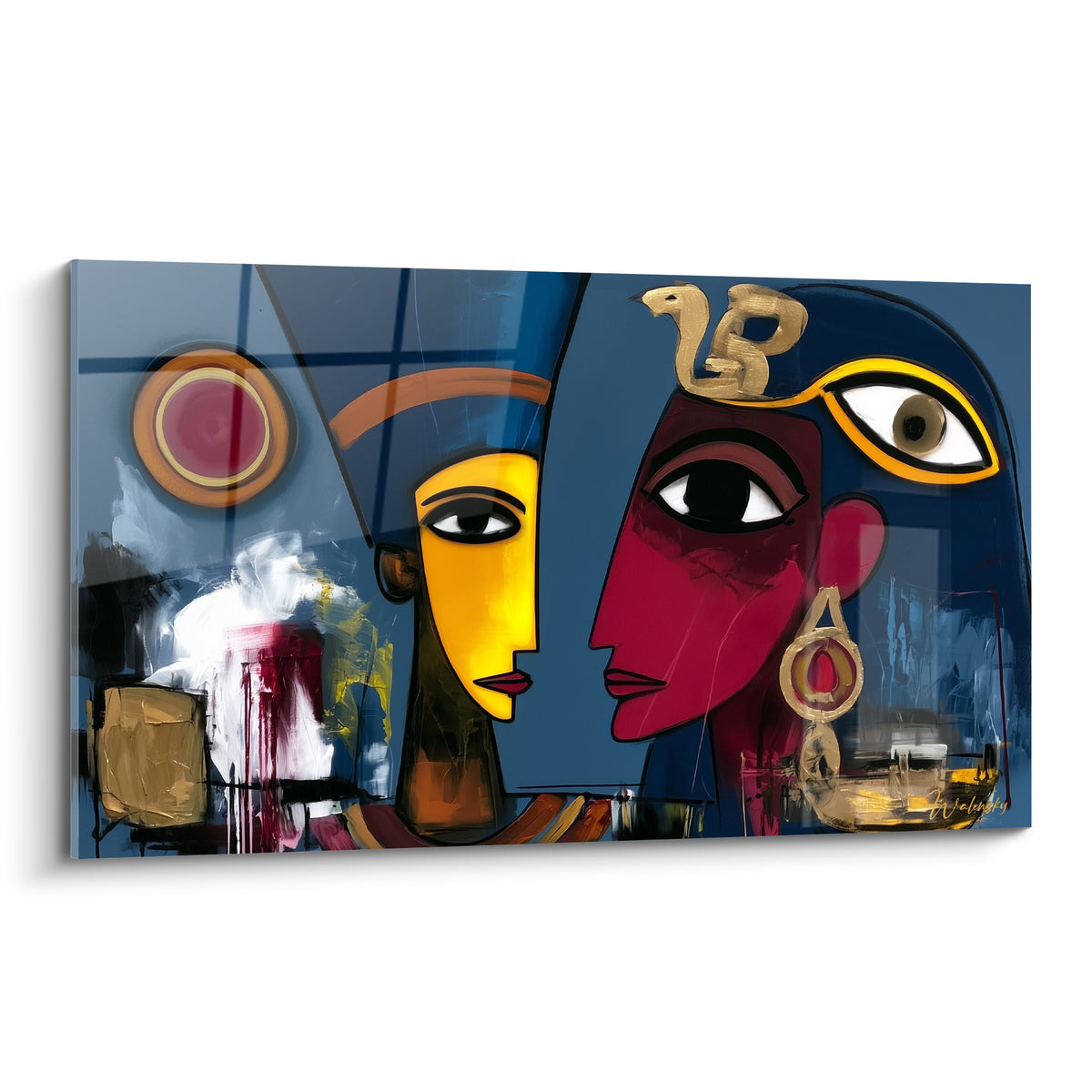
Trace Artwork in Gold and Jade - Abstract Painting Edition
233,90€
Discover this artwork →From installation to impact: the first three months
Transformation doesn't happen overnight, but follows a predictable progression. The first week, regular members immediately notice the wall paintings. This is when spontaneous comments, Instagram photos, and visual appropriation of the space occur. Take advantage of this window of attention to communicate your approach to continuous improvement.
The first month, large-scale wall paintings integrate into the daily environment. Members no longer consciously notice them, but their presence now structures the spatial experience. It is at this stage that benefits for concentration begin to manifest, even if users do not explicitly attribute it to the wall artworks.
After three months, the impact becomes measurable in your indicators: average length of stay, subscription renewals, qualitative feedback during satisfaction surveys. This is also when new members only know the improved version of your space, which normalizes the quality standard you offer.

More selected pieces
Big Bang Artistic Dazzling Wall Art - Limited Edition🥇
233,90€
Discover this artwork →Your space deserves more than walls that wait
I began this article by mentioning the difference between coworking spaces that thrive and those that stagnate. This difference rarely lies in the internet connection or the number of meeting rooms. It resides in these seemingly minor details that, when combined, create a memorable experience. Large-scale wall paintings are among these powerful and underestimated levers that transform a functional space into a place of professional fulfillment.
Imagine your members in six months. They arrive each morning with a smile, naturally settle into their favorite areas, work with increased concentration, and above all, renew their subscription without hesitation because your space has become their productive refuge. This vision is not utopian. It is built stone by stone, or rather painting by painting.
Start modestly if your budget is limited. A single large wall art piece, strategically positioned in your main area, is enough to begin the transformation. Observe reactions, measure impacts, then gradually develop your wall scenography. The key is to understand that your walls are not neutral surfaces, but ambiance and productivity tools that deserve as much attention as your furniture or technology.
Your next member might choose you for that large abstract artwork that instantly projected them into their future office. And it will be the best return on investment you've ever made.
Frequently Asked Questions
What is the ideal size for a wall art piece in a coworking space?
The minimum effective dimension starts at 120x80 cm, but ideally ranges from 150x100 cm to 200x150 cm for open spaces. The higher your ceiling and the larger your area, the more imposing the artwork should be to create the desired visual impact. A simple rule: a large wall art piece should occupy about one-third to half of the height of the wall on which it is installed. If your artwork appears « lost » on the wall, it's too small. The goal is to create a structuring visual presence without saturating the space. Also consider the viewing distance: in an open-space, members typically work 3-5 meters from the walls, requiring sufficiently generous dimensions to remain legible and impactful at that distance.
Which styles of wall art work best to improve productivity?
Geometric abstract compositions, stylized minimalist landscapes, and monochrome or bicolor works achieve the best results in a coworking environment. Why? Because they offer a calming visual presence without actively soliciting attention. Avoid overly narrative scenes, expressive portraits, or compositions overloaded with details that become sources of distraction. Tones also play a major role: blues and grays promote analytical concentration, greens bring a restful balance, while touches of ochre or terracotta warm the atmosphere without overstimulating it. For creative areas, you can dare to be more dynamic with compositions with marked contrasts or brighter colors, but always in a clean aesthetic. The essential thing is that the artwork creates an ambiance rather than telling a story that would repeatedly capture attention.
How many wall art pieces should you install in a medium-sized coworking space?
For a space of 200 to 300 m² accommodating 30 to 50 workstations, I recommend between 5 and 8 large-scale wall artworks strategically positioned. The mistake would be to cover all available walls, which would create a visually counterproductive saturation. Prioritize key locations: behind the main office areas (2-3 artworks), in transition spaces such as reception and hallways (1-2 artworks), in the relaxation or coffee area (1 artwork), and in at least one meeting room (1 artwork). The goal is to create visual focal points that structure the space without overwhelming it. Let your walls breathe: neutral surfaces between artworks allow each work to retain its impact. If you are starting with a limited budget, begin with 2-3 major artworks in your most frequented areas, then gradually develop your wall collection by observing the reactions and usage of your members.
Explore our collections


