

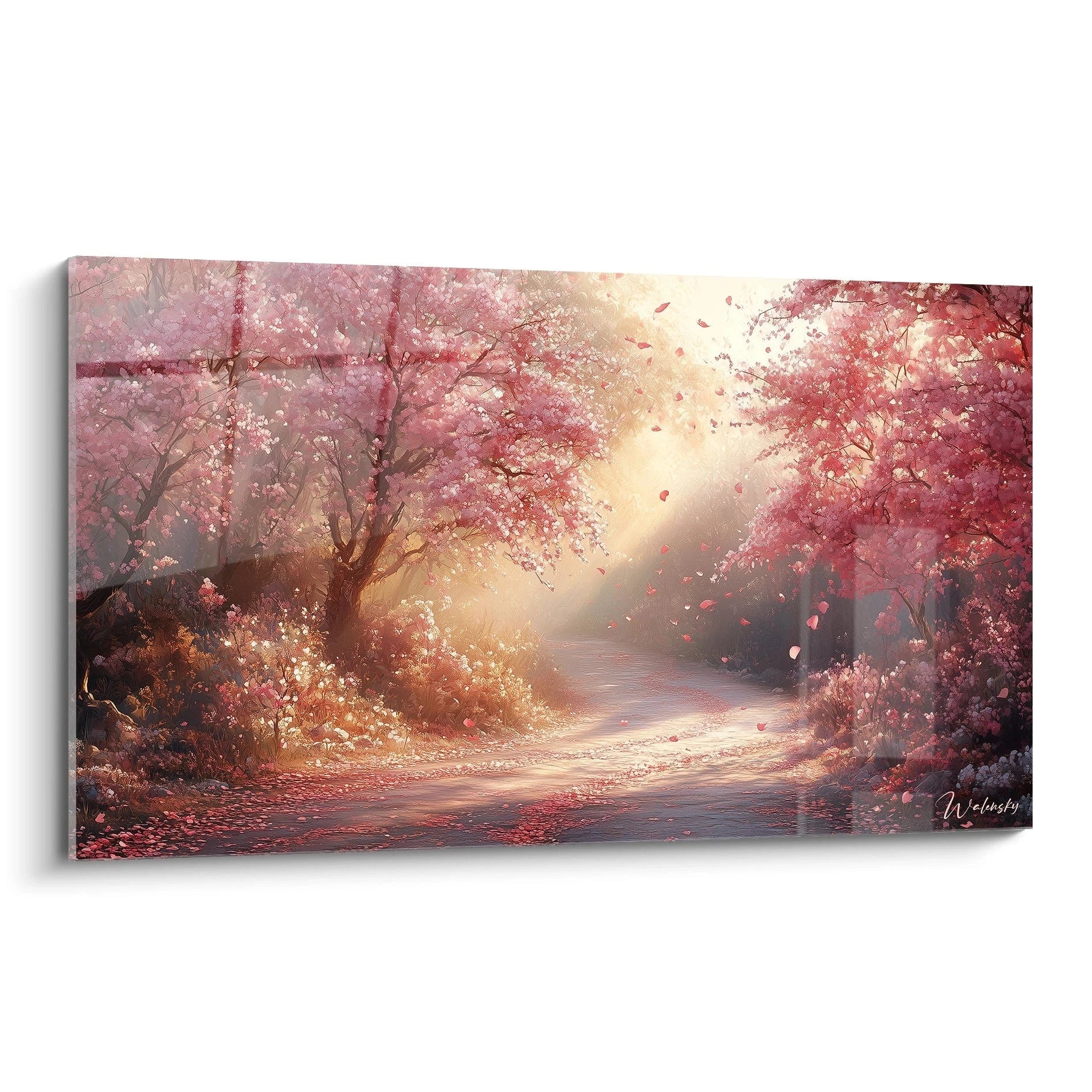






Kids wall art: how to foster creativity through decor
October 11, 2025 · 16 min read · by Walensky
Do you watch your child always draw the same stick figures, endlessly repeat the same colors, and wonder where that overflowing imagination you once knew has gone?
The white walls of their room seem to reflect this stifled creativity, those moments when they stand in front of their paper, pencil suspended in the air, searching for inspiration that no longer comes.
You may have tried buying more drawing supplies, enrolling your child in art classes, or even trying to stimulate them with creative activities. Yet, nothing works: the spark of creativity seems to have faded.
It's perfectly normal, and it’s not your fault. The problem is that children's creativity needs a stimulating visual environment to flourish, just as a plant needs light to grow.
By the end of this article, you will discover how to transform your child’s space into a true creative catalyst through wall art, and you will see their drawings and ideas come back to life in just a few days.
Why does wall art act as a creative trigger for children?
Your child's visual environment directly influences their ability to imagine and create, more than you might think. If you wait any longer, you risk seeing this critical period of creative development pass without fully benefiting from it. It’s like leaving a garden without water: the seeds of imagination are there, but they cannot germinate in a sterile environment.
🎨 Testimony from a mom: "Emma, 6 years old, only drew square houses with identical windows. Three weeks after hanging a series of colorful paintings depicting different universes in her room, she began to draw flying castles, fantastic animals, and even invent stories for each of her drawings."
Conversation with a decor expert
Wall art works as a silent dialogue with the imagination: it offers visual universes that the child can explore mentally, creating new neural connections. The result? A creative explosion observable from the earliest days, with lasting effects on their artistic development.
Understanding what really blocks your child's creativity
You may have noticed these three signals: your child avoids drawing "complicated things", prefers to reproduce rather than invent, or quickly abandons their creations saying "it’s rubbish". These behaviors do not reveal a lack of talent, but an environment that does not stimulate their creative potential enough.
What is really happening is that their reservoir of visual inspiration is emptying faster than it fills. Your child needs a constant flow of images, colors and shapes to fuel their creative machine. Without this, they fall back on the same reassuring patterns.
Imagine your child as a little chef: without varied ingredients in their visual pantry, they can only prepare the same simple recipes they already know.
Visual monotony: the invisible brake on imagination
Contrary to what one might think, a white wall is not neutral for a child: it sends a message of emptiness that inhibits creative expression. Neuroscience teaches us that a child's brain needs varied visual stimulation to develop its creative connections.
It’s like asking a musician to compose in a room with no sound at all: the absence of stimulation itself becomes an obstacle to creation.
This monotony creates in the child a creative laziness where they prefer to reproduce rather than explore, copy rather than invent. As a result, their confidence in their creative abilities gradually decreases.
✨ Instant test: Ask your child to close their eyes and describe their bedroom. If they don’t mention any inspiring visual elements, it means their environment lacks creative fuel.
Lack of diversified visual references
The creativity of children does not arise from a vacuum: it is nourished by rich visual references that they reinterpret in their own way. Without this bank of mental images, they go around and around with the same limited ideas.
Think of an architect who only knows one style of house: their creations would necessarily be repetitive and unoriginal.
Your child experiences the same frustration when their daily visual world does not offer them enough imaginative raw material. They have the creative abilities, but not the visual tools to fully express them.
The "blank page" effect amplified by the environment
You have surely observed that moment when your child is blocked in front of their sheet, not knowing what to draw. This phenomenon is amplified by an environment that does not suggest any creative direction.
The child can then easily spot this blockage: they hesitate for a long time before starting, often ask "what can I draw?", or mechanically reproduces their previous creations.
This creative hesitation directly impacts their artistic confidence and motivation to explore new imaginary territories.
🔍 The 3 signs of a creatively poor environment:
- Systematic reproduction: Your child always copies the same models rather than inventing, as if they lacked visual boldness
- Rapid abandonment: They start a drawing and then stop quickly, revealing a lack of continuous stimulation to maintain their interest
- Constant requests for help: They constantly ask you what to draw, indicating that their environment does not suggest ideas naturally
The revelation: wall art as a neuronal catalyst
What really makes the difference is the presence of appropriate wall art which acts as a permanent trigger of creative ideas. Like a lever that multiplies force, visual art amplifies your child's natural imaginative abilities.. You can identify it when your child spontaneously starts telling stories while looking at the artworks, or when their drawings suddenly become more varied and original
Golden rule of creative stimulation: A child exposed daily to diverse wall art naturally develops a rich visual repertoire. You can verify this by observing whether their creations gain in complexity and originality in the weeks following installation.
❌ Visually poor environment
✅ Environment enriched with wall art
💡 Explanatory mechanism
🎯 Observable creative benefit
White walls that inspire nothing
Colorful paintings that tell stories
The brain draws on its daily visual references
More inventive and narrative drawings
Repetition of the same creative patterns
Exploration of new styles and techniques
Visual diversity encourages experimentation
Technical improvement and artistic confidence
Frequent hesitation and blockages
Spontaneous and fluid start to creations
Wall art naturally suggests ideas
Creative productivity and pleasure of creating
Simple and predictable creations
Complex and surprising works
Artistic exposure raises the level of ambition
Development of a sense of aesthetics

The progressive method to transform your child's creative space
Rest assured: stimulating your child's creativity through wall art doesn’t require a huge budget or a radical transformation. Like planting a garden, it’s about proceeding step by step, letting each element take root before adding the next. Ultimately, you’ll get a creative ecosystem that naturally nourishes your child's imagination.
🌱 Transformation overview: Three simple steps like sowing, watering and watching it grow. First, you identify inspiring art suited to your child. Then, you create stimulating visual zones in their space. Finally, you observe and adjust based on their creative reactions. Each step brings its own satisfaction and visible results.
Step 1: Identify the visual worlds that speak to your child
Starting with this step is essential because it avoids costly mistakes of unsuitable purchases. Just as choosing the right seeds before planting, identifying your child's visual tastes ensures that the chosen art will have the expected creative impact. This step will give you the satisfaction of seeing their eyes light up at first glance.
What you need for this exploration
- An observation notebook: A simple notebook to note their reactions to different artistic styles. This helps you identify their real preferences rather than polite responses. Avoid overly direct questionnaires that bias their natural answers.
- A selection of varied images: Gather different art styles: realistic, abstract, fantastic, geometric. The principle is simple: the more you expose your child to diversity, the more you discover what really activates their imagination. Quality matters more than quantity.
- Relaxed observation moments: Choose times when your child is naturally receptive, without pressure. This reveals their true visual affinities and gives you valuable clues for future choices.
Let's move on to practical observation now:
How to proceed concretely
Create "discovery moments" naturally: Show them different artistic styles during relaxed times, in a library or online. The goal is to observe their spontaneous reactions: do they stop longer on some images? Do they ask specific questions? These are the clues that reveal their true affinities.
⏱️ Time: 15 minutes per session, 2-3 times a week | ✅ Success when: You identify 2-3 styles that permanently capture their attention | ⚠️ Attention: Avoid asking "do you like this?" - observe their natural behavior instead
Test its reactions with temporary reproductions: Display different types of images temporarily in their room with repositionable tape. Note those that naturally draw their gaze, those that trigger comments or invented stories. This method reveals their real preferences without a definitive commitment.
⏱️ Time: 1 week per style tested | ✅ Successful when: Some images spontaneously generate narratives or questions | ⚠️ Attention: Don't change too quickly - allow time for visual impregnation
Observe the evolution of its creations: Note whether certain styles of wall art positively influence their drawings: more colors, more varied shapes, more elaborate stories. This connection between exposure and creation is the best indicator of a successful choice.
⏱️ Time: Continuous observation over 2-3 weeks | ✅ Successful when: You observe a correlation between the art displayed and their creations | ⚠️ Attention: Influences can be subtle - look for small changes
✅ Validation of step 1: Your child now has 2-3 visual universes identified that naturally captivate their attention and positively influence their creativity. If you encounter difficulties, it's normal: each child has their own pace of artistic revelation. The essential thing is to have identified at least one promising direction for the future.
— Our selection


OUR RECOMMENDED PRODUCTS
Step 2: Create strategic inspiration zones
Now that you know your child's visual preferences, you move to the next level: creating an environment that actively stimulates their creativity. This step is more rewarding because you see the space transform concretely and, above all, you observe the snowball effect on your child's imagination.
Elements needed for this transformation
- Quality wall art: Choose artworks with durable colors and resistant supports. A quality artwork retains its vibrant colors and continues to inspire over time. Avoid cheap prints that quickly fade and lose their visual impact. A thoughtful hanging plan: Placement determines the inspirational effectiveness. The principle is simple: place the art within the child's natural field of vision during their creative activities. A poorly placed artwork loses 70% of its stimulating potential. Adapted lighting: Light reveals colors and creates atmosphere. Good lighting transforms even a modest painting into a major source of inspiration, while poor lighting can tarnish the most beautiful work.
Building a creative ecosystem
Define the "main creative zone": Identify where your child most often draws and place the most inspiring artwork there. This visual anchor becomes their daily creative reference point. The idea is to create an automatic association between this space and artistic inspiration.
⏱️ Time: 30 minutes of reflection + 20 minutes of installation | ✅ Success when: The artwork is perfectly visible from its usual creation position | ⚠️ Attention: Avoid locations where the artwork creates annoying reflections
Create a "visual path" in the room: Arrange 2-3 complementary artworks that tell a story or explore a theme. Your child discovers different facets of a universe as they move around their space. This method maintains interest and avoids boredom.
⏱️ Time: 45 minutes for design and installation | ✅ Success when: The eye can "travel" naturally from one artwork to the next | ⚠️ Attention: Maintain thematic consistency without creating visual overload
Step 3: Optimize creative impact based on reactions
You have now reached the expert level: that where you know how to finely adjust the artistic environment to maximize its effect on creativity. At this stage, you master the subtleties and can create a space that evolves with your child, an environment of which you will be proud and that will positively impress everyone who discovers it.
Refining the creative ecosystem
Analyze your child's creative evolution: Observe how their creations evolve since the installation of the wall art. Note the appearance of new elements in their drawings, the use of new colors, or the invention of more elaborate stories. These indicators reveal the effectiveness of your artistic choice.
⏱️ Time: Daily observation for 5 minutes over 3 weeks | ✅ Success when: You identify clear links between the artwork on display and their creations | ⚠️ Attention: Influences can be indirect - look for subtle changes
Adjust according to their phases of interest: When you feel a slowdown in inspiration, partially renew the exhibition or change the lighting. Like a gardener who adapts his care to the seasons, you maintain the inspiring freshness of the environment.
⏱️ Time: 15 minutes of adjustment every 2-3 months | ✅ Success when: Creative interest is maintained or renewed | ⚠️ Attention: Avoid too frequent changes that prevent impregnation
Creative progression rule: Your child is ready for more artistic complexity when they start to reinterpret rather than imitate the exhibited art, and when their creations gain in personal originality. Balance patience and stimulation for harmonious development.
You now master the fundamentals of creative stimulation through wall art. This knowledge gives you a considerable advantage: you know how to create an environment that naturally nourishes imagination, unlike most parents who hope creativity will appear "on its own".
🎓 Expert level - The ambiance creators' trick: Create "theatrical moments" by slightly changing the lighting of the wall art according to the desired creative mood. Soft light favors introspective creativity, while brighter lighting stimulates artistic energy. This subtle technique unconsciously influences your child’s creative state.
Worried parent's question
"Won't the art on the walls make my child dependent on visual stimulation to create?"
I understand this legitimate concern, and it is perfectly normal to want to preserve your child’s creative autonomy. In reality, wall art works exactly like books in a library: they enrich vocabulary without creating a dependence on reading. Your child develops rather a "visual repertoire" that they can mobilize even without visual support. It's like learning to cook with good ingredients: you become a better chef, capable of creating even with limited means.
💡 Verification test: Regularly offer your child the opportunity to draw in a neutral environment (another room, garden). If they continue to create with inventiveness and ease, then wall art has enriched their imagination without creating dependence.
— You may also like


Pitfalls to avoid to preserve the creative effect
Now that you know how to create a stimulating environment, it is crucial to know the mistakes that can destroy all your efforts. These traps are frequent and understandable, but easily avoidable when identified in time.
- ⚠️ Visual overload by accumulation: It's tempting to add more and more works, thinking of stimulating creativity further. Result: the child disperses and loses their ability to creative concentration. Like in a conversation where everyone talks at once, too much art kills art. Prefer 2-3 quality artworks that dialogue with each other.
- 🎯 The mistake of imposed "educational" art: Choosing only didactic works (alphabet, geometric shapes) to the detriment of inspiring art. The child then associates art and school learning, losing the magical dimension necessary for creativity. This common error turns art into an exercise rather than a pleasure.
- 🔄 Frequent changes in exposure: Changing wall art every week, believing it maintains interest. The child doesn't have time to fully absorb the works and develop a creative relationship with them. It’s like changing books before finishing a chapter: you lose the depth of the experience.
- 💰 Choice based solely on price: Systematically opting for the cheapest art, neglecting visual quality. Dull colors or fragile supports quickly lose their attraction and can even demotivate the child. This short-term economy is expensive in terms of lost creative potential.
- 📍 Neglected location without reflection: Hanging art "where there's space" rather than within the child’s creative field of vision. A beautiful work becomes useless if it isn't seen during creative moments. This basic error cancels out the artistic investment.
🔍 Quick verification system: Your installation is optimal if your child spontaneously mentions the art in their conversations, if their creations gain visual richness, and if you observe natural moments of contemplation before the works. Warning signs: progressive disinterest, stagnant creations, or repeated requests to "change the decoration".
— In the same vein


Your frequently asked questions about wall art and childhood creativity
The impact begins as early as 18 months, the age at which a child develops complex visual recognition, and becomes truly significant around 3-4 years old when they begin to create intentionally. To optimize the effect, adapt the style to their age: bright colors and simple shapes for younger children, more detailed universes for older ones. A 5-year-old exposed to quality art shows 40% richer creations than a child in a visually poor environment.
Allow between 80 and 200 euros for a significant impact: 2-3 quality artworks are quite sufficient. The mistake would be to multiply small, cheap purchases rather than invest in a few durable pieces. To optimize your budget, start with a main artwork of 60-80 euros and gradually add more according to your child's reactions.
With the appropriate fixings and hanging at a suitable height (out of reach of physical play), it is perfectly safe. Use appropriate wall plugs for the support and avoid high-traffic areas. For very young children, opt for canvas paintings rather than those under glass, and check the hanging every 6 months to maintain safety.
Observe their natural reactions: do they spontaneously look at the work? Do they invent stories based on what they see? Do their drawings evolve in the weeks following installation? These signals indicate a successful choice. If after 3 weeks you don't see any impact on their creativity or behavior, the artwork doesn't resonate with their imaginary world.
The ideal is a partial renewal every 4-6 months: replace one artwork out of three to maintain freshness without losing visual references. A child needs time to develop a deep relationship with the art that surrounds them. Too much change prevents this creative impregnation, while an environment that is too static can generate fatigue after several months.
Your child, future blossoming creator
In a few weeks, you will observe your child drawing with new confidence, inventing richer stories, and above all expressing their creativity with a confidence you did not know they had. Their gaze will shine differently when they show you their creations, and you will feel that particular pride of having offered them the keys to lasting artistic fulfillment. Their teachers will probably notice this evolution, and their friends will be impressed by the originality of their creations.
This transformation goes far beyond simple drawings: your child develops their aesthetic sense, their ability to observe, and that confidence in their creative abilities which will accompany them throughout their life. They unconsciously learn that they deserve a beautiful and inspiring environment, a valuable lesson for their future self-esteem.
You now know that creating this stimulating environment was the missing key. The most difficult thing - understanding the mechanisms of childhood creativity - is behind you. You just have to choose these first works which will transform their space into a true laboratory of imagination. Every day of waiting is a day when their creative potential remains dormant.
✨ Your first inspiring action: Your child possesses a creative treasure that is waiting for the right environment to fully express itself. By offering their imagination a visual frame at their height, you give them wings to soar artistically and create beyond your wildest hopes.
Also read: 📖 Read more articles on educational art
</divExplore our collections


