

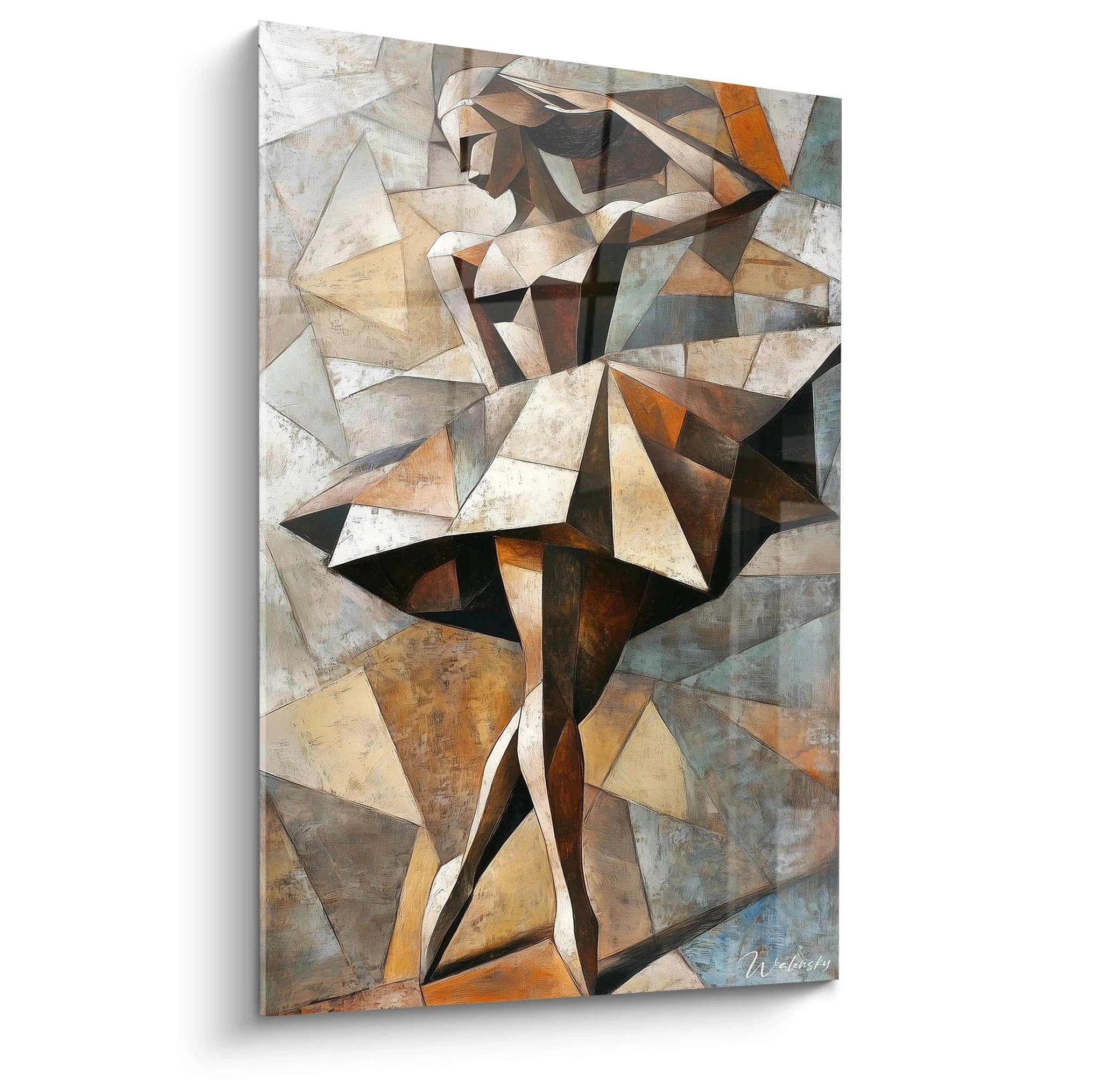






Bring an artistic touch to an “open” or visible closet
October 11, 2025 · 19 min read · by Walensky
Even worse, when your guests walk by, you feel this subtle embarrassment: your visible storage space betrays a certain coldness, as if you had forgotten that this area is an integral part of your interior decoration.
You have probably already tried adding some scented candles or colorful storage boxes. Result? The space remains sadly functional, without that artistic soul that characterizes the most beautiful interiors you admire in magazines.
This is quite normal: most classic decorative solutions are not designed for these hybrid spaces - neither completely private nor completely exposed. The problem isn't your lack of taste, but the absence of a specific approach to these particular areas.
By the end of this article, you will know exactly how to transform your open closet into a space that is both functional and visually captivating, where each artistic element will find its natural place without cluttering or seeming out of place.
Why does your open closet deserve immediate artistic attention?
In our modern interiors, open closets occupy a strategic position: they are seen several times a day, but their decorative potential remains largely untapped. Waiting to embellish them is like ignoring an expression wall that is reaching out to you. Imagine a musician who would have a piano but never tune it - you miss the opportunity to create a visual harmony in your daily life.
🏡 Customer testimonial: "Marie, a Parisian interior architect, recently told us: 'My open dressing closet in my bedroom had become a daily stress point. My clients complimented me on my decoration, but I knew this area was out of place. Since I integrated a small wall artwork and some selected visual elements into it, it has become my favorite corner of the house. Guests systematically ask me who decorated this space!'"
Conversation with a decor expert
The golden rule of art in open closets: A single, well-chosen artwork instantly transforms a storage space into a harmonious decorative zone. You will notice the change within the first week - your gaze will naturally be drawn to this area with pleasure rather than indifference.

Our highlight
Liquid Marble Eternity Blue Canvas - Modern Abstract Edition
232,90€
Discover this artwork →Finally understand why your open closet leaves you unsatisfied
Do you recognize these situations? You avoid the gaze of your guests when they pass by your open dressing room. You systematically close the bedroom door when friends come for dinner. You feel a diffuse frustration every morning when getting dressed, without really understanding why.
What's really happening is that your brain perceives an aesthetic imbalance: on one side, your carefully decorated interior, and on the other, this purely utilitarian area that breaks the overall harmony. The problem isn't your demanding nature, but the lack of visual continuity between your spaces.
It's like having an interrupted melody - technically everything works, but there is a note missing that allows the whole to resonate harmoniously.
The first hidden cause: the illusion of the "purely functional zone"
Contrary to popular belief, there is no space in a modern home that is exclusively functional. Even your bathroom deserves aesthetic attention! The common mistake is to consider the open closet as a "back room" when it is visible on a daily basis.
Imagine a restaurant where an open kitchen was equipped with quality utensils but lacked any aesthetic elements - the customer experience would be immediately affected, even if the food remains excellent.
This aesthetic neglect creates a cognitive dissonance that makes you unconsciously avoid this area or feel a diffuse malaise. Your approach will naturally evolve towards a more global and consistent vision of your interior.
🔍 Immediate test: Take a photo of your open closet from the entrance of the room. Look at this image as if you were discovering this space for the first time. Is your eye drawn positively or does it feel empty? This reaction instantly reveals the untapped artistic potential of your space.
The second cause: the myth of "too small for art"
Many believe that a storage space is too restricted to accommodate a work of art. That's confusing size with impact! The best decorators know that a small piece of artwork, well placed, can totally transform the perception of a space.
It’s like a delicate jewel that enhances an entire outfit: it’s not the surface area that counts, but the accuracy of the choice and harmony with the whole.
This belief prevents you from experiencing the magic of miniature art - those works that, through their subtle presence, create a focal point and give soul to even the most functional space.
The third reason: ignorance of "transition zones"
Here's the factor that 90% of people ignore: your open closet is a "transition zone" between the intimate and the social. It therefore requires specific decorative treatment, neither too personal (like a bedroom) nor too impersonal (like a hallway).
You can easily identify it: it's that space you see every day but your guests occasionally glimpse. The revealing clues? You feel different in this zone depending on whether you are alone or accompanied.
This specificity directly impacts your psychological comfort: without adapted artistic treatment, these zones create an unconscious tension between your need for intimacy and your desire to present a harmonious interior.
3 signals that reveal a poorly treated transition zone:
- The fleeting gaze: You instinctively avoid looking at this area in the presence of others, revealing an unconscious aesthetic discomfort.
- The urge to close: You regularly feel the impulse to "hide" this space, signaling a mismatch between function and visual presentation.
- Persistent dissatisfaction: Despite perfect organization, you feel no pride in showing this area, indicating a lack of decorative continuity with the rest of your interior.
The trigger element: the missing "focal point" effect
What really makes the difference is the presence of a "focal point" - that element towards which the eye naturally directs and which gives meaning to the whole. Without it, even the most perfect organization remains visually incomplete. It’s the domino effect of decoration: a single piece of artwork, well chosen, instantly reorganizes the perception of the entire space. You can identify this in your situation by observing where your gaze naturally settles - if it "floats" without fixing, it means the focal point is missing.
Universal practical rule: Every visible space on a daily basis should contain at least one element of visual pleasure. This rule works because our brain automatically associates beauty and well-being. To check this, temporarily add any aesthetic object to your closet and immediately observe your different emotional reaction.
| ❌ Traditional vision | ✅ Modern approach | 💡 Explanation | 🎯 Practical benefit |
|---|---|---|---|
| A closet should remain purely functional | Every visible space deserves aesthetic attention | The modern eye perceives all spaces as decorative | Overall visual harmony of your interior |
| Art takes up unnecessary space | Art structures and enhances the space | A focal point guides the gaze and organizes perception | Feeling of a larger and better organized space |
| It's best to avoid "overloading" | An artistic element unifies and soothes | Emptiness is not synonymous with serenity | Daily pleasure and pride in your space |
| It's too small to make a difference | Impact doesn’t depend on size | Details create decorative excellence | Differentiation and unique personality |

The 3-step method to create your artistic oasis
Rassurez-vous : transforming your open closet requires neither gros budget nor particular technical skills. This progressive method is inspired by the philosophy of "layering décoratif" - like in cooking, we will build visual flavors layer by layer. At each step, you will notice an immediate improvement, until you obtain that space which you will be proud to talk about with your guests.
🗺️ Overview of your transformation : Step 1 - Create the focal point (choose and position the central artistic element), Step 2 - Harmonize the whole (balance colors and textures), Step 3 - Refine the details (add finishing touches). This logical progression follows the principle of the gaze: first capture attention, then guide it, finally seduce it.
Step 1 : Anchor your artistic identity
Starting by choosing your masterpiece ensures solid foundations for everything that follows. It's like planting the tree before landscaping the garden: everything else will naturally organize around this central choice. Once this step is complete, you will immediately feel that satisfaction of seeing your space gain character.
Essential elements for success
- A painting or a wall art : Choose a piece of adapted dimensions (between 20x30cm and 40x50cm for most closets). It should resonate with your personality while harmonizing with the dominant colors of your clothes. Get it from an online gallery specialized rather than in a department store - the quality of the support and colors will make all the difference on the long-term effect.
- A suitable mounting system: Prioritize discreet fixings that do not require significant drilling (reinforced adhesive hooks, magnetic systems or light rails). The principle is: the artwork should appear to "float" naturally in space without drawing attention to its mounting method. Avoid visible nails which create a DIY look.
- Accent lighting: A small dedicated light source (battery-powered LED spotlight, adhesive strip or delicate string lights) that highlights your work without dazzling. The importance? It transforms your artwork into a true illuminated focal point that naturally attracts the eye and creates a warm atmosphere.
Let's move on to practical application now
How to proceed without risking error
Determine the optimal location: Stand at the entrance of the room and identify the "natural viewing triangle" - the area where your eye naturally settles when discovering the closet. It is generally at eye level (between 1m50 and 1m70 from the floor) and slightly offset from the exact center of the space. This technique replicates the rules of professional displays.
⏱️ Time: 5 minutes | ✅ Successful when: The artwork immediately attracts your eye from the entrance of the room | ⚠️ Attention: Avoid placing the artwork too high - a common mistake that gives an "decorated by obligation" look rather than a thoughtful aesthetic choice.
Test color harmony: Before final fixing, observe your choice at different times of day (morning, afternoon, artificial lighting). The artwork should create a subtle dialogue with the dominant colors of your clothing without competing with them. It acts as a "visual conductor" that unifies the whole.
⏱️ Time: 24 hours of observation | ✅ Successful when: The artwork naturally blends into the space while sublimating it | ⚠️ Attention: Beware of the "instant crush" - take the time to verify that the harmony persists over time.
Install accent lighting: Direct the light source to create a "soft halo" around the artwork, without creating an annoying shadow on your clothes. The goal is to sublimate art while maintaining the functionality of the space. It is this light that will transform your simple storage into a true "private gallery".
⏱️ Time: 15 minutes | ✅ Successful when: The artwork seems to "live" naturally in the space, even with the lighting off | ⚠️ Attention: Lighting that is too powerful would create an artificial "spotlight" effect - art should be revealed, not overexposed.
✨ Step 1 Validation: Your closet now exudes a distinct personality while maintaining its functionality. You can verify success by these signals: your gaze is naturally drawn to this area with pleasure, your guests spontaneously notice the improvement, you feel a subtle pride when using this space. If any of these elements are missing, adjust the placement or lighting before moving on to the next step.
— Our selection


OUR RECOMMENDED PRODUCTS
Step 2: Creating a Harmonious Visual Symphony
Now that your focal point is established, you will orchestrate the secondary elements to create a cohesive whole. This is the step where your space will truly come alive - like a musician adding harmonies to their main melody. The effect becomes multiplicative: each new element reinforces the impact of the whole.
Enhancements for Sublimating Harmony
- Texture Elements: Integrate one or two objects that create a tactile contrast with your clothes - a small ceramic vase, a succulent in an elegant pot, or a natural wood decorative object. These elements "warm up" the space and create visual depth. Choose them in natural materials to avoid the "plastic" look of mass-market accessories.
- Linking Accessories: Elements that connect your artwork to the rest of the space - discreet colored ribbons, small objects echoing a color from the artwork, or matching decorative containers. Their function? To create a "visual conversation" between all present elements.
- Artistic Organization Support: Transform some functional items into aesthetic objects - quality hangers in a harmonious color, design storage boxes, or elegant dividers. The idea: even organization becomes an integral part of your artistic composition.
The "Dancing Eye" Technique
Create Visual Resting Points: Arrange your decorative elements according to the rule of the "harmonious triangle" - your main artwork, then two secondary points that form an invisible triangle. This technique naturally guides the eye on a pleasant journey, avoiding a sense of visual chaos.
⏱️ Time: 20 minutes | ✅ Success when: Your gaze "travels" effortlessly from one element to another | ⚠️ Attention: Avoid perfect alignment which would create too rigid an effect - nature is never perfectly symmetrical.
Balancing visual masses: Alternate full and empty elements, vibrant and neutral colors, smooth and rough textures. This is the principle of "decorative counterpoint" - each element reveals the beauty of its neighbor by contrast. Your closet thus acquires that natural sophistication of the finest interiors.
⏱️ Time: 15 minutes | ✅ Success when: No element “shouts” louder than the others | ⚠️ Attention: Decorative overload is the main pitfall - it's better to remove an element than risk visual cacophony.
Step 3: Mastering the art of perfect finishing
This final step takes you from a "decorated" level to a "professional" level. This is where your decorative signature reveals itself - those subtle details that make your guests wonder who created this perfect harmony. The final result: a space you will be proud to talk about and may inspire other transformations in your interior.
Touches of excellent decorative detail
- Elements of movement: Subtly integrate something that creates a visual dynamic - a plant with delicate leaves, ribbons that float slightly, or a discreet mobile. These elements "enliven" the space and bring it to life, avoiding the frozen appearance of a museum display case.
- Discreet luxury details: Add an element that reveals your attention to detail - a small mirror that plays with light, a golden finish that subtly catches the eye, or a precious material in small quantity. The goal: create that impression of refinement without ostentation.
- Olfactory signature: Discreetly integrate an additional sensory dimension - a small hidden essential oil diffuser, natural scented sachets, or an element that naturally releases a pleasant smell (cedarwood, dried lavender). This touch creates a memorable multisensory experience.
Secrets of professional decorators
Create subtle surprise: Add an unexpected but coherent element - a hidden miniature artwork that is only revealed upon closer inspection, a colored detail that echoes another element in the room, or a surprising texture that intrigues without shocking. This technique creates the "discovery" effect that characterizes memorable interiors.
⏱️ Time: 10 minutes | ✅ Success when: Your guests notice this detail after a few seconds of observation | ⚠️ Attention: The surprise element must enrich the overall harmony, never disrupt it.
Optimize temporal evolution: Anticipate how your installation will evolve with the seasons and your desires. Choose elements that are easy to modify - a frame where you can change the artwork, repositionable objects, or colors that adapt to different moods. Your closet then becomes a "living space" that naturally renews itself.
⏱️ Time: 5 minutes of reflection | ✅ Success when: You can imagine 3 simple seasonal variations | ⚠️ Attention: Flexibility should not compromise the solidity of the main installation.
Expert progression rule: You are ready for the next step when the current step seems to you "obvious and natural". This progression respects your visual adaptation rhythm - forcing steps would create a set that does not reflect you. Patience and ambition balance each other: each mastered step multiplies the impact of the next.
Congratulations! You now master the expert subtleties that differentiate a simple decorated storage space from a true artistic space. These techniques give you an edge over most people who settle for "ready-made" solutions without understanding the underlying principles.
🎨 Professional decorator's tip: The secret technique of "invisible reflection" is to place a small mirror discreetly oriented to create subtle light games that animate the space throughout the day. This trick works because it reproduces the natural variations in light that our eye instinctively finds soothing. Test with a pocket mirror before investing in a permanent element.
Frequent question from our readers
"Will I quickly get tired of this decoration, especially if I see the space every day?"
Your concern is perfectly understandable - we have all experienced this feeling with a decorative object that initially excited us and then bored us. The difference here lies in the choice of timeless elements rather than trendy ones, and in this progressive approach that allows you to adjust as you evolve. Like a quality jewel that you wear with pleasure year after year, a well-chosen work of art ages with you and even reveals new facets over time. The secret? Prioritize authentic emotion over fleeting trends.
💡 Anti-boredom test: Before your final choice, live for a week with a temporary reproduction (even printed on paper) of the artwork you are considering. If it still gives you pleasure after 7 days of daily observation, you have found your durable artistic companion.
— You may also like


Pitfalls to avoid at all costs to preserve your success
Warning: these mistakes can undo all your efforts in a few days. I'm revealing them to you to avoid the disappointments I’ve observed in many well-intentioned customers. These mistakes are so common that they seem "logical" at first glance - that's exactly what makes them so treacherous.
- 🚫 The "everything new, everything beautiful" mistake: It’s tempting to want to transform the entire space at once by buying all the accessories at the same time. Result: a set that lacks soul and looks like a store display. Do otherwise: build your space gradually, letting each new element “settle in” visually before adding the next. This patience creates a natural harmony that bulk purchases cannot reproduce. 🚫 The trap of "perfectly coordinated colors": Many choose elements that take up exactly the same shades, creating a monotonous and flat ensemble. The consequence? A “pretty” but bland space that doesn’t hold attention. The winning approach: prioritize harmonies and subtle contrasts - your eye needs nuances to stay interested. 🚫 The "one size fits all" illusion: Copying an inspiration seen in a magazine exactly without adapting it to the proportions of your space. This classic mistake produces either an overwhelming effect (elements too large) or insignificant (elements too small). Always adapt: proportions must correspond to your specific space, not the reference image. 🚫 The "temporary hanging" syndrome: Installing the artwork “while waiting to find the perfect position” and... never moving it. Result: an approximate position that harms the overall effect for months. Take the time: really test several locations before final fixing - 30 minutes of trials will save you months of dissatisfaction. 🚫 Forgetting "the wear of the eye": Not anticipating how the installation will evolve with your changes in wardrobe or season. The perfect harmony of today can become discordant in 6 months. Anticipate: choose elements neutral enough to adapt to your evolutions, or plan for easy modifications.
🛡️ Weekly verification system: Each week, allow yourself 2 minutes of objective observation of your space: does the harmony still give you pleasure? Is there any element that bothers you? Is the balance maintained despite your storage changes? These warning signs to watch out for: visual avoidance of the area, desire to "hide" the space, negative comments from loved ones, feeling that “something is wrong” without being able to identify it.
— In the same vein


Frequently Asked Questions
Allow between €50 and €150 for a complete, high-quality transformation, depending on the size of your space and your aesthetic ambitions. To optimize: start with the main artwork (€30-€80), then gradually add complementary elements (€5-€20 each). A concrete example: Marie transformed her 2m² dressing room with a 40x30cm painting (€65), two succulents (€15), LED lighting (€25) and some accessories (€20) - total €125 for a result that impresses all her guests.
The impact is immediate as soon as your first artwork is installed, but perfect harmony develops over 2-3 weeks as your eye gets used to it and you adjust the details. Psychologically, you will feel the difference from day one - that satisfaction of finally seeing your space "finished". Your loved ones will notice the change instantly, even if they don't always know exactly what has evolved.
Absolutely not! This method is designed for people with no technical experience. Modern fixings (reinforced adhesives, magnetic systems) require neither drill nor special skills. The decorative aspect relies on simple visual principles that you apply intuitively by following the method. If you know how to hang a picture and arrange objects, you have all the necessary skills.
It's even more effective! In a small space, every detail counts more and the visual impact is multiplied. An artistically arranged open closet becomes a real decorative asset that visually expands the space by creating depth. Simply adapt the proportions: prioritize artworks of 20x30cm maximum and delicate accessories. The "private gallery" effect is particularly successful in studios where spaces are open-plan.
Excellent question that reveals a thoughtful approach! Choose a timeless artistic base (neutral or classic colors) that you embellish with seasonal elements that are easily modified. For example: a painting in permanent beige tones, to which you add colored ribbons, dried flowers or decorative objects that evolve with your desires. This flexibility maintains the visual interest while preserving the overall coherence.
Your new life begins today
In a few weeks, when you get dressed in the morning, your gaze will settle with pleasure on the space you have transformed. The feeling of unfinished business is gone - your open closet will become a true source of daily pride. Your guests will notice this attention to detail that characterizes exceptional interiors, and you will feel that subtle but profound satisfaction of having created something beautiful in your everyday life.
More than just a decorative improvement, this transformation will reveal your new confidence when it comes to interior design. The principles you have mastered will naturally apply to other spaces in your home - you will discover that you now look at all your spaces with a new eye, more demanding and more creative.
The understanding was indeed the most complex step - now that you know why and how to proceed, all you have to do is choose your first work of art. Start this weekend by identifying the optimal location in your closet. Your future self will thank you for making this decision today.
✨ Your inspiration challenge : Imagine yourself in a month, proudly showing this space to a close friend and seeing their admiring expression. This vision is only three simple steps away from becoming reality - and the first can begin this afternoon. Your space awaits to reveal its artistic potential!
Also read: 🏡 Discover our guides for each room in the house
</div
More selected pieces
Dance Fire Liberation Red Wall Art - Dancer Abstract Edition
233,90€
Discover this artwork →Explore our collections


