Japanese-inspired landscapes have become a true benchmark in the world of zen wall decor. Through minimalist representations of misty mountains, Japanese gardens, peaceful rivers, or temples nestled in the heart of the forest, these works bring visual harmony and an immediate feeling of serenity. But why does a zen landscape painting appeal so much in contemporary interiors? Far from being a simple trend, this aesthetic is based on a subtle combination of philosophical traditions, minimalism, and a deep respect for soothing nature.
The essence of wabi-sabi in a zen landscape painting
One of the fundamental principles of Japanese decoration is wabi-sabi, a philosophy that celebrates the beauty of imperfection and the passage of time. A Japan-inspired zen artwork often illustrates this concept through misty landscapes, aged textures, or asymmetrical compositions, evoking a zen atmosphere conducive to relaxation.
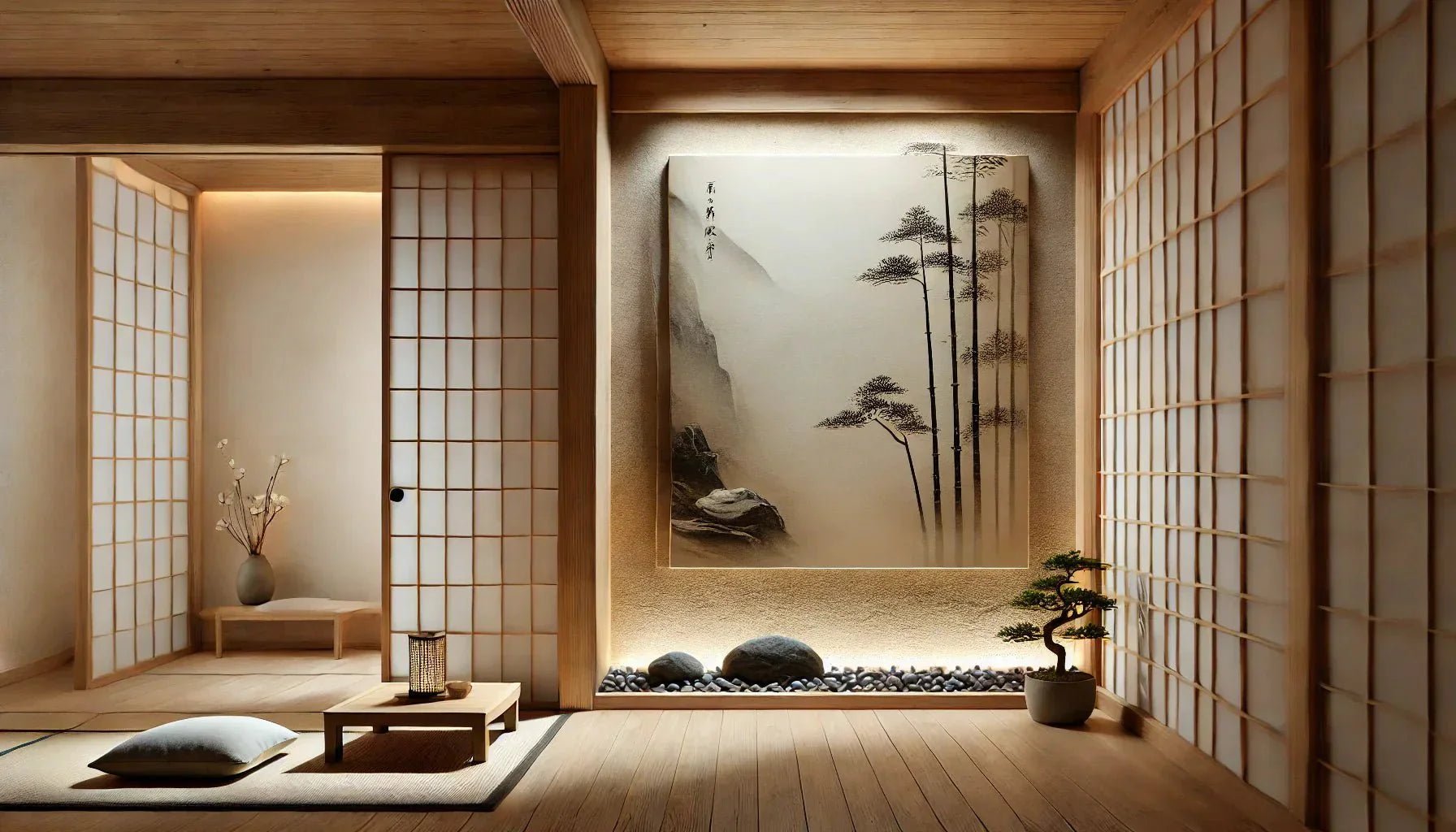
In a minimalist room, a zen print representing a natural landscape in the soft light of morning or a zen canvas illustrating a path lined with bamboo acts as a window open to a universe of tranquility. These representations fit perfectly into interiors focused on Feng Shui, where the balance of energies is essential for creating a relaxing ambiance.
The role of Buddhism and Shintoism in the symbolism of zen landscapes
Japanese landscapes draw their essence from deep spiritual traditions. Shintoism, which considers every natural element as sacred, inspires scenes where mountains, peaceful waterfalls and forests interact in perfect harmony.
Buddhism, for its part, favors clean and contemplative settings. A zen Buddhist painting, representing a temple on top of a hill or a statue of Buddha surrounded by vegetation, invites meditation and escape. These works do not only embellish a space; they act as a visual reminder of the need to slow down, refocus, and cultivate inner serenity.
Minimalism and visual balance: the keys to a successful zen painting
One of the distinctive elements of a relaxing painting inspired by Japan is its minimalism. In Japanese culture, empty space, or "ma" (間), is an essential element that allows objects to breathe and create a visual dialogue with the environment.
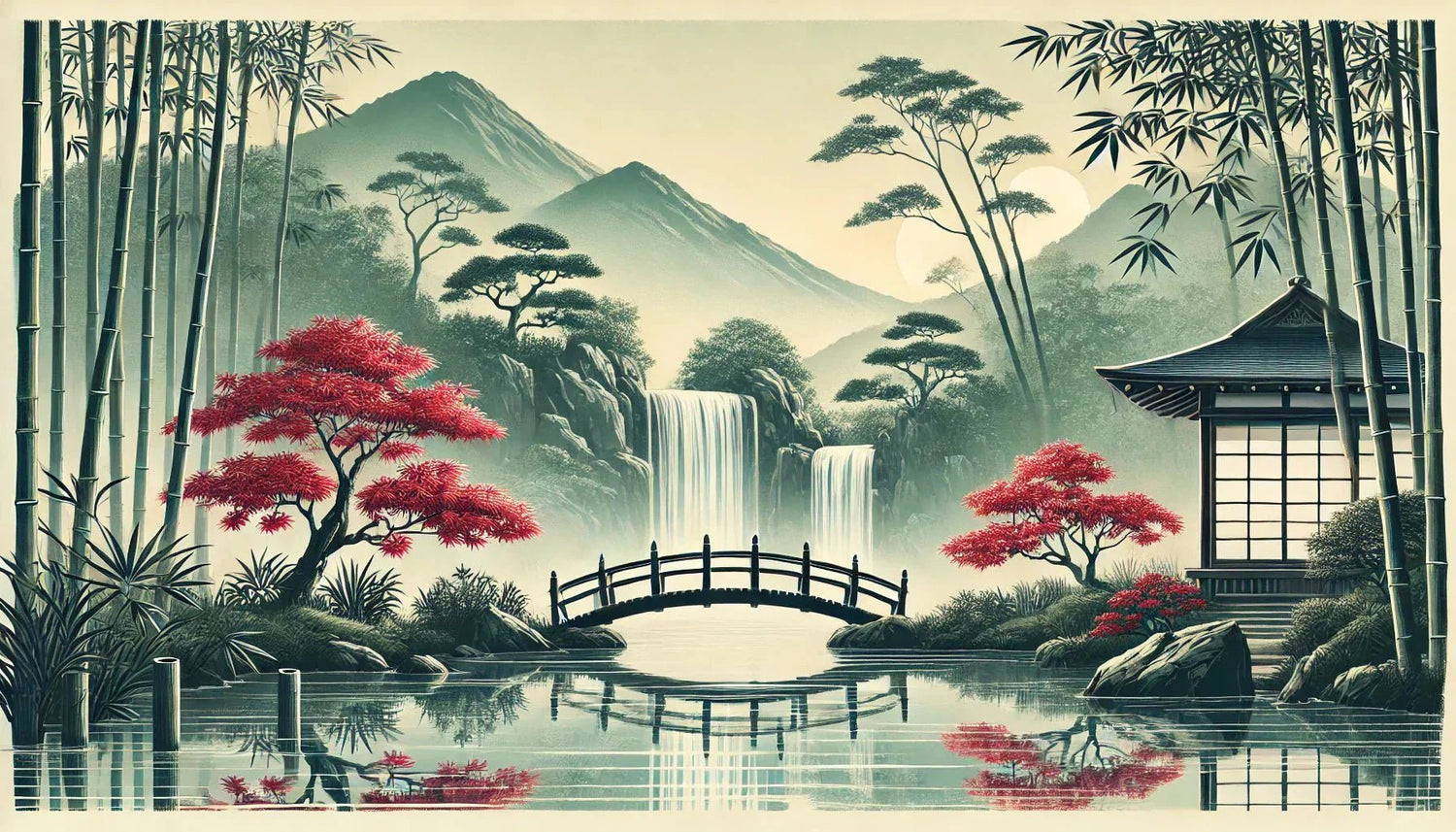
Thus, a zen painting representing a red bridge isolated in the middle of a misty lake or a zen illustration of snowy mountains in a vaporous sky does not seek to fill the space, but to establish a visual pause. This play of contrasts between matter and emptiness favors a feeling of positive energy and a better connection with your interior.
The influence of Japanese seasons in a zen landscape painting
Japanese landscapes offer an infinite diversity depending on the seasons, allowing you to adapt your zen wall decoration according to the desired emotions.
- Spring: Zen landscape posters illustrating cherry blossoms bring a touch of softness and symbolize ephemeral beauty.
- Summer: A zen landscape poster of terraced rice fields or a Japanese garden under golden light evokes vitality and expansion.
- Autumn: Zen canvases with the reddish tones of Japanese maples create a warm and introspective atmosphere.
- Winter: A zen frame representing a temple under snow reinforces the feeling of meditation and appeasement.
Each season tells a story and invites you on an immobile journey, transforming a simple wall into a window open onto nature.
Integrating zen landscapes into interior decoration
Beyond zen paintings, Japanese-inspired decor integrates natural elements that extend this aesthetic throughout the living space:
- Indoor fountains: recalling peaceful cascades and reinforcing the feeling of relaxation.
- Sand and stone gardens: inspired by Buddhist temples, perfect for a corner dedicated to meditation.
- Bonsais and bamboo: which add a lively and refined touch of greenery to the environment.
By combining these elements with a painting zen landscape, we create total immersion in a universe imbued with serenity and tranquility.
Timeless art that transcends cultures
A zen landscape painting is not just a decorative trend. It is an invitation to calm, introspection and balance, a visual reminder of the essential link between humans and nature. Its power lies in its ability to create a relaxing atmosphere, promote meditation and inspire positive energy within our living spaces.