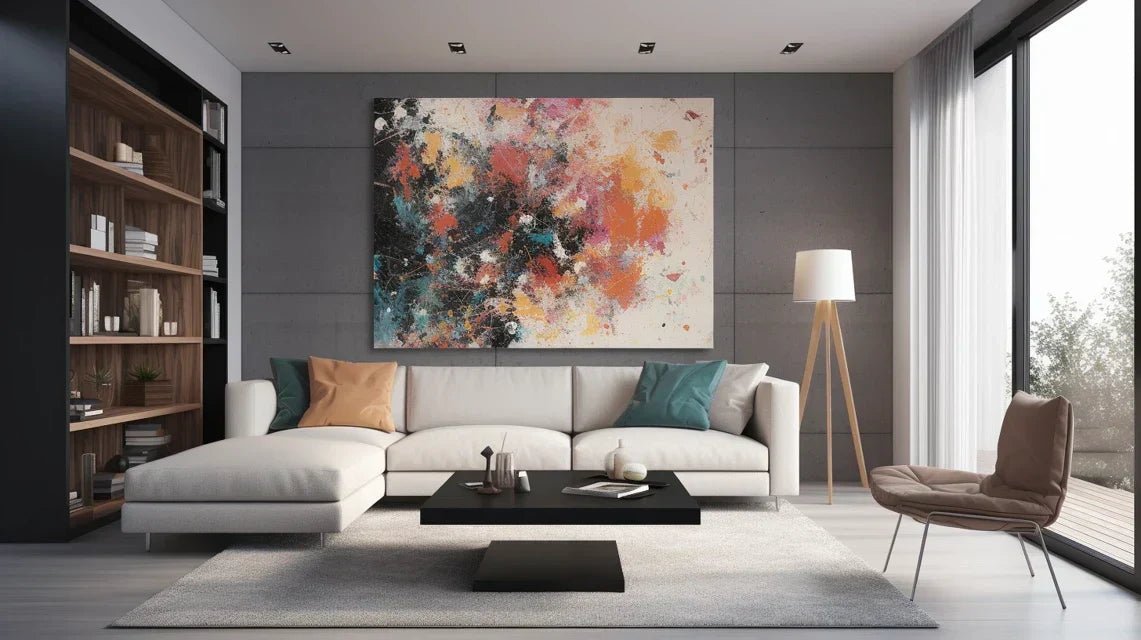
Choosing between steel or plastic hooks to hang your artwork may seem trivial, but this choice directly impacts the safety of your artworks and the longevity of your installation.In this detailed comparison, we explore the fundamental differences between these two materials, their respective strengths and weaknesses, to help you make an informed choice based on your specific needs and the weight of your artworks.
Understanding the Fundamental Differences Between Steel and Plastic Brackets
Before embarking on the purchase of fixing systems for your paintings and works of art, it is essential to understand the inherent characteristics of steel and plastic brackets. These differences go far beyond mere visual appearance and directly affect the performance and lifespan of your wall installations.
- Steel brackets offer superior mechanical strength, ideal for heavy artworks
- Plastic fixings are generally lighter and may be preferable for small frames
- Durability over time varies considerably between these two materials
- Price and ease of installation are decisive factors in choosing the material
Key takeaway: The choice between steel and plastic should not be based solely on aesthetic criteria, but primarily on the weight of the artwork to be hung and the environmental conditions of the room (humidity, sun exposure, temperature variations).
Comparative Analysis of Mechanical Properties
Load Resistance and Support Capacity
Load resistance is the most significant difference between steel and plastic brackets. Metal fixings can generally support much higher weights, ranging from 20-25 kg for standard models, up to 50 kg for reinforced versions. Conversely, plastic brackets rarely reach a capacity exceeding 5-10 kg, making them unsuitable for large or framed artworks with heavy materials such as glass.
Expert tip: For valuable or particularly heavy paintings (over 10 kg), always choose steel brackets and multiply the anchor points to distribute the load and further secure the installation.
Deformation Under Stress
Plastic materials, even high-quality ones, tend to deform under constant stress, a phenomenon known as creep. This problem is accentuated over time and can lead to progressive sagging of your painting. Steel, thanks to its crystalline structure, resists permanent stresses much better and retains its original shape, guaranteeing perfect alignment of your artworks even after several years.
Resistance to Shocks and Vibrations
In environments where vibrations may occur (proximity to a slamming door, frequent passage, etc.), fixings must absorb these micro-movements without deterioration. Steel brackets offer better resistance to point impacts, while some plastics can absorb vibrations more effectively, reducing the risk of progressive displacement of the painting.
Behavior Under Temperature Variations
Thermal expansion is a factor often overlooked but crucial in choosing a mounting system. Plastics are generally more sensitive to temperature variations and can expand or contract more significantly than steel, which may affect the stability of the hanging in certain conditions.
| Characteristic | Steel Hooks | Plastic Hooks | Importance |
|---|---|---|---|
| Maximum load capacity | 15-50 kg | 5-10 kg | Critical for heavy artworks |
| Resistance to deformation | Excellent | Medium to low | Important for alignment |
| Impact resistance | Very good | Variable depending on quality | Moderate to high |
| Thermal sensitivity | Low | High | Important near heat sources |
Compared Durability and Longevity
Corrosion Resistance
One of the main advantages of plastic hooks is their immunity to corrosion. In humid environments such as bathrooms or kitchens, steel fixings can develop rust over time unless they benefit from specific anti-corrosion treatment. This corrosion can not only weaken the hook but also stain your wall, or even damage your artwork.
- Standard Steel: Subject to corrosion in humid environments
- Stainless Steel: Excellent corrosion resistance but higher price
- Galvanized Steel: Good temporary protection against corrosion
Material Degradation Over Time
The aging of plastics differs from that of metals. When exposed to UV rays or certain chemicals present in indoor air, plastics can become brittle over time. Steel, on the other hand, generally retains its mechanical properties even after several decades if environmental conditions are stable.
- Standard Plastics: Sensitive to UV rays, becomes brittle after 5-10 years
- Engineering Plastics: Better resistance but higher cost
Environmental Impact
Beyond technical considerations, the environmental impact can guide your choice. Steel hooks are generally more durable and 100% recyclable, while many plastics used in mounting systems are difficult to recycle at the end of their life. For people concerned about their ecological footprint, this dimension deserves to be taken into account.
- Steel: Infinitely recyclable, higher initial carbon footprint
- Plastic: Complex recycling, less energy-intensive manufacturing
Comparative Durability: Under normal indoor conditions, a quality steel hook can last a lifetime, while plastic versions generally require replacement after 5 to 15 years depending on the quality and environmental conditions.
OUR RECOMMENDED PRODUCTS
Discover our selection of products specially chosen for you. Click on the images to learn more.

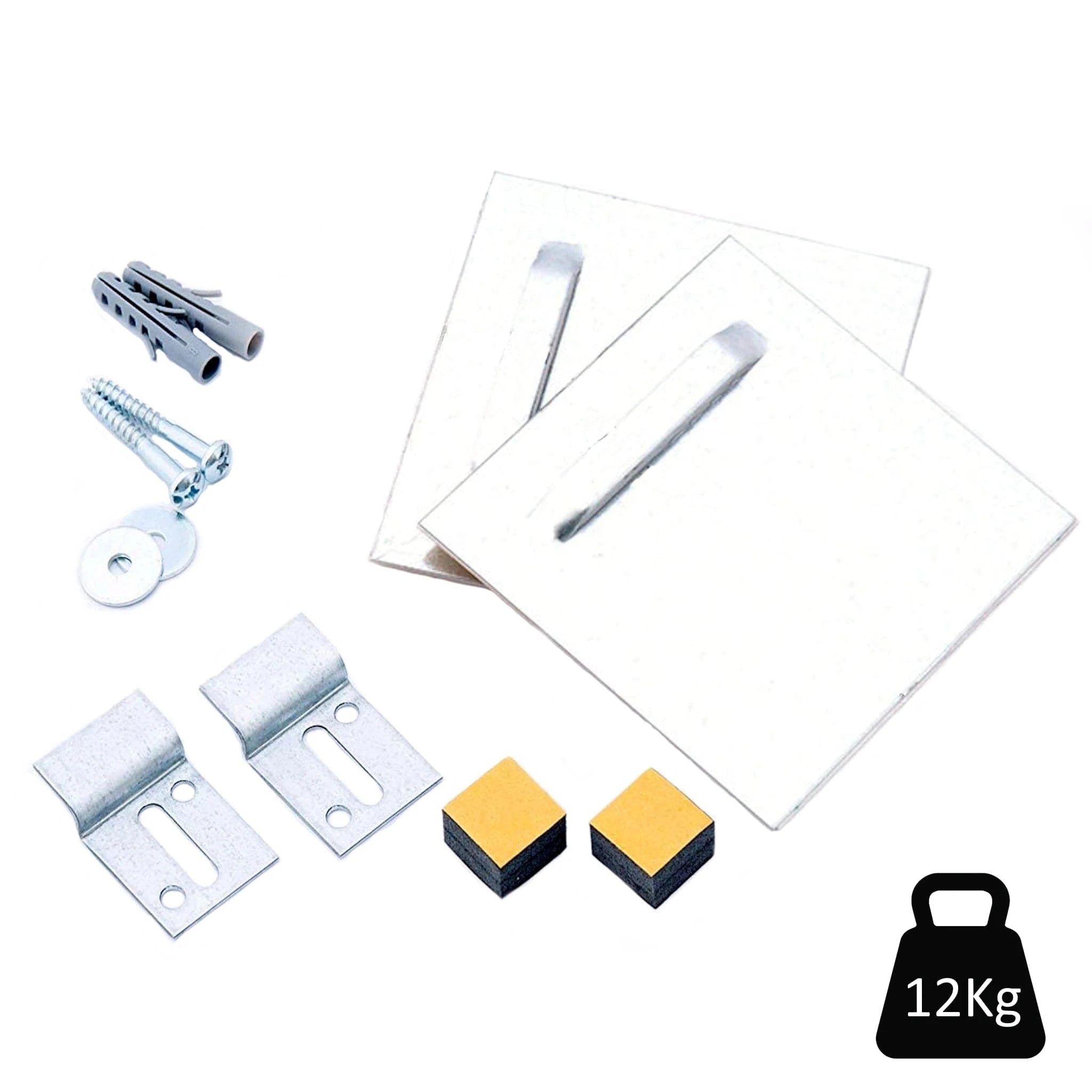
Wall mounting hooks 12kg max - complete kit
39.99 €
|
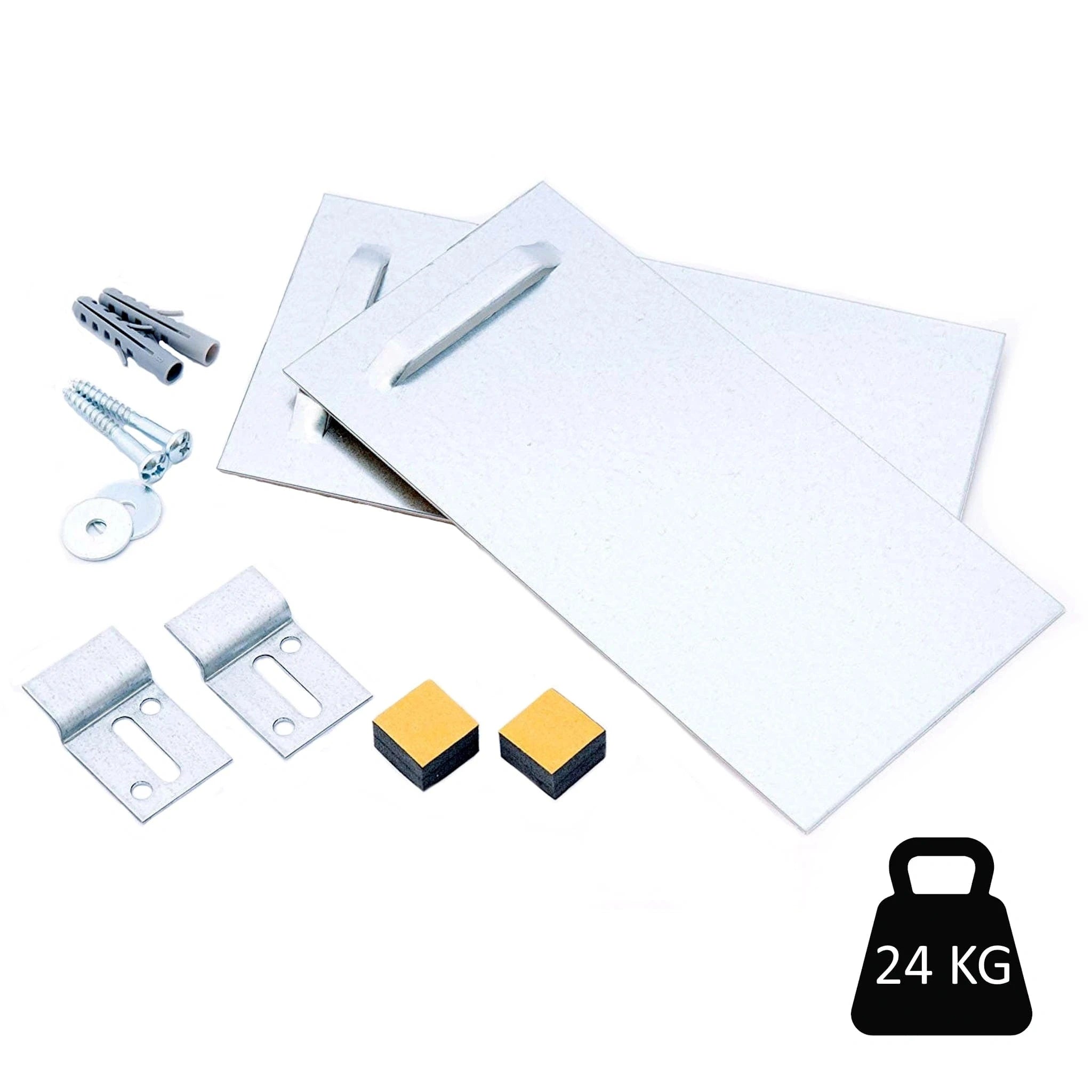
49.99 €
|
Why choose our products: All our wall hooks are made with high quality materials to guarantee exceptional durability and robustness. Easy and quick installation without special tools.
Specific Advantages and Disadvantages by Material Type
To facilitate your choice, here is a detailed analysis of the strengths and limitations of each type of hook, allowing you to quickly identify the solution best suited to your particular situation.
- Steel hooks: Advantages : Exceptional weight resistance, superior longevity, long-term reliability, perfect dimensional stability, variety of finishes available
- Steel hooks: Disadvantages : Generally higher price, risk of corrosion in certain environments, sometimes more complex installation, heavier weight
- Plastic hooks: Advantages : Economical, lightweight, easy to install, resistant to humidity, available in multiple colors to integrate into the decor
- Plastic hooks: Disadvantages : Limited load capacity, potentially accelerated aging, sensitivity to UV and temperature variations, sometimes less premium appearance
- Metal-plastic hybrids : Interesting compromise combining the resistance of steel with the lightness and ease of installation of plastic for specific applications
- Specialized hooks : For very heavy or valuable works, reinforced steel fixing systems are available with extended warranties
- Invisible solutions: Invisible mounting systems, typically made of steel for valuable artworks, offer a clean aesthetic while ensuring optimal security
- Small, lightweight frames (less than 2 kg): Standard or adhesive plastic hooks Medium frames (2-5 kg): Reinforced plastic hooks or basic steel hooksLarge paintings (5-10 kg): Medium quality steel hooks with fixings adapted to the wall typeVery heavy artworks (more than 10 kg): Exclusively high-strength steel systems with multiple anchor pointsPrecious collections : Professional systems in stainless steel with safety mechanismsWall art in humid areas : Stainless steel or technical plastics resistant to humidity
Collector's tip: For valuable artworks or important collections, don't hesitate to invest in professional stainless steel or high-strength corrosion-resistant steel fixing systems. The extra cost is largely offset by the peace of mind and protection provided for your precious pieces.
Criteria for Choice According to Artwork and Environment Type
The ideal choice between steel and plastic varies considerably depending on the nature of the artwork to be hung and the characteristics of the environment. Here are recommendations tailored to the most common situations.Depending on the Weight of the Artwork
Weight remains the determining criterion in selecting an appropriate fixing system. To ensure the safety of your installation, respect these thresholds generally recognized by framing and decoration professionals.According to the Value of the Artwork
The sentimental or financial value of your artwork should influence your level of investment in the mounting system. For valuable pieces, reliability is more important than savings.Adaptations to Environmental Conditions
The immediate environment of your artwork may determine the optimal material for your hooks. Certain specific conditions clearly favor one or the other material.Installation and Handling: Practical Comparison
Ease of installation: Plastic hooks generally require less force and specialized tools, making them more accessible to beginnersPositioning accuracy: Steel systems often offer more precise adjustment mechanisms, allowing for perfect alignmentRisk of wall damage: Plastic hooks typically create smaller holes and cause less damage when removedReusability: Steel fixings can generally be disassembled and reused several times, unlike some plastic modelsAdaptability to different wall types: Steel hooks adapt better to difficult walls such as concrete or brick, while plastic is perfectly suited for lightweight partitionsRecommendations by Type of Painting
To help you make the most suitable choice for your specific situation, here are our detailed recommendations depending on the type of artwork you want to hang.Making the Informed Choice Between Steel and Plastic
At the end of this comparative analysis, it becomes clear that the choice between steel and plastic hooks depends on a set of factors specific to your situation. The weight of the artwork remains the determining criterion, with a marked preference for steel when the painting weighs more than 5 kg or has significant value.
Plastic hooks remain relevant for lightweight, temporary installations or in humid environments, where their ease of installation and corrosion resistance make them practical and economical options. However, their limited durability and tendency to deform under load are significant limitations for permanent installations or valuable artworks.
Investing in quality fixing systems, adapted to the weight and value of your artworks, is ultimately the best guarantee to preserve the integrity of your paintings and enjoy your wall decoration serenely for many years. Do not hesitate to consult a framing professional for particularly precious or voluminous pieces, who can recommend tailor-made solutions suited to your specific needs.