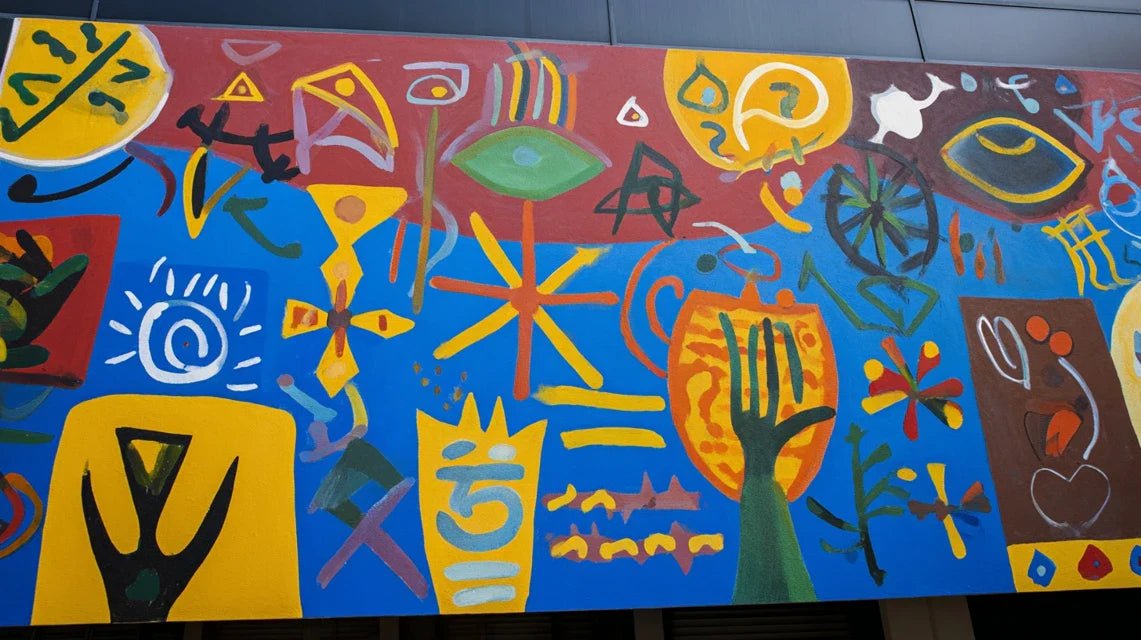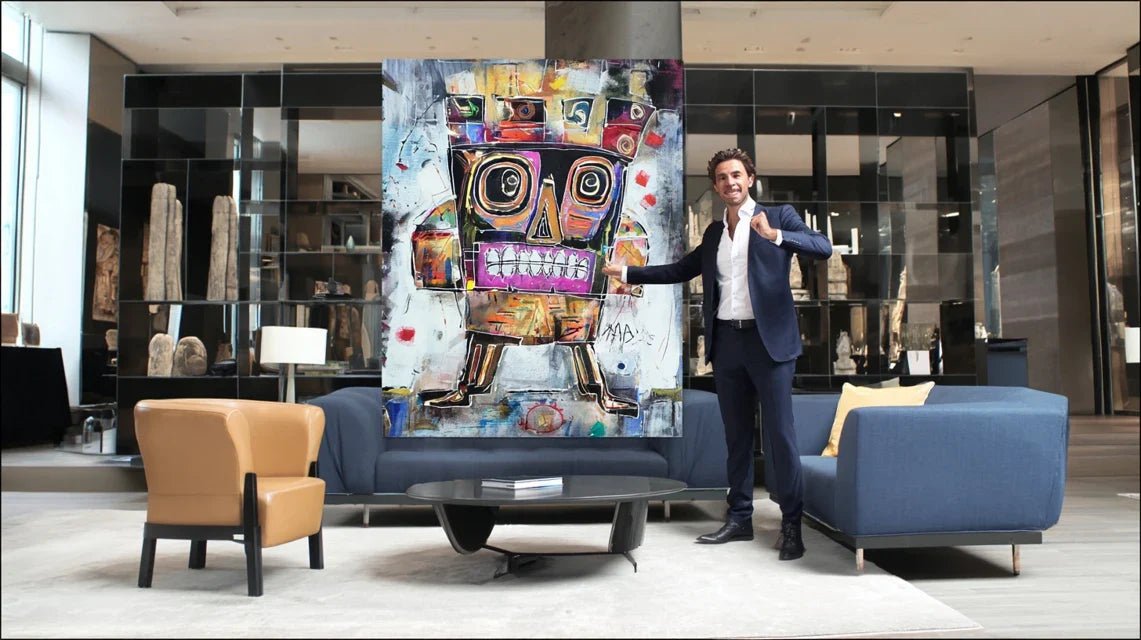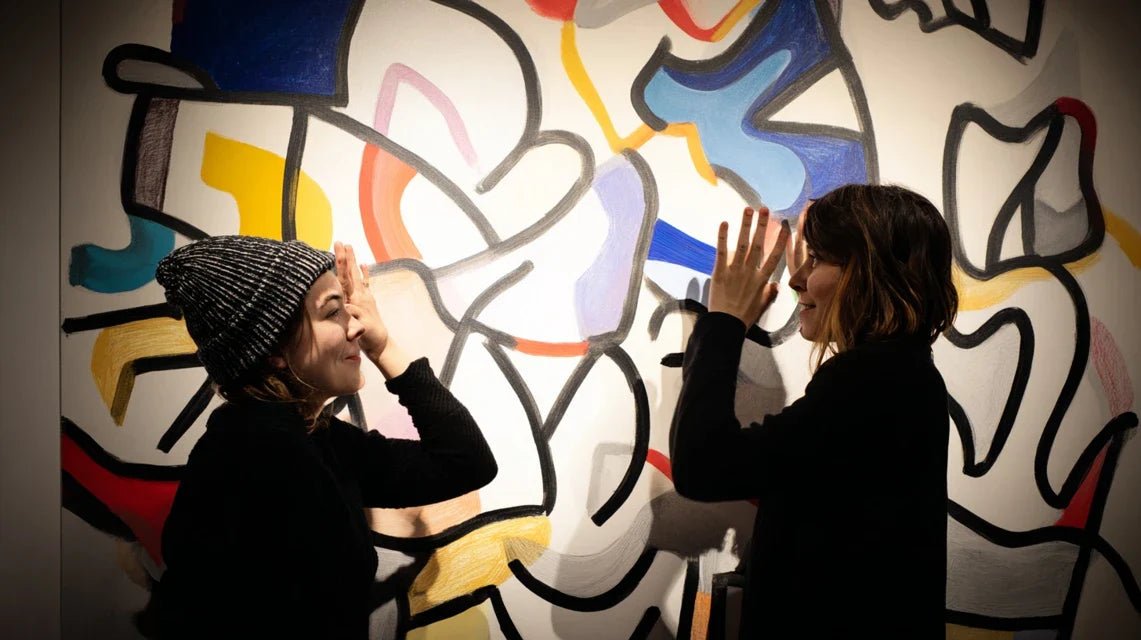
You step into your living room after a tiring day, and despite your efforts to create a harmonious interior, something feels off. The walls seem empty, cold, as if they don’t truly reflect you.
This feeling of disconnect between your personality and your living space follows you everywhere. You look at these bare walls wondering how to transform them without falling into the "catalog decoration" trap.
You've probably already tried hanging a few standard frames or prints found in stores, but the result lacks authenticity. Your interior remains impersonal, almost anonymous.
This is perfectly normal! Most people don’t realize that wall art functions as a true non-verbal language that communicates your essence before you even speak a word.
By the end of this article, you will master the secret codes of this silent communication and know how to transform your walls into true ambassadors of your personality.
Why Your Interior “Speaks” Already Without You Knowing It?
Every day, your guests subconsciously read the message conveyed by your walls. An art-free space communicates indecision, while a thoughtful choice reveals your depth. It’s like wearing a perfectly tailored suit versus wrinkled jeans: the impact is immediate and decisive for first impressions. While waiting to take the plunge, you miss the opportunity to create that instant emotional connection that transforms a simple visit into a true sharing experience.
🎨 Revealing testimonial: Sarah, a Parisian interior architect, recounts how a client confided in her that his guests always remained "reserved" at his home. After installing a series of abstract paintings with warm tones, evenings spontaneously became more convivial and conversations deeper.
💬 Conversation with a Décor Expert
Wall art translates your emotions into universal language: Shapes, colors, and composition interact to create a silent dialogue with your guests. The result? A space that truly reflects you from the first visit.
Decode the Signals Your Interior is Already Sending
You may be feeling this strange impression that your living room doesn’t represent you, that your guests struggle to grasp your personality, or that certain rooms are desperately lacking character despite your efforts.
These signals reveal that your walls aren't communicating your identity effectively. It’s not a matter of taste or budget, but simply a lack of understanding of the codes of visual language.
Imagine your interior as a conversation: currently, it murmurs when it should speak with confidence and clarity.
Color: Your First Emotional Signature
Contrary to popular belief, color doesn’t just decorate; it programs the mood. Warm tones stimulate conviviality, while blues soothe and greens reconnect you to nature.
It's like choosing the soundtrack of a film: each shade subtly influences the atmosphere and guides the emotions of your guests.
Your current palette is already shaping the energy of your home, but it can be optimized to create the ambiance you truly want to experience every day.
🔍 Revelatory Test: Observe your living room for 30 seconds with half-closed eyes. What feeling dominates? Serenity, dynamism, or neutrality? This first impression reveals the current message of your space.
Shapes: The Secret Architecture of Your Emotions
Many people think that only beauty matters in wall art, but in reality, it’s the shapes that create the deepest emotional impact.
Straight lines evoke stability and modernity, while curves bring softness and fluidity. It's like the difference between a structured speech and a natural conversation.
Your current choices unconsciously influence your and your loved ones’ level of relaxation. An environment that is too rigid can create an invisible tension, while organic shapes promote relaxation.
Composition: The Art of Directing the Gaze
Few people realize that the eye follows a precise path in each room. A mastered composition naturally guides attention to the most important elements.
You can identify this phenomenon by observing where your gaze settles first when you enter your living room, and then how it instinctively moves.
An unbalanced composition creates subtle visual fatigue that can explain why some rooms don’t give you the expected well-being.
3 Signals Your Wall Art is Already Communicating:
- The harmony of hanging heights: Irregular levels suggest improvisation, while a thoughtful alignment evokes mastery
- The balance of visual masses: Concentration on one wall creates an imbalance, like a conversation monopolized by one person
- Stylistic coherence: Styles that are too disparate translate hesitation, while a common thread reveals an affirmed personality
Lighting: Revealing Your Artistic Message
Lighting acts as an emotional amplifier that can radically transform the message of your wall art. It's like a spotlight in theater: the same scene can appear dramatic or romantic depending on the lighting chosen. To identify the current impact, observe your paintings at different times of the day and note how your feelings evolve.
Successful visual language rule: Each element must converse harmoniously with others. Test this harmony by photographing your room: the balance appears immediately in the image.
| ❌ Unintentional message | ✅ Controlled communication | 💡 Key principle | 🎯 Impact on atmosphere |
|---|---|---|---|
| Walls overloaded with disparate elements | Balanced and coherent composition | Fewer elements, more impact | Serenity and sophistication |
| Colors that clash | Harmonious and intentional palette | Dialogue of nuances | Fluidity and well-being |
| Uniform and cold lighting | Shadow and light games | Sculpt the atmosphere | Warmth and depth |
| Random hanging heights | Thoughtful and proportional alignment | Invisible geometry | Order and elegance |
Master Your Visual Signature in 3 Progressive Steps
Don't panic! Transforming your space into a true personal language follows a logical and accessible progression. Imagine you are learning a new language: first the basic vocabulary, then simple sentences, and finally subtle nuances. Each step reveals a deeper facet of your personality and will bring you closer to the final result: an interior that resembles you perfectly and fascinates your guests.
🎯 Your progression in 3 tiers: Establish your visual vocabulary (colors and shapes), build your decorative sentences (compositions), then develop your unique style (advanced personalization). At each step, you will feel a greater coherence and pride.
Step 1: Define Your Emotional Alphabet
Starting by identifying your instinctive colors and shapes allows you to build on solid foundations. It's like choosing the ingredients before cooking: this selection determines the entire result. You will immediately feel more coherence and your future choices will become naturally smoother.
Fundamental elements to identify
- Your natural emotional palette: Observe the colors that dominate your wardrobe and favorite objects. They reveal your deep affinities. Avoid "trendy colors" that don't really suit you, as they create an uncomfortable disconnect.
- Your preferred shapes: Geometric for a structured mind, organic for artistic sensitivity, mixed for balance. Test your preference by browsing decor magazines. The impact on your daily well-being is immediate.
- Your relationship with space: Do you prefer dense and stimulating compositions or airy and soothing spaces? This preference guides all your hanging choices and determines the final effect on your guests.
Now, let's move on to practice with method
Creating your personal moodboard
Collect your visual inspirations: Gather 15-20 images that spontaneously attract you, without thinking about style. This instinctive selection reveals your natural visual language more faithfully than a rational analysis.
⏱️ Time: 20 minutes | ✅ Success when: Clearly identifiable colorful and formal patterns | ⚠️ Attention: Do not censor yourself out of concern for "coherence" - instinct is paramount
Analyze recurrences: Identify the 3 colors and 2 types of shapes that most often appear. These constants form your personal visual signature, more authentic than any external trend.
⏱️ Time: 15 minutes | ✅ Success when: Clear dominant palette and forms | ⚠️ Attention: Avoid forcing associations that do not come naturally
Test emotional harmony: Arrange your selected elements side by side and observe your feelings. A good personal palette immediately provides a feeling of evidence and well-being.
⏱️ Time: 10 minutes | ✅ Success when: Spontaneous feeling of harmony | ⚠️ Attention: Trust the emotion rather than "rules"
✅ Validation of step: Your visual alphabet is defined when you feel an obviousness towards your choices. If in doubt, let it rest for 24 hours and trust your first impression upon waking.
OUR RECOMMENDED PRODUCTS
Step 2: Build your meaningful compositions
Now that your vocabulary is established, learn to create "visual sentences" that tell your story. This step is more rewarding because you see concretely how your personality takes shape on your walls. The snowball effect begins: each new artwork naturally finds its place in your coherent system.
Advanced composition tools
- Rule of the visual triangle: Arrange 3 elements in a triangle to create dynamism and balance. This invisible geometry naturally guides the eye. Avoid perfect alignment which paralyzes the eye and creates uncomfortable rigidity.
- Principle of balanced masses: A large artwork can be counterbalanced by 2-3 smaller ones opposite. Like a Calder mobile, everything must balance harmoniously. The impact: an immediate feeling of correctness.
- Visual breathing space: Leave at least 5-10cm between each element so the eye can "breathe". This ventilation avoids saturation and allows each piece to fully express itself.
Putting compositions into practice
Create your first sequence: Choose a main wall and arrange 3 elements according to the visual triangle. Start by placing them on the floor to adjust before hanging. This method avoids costly mistakes.
⏱️ Time: 45 minutes | ✅ Successful when: Obvious balance at first glance | ⚠️ Attention: Respect the 160cm rule from the floor for the center of the main artwork
Develop dialogue between walls: Create visual echoes between different walls by repeating colors or shapes. This continuity unifies the space and creates a recognizable signature.
⏱️ Time: 30 minutes | ✅ Successful when: Smooth visual flow in the room | ⚠️ Attention: Avoid exact repetition, prefer variation on the theme
🎨 Intermediate check: Your composition works when you can follow a natural visual path in the room. Photograph the whole thing: imbalances are obvious in the image.
Step 3: Personalize your unique signature
You now master the fundamentals, time for advanced personalization that distinguishes your interior from all others. This step reveals your acquired expertise and transforms your space into a true lived work of art. The final result: an interior so personal that your guests remember it months after their visit.
Advanced personalization techniques
- Sculpted lighting: Use directional spotlights and indirect lighting to create games of light and shadow. Each artwork becomes an evolving spectacle depending on the time. Avoid uniform frontal lighting that "flattens" art.
- Textures and materials: Mix supports (canvas, metal, wood) to create a tactile dialogue. This sensory richness adds a sophisticated dimension that few master.
- Contextual staging: Integrate furniture and objects into the overall composition. Your wall art no longer floats in isolation but is anchored in a harmonious ecosystem.
Finalizing your signature
Sculpt the atmosphere with light: Install 2-3 different light sources to reveal your artworks depending on the moment. This staging transforms your living room into a refined private gallery.
⏱️ Time: 1h30 | ✅ Successful when: Multiple atmospheres depending on the lighting | ⚠️ Attention: Avoid unsightly shadows
Create contemplation points: Arrange a chair facing your favorite composition. This invitation to pause reveals your sophistication and honors your art.
⏱️ Time: 30 minutes | ✅ Success when: Optimal contemplation comfort | ⚠️ Attention: Appropriate viewing angle and distance
🏆 Final validation: Your signature is complete when the whole works day and night, and each guest naturally finds an element that particularly attracts them.
Rule of mastered progression: You can move on to the next step when the current one provides you with spontaneous satisfaction. Patience in construction guarantees a lasting and authentic result.
Congratulations! You now have the keys to the visual language that only professionals usually master. These expert subtleties give you a considerable advantage for creating memorable and personal interiors. Your interior now communicates with the same sophistication as an art gallery, while retaining the warmth of an authentic home.
🎭 Professional curator tip: Renew 20% of your wall art each season to maintain freshness without losing identity. This rotation avoids fatigue and maintains the interest of your regular guests.
💭 Frequent question from our readers
"How do I know if my artistic choice will also please my spouse and children?"
This concern is perfectly legitimate! The beauty of a well-constructed visual language is that it respects everyone's tastes while creating family harmony. Start by identifying the colors and shapes that spontaneously appeal to everyone, then develop from this common base. A practical tip: create a small family moodboard by asking each person for their 3 favorite images. The common points will surprise you! Wall art then becomes a unifying project that strengthens family ties.
🔍 Immediate action: Organize a "family inspiration session" this weekend. You'll discover that your tastes converge more than you think, and this complicity will enrich your decor.
Avoid these pitfalls that sabotage your visual communication
Attention! Some mistakes can undo all your efforts and turn your artistic message into a cacophony of visuals. These errors are common but perfectly avoidable when you know them.
- ❌ Hanging everything at the same height: This uniformity creates a "school gallery" effect that kills all personality. The works seem to float without connection to the space. Solution: Vary heights according to importance and create dialogues between levels.
- ❌ Choosing overly showy frames: An overloaded frame distracts from the artwork itself. It’s like wearing jewelry that outshines your outfit. Solution: The frame should reveal the art, not compete with it.
- ❌ Ignoring ambient lighting: A beautiful painting becomes dull under poor lighting. This neglect is frustrating as it wastes the investment. Solution: Test different times of day before permanently fixing it.
- ❌ Overcrowding out of fear of emptiness: The horror vacui transforms your walls into a visual clutter. This accumulation creates eye fatigue and dilutes your message. Solution: Less elements, more impact - let your favorites breathe.
- ❌ Copying a style without adapting it: Replicating an interior from a magazine exactly creates a cold and impersonal “showroom” effect. Solution: Get inspired but personalize according to your real lifestyle.
🛡️ Anti-error verification system: Photograph your composition and observe it 24 hours later with a fresh eye. Check the balance of masses, the fluidity of the visual path, and your immediate emotional feeling. Warning signs: eye tension, impression of disorder, or feeling of impersonality.
🎁 Special offer for readers
Because you took the time to inform yourself, enjoy 10% discount on your first order:
⏰ Valid 72h after reading • Applicable to all our products
🙋♀️ Frequently asked questions about communicating wall art
The basics can be acquired in a weekend, but true ease develops in 3-4 weeks of practice. Start with a single wall to familiarize yourself with the principles. Optimization: photograph each step to accelerate your visual learning.
Between €200 and €800 depending on the scope of the project, prioritizing a few quality pieces over many low-end items. An impactful painting is better than five anonymous reproductions. Budget tip: start with a strong piece, then gradually complement it.
The basics are easy to learn! Required level: know how to use a meter and a level. For heavy or valuable works, call a professional. Safety: respect the maximum weights of the fixings and always test before releasing.
The principles remain universal, only the vocabulary changes. Scandinavian style = light palette and clean shapes. Industrial style = raw textures and geometric compositions. Key to success: stay true to your personality while respecting the DNA of your style.
🌟 Your transformation: from an anonymous space to a unique signature
In a few weeks, you will look at your interior with new pride. Your walls will finally tell your story with elegance and authenticity. Your guests will immediately feel this consistency and affirmed personality. Some may even ask you the secret of this particular atmosphere that instantly puts them at ease.
Beyond decoration, you will have developed an artistic eye which will enrich your daily life. This new sensitivity will accompany you in all your future aesthetic choices and strengthen your confidence in your personal tastes.
The best compliment? When someone tells you: "We feel good at your place, it really looks like you!" Start this weekend by defining your emotional palette. Your interior is waiting for this first step to reveal its full expressive potential.
✨ Your new chapter begins now: You have all the tools to create a visual language that resembles you. Trust your instincts and let your personality express itself freely on your walls!