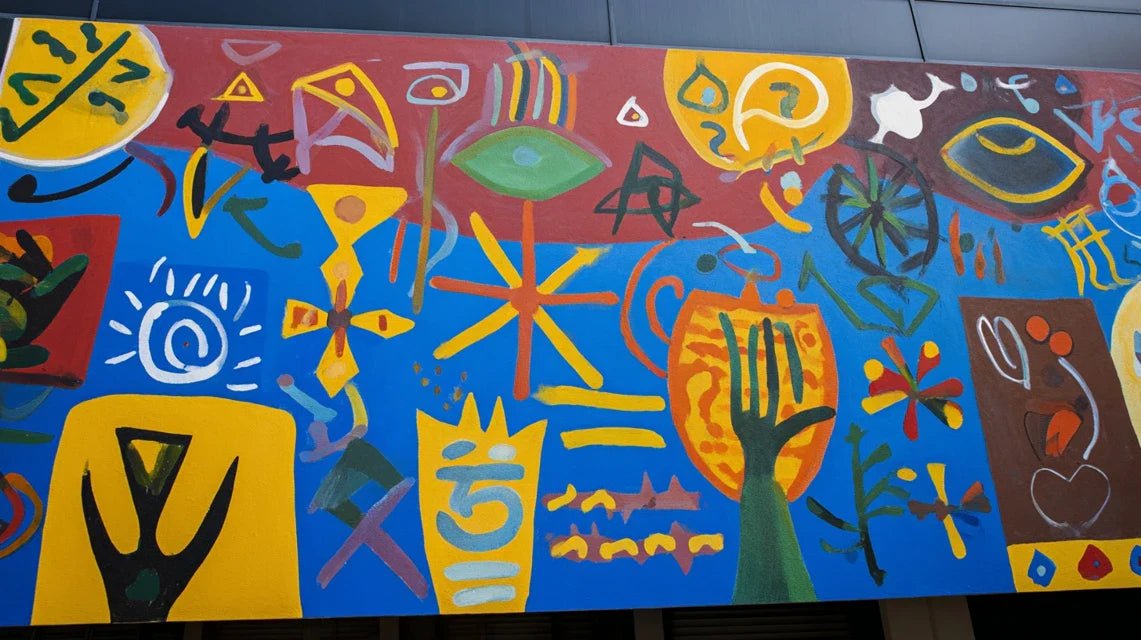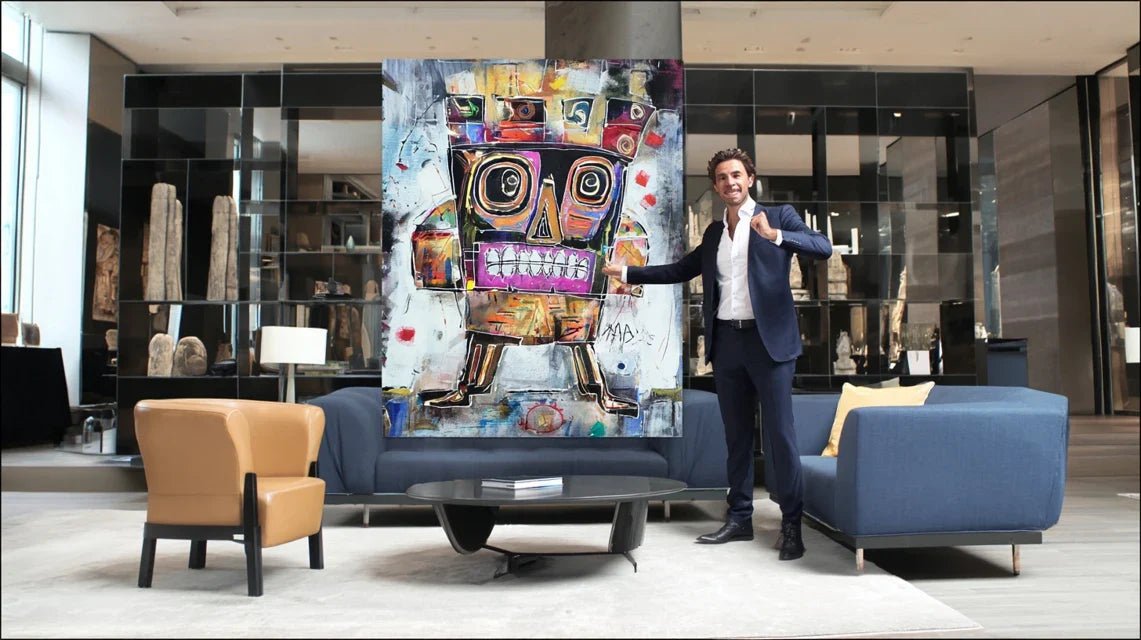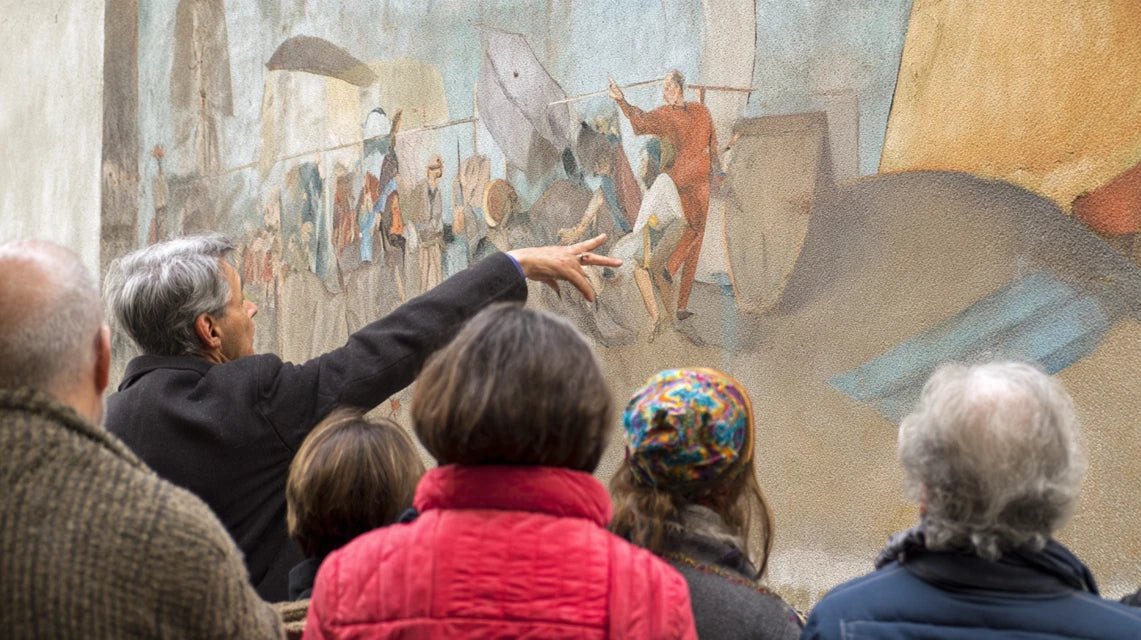
You look at your living room and something deeply bothers you. Despite all your decorative efforts, the space remains cold, impersonal, as if nothing really tells your story. Your guests admire politely but leave without being marked.
Walls seem silent, adorned with pretty but soulless decorations. You feel this gnawing frustration of living in a decor that doesn't look like you, where each element floats without connection to the others, without creating that unique atmosphere you seek so much.
You have tried matching frames, trendy colors, even consulted decorating magazines. But nothing works: your interior remains anonymous, lacking the emotional depth that transforms a house into a home.
This is perfectly normal, and it's not a lack of taste on your part. The problem comes from the fact that traditional decoration treats each element separately, without creating this narrative coherence that gives meaning to the whole.
In this article, you will discover how to transform your wall art into a true storyteller, creating a symbolic atmosphere that reveals your personality and leaves a lasting impression on your guests.
Why doesn't your current decor tell any story?
Narrative decoration is not just a passing trend - it's a deep need of the human being. Every day you spend in an environment devoid of symbols and stories, you deprive your mind of this emotional richness that nourishes the soul. It’s like living in a book with blank pages.
🎨 Revealing testimonial : Marie, interior architect, says: "I visited a magnificent penthouse with artworks worth €50,000, but I was bored. Then I discovered a small apartment with a wall art depicting a phoenix rising - every detail told the story of the owner's rebirth after her divorce. I spent two hours there, fascinated."
💬 Conversation with a decor expert
The golden rule of narrative decor: A single strong and symbolic piece is better than ten neutral decorations. It instantly creates a consistent atmosphere and will give you satisfaction for years, not months.
Why does your decor leave you so unsatisfied?
Do you recognize these situations? You regularly change your decor out of boredom, you always hesitate before inviting people to your home, or you feel that sense of emptiness despite an objectively beautiful interior.
This discomfort comes from the fact that your current decor only occupies space without emotionally transforming it. It's like wearing clothes that don't match your personality: technically correct, but they don’t flatter you.
Imagine your living room as a theater stage. Currently, you have neutral decors that could suit any room. But to create emotion, you need elements that tell your specific story.
The first hidden cause: Lack of symbolic anchoring
Contrary to what many think, it's not beauty that makes a wall art piece memorable, but its ability to evoke emotions and memories. A symbolic artwork acts as an emotional catalyst.
It’s like the difference between looking at a generic vacation photo and finding your personal travel journal. One is pretty, the other instantly transports you into your memories and emotions.
Without symbolic anchoring, your decor remains on the surface. It doesn't create that deep resonance which transforms a space into a personal sanctuary and makes your guests want to stay and return.
🧪 Quick test: Look at your main wall for 30 seconds. If no emotion, memory or personal story comes to mind, it’s missing that symbolic dimension which makes all the difference.
Many believe that you have to follow decor trends to have good taste. In reality, the most striking interiors are those that dare authenticity rather than aesthetic conformity.
It’s like choosing between wearing a custom-made suit or ready-to-wear: the first reveals your unique personality, the second makes you look like everyone else.
This fear of originality keeps you in an impersonal decor that doesn't reflect who you are. As a result: you never feel completely at home, even in your own living room.
The third cause: Misunderstanding of symbolic language
Few people realize that our brains naturally interpret symbols and visual stories. A well-designed wall art piece communicates before you consciously analyze it.
You can easily check this: observe how you feel differently in front of a mountain landscape (elevation, strength) versus a beach scene (relaxation, freedom). It's this subliminal communication that is missing from your current decor.
Without understanding this language, you choose decorative elements that don't "speak" to your subconscious, creating this feeling of disconnection with your space.
5 signs your decor lacks a story:
- You often change your mind about your decor: Sign that nothing creates a lasting emotional connection
- Your guests never ask questions about your decor: Indicator that nothing piques their curiosity
- You hesitate to show your interior on social media: Revealer of a lack of personal pride
- You feel a sense of emptiness despite a "full" interior: Symptom of an absence of narrative coherence
- You don't know how to describe your decor style: Proof that it lacks this strong visual identity
The trigger factor: The narrative focal element
What really makes the difference is having a focal element that tells a story and around which everything else naturally organizes. It's the domino effect: a well-chosen symbolic wall art influences all other decorative choices and creates an almost magical coherence.
Rule of the interior storyteller: A space without a strong story remains decorative but never becomes memorable. Start by identifying the message or emotion you want to convey, the rest will follow naturally.
| ❌ Traditional decor | ✅ Narrative decor | 💡 Why it works | 🎯 Perceived benefit |
|---|---|---|---|
| Accumulation of pretty elements | Coherent story with symbols | The brain loves structured narratives | Immediate feeling of home |
| Follows current trends | Expresses your authenticity | Being unique is more than being beautiful | Pride in hosting at home |
| Remains on a superficial aesthetic | Creates an emotional resonance | Emotion anchors memories | Durable attachment to the space |
| Requests frequent renewal | Evolves with your story | The symbolic transcends trends | Profitable decor investment |
How to create your storytelling wall art
Rest assured, creating a narrative decor is no more complicated than planting a garden. It's enough to understand the logic: first choose the story (the seeds), then select the symbols (the plants), and finally harmonize the whole (the arrangement). The final result will give you that deep satisfaction of having created something truly personal.
🗺️ Your roadmap in 3 steps: Identify your personal story (foundation), choose the appropriate visual symbols (structure), then harmonize the whole thing in your space (finishing). Each step brings its own satisfaction and gets you closer to that interior which finally resembles you.
Step 1: Identify Your Personal Story
Before thinking about colors and shapes, you must clarify the message you want to convey. It's like choosing the theme of a book before writing the chapters. This step is crucial because it will give meaning to all your future decorative choices.
What You Need for This Reflection:
- A personal reflection notebook: Choose a beautiful notebook that inspires you, not just a notepad. It will become your decor guide and deserves to be taken care of. Avoid digital applications which fragment the reflection - handwritten writing favors creativity.
- Meaningful photos from your journey: Gather 10-15 photos that summarize the key moments in your life. They will serve as emotional triggers to identify your personal symbols. Print quality is less important than emotional charge.
- An instinctive color palette: Note the colors you are naturally drawn to, without thinking about trends. These shades reveal your emotional signature and will guide your artistic choices.
Now, let's move on to discovering your story:
Your Personal Discovery Session
Identify Your Personal Transformation: Reflect on the period of your life when you changed or grew the most. This could be a move, a career change, an ordeal overcome. This transformation often contains the most powerful symbols for your decor because it represents your ability to evolve.
⏱️ Time: 20 minutes | ✅ Success when: You can summarize this transformation in a simple sentence | ⚠️ Attention: Don't necessarily choose the most recent event - sometimes the deepest changes date back several years
Define Your Visual Values: List 3 values that truly define you (not the ones you "should" have). For each value, find a visual symbol that evokes it naturally. For example: freedom could be represented by a bird, stability by a mountain, creativity by a labyrinth.
⏱️ Time: 15 minutes | ✅ Success when: Each value has its clear visual symbol | ⚠️ Attention: Avoid overly obvious or cliché symbols - look for what speaks to you personally
Create your decorative mission: Write in one sentence the emotion you want to make someone feel when they enter your living room. This sentence will be your compass for all future aesthetic choices.
⏱️ Time: 10 minutes | ✅ Success when: You have a sentence that moves you | ⚠️ Attention: Stay authentic - don't describe what you think you should feel, but what you really feel
✨ Validation of your narrative foundation: Your personal story is ready when you can explain in 2 minutes why this wall art resembles you. If you still hesitate, take a break and come back to it - this step conditions everything else.
OUR RECOMMENDED PRODUCTS
Step 2: Choose your visual symbols
Now that your story is clear, you are going to translate it visually. This step is more rewarding because you finally see your vision take concrete form. It's the moment when the abstract becomes tangible and when your personality reveals itself in colors and shapes.
Your visual translation tools:
- Thematic inspiration boards: Create physical mood boards (not digital) by cutting out images from magazines. The paper support allows you to manipulate and reorganize elements, stimulating creativity differently than a screen.
- Emotional color chart: Compile a palette of colors that evokes your target emotions. Each shade should resonate with your personal story. Avoid commercial color charts - create your own with fabric samples, paints, or natural elements.
- Personal symbol directory: Document the shapes, patterns and visual elements that have meaning for you. This directory will become your unique decorative language.
Your creative translation
Associate each element of your story with a visual symbol: For each aspect of your personal narrative, find a graphic element that represents it. Be creative - a winding path of life can become a river motif, a period of reconstruction can be expressed by a stylized phoenix.
⏱️ Time: 30 minutes | ✅ Success when: Your complete story has its visual translation | ⚠️ Attention: Don't limit yourself to classic symbols - invent your own visual codes
Prioritize your symbols: Identify the main element (60% of the visual impact), the secondary elements (30%) and the details (10%). This hierarchy will avoid visual overload and create a smooth reading of your wall art.
⏱️ Time: 15 minutes | ✅ Successful when: You have a clear structure | ⚠️ Warning: Resist the temptation to put everything on the same level - hierarchy creates readability
Test emotional consistency: Check that all your symbols together tell the same story. They should complement each other, not contradict each other. If an element clashes, adapt or replace it.
⏱️ Time: 10 minutes | ✅ Successful when: The whole forms a fluid narrative | ⚠️ Warning: A dissonant symbol can ruin the entire narration
🎨 Visual language validation: Your symbolism is complete when someone can guess your personality by looking at your selection. If it's too neutral or generic, deepen personalization.
Step 3: Harmonize in your space
This final step transforms your vision into a decorative reality. You will create that unique atmosphere you dreamed of, the one that makes your guests say "it's so you!" This is when your living room finally becomes an authentic reflection of your personality.
Your staging kit:
- Staging plan: Draw your main wall with the exact dimensions. This will avoid proportion errors and allow you to visualize the final impact. A simple sketch is enough, but it must be precise.
- Narrative lighting: Plan lighting that reveals your wall art at the right moments. Lighting can completely transform the emotional impact of your visual story.
- Harmony elements: Select 2-3 decorative objects that echo the colors or shapes of your artwork. They will create a narrative continuity throughout the room.
Your final staging
Position your wall art strategically: Choose the wall that people see first when entering. Your story should welcome and set the tone of the space. Avoid walls that are too cluttered or facing a window that is too bright.
⏱️ Time: 45 minutes | ✅ Successful when: The artwork naturally dialogues with the room | ⚠️ Warning: Don't sacrifice readability for originality - your story must remain accessible
Create decorative echoes: Arrange in the room elements that recall subtly your artwork without copying it. A cushion in a similar color, a plant that evokes the same feeling, an object that shares a shape.
⏱️ Time: 20 minutes | ✅ Successful when: The eye naturally circulates throughout the room | ⚠️ Warning: Too many echoes kill the echo - stay subtle
Adjust the overall atmosphere: Modify the lighting, reposition furniture if necessary so that everything converges towards your story. The goal is to create a consistent atmosphere where each element supports your narrative.
⏱️ Time: 30 minutes | ✅ Success when: You feel the ambiance as soon as you enter | ⚠️ Attention: Keep a visual resting area - not everything needs to be symbolic
🏠 Validation of your narrative atmosphere: Your space is successful when you enter and immediately feel that it's "home". If you still have doubts, invite a friend and observe their spontaneous reaction.
Narrative progression rule: Only move on to the next step when the previous one satisfies you emotionally. It's better to take the time to properly anchor each phase than to rush towards a disappointing result.
Congratulations! You now master the subtleties that separate simple decoration from a true narrative staging. These advanced techniques give you a considerable advantage: you know how to create emotion where others only decorate.
🎭 Technique of a master decorator: Create "pause points" in your visual narration - areas where the eye can rest between two strong symbolic elements. It is this breathing that allows the brain to process the story without being overwhelmed. Amateur decorators overload, experts know how to dose.
🤔 Frequent question from our readers
"I'm afraid that my wall art will be too personal and that my guests won't understand the story..."
This concern is very understandable, especially when stepping out of your decorative comfort zone. In reality, the universality of human emotions means that your personal story will resonate with your guests naturally, even if they don't grasp all the details. It's like listening to a song in a foreign language - you feel the emotion before understanding the words. Your guests will be more marked by an authentic artwork that tells your true story than by neutral decor that pleases everyone but marks no one.
💡 Social validation test: Invite a friend to discover your artwork and observe their spontaneous reaction. If they ask questions or make comments, it means your story works - it creates engagement.
The pitfalls to absolutely avoid in your narrative decoration
Beware, some mistakes can turn your good narrative intention into decorative confusion. These traps are tempting because they seem logical, but they sabotage the emotional impact of your story. Knowing these pitfalls will save you months of frustration.
- ⚠️ Wanting to explain everything visually: It's tempting to turn every detail of your story into a visible symbol. But as in a good book, what is not said is as important as what is shown. Leave room for interpretation and mystery - that’s what makes your decoration intriguing rather than explanatory.
- 🚫 Copying other people's symbols: Seeing a successful symbolic decoration on Instagram and wanting to reproduce the same elements. But symbols only have power if they resonate with your personal story. Otherwise, they remain pretty but lack meaning.
- 💔 Changing your story along the way: You start with an idea, then change it halfway through out of fear or boredom. This instability is felt in the final result, which lacks narrative coherence. It’s better to have a simple story well told than a complex story poorly finished.
- 🎭 Forcing symbols that don't speak to you: Choosing elements because they are "symbolically correct" according to books, even if they don't move you. Your personal feelings always take precedence over theoretical symbolism - it’s your authenticity that makes the whole thing vibrant.
- 📐 Neglecting narrative proportions: Giving as much visual importance to a detail as to the main element of your story. This error in hierarchy makes your story unreadable and fatigues the eye instead of guiding it.
🔍 Quick verification checklist: Your narrative decoration works if it passes the 30-second test (immediate impact), the question test (it sparks curiosity), the comfort test (you feel good in it) and the duration test (it doesn’t tire you out after several weeks).
🎁 Special reader offer
Because you took the time to inform yourself, enjoy 10% discount on your first order:
⏰ Valid for 72h after reading • Applicable to all our products
Your questions about narrative decoration
Allow 2-3 weeks for a finished creation: one week to identify your story and symbols, one week for design or selection, and a few days for installation and adjustments. Don’t rush the reflection phase - it conditions everything else. To optimize, work in 30-minute daily sessions rather than long spaced sessions.
A symbolic wall art piece costs between €200 and €800 depending on the size and technique, but the investment is worthwhile as it doesn't go out of style like trendy decor. Allow an additional 20% for suitable lighting and decorative echoes. The long-term savings are considerable: no more frequent redecorating due to boredom.
Your decorative transformation awaits
In a few weeks, you will enter your living room and feel that deep satisfaction of finally being at home. Your guests will no longer leave with a simple "it's pretty" but with questions, personalized compliments, and the desire to return to this space that tells a story. Your wall art will have become the silent narrator of your personality.
This transformation goes beyond mere decoration. By learning to tell your story visually, you develop a new form of personal expression. This creative confidence will ripple into other aspects of your life - you'll more easily dare to express your authenticity, whether in your clothing style, professional projects or relationships.
The most difficult part was understanding the mechanics of narrative decoration. Now that you master these codes, all you have to do is take action. Start today by identifying your personal story - take this notebook, these photos, and give yourself 30 minutes of reflection that will change your relationship with your interior.
✨ Your new decorative chapter begins now: You have all the keys to create a space that finally resembles you. Trust yourself - your personal story is unique and deserves to be told with pride!