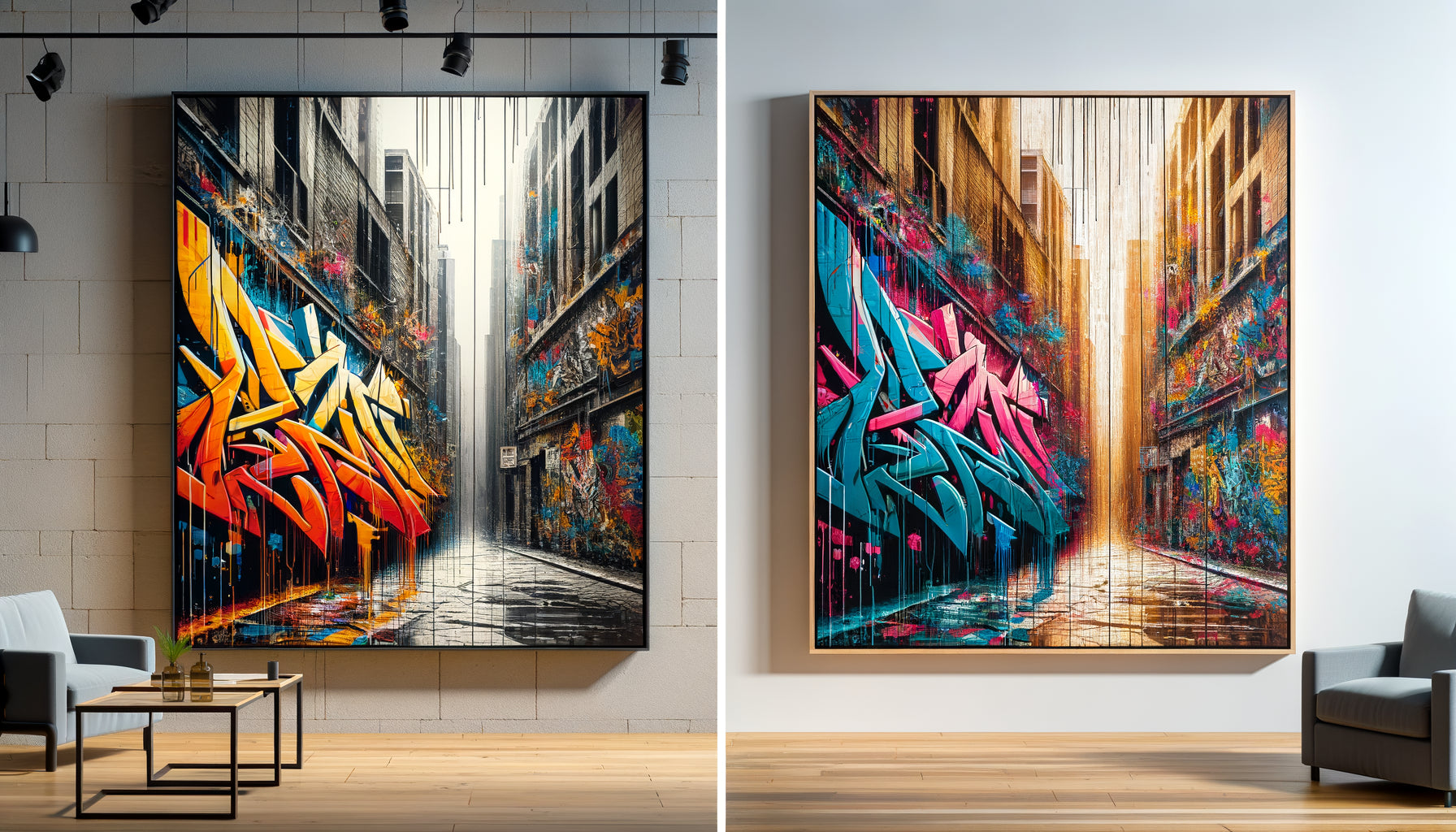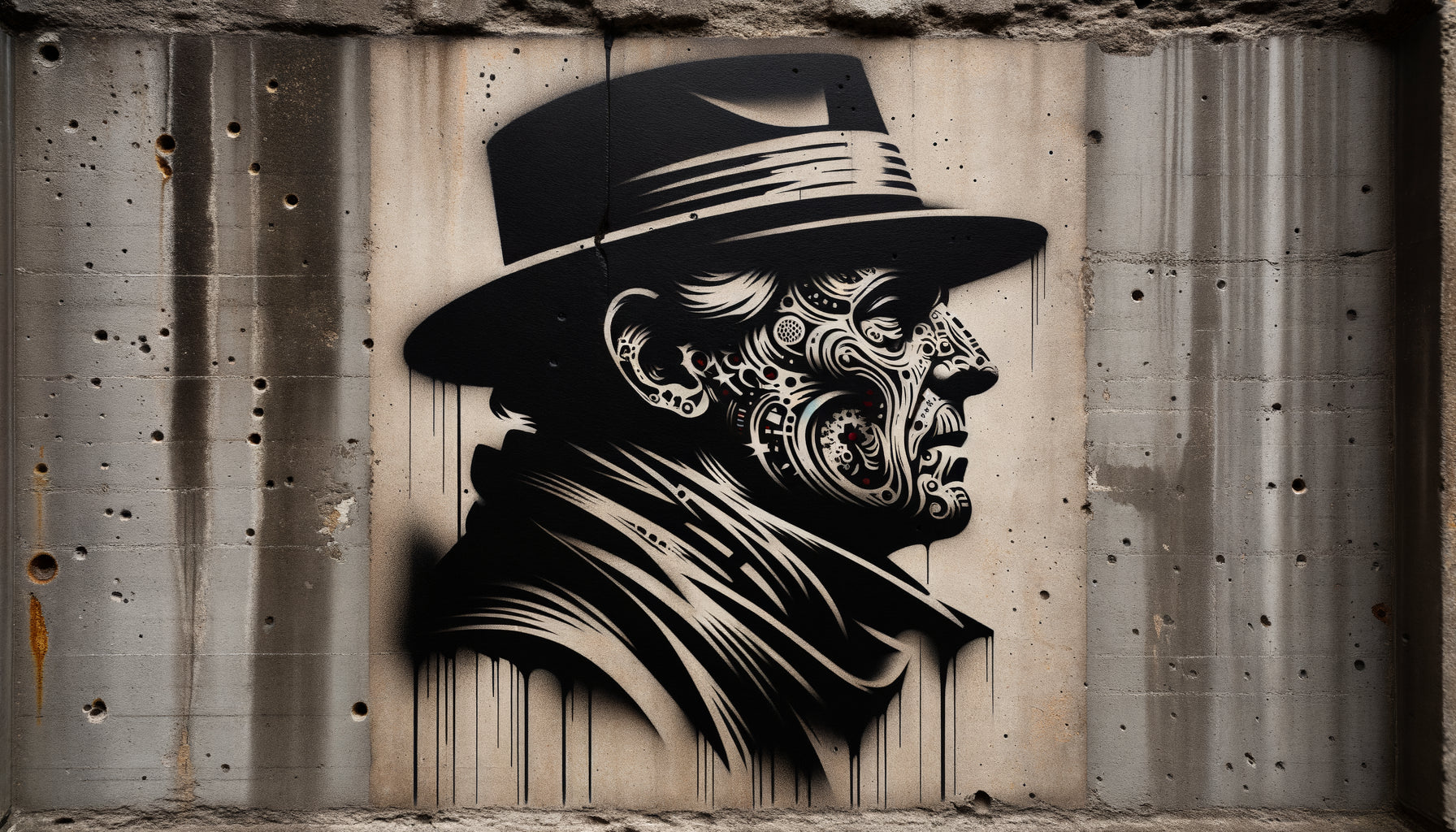
I almost bought it. This magnificent Banksy, with its characteristic signature, at a price that was almost too good to be true. Three days before transferring the €8,000, something caught my eye: the ink of the signature shone under UV light in a... strange way. I consulted an expert. Fake. A skillful reproduction sold as original. This experience has changed my approach to collecting street art.
Here's what authenticity verification for a wall art street art brings: the certainty of investing in a legitimate work, protection of your artistic heritage, and peace of mind knowing that your piece has real historical value. In a market where some works resell for ten times their initial price, authentication becomes your best insurance.
The problem? Street art was born illegally, without certificates or galleries. How do you authenticate a wall art street art when the artist themselves cultivates anonymity? How do you distinguish an authentic signature from a perfect copy? You're afraid of being scammed, and you’re right: the market is full of sophisticated forgeries.
But there are proven methods. Concrete clues. Experts capable of deciphering what your eyes cannot see. I will show you exactly how to verify the authenticity of a wall art street signed, step by step, with the techniques I have used for fifteen years in this fascinating and sometimes murky field.
The signature is never enough: the mistake of beginners
This is the first lesson I teach: a signature is not proof of authenticity. It's even the easiest element to forge. I have seen counterfeiters reproduce Shepard Fairey’s signature with disturbing precision, down to the characteristic imperfections.
To verify a wall art street art signed, first examine the signature style. Artists develop automatic gestures, specific pressures. Banksy, for example, uses a stencil for his signature on some screen prints, creating sharp edges impossible to reproduce freehand. Other artists like JR integrate their signature into the composition itself.
Photograph the signature from multiple angles and lights. Compare it with authenticated signatures available in raisonné catalogs or on official websites. Look for variations: a counterfeiter copies a specific signature, while an artist presents natural variations according to the era and support.
Beware of too perfect signatures. It's paradoxical, but a mechanically appearing signature often betrays a copy made with a projection or tracing system. The authenticity of a wall art street art lies in these micro-irregularities that only a repeated human gesture creates.
The Certificate of Authenticity: Your First Line of Defense
No serious street art painting should be sold without a certificate of authenticity. It's the document that transforms a work into a protected investment. But beware: certificates themselves can be forged.
A legitimate certificate of authenticity contains specific elements: edition number for silkscreens, detailed description of the artwork, exact dimensions, technique used, year of creation. It must be signed by the artist, their official studio, or a recognized organization such as Pest Control Office for Banksy.
Always check the issuing organization. Contact them directly with the certificate's serial number. Official studios maintain databases. For established artists, foundations or archives manage authentication: the Authentication Board for some, representing galleries for others.
I’ve developed a habit: photographing the certificate and doing a reverse image search. Forgers sometimes reuse the same scanned certificates. If you find the same document associated with another artwork online, run.
Holograms and Security Markings
Since 2010, many street artists have integrated security holograms on their certificates. Shepard Fairey uses a specific hologram with his OBEY logo. These elements are expensive to reproduce and change appearance depending on the viewing angle.
Some artists go further: UV inks invisible to the naked eye, custom watermarks, QR codes leading to secure databases. Invader, for example, has developed a system of points assigned to each work, verifiable on his FlashInvaders application.

Provenance: Tracing the History of Your Painting
The authenticity of a street art painting is built on its provenance. Where does it come from? Who owned it? How did it get to market? These questions are crucial.
Always ask for the complete history. A legitimate work possesses a documented chain of ownership: original purchase invoice, transfer certificates, possibly photos of the artwork in previous exhibitions or collections. For works torn directly from walls (which raises ethical issues), there are sometimes photographic evidence of the artwork in situ.
Reputable galleries maintain detailed records. When I buy a piece of street art, I demand not only the current invoice but also proof of initial purchase. If the seller claims to have purchased the work directly from the artist, request evidence: correspondence, photos of the transaction, receipt.
Be wary of vague stories: 'inherited from a collector uncle' or 'bought on a trip twenty years ago'. Without documentation, these accounts are worthless. Authenticity requires tangible proof.
Technical analysis: when science meets street art
For works of great value, scientific expertise becomes essential. I had three paintings in my collection analyzed, and each time the results revealed information invisible to the naked eye.
Examination under UV light reveals retouching, repainting, signatures added later. Inks and paints fluoresce differently depending on their chemical composition. An authentic signature executed at the same time as the work presents a fluorescence consistent with the rest.
Infrared photography penetrates the surface layers of paint, revealing preparatory sketches, pentimenti (artist's regrets), construction techniques. A forger who reproduces an existing work does not perform these preparatory steps.
For silkscreens, microscopic analysis reveals the characteristic mesh. Each workshop uses screens with a specific density of threads. Even sophisticated digital prints show different microscopic dots. I discovered that a supposed Obey was actually an inkjet print thanks to this technique.
Dating materials
Some laboratories offer dating of supports and pigments. If a seller claims that their street art painting dates from 2005, but the analysis reveals paper manufactured in 2015, the deception is obvious. This technique remains expensive, but for a work worth five figures, it represents a valuable insurance.

Consult experts and official databases
You can't know everything. Even after fifteen years, I regularly consult experts to verify the authenticity of a piece of street art. It is a matter of humility and protection.
Each major artist now has their own authentication network. The Pest Control Office for Banksy remains the most well-known: they are the only ones authorized to authenticate his works. Without their certificate, a Banksy officially has no value. They receive thousands of requests and reject the majority: most alleged Banksys are fakes.
For other artists, identify their official representative gallery. Shepard Fairey works with Subliminal Projects. Os Gemeos have representatives in São Paulo and New York. These galleries maintain archives and can confirm whether a work is referenced in their catalog.
Auction houses also employ experts. Artcurial, Sotheby's and Christie's have developed street art departments with specialists capable of assessing authenticity. Their online catalogs are valuable databases for comparing your piece with authenticated works.
Red flags: when to walk away immediately
Fifteen years of experience have taught me how to recognize warning signs. Certain elements should make you renounce an acquisition immediately, regardless of the beauty of the street art painting.
Abnormally low price : if it's too good to be true, it's probably fake. An authentic Banksy never sells for 2000 euros. An original Miss.Tic does not cost 300 euros. Check market prices on Artprice or recent auction results.
Evasive seller : refusal to provide provenance, inability to see the work physically, pressure to conclude quickly ('another buyer is interested'), communication only by encrypted messaging. Authenticity is verified through transparency.
Insufficient documentation : absence of certificate for a recent work, blurry photocopy of an authentication document, impossibility of contacting the issuing organization. A legitimate seller has all the documents and accepts that you verify them.
Stylistic inconsistencies : even without being an expert, your intuition sometimes detects anomalies. If something seems strange to you in the style, technique or colors, investigate. I avoided several scams simply by listening to that little voice that told me 'this is not normal'.
Ready to collect urban art with confidence?
Discover our exclusive collection of Street art paintings that will transform your walls with works selected and documented for their authenticity.
Your collection deserves peace of mind
Verifying the authenticity of a signed street art painting is not a waste of time, it's an investment. It's the difference between owning a work that will increase in value and hanging a reproduction with no future on your wall.
Imagine in ten years, reselling the piece you bought today. All documents are in order, the provenance is clear, and the appraisal has been carried out by recognized professionals. You're not just selling a painting; you're passing on a verifiable story, a documented heritage. That’s what authentication offers you.
Start today: if you already own street art pieces, check their documentation. Contact authentication organizations. Have appraisals done for important pieces. And for your future purchases, systematically apply these checks. Your collection will thank you.
Street art deserves the same respect and rigor as traditional art. By verifying the authenticity of each street art painting, you protect not only your investment but also the integrity of an artistic movement that has revolutionized our relationship with creation.