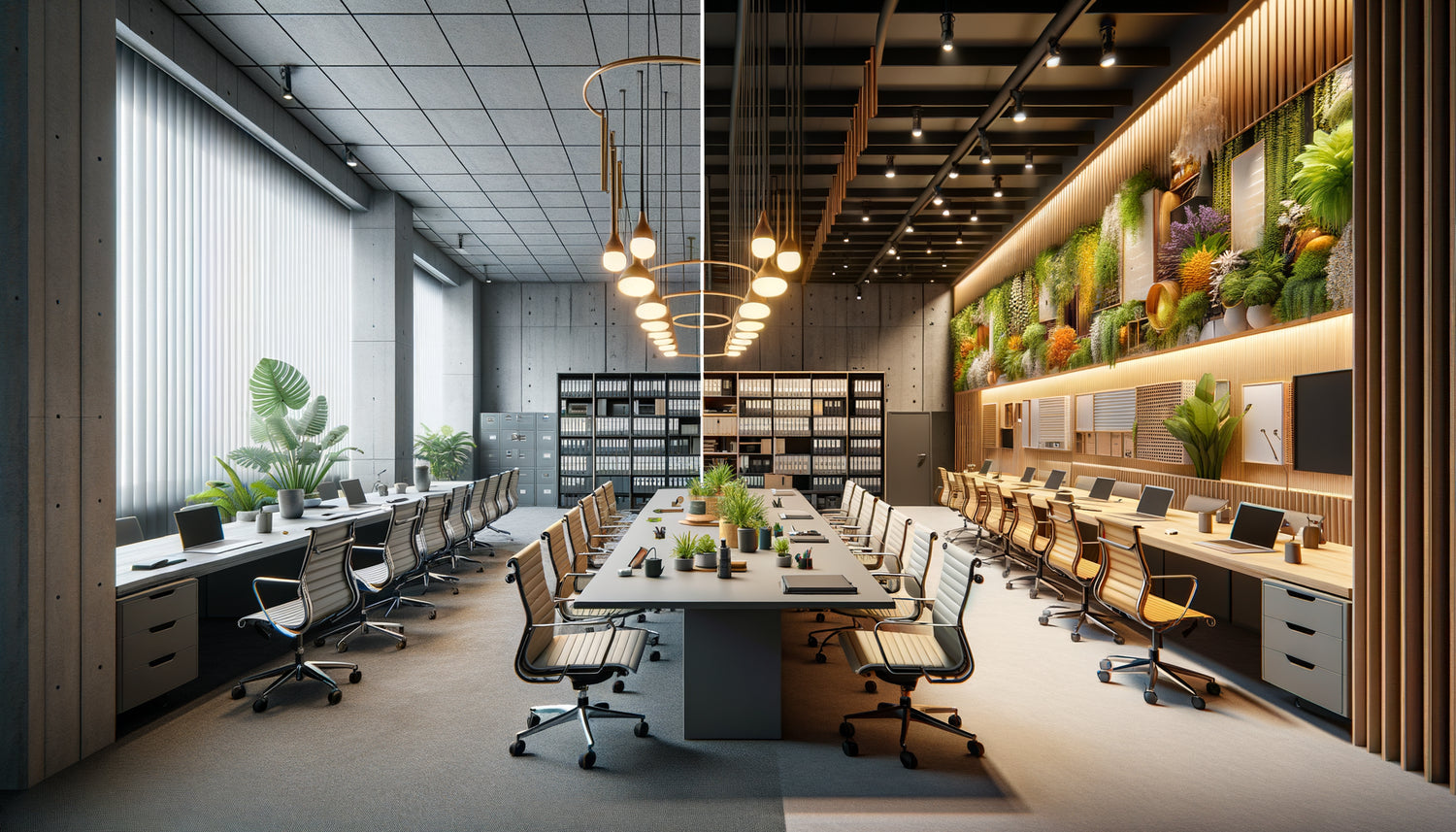
I still remember that meeting room where I had my first interview in the 2000s: mouse-grey walls, Formica table, uncomfortable chairs and this neon lighting that gave everyone a cadaverous complexion. Fifteen years later, I redesigned that space into a place of creativity with green walls, modular furniture and natural light. The metamorphosis was total.
Here's what the evolution of meeting room decor brings today: spaces that stimulate creativity rather than lull you to sleep, that foster authentic collaboration rather than rigid hierarchy, and that reflect a living corporate culture rather than a cold corporate image.
For decades, all meeting rooms looked like administrative bunkers. You knew this frustration: sitting in these sterile spaces that killed inspiration before the meeting even began. This stifling uniformity where every company reproduced the same scheme: neutrality, impersonality, supposed efficiency.
But those days are gone. Companies have realized that an inspiring environment is not a luxury, it's an investment in collective performance. And this transformation of meeting room decor tells the story of a profound cultural change that I have had the chance to witness project after project.
The era of grey offices: when conformity reigned supreme
The 1980s to 2000s imposed a unique model for meeting room decor. I found in my archives photos of these spaces: neutral color palettes (beige, grey, off-white), standardized dark melamine furniture, and this obsession with perfect symmetry. Everything had to be ordered, predictable, controlled.
This approach reflected a hierarchical view of work. The meeting room was a place of power where presentations were made, decisions were reached, and validations took place. Not a space for co-creation. The design had to be serious, sober, almost austere to inspire respect and concentration.
The preferred materials? Faux wood, durable synthetic fabrics, easy-to-clean linoleum. Durability was prioritized over aesthetics. Walls were bare or adorned with a single generic painting – often a seascape or an inoffensive abstraction. Nothing that could distract or, worse, divide.
The Silicon Valley turning point: when color enters meetings
Everything changed in the mid-2000s. California technology giants revolutionized meeting room decor by injecting personality into them. I visited several of these campuses and the impact was striking: themed rooms with creative names, bold color palettes, playful furniture.
This transformation was not superficial. It translated a new relationship to work: less formality, more horizontal collaboration, encouragement of creativity. Meeting rooms have become living spaces where you spend time, not interrogation rooms.
European companies have gradually adopted these codes. I accompanied this transition: introduction of colorful ergonomic chairs, replacing large rectangular tables with modular configurations, integrating natural elements such as plants. Decorating meeting rooms became a tool for employer branding.
Color palettes are freed
White walls have given way to strategic colors. Blue to stimulate concentration, green to soothe, yellow to energize brainstorming sessions. I learned to compose atmospheres according to the function of each space: vibrant creativity rooms, more subdued negotiation areas, elegant presentation zones.

The era of well-being: when humans take back control
Since 2015, a third wave has transformed the decoration of meeting rooms. It places physiological and psychological comfort at the heart of concerns. Companies have realized that a productive meeting requires an environment that supports body and mind.
I now systematically integrate: adaptive lighting mimicking natural light, refined acoustics with design sound-absorbing panels, optimized air quality, truly ergonomic furniture. Decorating meeting rooms becomes an applied science serving collective performance.
Materials are radically evolving. Out with synthetic materials and plastic: make way for natural wood, durable textiles, artisanal finishes. Companies want authenticity, warmth, a connection to ecological values. This materiality creates a completely different atmosphere.
Nature enters meetings
Biophilia revolutionizes the decoration of meeting rooms. Living walls, hanging plants, organic materials: nature is no longer decorative, it is functional. Studies show a reduction in stress and an improvement in creativity in these vegetated spaces that I now design as bubbles of rejuvenation.
The hybrid revolution: chameleon spaces
The pandemic accelerated a transformation that was already underway. Meeting rooms now need to serve hybrid uses: teams present physically and participants remotely. This technical constraint has revolutionized the decoration of meeting rooms.
I am now working on the invisible integration of technology: retractable screens, design suspended microphones, concealed wiring in furniture. The challenge is to preserve aesthetics while optimizing functionality. Rooms are becoming sophisticated studios where the background is as important as the comfort of occupants.
Acoustics are taking crucial importance. Wall coverings become strategic: colored felt panels, perforated wood, stretched textiles. These technical solutions appear as decorative elements in their own right, creating graphic compositions that structure the space.

Art as a lever for identity and inspiration
The major revolution in the decoration of meeting rooms is the arrival of art as a strategic component. Gone are the faded and conventional reproductions. Companies invest in works that tell their story, their values, their ambition.
I have observed the spectacular impact of a well-chosen artwork on the atmosphere of a meeting. It becomes a starting point for conversations, a source of inspiration, an element of pride. Collaborators photograph these spaces, share them, and identify with them. The decoration of meeting rooms becomes a tool for corporate culture.
Formats are evolving: abstract paintings to stimulate imagination, inspiring photographs that open perspectives, motivating typography that affirms values. Each room develops its own personality through its artistic choices.
From generic to bespoke
Companies are now fleeing standardized solutions. They want unique creations, sometimes commissioned from local artists, that reflect their singularity. This personalization of the decoration of meeting rooms creates memorable spaces that impress visitors and collaborators.
What is the meeting room of tomorrow evolving towards?
The emerging trends I identify in my latest projects: extreme modularity with mobile partitions and transformable furniture, integration of informal areas (coffee corner, lounge seating), strong personalization according to user teams.
Meeting room decor becomes adaptive and evolving. Companies want to be able to quickly transform these spaces according to their needs: theater configuration for a presentation, pods for a workshop, grand U for a negotiation. The design must allow this flexibility without sacrificing aesthetics.
Environmental commitment intensifies. Recycled materials, renovated used furniture, LED lighting, air-purifying plants: sustainable decor is no longer an option. New generations demand this consistency between words and actions.
Technology continues its integration: augmented reality to visualize concepts, sensors automatically adjusting light and temperature, interactive surfaces. But always with this requirement: that technology serves humans without imposing itself visually.
Transform your meeting rooms into inspiring spaces
Discover our exclusive collection of wall art for Meeting Room that inspire creativity and character in your professional spaces.
Conclusion: the meeting room, a reflection of a culture
The evolution of meeting room decor tells more than just a design story. It testifies to a profound transformation of our relationship with work: from control to trust, from hierarchy to collaboration, from uniformity to authenticity.
These spaces that I design today have nothing in common with the gray bunkers of yesteryear. They are living, inspiring, human. They tell teams: your creativity counts, your comfort is a priority, your well-being matters to us.
Look at your current meeting rooms. What do they say about your culture? If the answer does not satisfy you, remember: every transformation begins with a decision. Yours can start today, with a simple addition that changes everything.