


Do Mountain Paintings Symbolize Challenges and Goals?
November 3, 2025 · 7 min read · by Walensky
This morning again, I saw this executive fix his gaze on the alpine photograph hanging opposite his desk. His associate confided in me that before each strategic decision, he contemplates this snow-capped peak for a few seconds. Coincidence? I no longer believe in coincidences after fifteen years spent composing spaces where decisions weighing millions are made.
Here's what mountain paintings bring to your professional space: a permanent visual metaphor of surpassing that anchors your goals in reality, a source of collective inspiration that unites teams around a shared vision, and a daily reminder that every great achievement begins with a first step.
Too many workplaces resemble empty shells. White walls. Abstract canvases chosen by default. No breath. No intention. Yet, you spend hours defining your company's vision, your values, your ambitions. Why don’t these convictions reflect in the environment that shapes your daily life?
I understand this hesitation. You fear the motivational cliché, the office poster that makes you smile. But there is an abyssal difference between a banal image accompanied by a hollow quote and a photographic or pictorial work that carries a true symbolic charge. A mountain is never just a mountain when it inhabits the space where you build your future.
In the lines that follow, you will discover why alpine representations resonate so deeply with our professional aspirations, how to choose a work that amplifies your goals rather than decorating them, and how to transform a simple painting into a performance catalyst for your teams.
When verticality becomes language
Mountains speak a universal language that our brain decodes instantly. This affirmed verticality, these lines rising towards the sky, this upward movement frozen in matter: everything in their graphic composition naturally evokes elevation, progression, surpassing.
I accompanied a technology start-up during its move to new premises. The founder wanted to mark this symbolic milestone. We installed in the main meeting room a photographic triptych representing the progressive ascent of Mont Blanc: base camp at dusk, rocky ridge in the morning mist, summit bathed in golden light. Each mountain painting corresponded to a phase of development of the company.
Six months later, he told me that during moments of doubt, teams referred to « the rocky ridge » to describe difficult but necessary passages. The painting had become a common reference point, a shared visual vocabulary for naming challenges without dramatizing them.
The psychological effect of perspective
Representations of mountains play with our perception of space and time. A distant peak seems both close and inaccessible. This spatial ambiguity perfectly reflects the nature of our goals: visible but requiring effort and strategy.
A sales director explained to me how a large-format alpine print installed facing her team's offices changed their relationship with goals. "Before, the figures seemed overwhelming. Now, when I look at this slope rising in successive tiers, I see our strategy: intermediate steps, base camps, moments to catch your breath."
The mountain as a mirror of collective challenges
No mountaineer climbs a peak alone. Rope team, equipment, preparation, mutual trust: the mountain is fundamentally a collective adventure. This is precisely what makes it such a powerful symbol for shared professional spaces.
In a creative communication agency, I observed a fascinating phenomenon. The artwork depicting a rope team progressing towards a snowy pass had become an informal gathering place for the team. Difficult brainstorming sessions often took place standing up, around a coffee, facing this image. As if the visual representation of collective effort freed speech, legitimized difficulties, and reminded that the journey counts as much as the summit.
Mountain artworks carry this ancestral memory of shared effort. They symbolize interdependence, complementarity of skills, the need to work together in the face of adversity. In an open space where everyone could retreat behind their screen, these works visibly maintain a common horizon.
Choose the angle that resonates with your culture
Not all mountain artworks carry the same message. A view from the summit expresses accomplishment, a panoramic vision of the journey taken. A steep slope evokes the immediate challenge, the effort to be made. A mountain range on the horizon speaks of long-term ambition, a course to maintain.
A strategy consulting firm chose a minimalist representation: a black ridge line on a white background, almost abstract. "Our clients come to us when they need to chart a path through uncertainty," explained the principal associate. “This crest is the clarity we bring them. The white space is all the possibilities.”

The visual codes that transform a decor into a tool
After hundreds of projects, I have identified the visual elements that differentiate a simple decorative painting from a true strategic resource for an organization.
Light first. A mountain bathed in golden light conveys a message of optimism, reward after effort. A hazy atmosphere evokes perseverance in uncertainty. A summit at dusk recalls that each day offers a new attempt. Choose the luminous ambiance that resonates with your company's philosophy.
Then scale. A monumental work that occupies an entire wall transforms the mountain into an immersive presence. A more intimate format creates a point of personal contemplation. In a board room, I saw a large-format alpine painting literally change the tone of discussions: discussions became calmer, more strategic, as if the painting naturally imposed a sense of perspective.
Photography or painting: two distinct languages
Alpine photography offers documentary precision that anchors the symbol in reality. "This summit really exists, human beings have really climbed it": this authenticity reinforces the credibility of the motivational message.
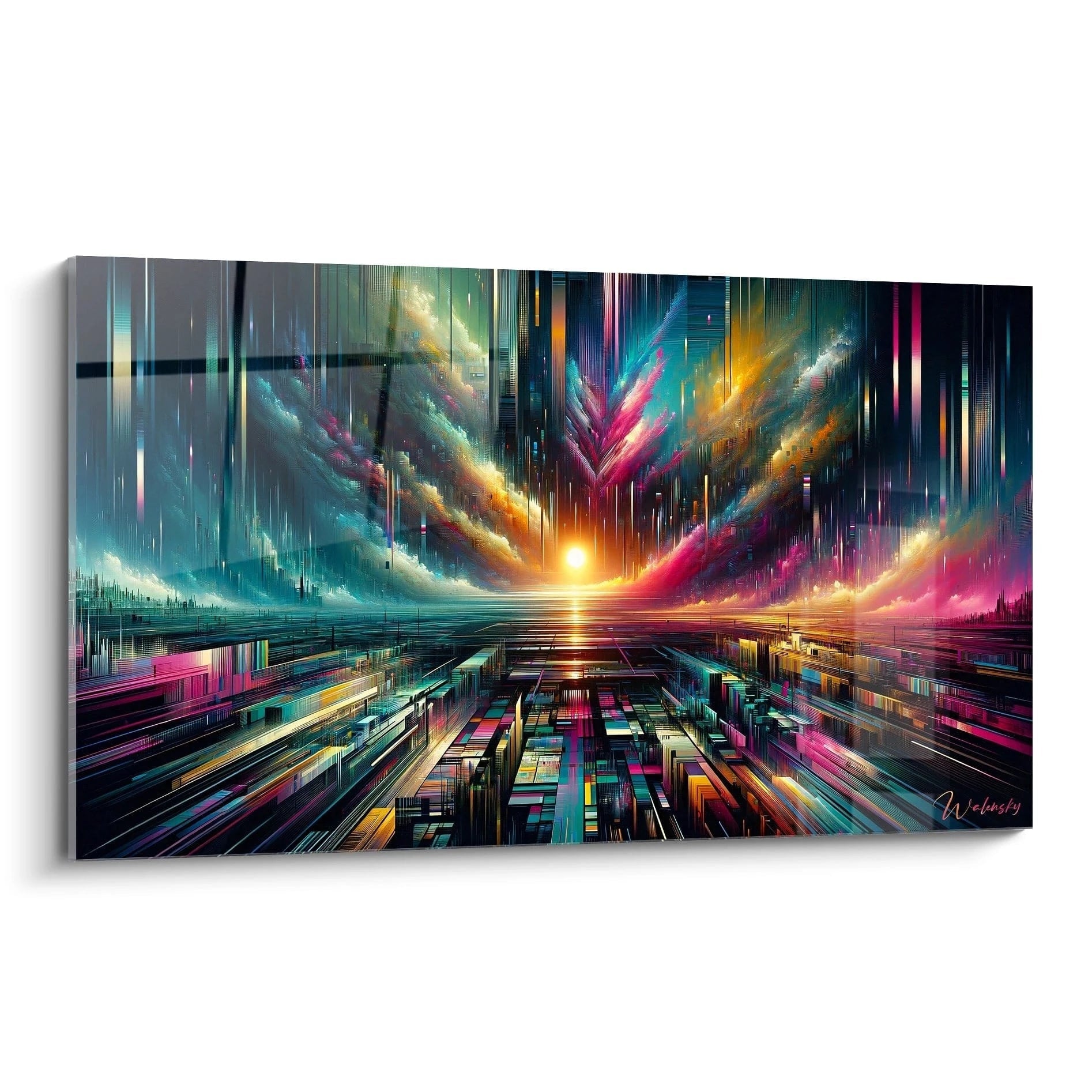
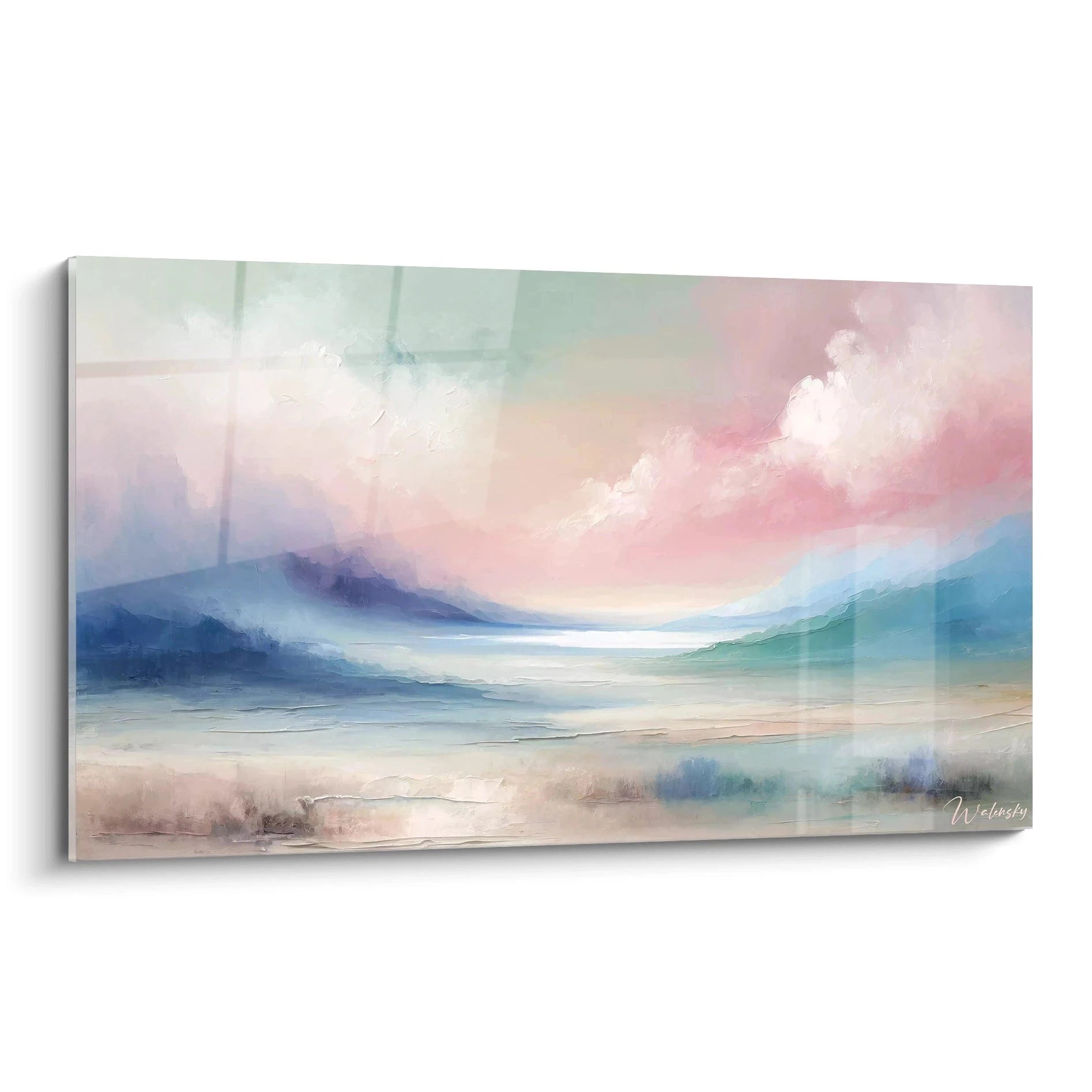
Painting, on the other hand, allows for a more personal interpretation. Expressionistic brushstrokes, intensified colors, the visible texture of the pictorial material add an emotional dimension, almost dreamlike. I installed an oil painting with turquoise and gold hues depicting an imaginary mountain range in a design agency. The creative director told me: "We don't sell realism, we sell visions. This unreal mountain is exactly what we do: make tangible what does not yet exist."
— Our selection


When alpine art becomes a team ritual
The most successful organizations I have accompanied do not simply hang a painting: they give it a function, a role in their collective rituals.
An asset management company organizes its quarterly retrospectives facing the large alpine panorama of their meeting room. The CEO opens each session by asking: "Where are we on this mountain?" Teams locate their progress, identify visible obstacles, anticipate upcoming technical passages. The mountain painting literally structures their strategic thinking.
A pharmaceutical company has established a more intimate ritual: each employee who achieves a major goal is photographed in front of the alpine painting in the entrance hall. These photos gradually compose a wall of successes. The mountain becomes witness to individual achievements that build collective success.
Strategic placement: where the eyes rest
The placement of a mountain artwork determines its impact. Facing the entrance, it sets the tone from the moment you step inside. In a meeting room, it becomes a common visual reference during discussions. In a break area, it offers a moment of mental relaxation between intense tasks.
I've noticed that a artwork placed in the field of vision during difficult phone conversations acts as an emotional anchor. A negotiator confided to me that she instinctively looked at the snowy peak facing her desk during tense calls: “It reminds me to keep the big picture in mind, not to get lost in the details along the way.”

— You may also like


Beyond the symbol: the energy of a space
Mountains carry a particular energetic charge. Their powerful geometric shapes, their immutable mineral presence, their terrestrial anchoring counterbalance the increasing immateriality of modern work. In a world of volatile data and shifting goals, they remind us that there are solid realities, fixed reference points.
A digital entrepreneur explained to me why he had chosen a mountainous triptych for his office: “My sector changes every quarter. Technologies, competitors, economic models: everything is fluid. I needed something immutable. These peaks have existed for millennia and will be there in a thousand years. It puts my daily urgencies into perspective while strengthening my determination over the long term.”
This dialectic between permanence and movement, between stability and ascent, makes mountain artworks paradoxical objects particularly suited to contemporary professional environments. They symbolize both ambition (going up) and wisdom (some things do not change).
Ready to give your goals the visual presence they deserve?
Discover our exclusive collection of artwork for Meeting Room that transform your decision-making spaces into catalysts for collective performance.

Your summit starts today
The next time you enter your workspace, imagine for a moment this large-format alpine scene on that wall waiting. Visualize your team gathered for a strategic meeting, the eyes naturally rising to these peaks, the conversation taking on new heights.
Mountain paintings don't decorate your ambitions: they make them visible, shared, tangible. They transform abstract goals into daily presence. They turn collective challenges into an adventure where everyone knows the summit aimed for.
Start by identifying the message you want to anchor in your environment. Perseverance? Long-term vision? Collective strength? Self-improvement? Then look for the work whose composition, light, atmosphere naturally carries this message. No need for an explanatory legend: a well-chosen mountain speaks for itself to everyone who enters the room.
Your next big decision deserves to be made facing a horizon that reminds you why you started the ascent.


