

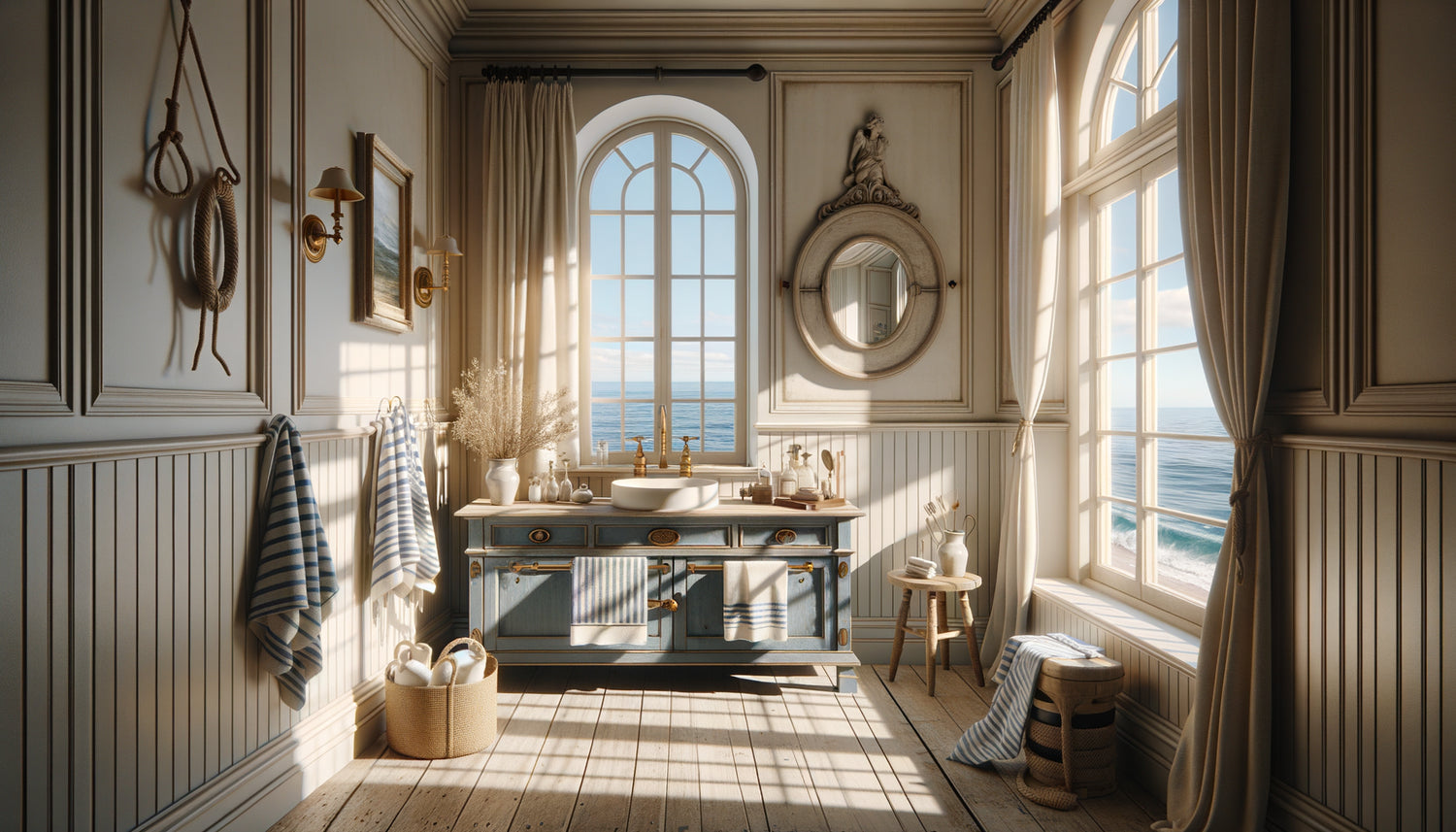
The scent of salt, the lapping of waves on the bleached wood of cabins, the pearlescent light of morning on the sand… For over a century, French seaside resorts have shaped our vision of beauty and well-being. And if I told you that these emotions, these unique atmospheres naturally invited themselves into our most intimate interiors? The French coastal culture has profoundly transformed the aesthetics of bathrooms, far beyond a simple decorative trend. Here's what this influence brings: a feeling of daily escape, a soothing brightness that transforms routine into ritual, and timeless elegance that transcends trends without ever aging. Perhaps you feel this frustration: your bathroom lacks soul, it looks like all the others, functional but without character. Rest assured, this quest for an atmosphere that is both relaxing and sophisticated is universal. I'm going to show you how the tradition of French seaside baths has created a unique aesthetic vocabulary, and how you can adopt it to transform your space.
Aristocratic origins: when the sea becomes luxury therapy
It all begins in the mid-19th century, when doctors prescribe sea baths as a miracle cure for nervous ailments of the aristocracy. Deauville, Biarritz, La Baule become resort destinations where one does not come only for health, but to display social status. Bath establishments multiply, veritable temples dedicated to the cult of the body and water. These places revolutionize the approach to bathing: it is no longer simply a matter of hygiene, but a complete sensory experience. The architecture of these maritime pavilions – with their white facades enhanced with navy blue, their large bay windows capturing maritime light, their raw wood cabins – lays the foundations of a coastal aesthetic instantly recognizable. This relaxed elegance, this luxury that wants to be natural, will gradually contaminate the layout of bourgeois bathrooms, then democratize throughout the 20th century.
The color palette of the coast: blue, white and natural
French seaside culture has imposed a readily identifiable colorful signature in our bathrooms. The bright white, omnipresent, recalls fine sand, the foam of waves, beach cabins freshly repainted each spring. It is not the clinical white of hospital spaces, but a warm white, sometimes broken with beige or pearl gray, which reflects light without aggression. Blue is available in all its marine shades: from deep ocean blue to the turquoise of seawater pools, through the horizon blue that blends with the sky. These tones create a soothing atmosphere scientifically proven to reduce stress. Natural materials complement this palette: bleached wood evokes pontoons and wave-sculpted breakwaters, rattan recalls armchairs on terraces facing the sea, pebbles polished by waves become decorative elements or shower mats. This chromatic harmony transforms the bathroom into a soothing refuge, a bubble of serenity where each morning becomes a mental escape to the coast.

The architecture of light: the quest for maritime clarity
French seaside resorts have developed an architectural obsession: to capture, diffuse, and magnify the particular maritime light. This light reflected by water and sand has a unique quality, soft but energizing. The influence of this search for light on the aesthetics of bathrooms is considerable. Designers multiply reflective surfaces: subway tile with white grout that multiplies brightness, oversized mirrors that create an impression of infinite space, chrome faucets that play with reflections like waves with the sun. Interior skylights, inspired by the bow-windows of seaside villas, allow natural light to circulate freely. Even in windowless spaces, lighting is designed to recreate this particular quality: color temperature close to daylight, multiple and indirect sources, variable intensity to accompany different times of the day. This attention to light is not just aesthetic: it influences our mood, our energy, our physiological well-being. Seaside culture has taught us that bathing is not only about water, but also about light.
The ritual of the bath: from the beach cabin to the home spa
Seaside bathrooms have created a fascinating transition ritual: one enters in one state, and exits transformed. This airlock between the everyday and the extraordinary has profoundly influenced our conception of the modern bathroom. Contemporary design incorporates this notion of transitional, almost sacred space. Entering the bathroom becomes a symbolic passage: crossing the threshold of stress to enter a bubble of well-being. Spa resorts in coastal areas, with their aquatic courses and relaxation spaces, have inspired the functional organization: separation of wet and dry zones, logical succession of spaces (undressing, shower, bath, drying), attention paid to thermal transitions. The furniture recalls that of chic beach changing rooms: teak benches, brass hooks, wicker baskets for linen. This theatricalization of everyday life, inherited from French seaside culture, transforms hygiene gestures into moments of reconnection with oneself. The bathroom becomes a personal spa where one practices not narcissistic body worship, but a form of aquatic meditation.
Signature accessories of the seaside style
Certain objects become identifying markers of this seaside aesthetic in the bathroom. Nautical stripes are found on towels and rugs, a nod to beach tents and retro swimsuits. Mirrors framed with rope recall the nautical universe without falling into thematic pastiche. Glass jars containing bath salts, pebbles or shells create decorative compositions that evoke treasures collected during walks along the shore. Tapware is sometimes inspired by naval equipment: rounded shapes, aged brass finishes, maneuvering crosses rather than classic handles. These details are not mere ornaments: they tell a story, of an art de vivre born on French beaches and become a global reference for relaxed luxury.

Noble materials: authenticity and durability
French seaside culture has always favored materials capable of withstanding the elements while gaining character over time. This philosophy deeply permeates the choice of materials in maritime-inspired bathrooms. Ceramic tile, a direct heir to the mosaics of seawater swimming pools from the 1920s, remains an essential element. Subway formats, hexagons, Art Deco geometric patterns recall the decor of marine spas. Natural stone – veined white marble, Burgundy stone, slate – evokes the permanence of cliffs facing the assaults of the ocean. Treated wood, resistant to humidity, naturally finds its place: teak from yacht decks, bleached maritime pine, limed oak. These authentic materials age gracefully, unlike plastic imitations which degrade quickly. This requirement for quality and durability is not a superfluous luxury: it is part of a long-term vision of housing, where every element is chosen to last through the years while maintaining its elegance. The influence of seaside aesthetics reminds us that true luxury lies in the authenticity of materials and the permanence of choices.
The spirit of escape: the bathroom as a destination
Beyond aesthetic codes, French seaside culture has transmitted something more intangible but just as powerful: the idea that certain spaces can be mental destinations. Seaside resorts have always been places of escape, parentheses in everyday life. This psychological function has naturally transferred to bathrooms inspired by them. Designing your bathroom in this spirit is not about accumulating trinkets shaped like anchors or boats – it would be a total misunderstanding. Rather, it's about creating an evocative atmosphere: a certain quality of silence, softness in the textures, consistency in choices that subtly tell a story. Scents play a crucial role: iodine notes, fresh citrus fruits, driftwood, clean linen. The temperature is carefully regulated to recreate this feeling of enveloping warmth after a sea bath. Even sounds can be considered: a regular dripping evokes rain on the ocean, the sound of water flowing in the bathtub recalls waves. This holistic sensory approach transforms daily routine into a ritual of escape, accessible every day without taking a plane or booking a hotel.
Transform your bathroom into a true seaside refuge
Discover our exclusive collection of wall art for bathroom that captures the essence of the French coast and enhances your everyday space.
Your bathroom, your daily escape
French seaside culture has bequeathed us much more than a decorative style: it has offered us a philosophy of space and well-being. By integrating its aesthetic codes – luminous palette, authentic materials, search for light, ritualization of gestures –, your bathroom becomes that exceptional place you deserve. Imagine yourself tomorrow morning, opening the door to this transformed space: soft light caresses the white surfaces, a soothing atmosphere immediately envelops you, every detail invites you to slow down, to breathe, to reconnect with yourself. This is not an inaccessible dream reserved for owners of seaside villas. It's a transformation within your reach, which begins with a choice: that of considering your bathroom no longer as a purely functional space, but as your own personal spa, accessible 365 days a year. Start with one element – a new color palette, a mirror that captures light better, an evocative painting – and let this maritime energy gradually transform your space and your mornings.
FAQ : Everything you need to know about the seaside influence in the bathroom
How to create a seaside atmosphere without falling into the nautical cliché?
The key lies in suggestion rather than affirmation. Avoid overly literal objects such as decorative anchors or fishing nets. Instead, favor the seaside spirit through the color palette (white, soft blue, natural wood), authentic materials (linen, ceramics, stone), and the quality of light. A simple painting evoking the marine horizon, towels with discreet stripes, a wicker basket for linens: these subtle touches create the atmosphere without overloading. The influence of French seaside culture is precisely recognized by its minimalist elegance, by this ability to evoke the sea without representing it explicitly. Think of the refined interiors of villas in La Baule in the 1930s: sophistication, purity, and just enough maritime references to create a recognizable but never caricatural atmosphere.
Does this aesthetic work in a small bathroom without windows?
Absolutely, and it's particularly well-suited! The seaside aesthetic excels at creating a sense of space and light, even in reduced volumes. Beach cabins were themselves tiny spaces that managed to provide a feeling of well-being thanks to simple tricks. Opt for white walls and ceilings to maximize light reflection. Install a large mirror which will create an illusion of depth. Choose LED lighting with a color temperature close to natural light (around 4000K). Go for wall storage rather than floor furniture to clear the space. Shiny materials (metro tile, glazed ceramic) will multiply artificial light. This approach inspired by seaside culture will transform your small bathroom into a luminous cocoon, proving that maritime elegance is not about surface area but about judicious aesthetic choices.
What budget should you allocate to incorporate this seaside influence into your bathroom?
The beauty of the French seaside aesthetic lies in its budgetary flexibility. You can adopt it gradually without undertaking a complete renovation. Start with accessible changes: repaint in bright white (50-100€ of paint depending on the surface), replace textiles with towels and mats in marine tones (100-200€), add evocative decorative elements such as a painting or wooden accessories (50-150€). These superficial modifications already transform the atmosphere considerably for a total budget of 200-450€. If you are considering a more complete renovation, metro tile remains affordable (20-40€/m²), moisture-resistant composite wood furniture is accessible (300-800€ for a vanity unit), and decent quality chrome taps can be found from 150-300€. The influence of seaside culture does not mean extravagant spending: it is above all a question of aesthetic consistency and thoughtful choices, accessible to all budgets with a little planning.


