The Kiss. This universal gesture, this communion of lips that transcends cultures and eras, has fascinated artists since antiquity. But did you know that its representation has radically changed over the centuries, from a mystical symbol to passionate embraces, to contemporary provocations? Here's what the evolution of the depiction of kissing in art history reveals: a progressive liberation of sensuality, a mirror of social changes, and an inexhaustible source of inspiration for decorating our interiors. Are you perhaps looking to understand why some works move you more than others, or how to choose a representation of a kiss that resonates with your sensitivity? This lack of knowledge about the artistic evolution of kissing can prevent you from understanding the emotional power of these works. Rest assured, I will guide you through the centuries to discover how artists have transformed this intimate gesture into a masterpiece. Together, we will explore the major turning points that have shaped our modern perception of kissing in art.
Sacred Kisses from Antiquity and the Middle Ages
In antiquity, kissing was primarily a ritual and symbolic gesture. The frescoes of Pompeii show tender but modest kisses, often associated with mythological deities. The representation of kissing in ancient art served more to illustrate mythological narratives than to celebrate carnal passion. Greek and Roman artists preferred a certain restraint, placing the kiss within a specific narrative context.
The Christian Middle Ages transformed the meaning of artistic kissing. Medieval illuminated manuscripts show us mainly the kiss of Judas, symbolizing betrayal, or the kiss between saints, an expression of spiritual fraternity. This period has profoundly codified the representation of kissing, emptying it of all sensuality in favor of its moral and religious dimension. Illuminated manuscripts are full of these chaste kisses, where bodies hardly touch each other, separated by complex draperies.
This medieval approach has permanently influenced the perception of kissing in Western art. For nearly a thousand years, representing a passionate kiss was considered inappropriate, even heretical. Artists had to navigate between emotional expression and respect for religious conventions.
The Renaissance: When the Kiss Regains Its Flesh
The Italian Renaissance marks a decisive turning point in the representation of kissing. Artists rediscover classical antiquity and dare to explore human sensuality. Botticelli, in his mythological scenes, suggests kisses imbued with grace and contained desire. The depiction of kissing becomes more carnal, even if it remains elegantly veiled by the pretext of mythology.
Venetian masters like Titian go even further. Their canvases depict kisses where bodies truly draw near, where erotic tension becomes palpable. The kiss in Renaissance art is no longer merely symbolic: it expresses physical desire and earthly love. This evolution reflects the humanism of the era, which places human beings and their emotions at the center of artistic creation.
The Baroque Kiss: Theatricality and Passion
The Baroque period amplifies this sensuality with a spectacular theatrical dimension. Rubens paints kisses of unprecedented carnal intensity, with opulent bodies entwined without restraint. The representation of the kiss becomes a dramatic spectacle, where every detail - the hand that caresses, the parted lips, the crumpled fabrics - tells of the urgency of desire. Bernini, in sculpture, captures the precise moment of the kiss with astonishing technical virtuosity.

Romanticism and the Zenith of Passionate Kisses
The 19th century romanticism makes the kiss an absolute symbol of passionate love. Francesco Hayez paints his famous 'Kiss' in 1859, a work that perfectly embodies this evolution: two lovers entwined in a passionate embrace, where the kiss expresses both love, desire and imminent separation. This representation of the kiss still resonates today in our interiors, an essential reproduction for lovers of romantic art.
The English Pre-Raphaelites explore another facet of the kiss, more melancholic and mystical. Their representations blend earthly passion and spirituality, creating images of enchanting beauty. The kiss in romantic art becomes a vector of complex emotions: joy, sadness, nostalgia, ecstasy mingle in a single gesture.
This period permanently establishes the kiss as a legitimate and noble artistic subject. Official salons now exhibit these intimate scenes that would have scandalized previous centuries. The representation of the kiss has definitively freed itself from religious tutelage.
Modern Revolutions: From Klimt to the Avant-Gardes
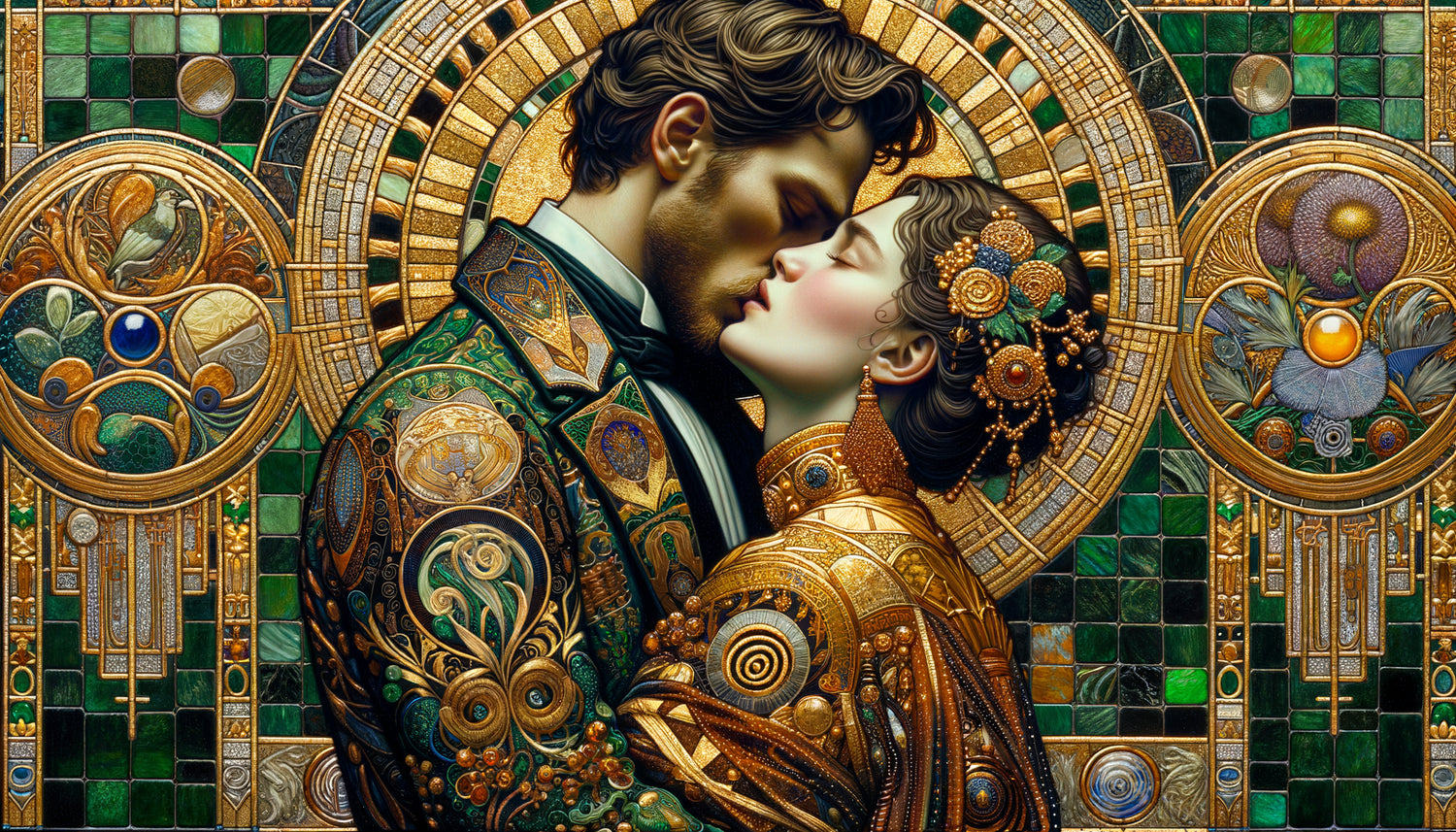
Gustav Klimt revolutionizes the depiction of the kiss with his masterpiece from 1907-1908. His iconic 'Kiss' envelops lovers in an ornamental golden cocoon, fusing their bodies into a hypnotic decorative motif. This work transcends realism to reach a universal symbolic dimension. The kiss is no longer just a physical gesture, but a spiritual and aesthetic fusion.
Expressionists like Munch or Schiele offer more tormented visions of the kiss. Their representations explore psychological tensions, the anguish of desire, and the violence sometimes present in intimacy. The kiss in modern art becomes a terrain for psychological exploration, revealing the ambiguities of love.
Surrealism and transgression
Magritte and the Surrealists subvert the representation of the kiss to question identity and perception. Magritte's 'The Lovers,' with these veiled faces attempting to embrace, creates a fascinating discomfort. The kiss becomes an enigma, impossibility, frustration. This intellectual approach to the kiss in art opens up new perspectives on our intimate relationships.

The contemporary kiss: multiplication of perspectives
Contemporary art explodes the conventions of representing the kiss. Warhol turns it into a pop icon, repeated and colorized. Banksy transforms it into a political statement. Contemporary photography captures kisses in all social, cultural, and identity contexts. The kiss in current art reflects our diversity: homosexual, interracial, intergenerational kisses assert their place in visual history.
Contemporary artists also question the virtualization of the kiss in the digital age. How to represent intimacy in a world of screens? Multimedia installations explore these new forms of connection. The representation of the kiss evolves with our ways of relating, integrating social networks, emojis, and the culture of instant images.
This democratization allows everyone to find the representation of the kiss that resonates with their own story. From delicate watercolors to provocative street art, the artistic offer has never been so rich and accessible.
Let the emotion of the kiss enhance your daily life
Discover our exclusive collection of Valentine's Day paintings that celebrate love in all its forms, from classic romances to contemporary interpretations.
Compose your own visual story of the kiss
Today, incorporating a depiction of a kiss into your interior decoration is no longer simply an aesthetic choice; it's a personal statement. Each artistic era offers you a different language to express your vision of love. A romantic kiss by Hayez creates a passionate and timeless atmosphere, perfect for a bedroom. A modern minimalist interpretation of the kiss harmoniously integrates into a contemporary living room.
The key is to choose a depiction of a kiss that dialogues with your own sensibility. Are you drawn to Baroque sensuality, romantic elegance, expressionist intensity or contemporary irony? Your choice reflects not only your artistic taste but also your philosophy of love and intimacy. The historical evolution of the representation of the kiss offers you an extraordinarily rich visual vocabulary to express your deepest emotions.
Imagine yourself in your transformed space, where every glance at this artwork reminds you of the beauty of human connections. You now have all the keys to understand what each artistic kiss is telling you. Start by identifying the era and style that speak to you most. Visit galleries, browse art books, explore online collections. Let yourself be guided by your immediate emotion: the right artistic kiss is one that touches you viscerally, one in front of which you cannot help but stop. The history of art offers you centuries of inspiration; it's up to you to choose your favorite chapter to write your own decorative story.
Frequently Asked Questions
What is the most famous work depicting a kiss?
Gustav Klimt's 'The Kiss' (1907-1908) is undoubtedly the most iconic artwork depicting a kiss in art history. This oil on canvas, measuring 180 cm on each side and housed in the Belvedere in Vienna, fascinates with its ornamental treatment and dazzling golden palette. Klimt depicts two lovers embracing, enveloped in geometric and floral patterns that merge their bodies into a single form. The man, recognizable by the rectangles of his tunic, leans in to kiss the woman whose dress is adorned with curves and flowers. This representation of the kiss transcends the simple physical gesture to become a universal symbol of love and spiritual union. The work enjoyed immediate success upon its presentation and remains today one of the most reproduced images in the world, adorning countless interiors throughout the centuries.
Why was the kiss so little represented in the Middle Ages?
The rarity of the representation of a passionate kiss in the Middle Ages can be explained by the dominance of the Catholic Church over artistic production at that time. Medieval art was primarily religious and didactic, serving to educate a largely illiterate population about sacred texts and the lives of saints. From this perspective, physical affection was considered an expression of earthly desire to be repressed. The only kisses depicted were Judas' kiss, symbolizing betrayal, the kiss of peace between saints, expressing Christian charity, or the mystical kiss between the soul and Christ. Sensuality was seen as dangerous for spiritual salvation. This vision profoundly marked Western iconography for nearly a millennium, until the humanist Renaissance gradually rehabilitated the body and human emotions in art.
How to choose an artistic kiss reproduction for my decoration?
The choice of a kiss representation for your interior should balance emotional connection and decorative coherence. Start by identifying the desired atmosphere: romantic and classic with Hayez, sophisticated and luxurious with Klimt, modern and refined with a minimalist contemporary interpretation, or bold with a street art work. Then consider your existing color palette: Klimt's golden tones harmonize with warm interiors, while a black and white photograph of a kiss integrates perfectly into a monochrome decor. Size also matters: a large canvas creates a dramatic focal point in a living room, while a series of small reproductions can compose an intimate wall gallery in a bedroom. Finally, trust your instinctive reaction: the ideal work is one that moves you personally, which tells your own love story or your vision of intimacy. An authentic kiss representation will transform your space into a place charged with emotion and beauty.