I recently accompanied a couple to the vernissage of their renovated apartment. Everything was perfect – furniture carefully chosen, subtle lighting, harmonious palette – until their eyes fell on the large painting depicting a passionate kiss hanging in the living room. The silence that followed spoke volumes about their discomfort. Too intimate? Too romantic? Inappropriate for entertaining? This scene perfectly illustrates the dilemma many of my clients face.
Here's what a well-chosen kissing painting brings: a touch of authentic emotion that humanizes your decor, a conversational focal point that tells your story, and a romantic elegance that transforms a simple wall into an assumed declaration of love.
Many hesitate to take the plunge, fearing kitsch or creating discomfort among their guests. This caution is understandable – after all, kissing is one of the most intimate gestures in human existence. But rest assured: with the right reading keys, these works can become the jewels of your decor, bringing depth and sensitivity to any space. I will show you how to tame this delicate art so that it enhances your interior without ever betraying it.
The subtle boundary between elegance and excess
During my consultations, I find that the first question is always about the limit of good taste. A kissing painting becomes inappropriate not because of its subject matter, but because of how it is artistically treated. The difference lies in three essential criteria that I have refined over the years.
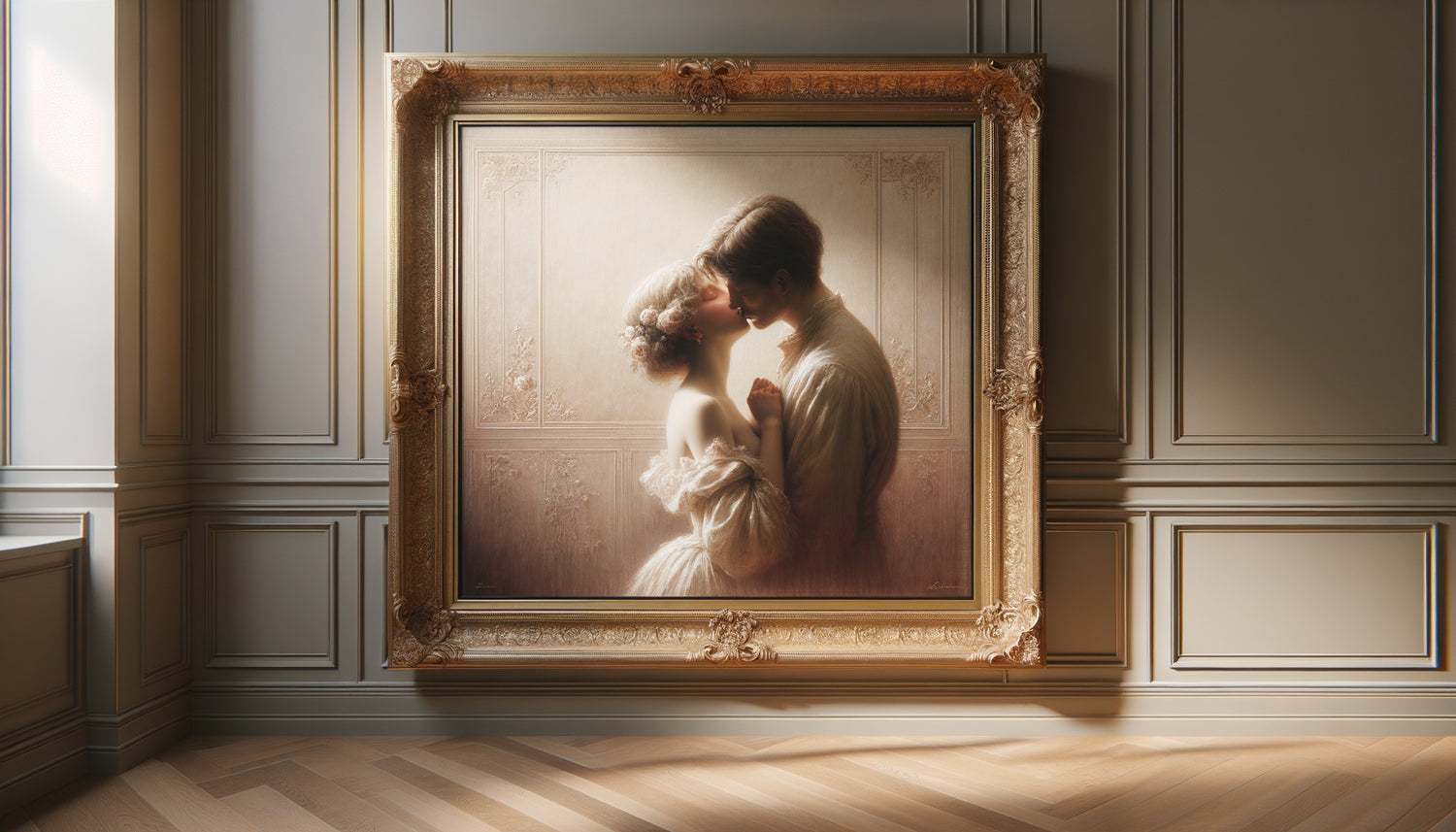
The intensity of the representation makes all the difference. A suggested kiss, where faces brush against each other in a clean composition, possesses universal elegance. Conversely, a scene that is too explicit or passionate risks creating discomfort, especially in shared spaces. Think of Klimt's famous painting: his iconic kiss remains mysterious, almost abstract thanks to the golden motifs that envelop the lovers.
The historical and artistic context also plays a protective role. A work inspired by Rodin, Chagall or Toulouse-Lautrec benefits from a cultural legitimacy that transcends the purely romantic aspect. These artistic references elevate the painting to the rank of cultural object rather than simple sentimental decoration.
The visual language that makes the difference
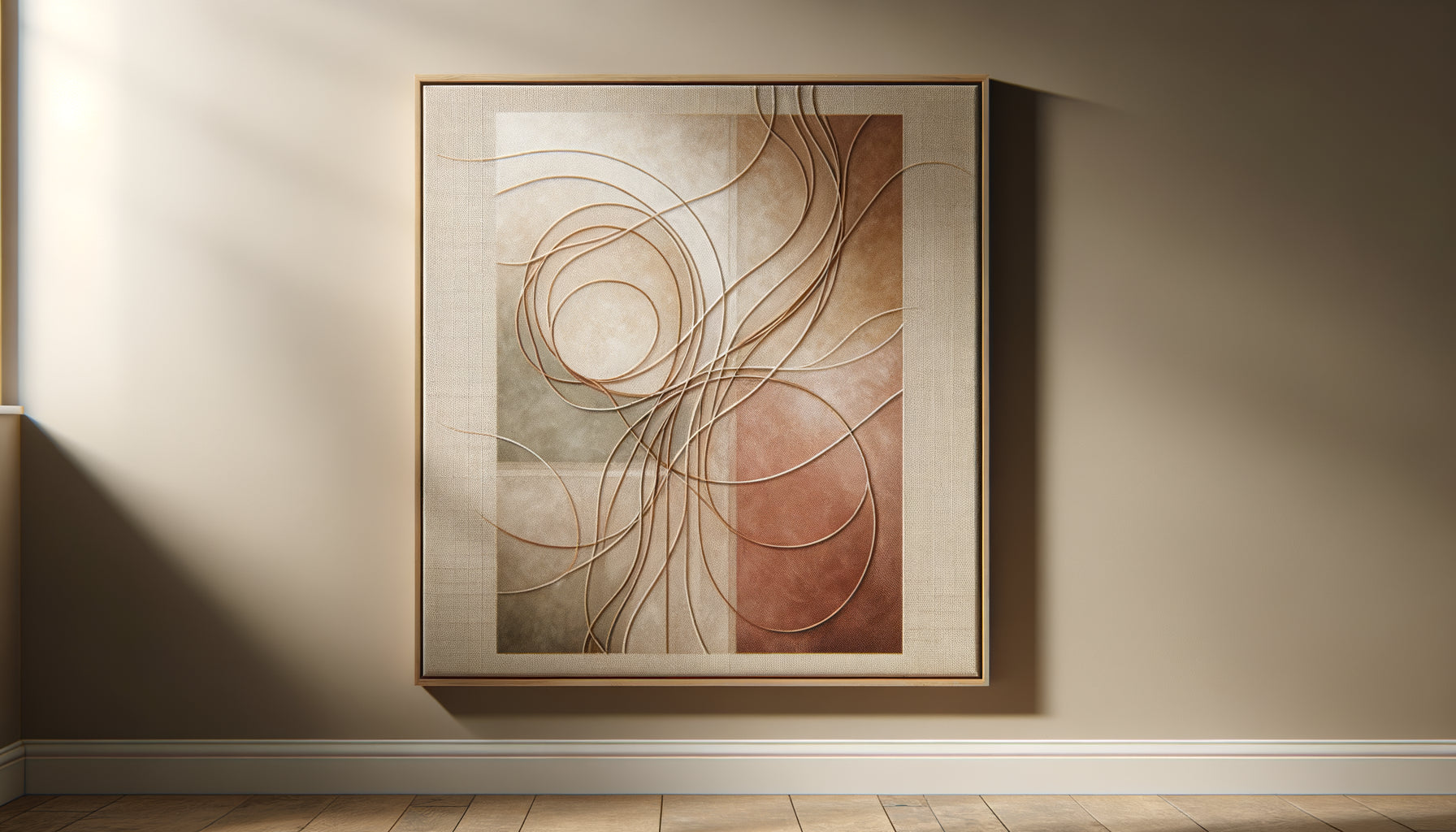
I have noticed that kissing paintings work best when they adopt an asserted artistic treatment. An abstract interpretation, a charcoal technique, a black and white composition or a geometric stylization create this necessary aesthetic distance. The subject then becomes a pretext for formal exploration rather than a simple sentimental representation.
Works that play on silhouette and shadow possess a particular universality suited to contemporary interiors. These clean representations capture the essence of the gesture without falling into description, allowing each observer to project their own story onto it.
Decoding Your Interior's Pieces: Where to Dare Romanticism?
Location radically transforms the perception of a painting depicting a kiss. What seems perfect in one room can seem misplaced in another, and this emotional geography of habitat deserves your full attention.
The bedroom remains naturally the ideal sanctuary for these intimate works. Here, you can afford more sensuality and assumed romanticism. A large painting of a kiss above the bed creates an enveloping and personal atmosphere, with no risk of discomfort since this space remains private.
In the living room or dining room, the exercise becomes more delicate but absolutely achievable. I guide my clients towards works with a more artistic treatment, where the aesthetic dimension takes precedence over the emotional content. A stylized kiss in neutral tones can perfectly integrate above a sofa or console, becoming a refined conversation starter rather than an overly personal statement.
Spaces to Avoid or Reinvent
Some places naturally resist these romantic representations. Professional offices or home workspaces generally call for neutrality that excludes kissing paintings, except in creative professions where this assumed transgression can become a signature.
Paradoxically, the entrance can accommodate a painting of a kiss if it is treated with sufficient sophistication. This bold first impression announces an interior where emotion has its place, creating a welcoming and human atmosphere from the moment you step through the threshold.

When Your Personal Story Justifies the Choice
Beyond decorative conventions, I always encourage my clients to consider their personal narrative. A painting of a kiss takes on a totally appropriate dimension when it tells your story: place of your first meeting recreated artistically, evocation of a memorable trip, or simply celebration of your relationship.
Wedding anniversaries or pivotal moments in the life of a couple are perfect opportunities to integrate these works. They then become temporal markers, visual witnesses of your shared journey. This personal symbolic load totally legitimizes their presence.
I have accompanied several couples who hesitated to display their romanticism, fearing judgment. Yet, your interior should above all reflect you. If you are naturally expressive in your feelings, a kissing painting authentically reflects your personality. Authenticity always surpasses rigid conventions.
Cultural and generational codes to consider
The perception of paintings depicting kisses varies considerably according to cultural contexts. In Mediterranean or Latin cultures, the public expression of feelings is generally better accepted, making these works more natural in decoration. Conversely, some cultures prefer restraint which may conflict with such explicit representations.
The generational factor also influences acceptability. Millennials and Generation Z tend to embrace a more personal and emotional decor, where kissing paintings fit into a claim of authenticity. Previous generations may prefer more classic and discreet codes.
Composing with your guests without compromising yourself
If you frequently entertain, consider the diversity of your social circle. A very prominent kissing painting may make some more conservative guests uncomfortable. The solution? Opt for a treatment artistic enough that the work is first perceived as a cultivated aesthetic choice rather than a sentimental exhibition.
In multigenerational homes, where different sensibilities coexist, prioritize personal spaces for more intimate representations, and reserve common areas for more universal interpretations of the theme.

The art of creating a balanced composition
A kissing painting isolated on a wall can sometimes seem too emphatic. Integrating it into a thoughtful wall composition dilutes this intensity while retaining its impact. Combine it with abstract works, landscape photographs or botanical engravings to create a visual dialogue where romanticism is only one note in a more complex decorative symphony.
The format and proportions also influence the appropriation of the work. A large kissing painting imposes a strong presence that can dominate the space, while a medium format integrates more naturally. Several small formats arranged in series create a less frontal, more poetic narrative.
Play with frames and supports to adjust the message. A modern and minimalist frame contemporizes the subject, while a traditional gold frame can age it or give it a historical feel, creating that temporal distance that makes the work more acceptable.
Lighting that enhances without overexposing
Strategic lighting radically transforms the perception of a kissing painting. Soft, indirect lighting creates an intimate atmosphere that makes the work more acceptable, while a direct spotlight can seem too insistent. Light models emotion as much as the image itself.
In natural light, position your painting so that it is not constantly in the spotlight, but reveals itself gradually throughout the day. This intermittent discretion adds a poetic dimension to its presence.
Ready to embrace your romanticism with elegance?
Discover our exclusive collection of Valentine's Day paintings that celebrate love with refinement and authenticity.
Visualize your interior transformed
Imagine yourself in your renovated living room, this carefully chosen kissing painting dialogues with your furniture, tells your story without shouting it, adds that touch of humanity that may have been missing from your decor. Your guests notice it, smile, understand something essential about you without you having to explain it.
A painting depicting a kiss is appropriate when it resembles you, when it is treated with artistic sensitivity, and when it finds its rightful place in your intimate geography. Inappropriateness arises from discordance, never from the subject itself. So dare, with discernment, to bring emotion into your decor. After all, an interior without feelings is just a setting – you deserve a real home.
Start by identifying the space that naturally calls for this romantic presence. Your bedroom? A cozy reading corner? That wall in the living room that still lacks character? Then look for the work that speaks to your sensitivity while respecting the aesthetic codes of your interior. The appropriation of a kissing painting is not decreed – it is felt.
Frequently Asked Questions
Can a kissing painting be suitable for a minimalist interior?
Absolutely, and it’s even a particularly successful association when well executed. In a minimalist interior, every element counts and must justify its presence. A kissing artwork treated in a clean style – think of a black and white silhouette, a stylized geometric composition, or an abstract interpretation of the gesture – becomes that emotional focal point that minimalism seeks. The key is to avoid overly detailed or colorful representations that would conflict with the surrounding sobriety. Favor pure lines, clear contrasts, and medium formats that blend in without dominating. Minimalism does not exclude emotion – it concentrates and sublimates it.
How to react if my guests seem uncomfortable with my artwork?
This situation often reveals more about your guests than about your decorative choice. If someone expresses discomfort, you can simply contextualize the work by mentioning its artistic origin, the artist who created it, or the personal history that links it to your home. This perspective transforms the painting into a cultural object rather than a simple sentimental statement. Remember that your interior belongs to you – it must first please you. That said, if this discomfort is repeated and really weighs on you, you can always reposition the work in a more intimate space. But honestly, people who are comfortable with their own emotions are never bothered by yours. A kissing artwork sometimes acts as a revealer of the rigidity of some visitors, which is not necessarily a bad thing.
Is it kitsch to have several kissing artworks in different rooms?
The boundary between themed collection and decorative overload depends entirely on the treatment and consistency. Several kissing artworks can coexist harmoniously if you create a true visual narrative: different artistic eras (a Klimt in the living room, a Chagall in the bedroom, a contemporary interpretation in the entrance), different technical treatments (photography, painting, illustration), or different emotional intensities depending on the rooms. Kitsch occurs when repetition becomes mechanical and devoid of meaning. Make sure each work brings something unique to its space, that it dialogues with its immediate environment rather than simply repeating the same message. Vary the formats, colors, styles, and above all, make sure each painting is chosen for reasons that are your own rather than artificially completing a collection. Authenticity, once again, remains your best protection against kitsch.