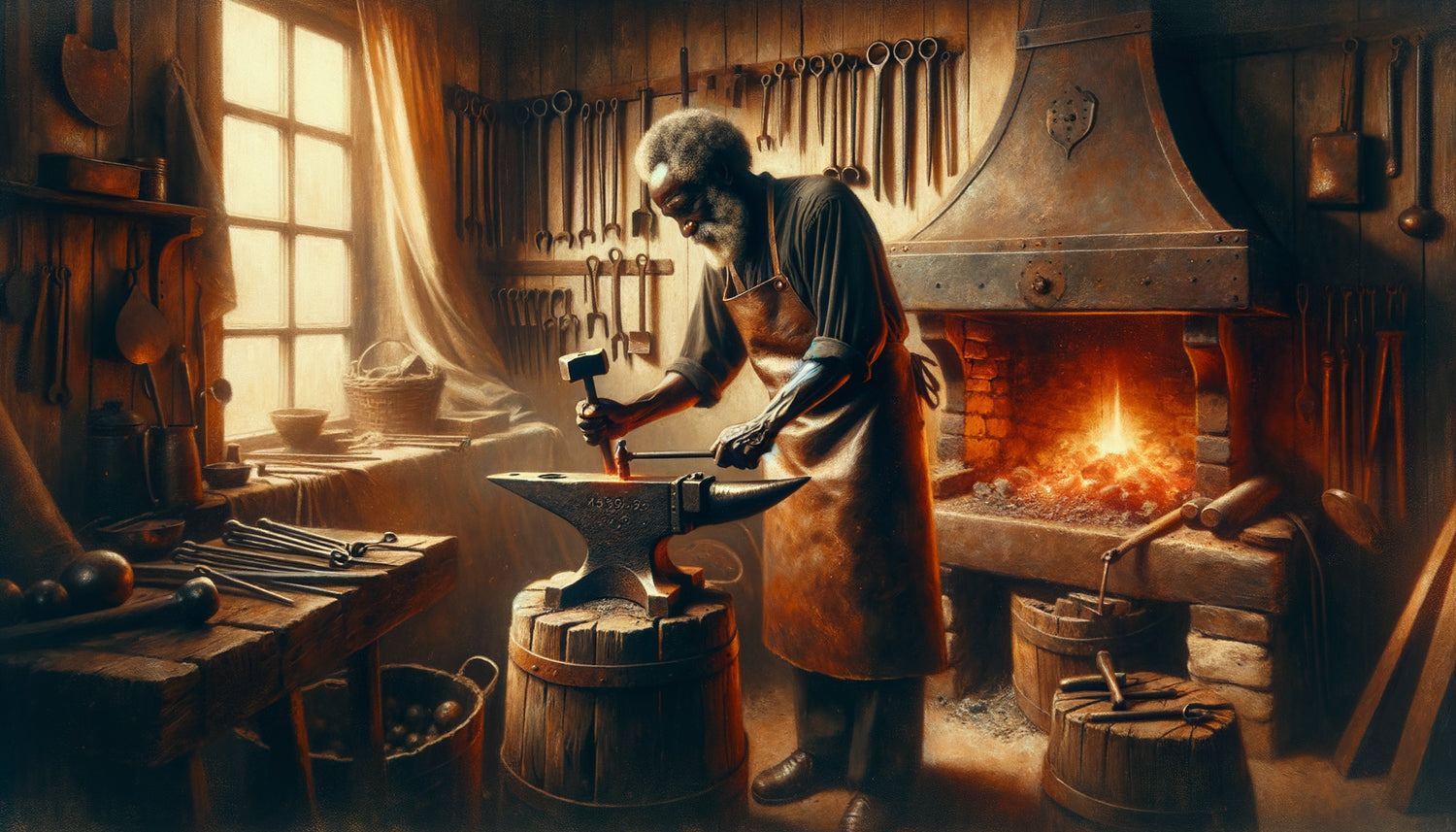
I remember that morning when Mrs. Dupont, 87 years old, stopped abruptly in front of the painting depicting a blacksmith at work in the hall of her residence. Her eyes lit up. "My father! He held his hammer exactly like that..." And for an hour, she told us about her childhood in the family forge, anecdotes that even her daughter didn't know. That’s when I understood: paintings of traditional trades are not just decorations, they are extraordinary memory triggers.
Here's what paintings of traditional trades bring to residents: they awaken memories buried for decades, create bridges between generations, and offer a profound recognition of their life journey. In a world where traditional trades are disappearing, these works become invaluable therapeutic treasures. Yet, many establishments still underestimate their emotional power, preferring neutral and impersonal decorations. Rest assured: it's never too late to transform the walls of your residence into catalysts for living stories. I will show you how paintings of traditional trades become irreplaceable conversation companions.
Visual memory, this forgotten key to identity
Our memories don't work like ordered archives. They are attached to smells, sounds, sensations... and above all to images. When a resident sees a painting depicting a baker kneading his dough, it’s not just a picturesque scene that he sees. It’s the smell of warm bread from his childhood, the creaking of the wooden floor in the neighborhood shop, the voice of the merchant who greeted him every morning.
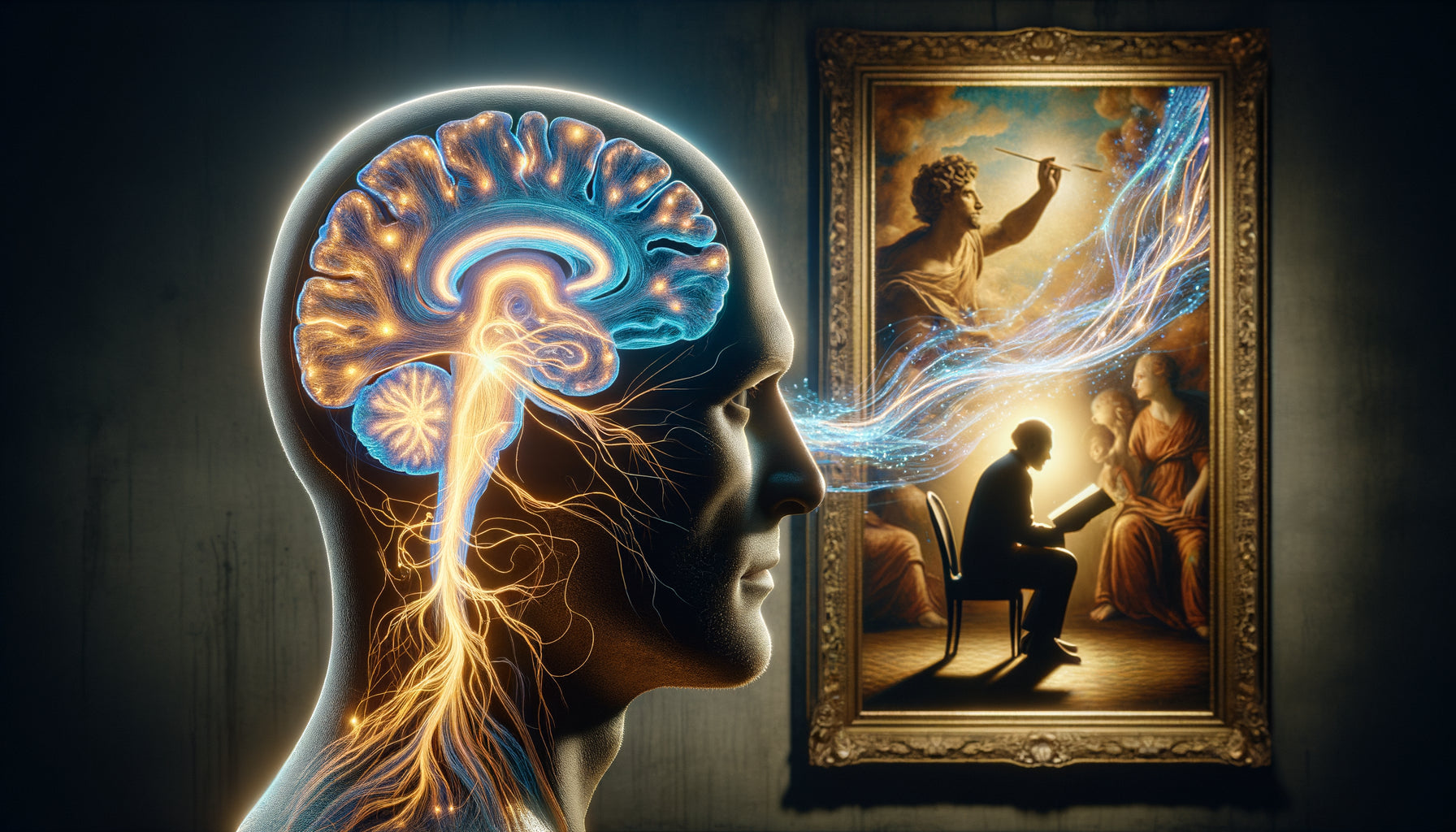
Neuroscience confirms what I observe daily: paintings of traditional trades activate brain areas related to autobiographical memory. Unlike photographs that freeze a specific moment, paintings and illustrations of traditional trades leave room for personal interpretation. Each resident projects HIS own story, HIS own experience onto it. Mrs. Laurent doesn't see the same seamstress painting as Mrs. Bertin, even though they are looking at the same work.
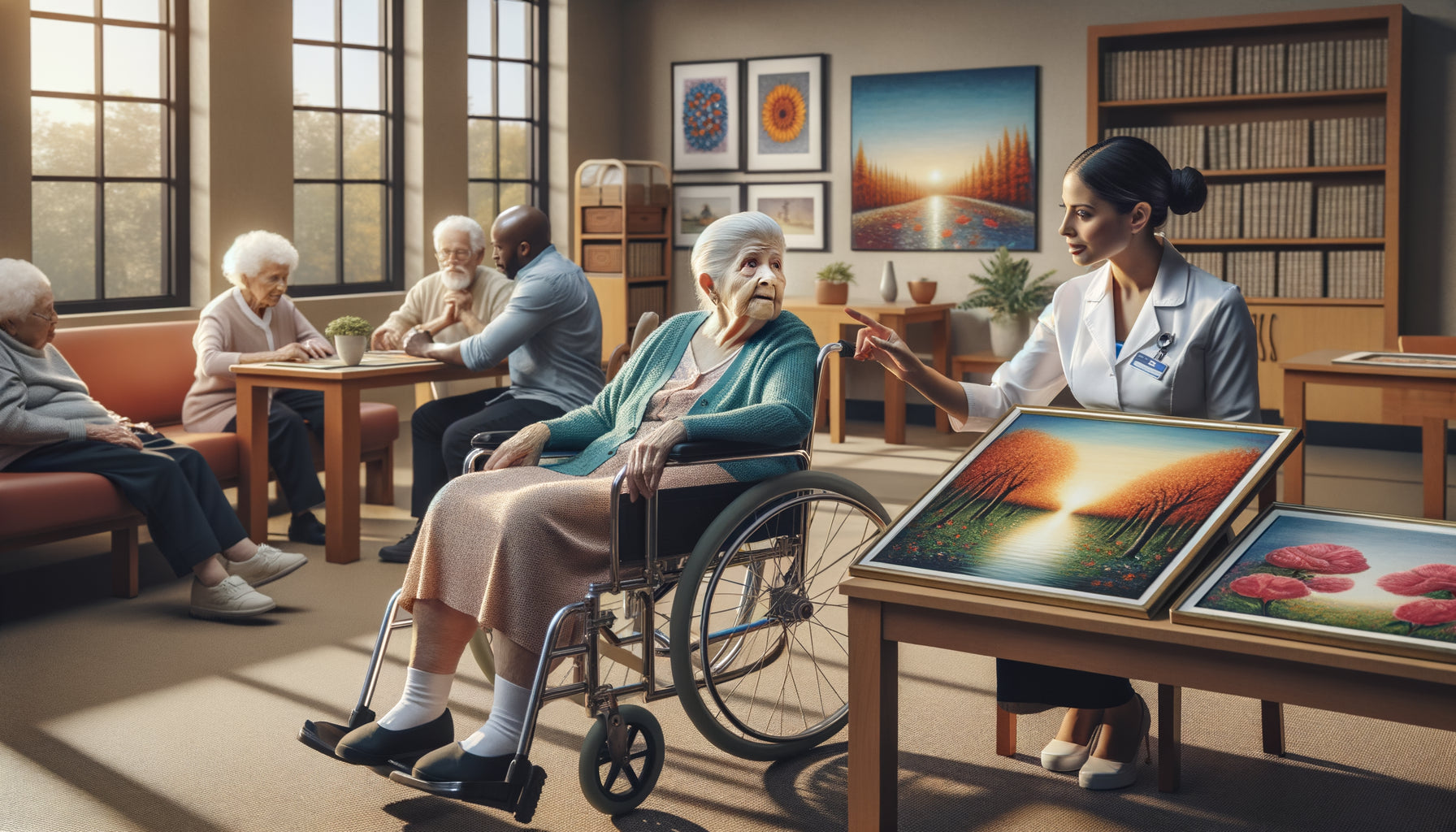
This memory activation is particularly valuable for people with cognitive disorders. Where direct questions (“What was your job?”) can generate frustration and anxiety, paintings of traditional trades offer a reassuring visual support. The resident doesn't need to look for his words: the image speaks for him, and memories flow naturally.
When walls become living history books
I have seen residents who were almost mute for months transform into tireless storytellers in front of a painting depicting an old trade. Why? Because these works value their expertise. They tell them: “Your time matters. Your knowledge has value. You have something important to pass on.”
Mr. Garnier, a former shoemaker, spent three afternoons explaining each tool visible in the painting hanging in the common room to the caregivers. He corrected details (« No, that's a trimming knife, not a knife »), recounted the precise gestures, the tricks of the trade. For the first time since arriving in residence, he had become the master again, the one who teaches, the one who counts. His physical posture changed. So did his voice.
Paintings of old trades also create magical intergenerational bridges. When grandchildren visit and discover these representations, questions arise: « Grandpa, is that true? Did you do that? » « Grandma, did you work with those machines? » Suddenly, the grandparent is no longer just an elderly person to be visited out of duty. He becomes a fascinating historical witness, a living link with a disappeared world. The residents' life stories finally find an attentive ear.
The power of authentic details
Attention: not all paintings of trades are equal. Residents instantly spot inaccuracies. I have learned to prioritize works that show the real tools, the actual gestures, the clothes of the time. An illustration that is too stylized or fanciful triggers nothing. Worse, it can be frustrating: « That's nonsense, we didn't work like that! »
The most effective paintings of old trades are those that capture the atmosphere of an era: the light in a workshop, the concentration of an artisan, the pride in well-done work. It is these subtle details that bring forth emotions and, with them, the residents' life stories.

Conversation starters for everyday life
In a senior residence, days can sometimes seem long and repetitive. Paintings of old trades break this monotony by offering endless starting points for conversation. Unlike landscapes or abstractions, they pose implicit questions: « Did you know that trade? », « Have you ever used those tools? », « Did your neighborhood have shops like that? »
I've noticed that residents even develop spontaneous rituals around certain paintings. Mr. Petit systematically stops in front of the fishmonger scene when returning from lunch. He sees his uncle who worked at Les Halles de Paris there. Mrs. Colette takes each new resident in front of the milliner's painting: it was her job for forty years, and she loves to pass on that pride.
For caregivers and activity coordinators, these artworks become valuable non-pharmacological therapeutic tools. During episodes of anxiety or confusion, gently guiding a resident towards a familiar painting can soothe and reorient them. The visual recognition of an ancient trade acts as a reassuring anchor: "I know where I am in history. I recognize this world. I have my place."
Choosing the right paintings according to life paths
Not all residences have the same resident profile. An effective collection of paintings depicting ancient trades should reflect the likely stories of your residents. In a wine region, scenes of grape harvesting and cooperage will resonate powerfully. Near a former industrial basin, the trades of forging, mining or textiles will speak more.
Here are the categories of trades that consistently generate rich life narratives:
Trades related to food: baker, butcher, fishmonger, cheesemaker. They evoke powerful sensory memories (smells, tastes) and touch everyone. Everyone has frequented these businesses.
Craft trades: carpenter, blacksmith, shoemaker, seamstress. They illustrate manual know-how and the pride in a job well done, values very present in this generation.
Rural trades: reaper, farmer, market gardener. Particularly relevant because many current residents grew up in rural environments before urban migration.
Commercial trades: grocer, general merchant, peddler. They recall the social interactions of a time when you knew your shopkeeper by their first name.
The importance of diversity
Vary the representations! Show men and women at work. Include different eras (early 20th century, 1930s-40s, 1950s-60s). This diversity allows each generation of residents to find THEIR reference era. A resident born in 1930 will not visualize the same scenes as a resident born in 1950, even for the same trade.
The paintings depicting ancient trades also work wonderfully in passageways: corridors, halls, waiting rooms. They transform these potential moments of boredom into opportunities for reminiscence and sharing. I have seen entire families spontaneously gather around a work, each adding their own memories to those of the resident.

Beyond Nostalgia: Recognition and Dignity
Let's be frank: some may fear that tableaux depicting old trades trap residents in the past. The opposite is true. By validating their personal history, these works firmly anchor their identity, allowing them to live in the present even better.
A resident who can say "I worked in this trade for thirty years" and see that reality visually recognized on the walls of their residence feels respected in their entirety. They are not reduced to their age or current limitations. They remain that skilled artisan, worker, or shopkeeper they once were. This identity continuity is fundamental to psychological well-being.
I have noticed that residents speak differently about themselves after a few weeks surrounded by these representations. They use the present tense more often: "I AM a carpenter" rather than "I was a carpenter." This linguistic shift is not insignificant. It testifies to a reappropriation of their professional identity, which remains a central part of who they are.
Families also perceive their elders differently in this context. Seeing a parent in an environment that visually honors their professional journey changes the perspective. One rediscovers the person behind the family role. The residents' life stories then become family heritage passed down and preserved.
Transform your spaces into living memory places
Discover our exclusive collection of wall art for senior residences that awakens stories and creates authentic connections between residents, families, and caregivers.
Creating your collective memory gallery
How to effectively integrate tableaux depicting old trades into your residence? Start with an informal survey of your current residents. What professions have they practiced? Which shops did they frequent? What was the economic atmosphere of their youth? These conversations are already therapeutic in themselves.
Next, create thematic exhibition routes. For example: a corridor dedicated to earth-related trades (from farm to plate), another to textile trades (from shepherd to tailor), and a third to building trades. This organization helps residents build coherent narratives and encourages comparative discussions (“My father did it like in this painting, but with different tools.”).
Don't hesitate to accompany some paintings with narrative labels written with the residents themselves. "Mrs. Renard explains that in her haberdashery..." These short texts value resident expertise and encourage others to share their own memories. The residents' life stories then become an integral part of the decor.
Organize discovery afternoons during the installation of new artworks. Invite residents to share what the artwork evokes in them. Record these testimonials (with consent): you create valuable oral archives for families and local history. Some residences even create intergenerational podcasts from these exchanges.
Now imagine your residence in six months. The walls are no longer neutral and silent. They tell stories. Mr. Dubois stops every morning in front of the mechanic's painting, smiling, murmuring memories to his daughter who came to visit him. Mrs. Petit spontaneously hosts mini-lectures on embroidery techniques in front of the seamstress's work. New residents find it easier to settle in: "Ah, you were a farmer? Come see this painting, you will like it."
Ancient trades paintings do not simply decorate your spaces: they transform them into authentic living places where each resident recognizes themselves and tells their story. They create the most valuable asset in senior residences: a sense of belonging and continuity. Your first carefully chosen painting can trigger conversations you never imagined. And in a rediscovered smile, in an anecdote shared, in these renewed human connections, you will discover the true value of these works that, beyond their beauty, give everyone back their place in history.