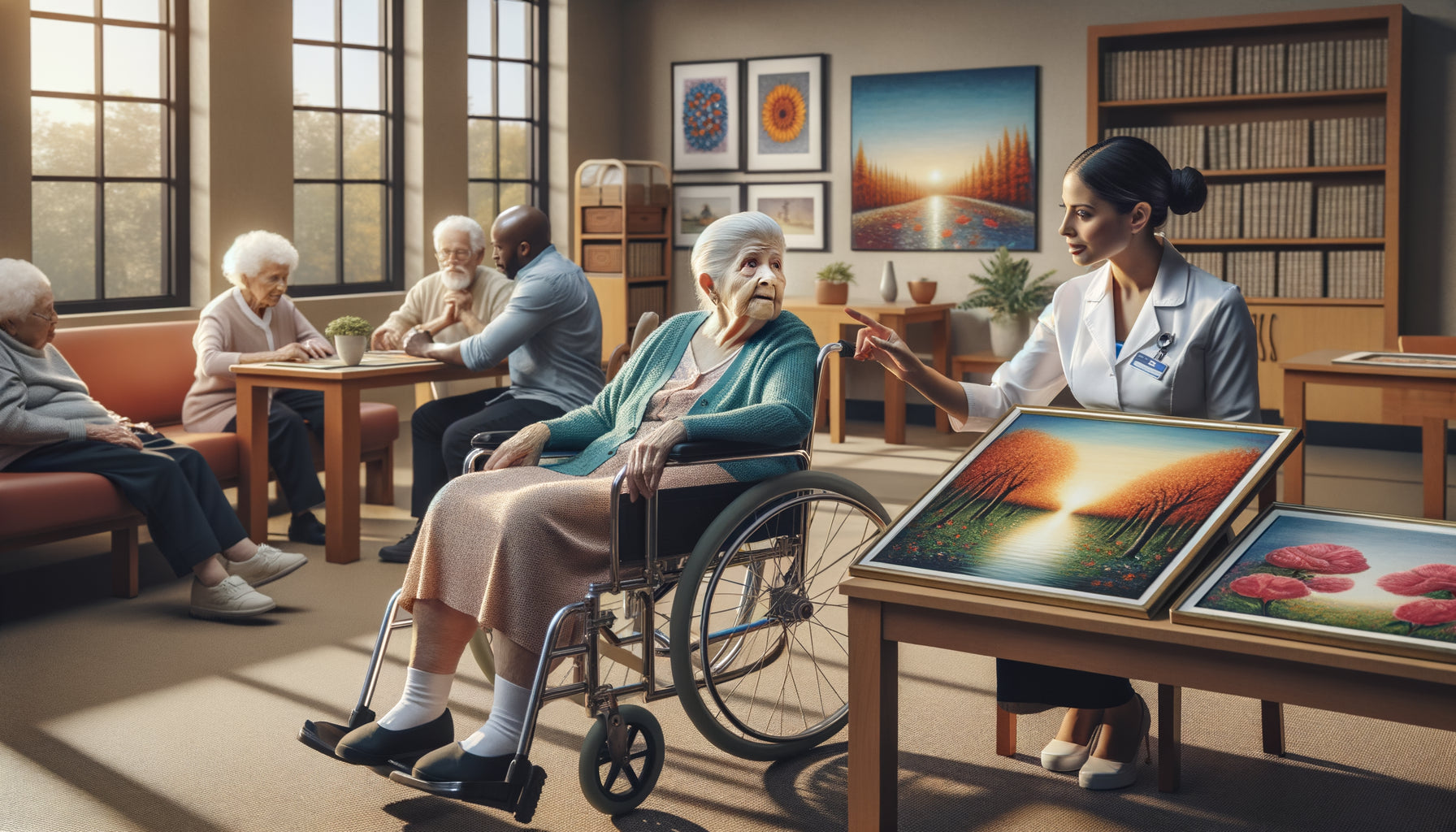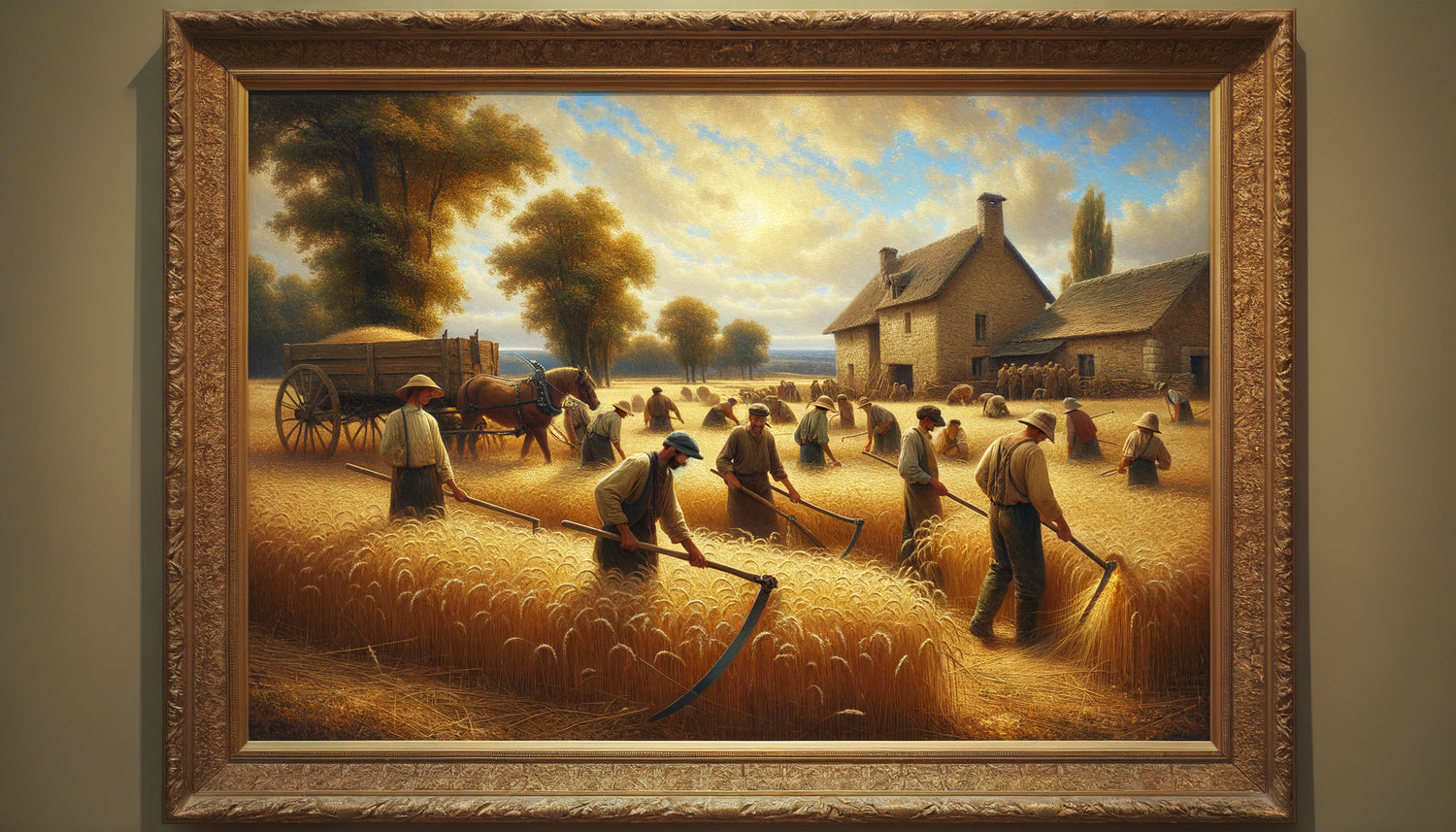
In a senior living residence near Lyon, I observed a fascinating phenomenon: in front of a painting depicting harvesters at work, three residents over the age of 80 spontaneously gathered. For an hour, they shared precise and moving memories as if this simple canvas unlocked a dormant collective memory. Details flowed: the smell of freshly cut hay, the rough texture of jute sacks, the taste of fresh water drunk straight from the metal canteen. This moment deeply marked me. How can an image awaken entire segments of a life with such intensity?
Here's what paintings of agricultural scenes bring to seniors: they reconnect with an often idealized authentic past, create spontaneous intergenerational bridges around shared stories, and offer reassuring emotional anchoring in a constantly changing world. Yet, many families still hesitate to integrate these works into the living spaces of the elderly, fearing that they will confine them to sterile nostalgia or choose visuals that are too dated. This concern is legitimate but rests on a fundamental misunderstanding.
In reality, these paintings are not simple retro decorations: they constitute true cognitive and emotional stimulation tools, triggers for conversations and supports for identity for a generation whose personal history is intimately intertwined with the rural world. Let me show you why these works resonate so deeply with the memories of seniors, and how to choose them to create spaces that are both aesthetic and meaningful.
When France was still in the fields
To understand the emotional impact of these paintings, we must delve into the demographic reality of the mid-20th century. In 1950, nearly 30% of the French population still lived in rural areas, compared to less than 20% today. Seniors of today, born between 1930 and 1960, many grew up on farms, hamlets or agricultural towns. Their childhood is marked by ancestral gestures: milking cows at dawn, bringing in the hay before the storm, participating in family grape harvests.
These experiences are not vague blurry memories. They are engraved in sensory and emotional memory, which resists cognitive aging best of all. A painting showing plowing with a plow does not only trigger visual recognition: it reactivates a whole network of sensory and affective associations. The creaking of the leather harnesses, the warmth of the sun on the neck, the pride of the straight furrow traced behind oneself.
Agricultural scenes also represent an era when the pace of life followed the seasons, where physical effort had an immediate and visible meaning. For generations who experienced mass rural exodus, accelerated industrialization and the dematerialization of work, these images recall a comprehensible, tangible world where each action produced a concrete result.
The therapeutic power of familiar images
Beyond simple nostalgia, paintings of agricultural scenes play a documented role in the well-being of seniors. Research in art therapy and gerontological psychology shows that images evoking personal memories promote temporal orientation, reduce anxiety, and stimulate communication, even in people with cognitive impairments.
I have seen usually silent residents come to life in front of a painting depicting a chicken coop. A lady suffering from memory problems began listing the names of all the chickens from her childhood, with astonishing details about their behavior. These islands of preserved memory are precious: they allow seniors to reconnect with their deep identity, beyond illness or cognitive losses.
Triggers for intergenerational conversations
These paintings also create unique opportunities for transmission. When a grandchild asks their grandfather to explain what he sees in a painting depicting threshing with flails, a conversation naturally opens up. The senior becomes expert and transmitter, valued in his role as guardian of a collective memory. He no longer talks about his pains or limitations, but about know-how, an era, a full and active life.
This reversal of roles is fundamental to self-esteem. In a world that values youth and technology, agricultural scenes allow seniors to become central again, holders of knowledge that no one else possesses with the same authenticity.

Choosing artworks that honor without infantilizing
Not all representations of rural life are equal. There is a delicate balance between memory evocation and aesthetic quality. A painting too naive or simplistic can be perceived as condescending, while an artwork too stylized risks losing its function as an emotional trigger.
Realistic scenes with attention to detail generally work best. A painting showing precise gestures – sharpening a scythe, folding a sheaf of wheat, harnessing a horse – allows for immediate recognition and values know-how. Expressive faces, familiar postures, authentically represented tools: all these elements create a strong emotional connection.
The color palette of memory
Colors also play a vital role. Warm and earthy tones – ochres, golden browns, deep greens – naturally evoke the agricultural world and create a soothing atmosphere. These shades are associated with security, the warmth of home, the natural cycle of the seasons. Conversely, overly bright or artificial colors can create a dissonance with real memories.
I've noticed that paintings bathed in natural light – that of early morning in barns, that of the golden evening on wheat fields – elicit the deepest reactions. This light evokes specific moments of the agricultural day, atmospheres that the body remembers viscerally.
Beyond decoration: creating living spaces full of meaning
Integrating paintings of agricultural scenes into a senior's environment is not just an aesthetic matter. It's an approach to empathic design that recognizes the importance of the past in building present well-being. These works transform an anonymous space into one inhabited by a personal history.
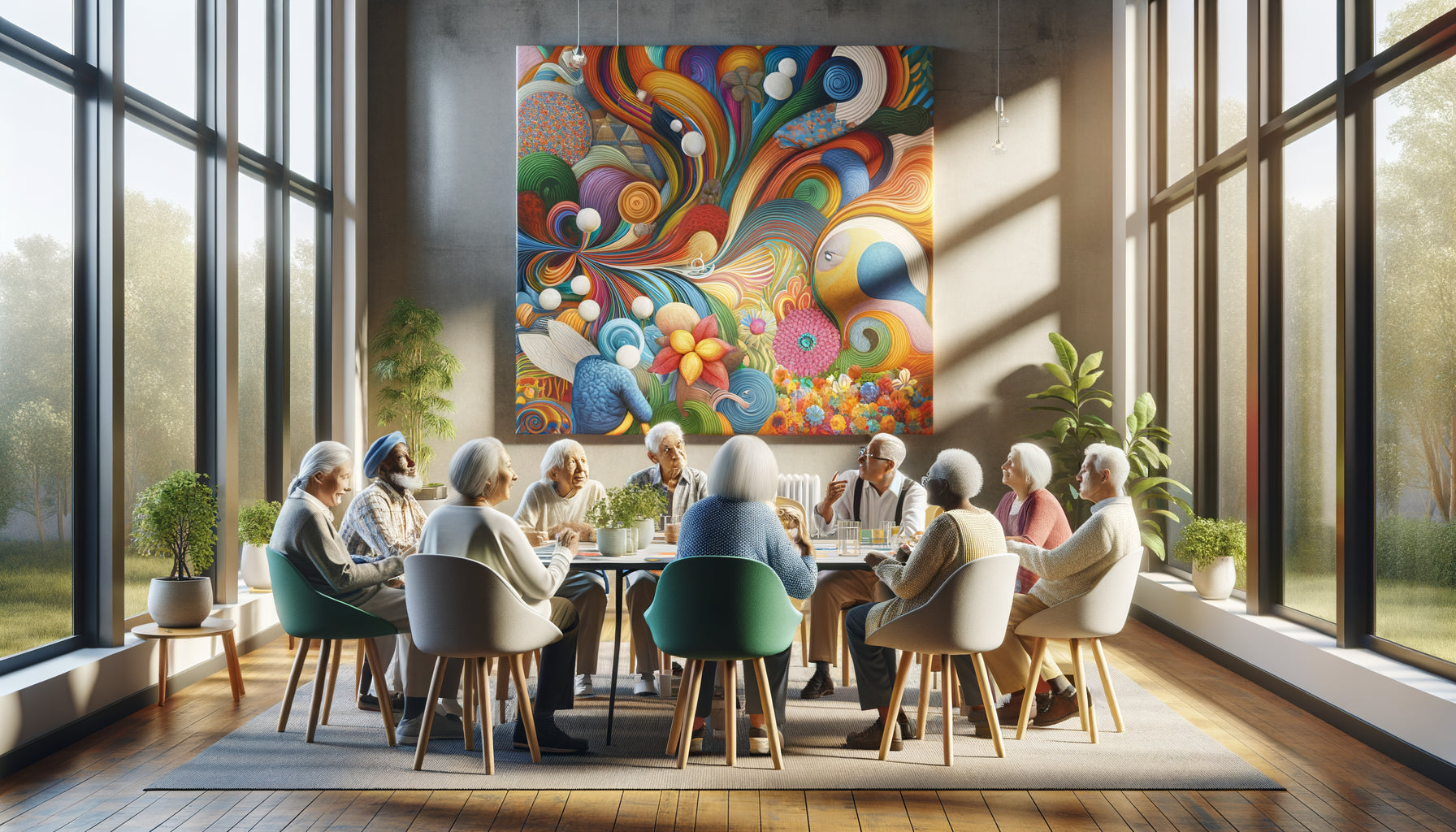
In retirement homes, I have observed that common areas adorned with these paintings naturally become places of gathering and exchange. Residents stop, comment, share their own experiences. A community is woven around these shared visual references, even if individual journeys differ.
For seniors living at home, these paintings create a continuity between past and present. They affirm that their history has value, that their rural identity is not obsolete but rather constitutes a richness in an urbanized world that rediscovers the importance of agriculture, nature, and seasonal rhythm.

The agricultural themes that resonate the most
Certain agricultural scenes trigger particularly strong reactions. Harvests and threshing evoke collective work, village solidarity, meals shared in the fields. These moments of intense cooperation, where the entire community mobilized, remain etched as happy memories despite the hardship of labor.
The farm animals – draft horses, cows, chickens, pigs – elicit an immediate tenderness. Many seniors grew up interacting with these animals on a daily basis, developing affectionate relationships with them that urban generations no longer know. A painting showing a farmer grooming his horse can trigger moving stories about particular beasts, their characters, their little quirks.
Seasonal scenes – autumn harvests, winter plowing, spring sowings, summer haymaking – recall the reassuring rhythm of the agricultural calendar. This natural cyclicity contrasts with the acceleration and detemporalization of the contemporary world, offering an anchor in a long and predictable timeframe.
Forgotten gestures that still speak
Paintings showing traditional know-how – butter making, basket weaving, tool repair – value a practical intelligence often devalued in our tertiary society. These precise gestures, acquired through years of practice, represent a form of excellence that seniors recognize and are proud to have been the guardians of.
Offer more than just wall decoration
Discover our exclusive collection of wall art for senior residences that awakens the most precious memories and creates warm and meaningful living spaces.
Creating bridges between yesterday and today
It would be a mistake to think that these paintings confine seniors to the past. On the contrary, they create temporal bridges that enrich the present. When a senior tells about their childhood on the farm in front of a painting, they are not fleeing their current life: they give meaning to their journey, they draw a coherent line between who they were and who they have become.
These works also make it possible to address contemporary issues – organic farming, short circuits, respect for the environment – by linking them to ancestral practices. Seniors then become valuable witnesses of an era when these values were natural and not militant choices. Their experience acquires a new relevance in current debates.
I have witnessed magnificent exchanges between curious teenagers and grandparents in front of these paintings. Young generations, often disconnected from food production, discover with fascination the complexity and beauty of traditional agricultural work. Seniors, accustomed to being perceived as outdated, once again become sources of wisdom and knowledge.
Agricultural scene paintings are not mere nostalgic decorative objects. They serve as powerful tools for emotional connection, cognitive stimulation, and identity affirmation for a generation whose personal history is rooted in the rural world. By carefully selecting these works – prioritizing the authenticity of details, the accuracy of atmospheres, the dignity of representations – you create much more than decor: you honor a collective memory, facilitate intergenerational transmission, and offer reassuring anchors in a rapidly changing world. The next time you choose a painting for a parent or senior resident, imagine it not as a simple image, but as a window open onto an entire aspect of life, a trigger for stories, a bridge between generations. Perhaps this is the most beautiful gift one can give: the recognition that this rural history, far from being obsolete, remains fundamental to understanding who we are collectively.
Frequently Asked Questions
Do agricultural paintings also suit seniors who did not grow up in the countryside?
Absolutely. Even seniors who grew up in cities often have connections to the rural world – vacations at grandparents' farms, school trips, childhood films and books. These paintings evoke a collective era when rural life was omnipresent in French culture. Moreover, they create a soothing and natural atmosphere that benefits everyone, regardless of personal background. The important thing is to choose universal scenes – animals, landscapes, seasons – rather than very specific agricultural techniques that would require expert knowledge to be appreciated.
How to avoid these paintings creating sadness or melancholy?
The choice of works is crucial. Prioritize scenes showing moments of collective and joyful life – harvest meals, village festivals, animals roaming freely – rather than solitary or laborious images. Paintings bathed in light, with warm colors and interacting characters, generally evoke positive emotions. Nostalgia is not necessarily sad: it can be gentle, comforting, a source of pride. The essential thing is to accompany these works with open conversations, where the senior can freely share their memories without them being minimized or quickly diverted towards the present.
Where to place these paintings to maximize their positive impact?
Living spaces are ideal: living rooms, dining rooms, busy hallways. Avoid bedrooms if the senior already spends a lot of time alone there, as these images work better as triggers for shared conversations. In residences, common areas – activity rooms, reading corners, cafeterias – are perfect because they encourage spontaneous exchanges between residents. Hanging height also matters: place paintings at eye level when seated, so seniors can contemplate them comfortably. Good natural lighting or soft spotlights enhance the artwork and invite you to approach it.