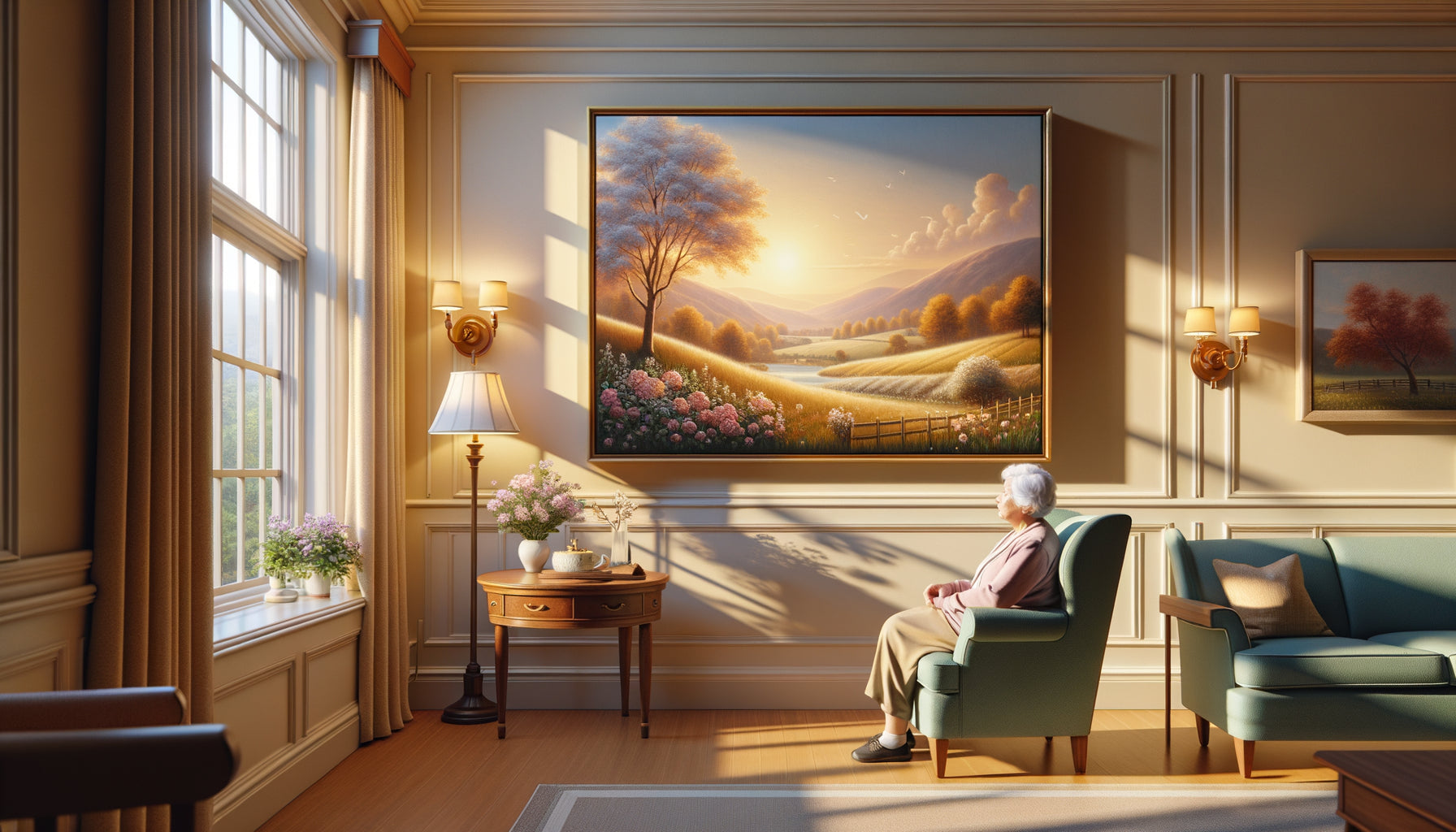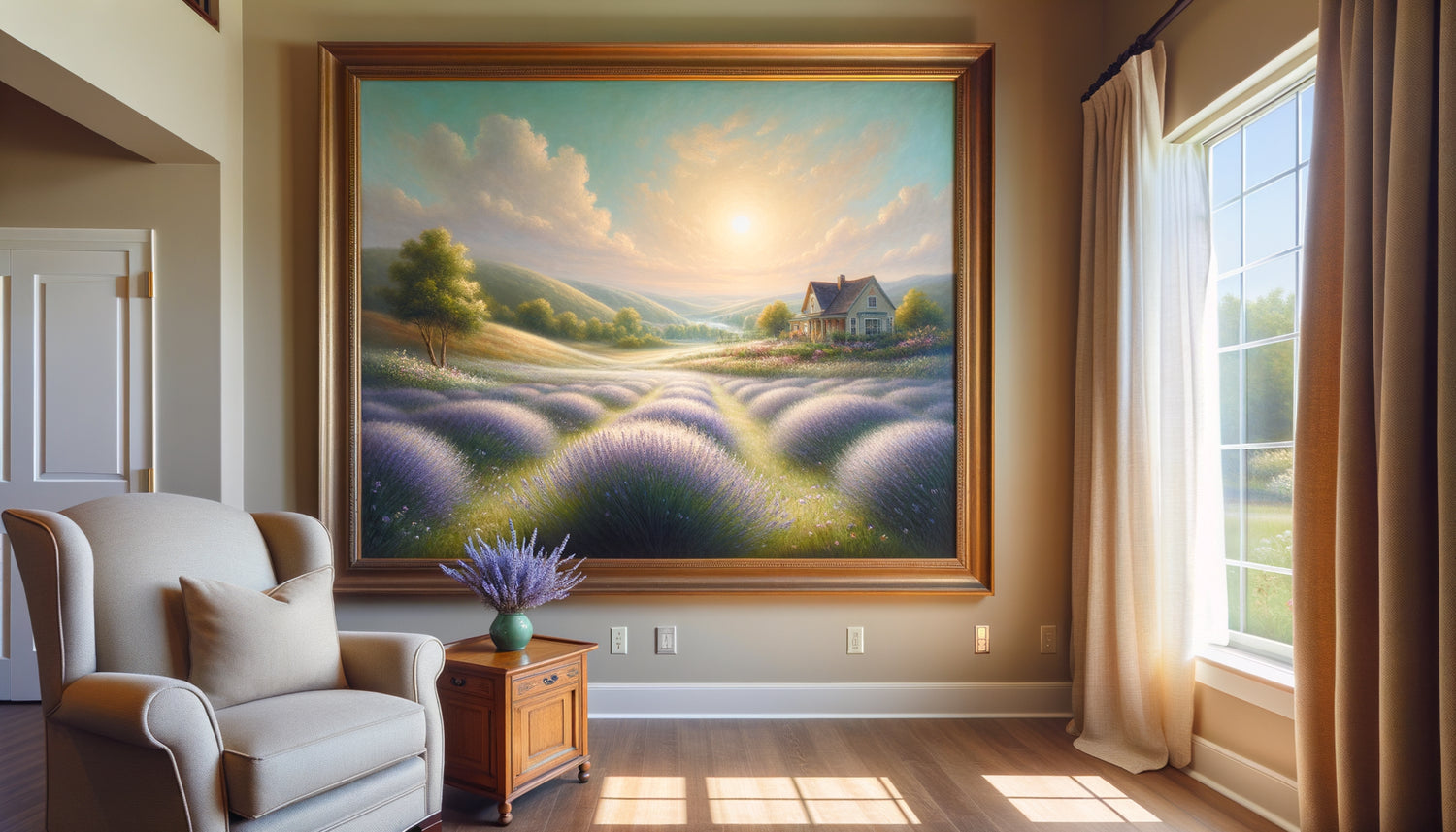
When I accompanied my mother to her new senior living facility last year, I was struck by the coldness of the white walls in her room. Within a few weeks, I saw her anxiety rise and her nights become restless. Then we hung three carefully chosen paintings. The change was spectacular: her sleep calmed down, her smiles returned. This experience opened my eyes to the therapeutic power of art in these living spaces.
Here's what a well-chosen painting brings to a senior living facility: a comforting emotional anchor, a measurable reduction in stress and anxiety, and gentle cognitive stimulation that preserves memory abilities. Many families feel helpless when decorating a loved one’s room in a senior living facility. They fear making the wrong choice, cluttering the space, or choosing something too infantilizing. Rest assured: a few simple principles, drawn from environmental psychology and art therapy, can radically transform the atmosphere of a place. I will guide you through the choices that have proven successful in dozens of facilities I have visited.
Why paintings are therapeutic allies in senior living
Senior living facilities often present neutral, almost impersonal environments. This standardization, while hygienic and practical, can generate a form of spatial disorientation in residents. A soothing painting then becomes much more than just a decorative element: it is a visual landmark, an emotional anchor.
Research in geriatric environments demonstrates that wall art significantly reduces agitation behaviors in older adults. Paintings for senior living act on several levels: they stimulate memory by evoking positive memories, reduce the perception of time passing too quickly, and create conversation topics with visitors and caregivers.
In my practice, I have observed that residents whose rooms contain soothing paintings consume less anxiety medication and participate more in group activities. Art becomes a silent mediator between the resident and their new environment, facilitating acceptance and adaptation.
Soothing colors: the ideal palette for seniors
Not all paintings are equal in a senior living facility. The color palette plays a crucial role in the desired soothing effect. Soft and natural tones consistently top the list of therapeutic choices.
Blue: the universal color of serenity
Sky blue, lavender blue, aquatic shades... These tones naturally slow heart rate and promote relaxation. A painting depicting a seascape or a summer sky offers this soothing presence without ever tiring. I saw a resident suffering from sleep disorders regain peaceful nights after installing a nautical scene with pale blue tones in her room.
Soft green: the connection with nature
Plant prints in soft greens evoke gardens, forest walks, and countryside memories. This color brings a feeling of freshness and renewal particularly valuable for people confined indoors. Favor sage, mint or celadon greens over acidic ones.
Pastel tones: softness and elegance
Powdered rose, cream beige, pale lavender... These shades create a cocooning atmosphere without infantilizing. They blend harmoniously into all spaces and never offend the eye, even in cases of increased light sensitivity.
Absolutely to avoid: bright colors (red, vivid orange, screaming yellow) which can generate agitation, and contrasts too marked black and white that tire the view and can provoke visual hallucinations in some elderly people.

Themes that reassure and stimulate without exhausting
Beyond colors, the subject depicted on the wall art for senior residences profoundly influences the resident's emotional state. Some themes have a universal comforting power.
Natural landscapes are at the top: rolling countryside, forest paths, flower gardens... These scenes evoke freedom, fresh air, and activate positive autobiographical memory. A British study showed that nature prints reduce stress signs by 37% in EHPAD residents.
Marine and lacustrine scenes exert a soothing fascination. Water has a recognized meditative quality. A painting depicting a quiet beach, a sailboat in the distance or a lake at dawn invites contemplation without requiring cognitive effort.
Classic floral bouquets bring cheerfulness without agitation. Old roses, peonies, lavender... These compositions evoke gardens of yesteryear, offered bouquets, happy moments. However, be careful to avoid arrangements that are too complex, which may seem confusing to people with visual impairments.
Familiar animals - cats, dogs, garden birds - create a comforting presence. Many residents had to part ways with their four-legged companions; a painting depicting a gentle animal can partially fill this emotional void.
To avoid: complex abstractions that can be confusing, overly busy urban scenes, melancholic representations (rainy autumns, ruins...), and religious subjects that are not suitable for everyone.
Size and placement: the golden rules for maximum impact
A beautiful soothing artwork poorly positioned loses all its therapeutic power. Location and dimensions count as much as the subject itself.
Ideal height: in senior residences, artworks should be visible from both the bed and the armchair. The center of the artwork should be between 1.40 m and 1.50 m from the floor, slightly lower than the museum standard, as residents spend a lot of time sitting or lying down.
Adapted size: for a standard bedroom (15-20 m²), prioritize a medium format (60x80 cm to 80x100 cm) that creates a presence without overwhelming the space. In common areas, more generous formats (100x120 cm) are appropriate.
Strategic wall: the main artwork should ideally face the bed, offering a soothing view upon waking and before sleep. It is at these times that anxiety is often strongest. A second, smaller artwork can find its place on the adjacent wall, visible from the armchair.
Lighting: ensure that the artwork receives sufficient natural light without reflections. Residents often have a downward view; an artwork in the gloom loses all interest. If necessary, add a small accent light.

Personalization: when the artwork becomes a living memory
The perfect artwork for a senior residence is often one that resonates with the resident's personal history. This memorial dimension transforms the work into true therapy.
Ask your loved one about their happy memories: where did they spend their childhood vacations? What landscape particularly moves them? Did they live near the sea, the mountains, in the countryside? An artwork depicting a familiar environment activates long-term memory neural networks, often preserved even in cases of cognitive impairment.
Marguerite, 89 years old, regained an amazing serenity when we hung in her room a painting representing the cliffs of Normandy. Her face lit up every time she looked at it, evoking her childhood summers in Étretat. This simple artwork has become the bridge between her present and her most precious memories.
For individuals with neurodegenerative diseases, prioritize highly readable scenes without ambiguity, representing elements from the distant past (1940s-1960s) rather than contemporary ones. Colorized vintage photographs can also be excellent soothing artworks.
Quality and safety: practical aspects to consider
In a senior residence, an artwork must respect certain practical constraints that are often overlooked.
The frame: opt for lightweight frames (wood or aluminum) with solid wall fixings. Absolutely avoid glass which could shatter. Prefer anti-glare acrylic, much safer and offering excellent protection.
Fixing: ask the residence staff about authorized systems. Many establishments require specific fixings to prevent objects from falling. Some walls cannot be drilled; there are then suitable cimaises (picture rails) systems.
Maintenance: in a medicalized environment, the artwork must be easy to clean. Smooth surfaces without imperfections where dust accumulates are preferable. Frameless canvases, although trendy, should be avoided as they are difficult to maintain.
Durability: invest in a quality artwork that will not degrade over time. Professional-quality canvas prints with UV-resistant inks will retain their vibrant colors for years, unlike cheap posters which yellow quickly.
Offer your loved one a haven of visual peace
Discover our exclusive collection of artworks for senior residences that transform living spaces into true cocoons of serenity.
Transforming a care setting into a home
Choosing an artwork to soothe a senior residence is a gesture of love that transcends simple decoration. It's recognizing that our elders deserve a beautiful, personalized, comforting environment. It’s understanding that art possesses documented, measurable, profound therapeutic power.
Imagine your loved one waking up each morning facing a landscape that speaks to them, which revives their fondest memories, which soothes their nighttime worries. Visualize their visitors complimenting this elegant choice, initiating conversations about the places depicted, creating moments of authentic sharing. Feel the pride of knowing that you have contributed, with this simple gesture, to concretely improve their daily life.
Start by having a conversation with your loved one about their happy memories. Take notes, photos of places that marked them. Then explore the available soothing artworks, keeping in mind the principles we have explored: soft colors, comforting subjects, size adapted. Don't hesitate to order several small formats to create an evolving gallery that tells a story.
The most beautiful gift you can give to a nursing home resident is not material: it’s the feeling of being at home, even far from home. A carefully chosen artwork is the key to this emotional transformation.
Frequently Asked Questions about Artworks in Nursing Homes
How many artworks should you hang in a nursing home room?
For a standard room, one to three artworks are more than enough. The main artwork (medium format) should be positioned facing the bed to offer a soothing view. One or two smaller artworks can complete the set on the side walls. The goal is to create a warm atmosphere without visually cluttering the space. Too many artworks can generate excessive stimulation counterproductive for older people, particularly those with cognitive disorders. Prioritize quality over quantity: a single soothing artwork of good manufacture will have more impact than several mediocre works. Also observe your loved one's reactions: some residents appreciate a clean environment while others feel comforted by several familiar visual points.
Can you hang family photos instead of artworks?
Family photos play a different but complementary role to artworks for nursing homes. Photos maintain the family connection and stimulate biographical memory, which is excellent. However, they can also generate melancholy or anxiety if the resident has difficulty recognizing their loved ones or feels abandoned. The ideal is to combine the two: a soothing artwork as the main decorative element (landscape, nature) that creates a permanent serene atmosphere, and a few selected photos (3 to 5 maximum) arranged on a shelf or a small wall. Prioritize happy photos from significant periods rather than an exhaustive gallery that can become a source of confusion. The artwork offers peace, photos offer connection: both are precious but meet distinct emotional needs.
Do you need to ask the nursing home for permission before hanging a painting?
Absolutely, this is an essential step before installing any wall art in senior living facilities. Each establishment has its own regulations regarding the personalization of rooms. Some freely allow modifications while others impose strict restrictions on fixing systems, the maximum weight of wall objects, or the types of frames allowed (often a ban on glass for safety reasons). Many residences require that fixings are carried out by their maintenance staff to guarantee solidity and avoid damaging the walls. Contact the accommodation manager or residence director before any purchase. This will help you avoid disappointments and allow you to choose a soothing artwork perfectly compliant with the establishment's standards. Some residences even offer a room personalization assistance service.