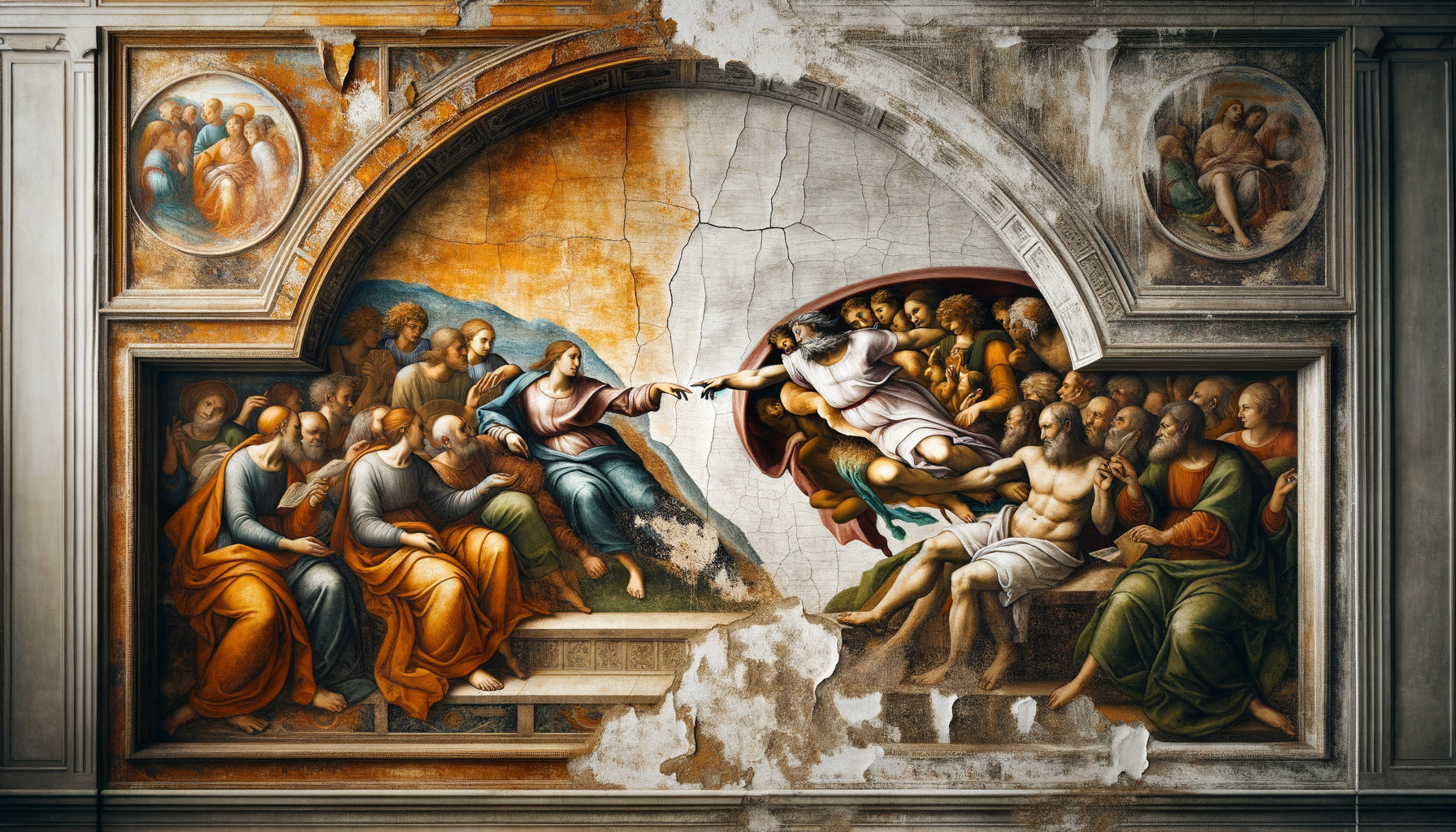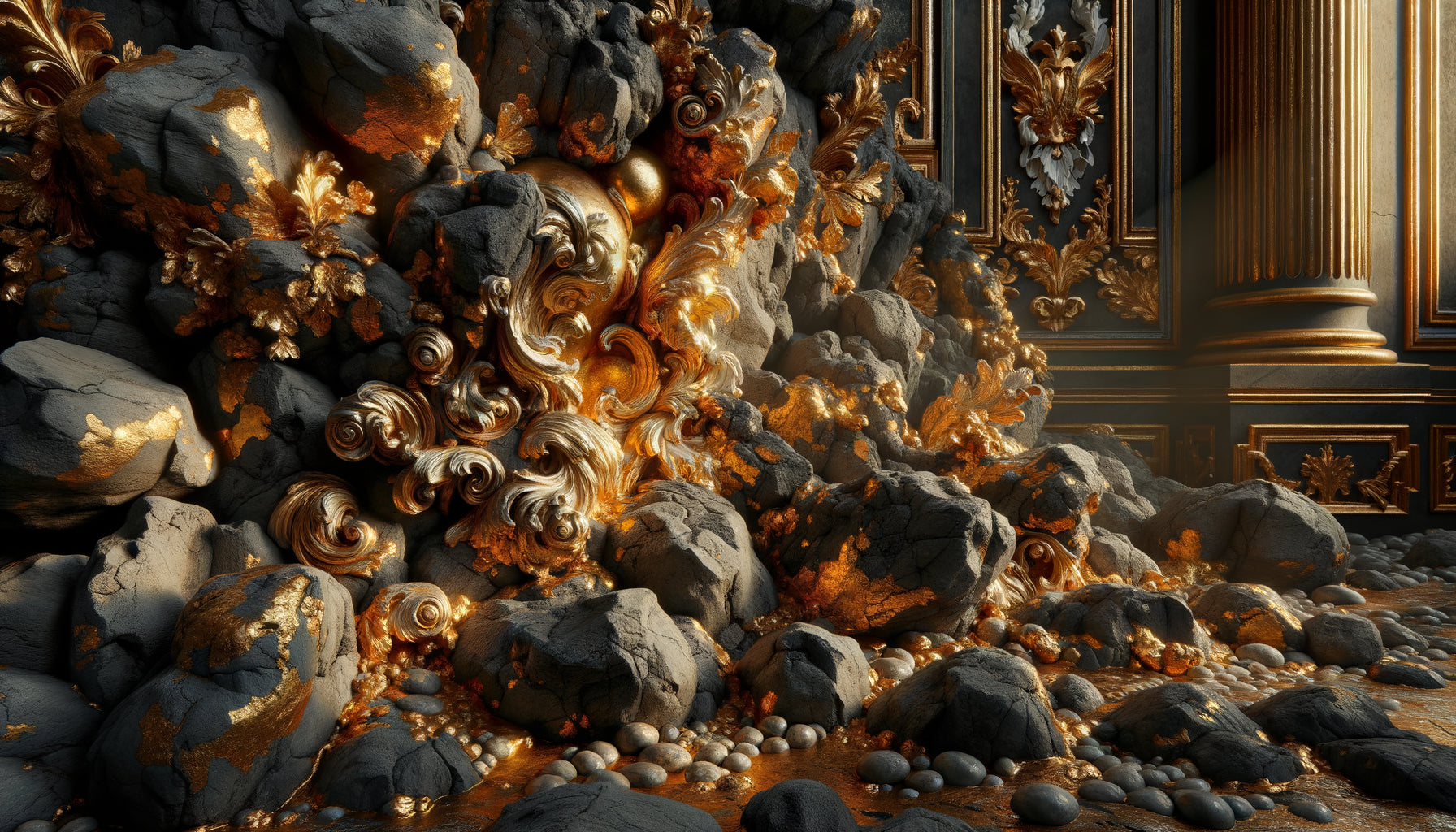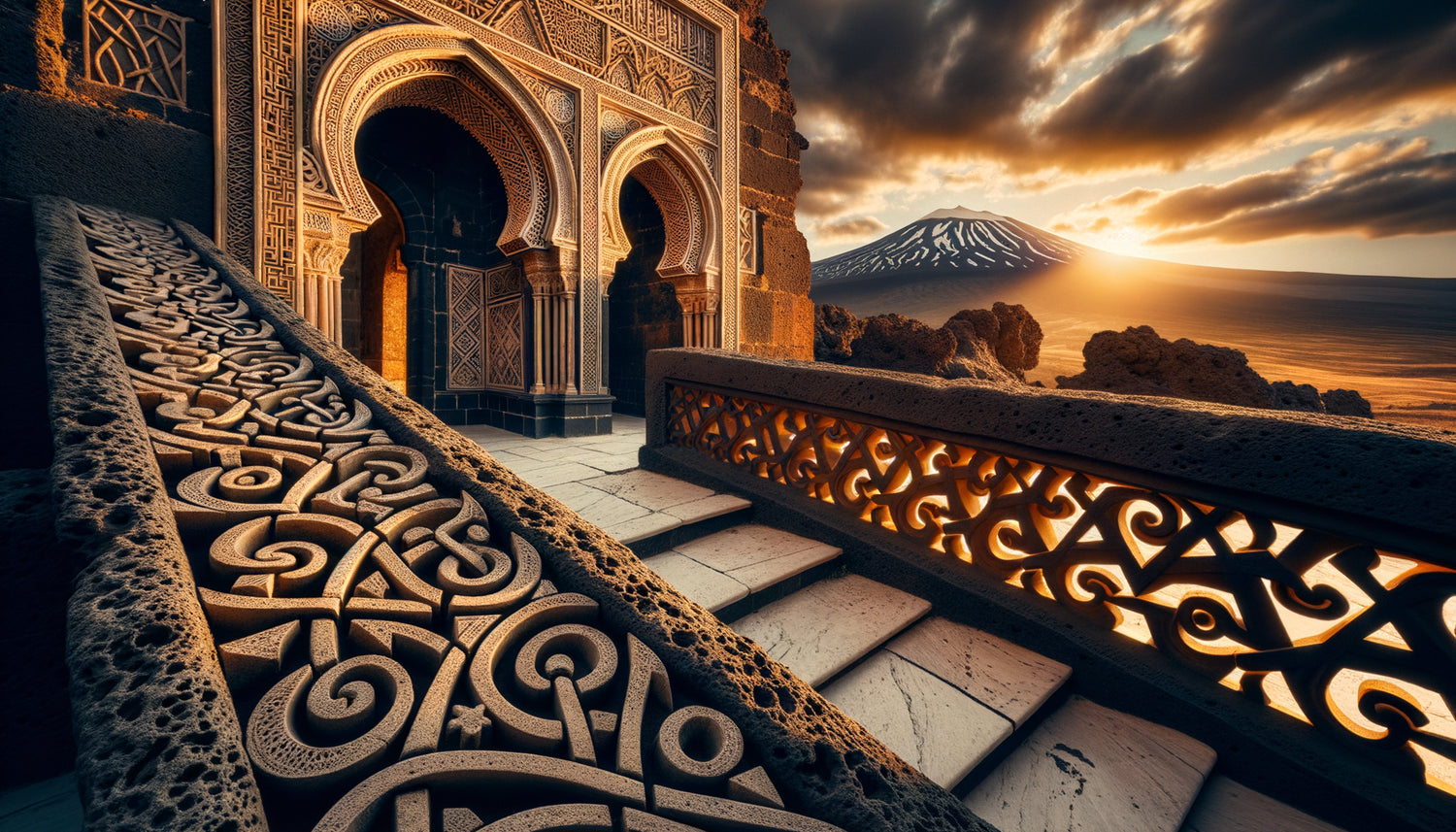
Imagine standing before Mount Etna, this giant of fire that has dominated Sicily for millennia. Its black lava flows contrast with the Mediterranean blue, creating a chromatic palette of rare intensity. This is precisely this telluric power that shaped one of the most fascinating artistic expressions in history: Islamic art from Sicily. Between the 9th and 13th centuries, Muslim artisans transformed the volcanic soul of the island into architectural and decorative motifs of breathtaking beauty.
Here's what this encounter between Sicilian volcanic landscapes and Islamic art reveals: an unprecedented mastery of lava stone as a noble material, the integration of natural chromatic contrasts into palace architecture, and a symbolism of transformative fire that transcends simple decoration to become aesthetic philosophy.
You may have admired Islamic motifs in books or museums, wondering where this unique ability to capture light, play with contrasts, and create compositions that seem to vibrate with an inner energy came from. The answer is often found in the silent dialogue between the artist and their environment.
Rest assured: understanding this influence requires no prior knowledge of art history or geology. Simply open your eyes to how a territory shapes the creative imagination of those who inhabit it.
I invite you to explore how Sicilian volcanic landscapes nourished the Islamic aesthetics of the island, creating a unique visual language that continues to inspire contemporary designers and decorators.
Black lava: sacred material of Norman-Arab architecture
The lava stone from Mount Etna was not just a building material for Muslim artisans in Sicily. This basaltic rock, born from the burning depths of the volcano, possessed a density and texture that allowed for unparalleled sculptural finesse. In the palaces of Palermo, notably at the Zisa and the Cuba, black lava columns alternate with golden limestone in a chromatic composition directly inspired by the geological strata visible on the slopes of Etna.
Arab stonemasons developed a revolutionary technique: they polished the lava until it achieved an almost metallic luster, creating surfaces that reflected light with particular intensity. This innovation transformed architecture into a play of luminous contrasts, where the deep black of the lava magnified the brilliance of golden mosaics and white stucco.
The choice of this volcanic material was not merely aesthetic. In Sicilian Islamic cosmology, lava represented the purifying transformative power of fire, a symbol of perpetual rebirth that resonated with Sufi teachings then very present on the island. Sicilian volcanic landscapes thus offered a raw material charged with spiritual meaning.
The art of volcanic bichromy
Carefully observe the facades of the Monreale Cathedral or the Norman Palace: you will discover this characteristic bichromy that alternates light stone and dark lava in hypnotic geometric patterns. This technique, called opus reticulatum in its Arab-Sicilian version, visually reproduces the successive layers of ash and lava visible in volcanic quarries.
Muslim artisans were not copying nature: they were distilling it into universal aesthetic principles. Each band of black lava evoked a flow frozen in time, transforming walls into a living geological memory.
When paradise gardens meet the land of fire
The concept of janna (paradise garden) occupies a central place in Islamic art. In Sicily, this dream of eternal greenery took on a particular dimension: it had to flourish on an exceptionally fertile but visually arid and black volcanic soil. This apparent contradiction gave rise to a unique aesthetic in Sicilian Islamic gardens.
At La Zisa, the Arab hydraulic system created fountains and canals that snaked between lush plantations, all framed by pavilions with walls of polished lava. Running water reflected the sky and vegetation, creating a striking contrast with the dark volcanic stone. This landscape staging reproduced the visual experience of oases emerging miraculously from fields of cooled lava on the slopes of Etna.
The ceramics that adorned these gardens echoed the tones of the volcanic landscapes: ochres of burnt earth, intense greens of vegetation rapidly colonizing ancient flows, deep blues of the Mediterranean sky reflected in polished stone. Muslim artisans thus created a Sicilian color palette immediately recognizable.

Volcanic geometry: motifs born of creative chaos
The geometric patterns of Sicilian Islamic art reveal a careful observation of natural structures created by volcanic activity. Basalt columns, which form during the slow cooling of lava and create perfect hexagonal prisms, directly inspired the honeycomb (muqarnas) patterns of palace ceilings.
In the Palatine Chapel of Palermo, the stalactite ceiling faithfully reproduces the geological formations of Sicilian volcanic caves. Each sculpted alveolus captures and refracts light exactly as lava cooled cavities create plays of shadows and reflections in natural cavities.
Muslim artisans developed a geometric language that visually translated the concept of creation by fire. Their seemingly endless compositions evoked molten lava branching into incandescent rivers before freezing into complex organic forms. This aesthetic of crystallized movement defines the very essence of Sicilian Islamic art.
The imperfect symmetry of volcanic nature
Unlike the perfectly symmetrical geometric patterns of Eastern Islamic art, Sicilian creations incorporate subtle asymmetrical variations. This peculiarity reflects the irregularity of volcanic landscapes: each eruption creates unique forms, never exactly reproduced. Artisans translated this geological truth into an aesthetic principle, introducing controlled variations into their compositions that make each work alive and organic.
The color of sulfur: volcanic pigments in decorative art
The volcanic landscapes of Sicily offered Muslim artists an extraordinary palette of natural pigments. Sulfur, abundant around Etna, produced vibrant yellows used in ceramics and illuminated manuscripts. Iron oxides from volcanic slag gave deep reds and warm ochres, while some volcanic ashes, once calcined, created blacks of unparalleled intensity.
Arab-Sicilian ceramic workshops developed glazing techniques incorporating these volcanic minerals, creating brilliant surfaces with characteristic metallic reflections. The famous geometrically decorated plates of Palermo feature tones found nowhere else in the Islamic world: this verdigris tinted with sulfur, this burnt earth brown-red, this lustrous black of polished lava.
This material approach to color created a direct physical link between the work of art and the territory. Owning a Sicilian ceramic meant literally holding a fragment of the volcano transformed by human art, an aesthetic relic of telluric power.

Contemporary legacy: when modern design rediscovers the volcanic lesson
Today, architects and decorators are rediscovering the aesthetic principles developed by Muslim artisans in the face of Sicilian volcanic landscapes. The renewed appreciation for raw materials, affirmed chromatic contrasts, and mineral textures in contemporary design owes much to this centuries-old tradition.
The collections of contemporary furniture inspired by Sicily play on the contrast between polished and rough surfaces, between deep black and bright white, reproducing this dialogue between lava and light that defines the island's Islamic art. Contemporary ceramicists reinterpret Arab-Norman geometric motifs by incorporating natural pigments extracted from volcanic soils, perpetuating a millennial tradition.
This volcanic aesthetic finds a particular resonance in our contemporary interiors. It brings an earthy and authentic dimension, an anchoring in primordial matter that contrasts with the dematerialization of digital life. Integrating elements inspired by this tradition is inviting home the quiet power of geological forces channeled by art.
Transform your interior with the power of eternal landscapes
Discover our exclusive collection of landscape paintings that capture the soul of extraordinary territories and bring this earthy dimension to your living space.
Creating Your Own Dialogue Between Space and Matter
You don't need to live in Sicily to apply the aesthetic lessons of this encounter between volcanic landscapes and Islamic art. Start by observing your immediate environment: what are its dominant colors, its characteristic textures, its natural contrasts? Sicilian Islamic art teaches us that a powerful aesthetics is always born from an authentic dialogue with the territory.
Introduce raw materials into your decor: natural stone, artisanal ceramics, polished surfaces that play with light. Dare to use asserted chromatic contrasts rather than bland harmonies. Favor geometric patterns that structure space while creating visual movement.
The legacy of Muslim artisans from Sicily lies in their ability to transform the raw power of nature into aesthetic refinement, to tame volcanic chaos without depriving it of its vitality. It is this controlled energy that you can invite into your home, creating interiors that vibrate with an inner life, that tell the millennial story of earth and fire tamed by human art.
The Sicilian volcanic landscapes have offered Islamic artists much more than materials: a worldview where creation and destruction intertwine perpetually, where beauty emerges from chaos, where raw matter becomes visual poetry. This aesthetic philosophy crosses centuries and continues to inspire those who seek to create authentic spaces, anchored in the quiet power of natural elements.
Let yourself be inspired by this millennial lesson: your interior can become the setting for a dialogue between matter and light, between telluric force and human refinement, between the geological memory of the earth and your personal quest for beauty.