1841. A silent, small revolution takes place in the workshop of John Goffe Rand, an American portrait painter based in London. By squeezing this metal tube he has just patented, he doesn't yet know that he will free generations of artists from their confined workshops. Before this invention, painting outdoors was akin to a military expedition: pig bladders filled with pigments that dry and leak, heavy and fragile ceramic pots, preparations that spoil in a few hours under the sun. I spent ten years studying the notebooks of 19th-century painters to understand this transformation, and each testimony reveals the same thing: the paint tube didn't simply facilitate plein air painting, it invented it.
Here’s what the invention of the paint tube brought: the freedom to capture natural light without time constraints, the spontaneity of a practice that is finally mobile, and the emergence of a new vision of landscape based on direct observation rather than studio reconstruction.
You might wonder why this technical question should interest you today, as you simply seek to understand the art around you or enrich your perspective on the works you love. It's precisely because this small innovation explains everything we consider modern in landscape painting. Without it, there would be no Impressionism. No Monet in front of his water lilies, no Van Gogh in the wheat fields, no Cézanne facing Mont Sainte-Victoire.
I will tell you about this invisible revolution, the one that transformed the landscape from an academic genre and reconstructed scene into an immediate sensory experience. You will discover how a simple tin tube redrew the history of art.
The logistical hell of painting before 1841
Imagine the scene: a painter at the beginning of the 19th century wants to capture a sunset over the Seine. He must first prepare his colors in his studio, grinding pigments by hand with linseed oil for hours. Then, he fills pig bladders – yes, you read that right – with these colored pastes, sealing them with a brass pin. These semi-permeable bladders allow the oil to oxidize and the paint to harden in a few days.
For a three-hour outing, he must carry about ten of these fragile pouches, glass or ceramic pots for mixtures, oils, solvents, brushes, a heavy wooden easel, primed canvases... The whole thing easily weighs fifteen to twenty kilos. Corot’s notebooks, which I consulted in the Louvre archives, regularly mention “lost colors” and “preparations spoiled by heat.”
Result? Most landscapes were painted in the studio, from quick sketches or memories. The painter reconstructed the scene from memory, adding conventional elements, typical trees, standardized skies. Nature became an idea of nature, filtered through academic codes rather than direct observation.
The metallic revolution: freedom in a tin tube
When Rand invents his flexible and resealable tin tube, the impact is immediate but underestimated. In the first years, only a few manufacturers like Winsor & Newton in England adopt this technology. But from the 1850s, the democratization of paint tubes radically transforms artistic practice.
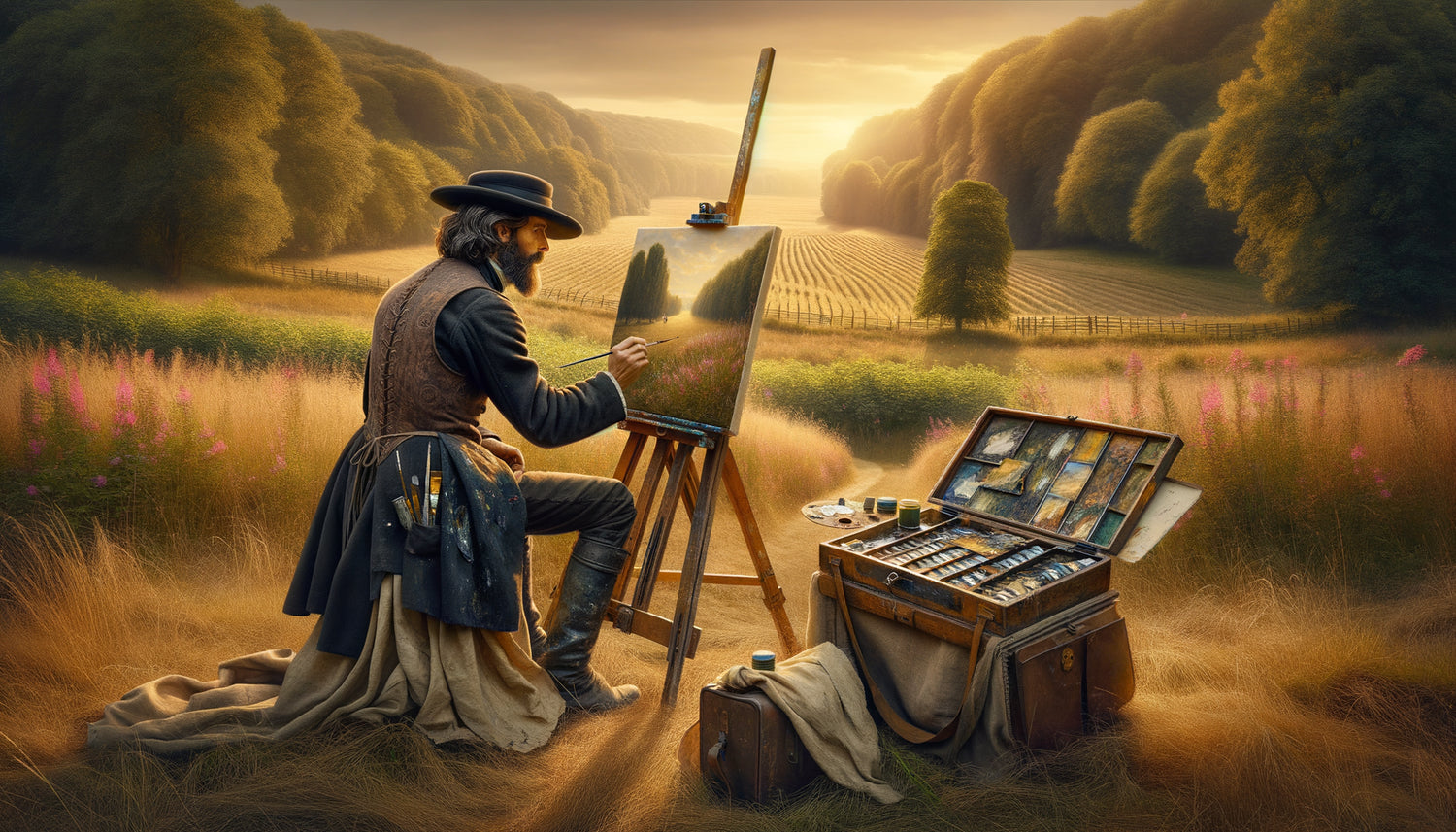
Suddenly, a painter can slip a dozen tubes into a light bag, go out for the day, and have fresh colors available, protected from air, reusable for months. Painting outdoors goes from an exceptional expedition to a daily accessible practice.
Pierre-Auguste Renoir will later say it with disarming frankness: "Without color tubes, there would be no Cézanne, no Monet, no Sisley or Pissarro, nothing that journalists call Impressionism." This statement is not an exaggeration. The tube created the material conditions of an aesthetic revolution.
A new relationship with time
With tubes, painters can now work quickly, very quickly. Capturing an ephemeral effect of light becomes possible. Monet will set up as many as seven canvases simultaneously to capture the variations in light on Rouen Cathedral at different hours. This practice would have been unthinkable with the old system of bladders that dry and preparations that deteriorate.
The outdoors is no longer a suffered constraint, it is a sought-after aesthetic choice. The Barbizon painters in the 1850s, then the Impressionists in the 1870s, develop an approach where spontaneity takes precedence over academic finishing. Brushstrokes remain visible, color touches juxtaposed rather than blended. This aesthetics of the “unfinished” is born directly from the technical possibility of painting on site.

When light becomes the true subject
The deepest consequence of this technical revolution touches the very conception of landscape. Before paint tubes, academic landscapes followed a formula: a dark foreground with picturesque elements, an intermediate plane with the main motif, a clear and airy background. The composition obeyed strict rules, light was reconstituted in the studio with artificial lighting.
Faced with the actual motif, armed with their portable tubes, painters discover something radically different: natural light This direct observation, made possible by the ease of working outdoors, leads to the I have often observed this transformation by comparing landscapes from 1830 and those from 1870 in museum reserves. The difference is striking: we move from a The impact of the paint tube goes beyond the simple aesthetic question. It creates a new type of artist: the This mobility transforms the geography of art. Painters leave Paris for Normandy, Brittany, the Midi. They discover regional lights, specific atmospheres. The Provençal landscape of Cézanne, vibrant and structured, could never have been born in a Parisian studio. It is the result of hundreds of hours of Artists' colonies flourish: Pont-Aven, Giverny, Collioure... Places where painters can settle permanently, go out every day with their portable equipment, and develop a new intimacy with nature. This nomadic practice of landscape painting in the open air creates a collective emulation that accelerates stylistic innovations. Another little-known consequence: the paint tube democratizes painting practice. Painting en plein air is no longer reserved for professionals equipped. Amateurs, women artists long excluded from official workshops, can now practice autonomously. Berthe Morisot, Mary Cassatt, or Eva Gonzalès develop their art outdoors with a new freedom. This technical accessibility contributes to diversifying perspectives on the landscape, multiplying approaches. Landscape painting en plein air becomes a plural, personal genre, where each sensibility can express itself without passing through the academic filter. Today, this story may seem distant. Yet, every time you admire a Monet, a Sisley, or even a contemporary landscape worked on site, you contemplate the direct heritage of this invention. The tube of paint shaped our modern conception of landscape: immediate, sensory, authentic. In galleries and collections, landscapes painted en plein air are recognizable by their particular energy. They bear the mark of the wind, changing light, the urgency to capture the moment. This visible spontaneity, this vibration of real life transposed onto canvas, still moves us because they testify to a real presence of the artist facing nature. Contemporary artists who perpetuate this tradition – and there are many – inherit this freedom conquered in 1841. Their works extend this intimate conversation with the landscape, made possible by a tin tube filled with color. Let this captivating light captured en plein air into your interior The invention of the tube of paint reminds us of a fundamental truth: great artistic revolutions often arise from small technical innovations. This modest tube freed artists from their studios, allowed them to confront their gaze directly with the complexity of the real world, and ultimately transformed our way of seeing and representing nature. Next time you contemplate an impressionist landscape, think of these tin tubes that made this capture of light possible. And perhaps you will yourself go out to observe differently the landscape around you, attentive to those infinite variations that only direct observation reveals. For it is there, ultimately, the most beautiful legacy of this revolution: having taught us to really look at the nature surrounding us. Before 1841, painters mainly used pig bladders in which they enclosed freshly prepared paint. These bladders were closed with a brass pin that was removed to extract the color. The problem? They were fragile, permeable to air, and the paint dried quickly. Other solutions existed such as ceramic or glass pots, but they were heavy and impractical for transport. Metal syringes were also used, but they required tedious filling. As a result: painting outdoors was like a logistical expedition, with equipment weighing fifteen to twenty kilos for a few hours of work. This constraint explains why the majority of landscapes were painted in studios, based on quick sketches made on site. The resealable metal tube changed everything by offering a light, airtight and durable solution. Impressionism relies on direct and prolonged observation of natural light and its variations. Monet sometimes painted the same cathedral at different hours to capture changes in luminosity. This practice required being able to work quickly outdoors, with fresh colors immediately available. Before the paint tube, this approach was materially impossible: pig bladders dried too quickly, transport was too heavy, preparation too long. The tube created the technical conditions allowing Impressionists to develop their aesthetic based on spontaneity, visible touches, and the capture of fleeting moments. As Renoir said: without tubes, no Impressionism. This statement is not metaphorical but literally true: the aesthetic revolution stemmed directly from the technical innovation. No, but it is the type of landscape that has been most profoundly transformed. Portrait or interior scene painting was already essentially practiced in studios where old methods worked correctly. On the other hand, landscape naturally required movement to the motif. The tube of paint therefore specifically revolutionized this genre by allowing systematic plein air painting. That said, the impact extended to all artistic practice: greater freedom of movement, possibility of long sessions outside the studio, democratization of painting for amateurs. Outdoor scenes of daily life, seascapes, cafes, all these Impressionist subjects also benefited from this new mobility. But it is truly plein air landscape painting that has undergone the most radical and visible transformation in the history of art.The birth of the traveling painter
The emancipation of the amateur gaze

The contemporary legacy of a small revolution
Discover our exclusive collection of landscape paintings that perpetuates this tradition of direct observation and authentic emotion in the face of nature.Conclusion: technique at the service of vision
FAQ: Understand everything about the impact of the tube of paint
How did painters transport their colors before the invention of the tube?
Why is it said that Impressionism would not have existed without the paint tube?
Did this invention have an impact only on landscape painting?