Imagine yourself atop an English hill in 1780, turning your back on a grand landscape to observe... a small dark mirror. No, you're not mad. You are simply one of those refined travelers who possess the most intriguing accessory of the Enlightenment: the Claude Glass. This mysterious black mirror, no larger than the palm of your hand, instantly transformed any ordinary view into a painting worthy of the greatest masters. Before the invention of photography, before Instagram and its filters, this small optical tool already allowed reality to be sublimated, landscapes to be composed perfectly, and beauty to be captured through the prism of romantic art. A magic that cultivated ancestors considered the pinnacle of good taste.
Here's what the Claude Glass brought to 18th-century travelers: an instant transformation of the landscape into a perfect pictorial composition, a novel aesthetic experience that intensified emotion in front of nature, and an enviable social status among Europe's cultural elite. For possessing a black mirror was not merely a whim: it was asserting one's belonging to a circle of initiates, those who truly knew how to see the world.
The magic mirror of aesthetes: the birth of a cult object
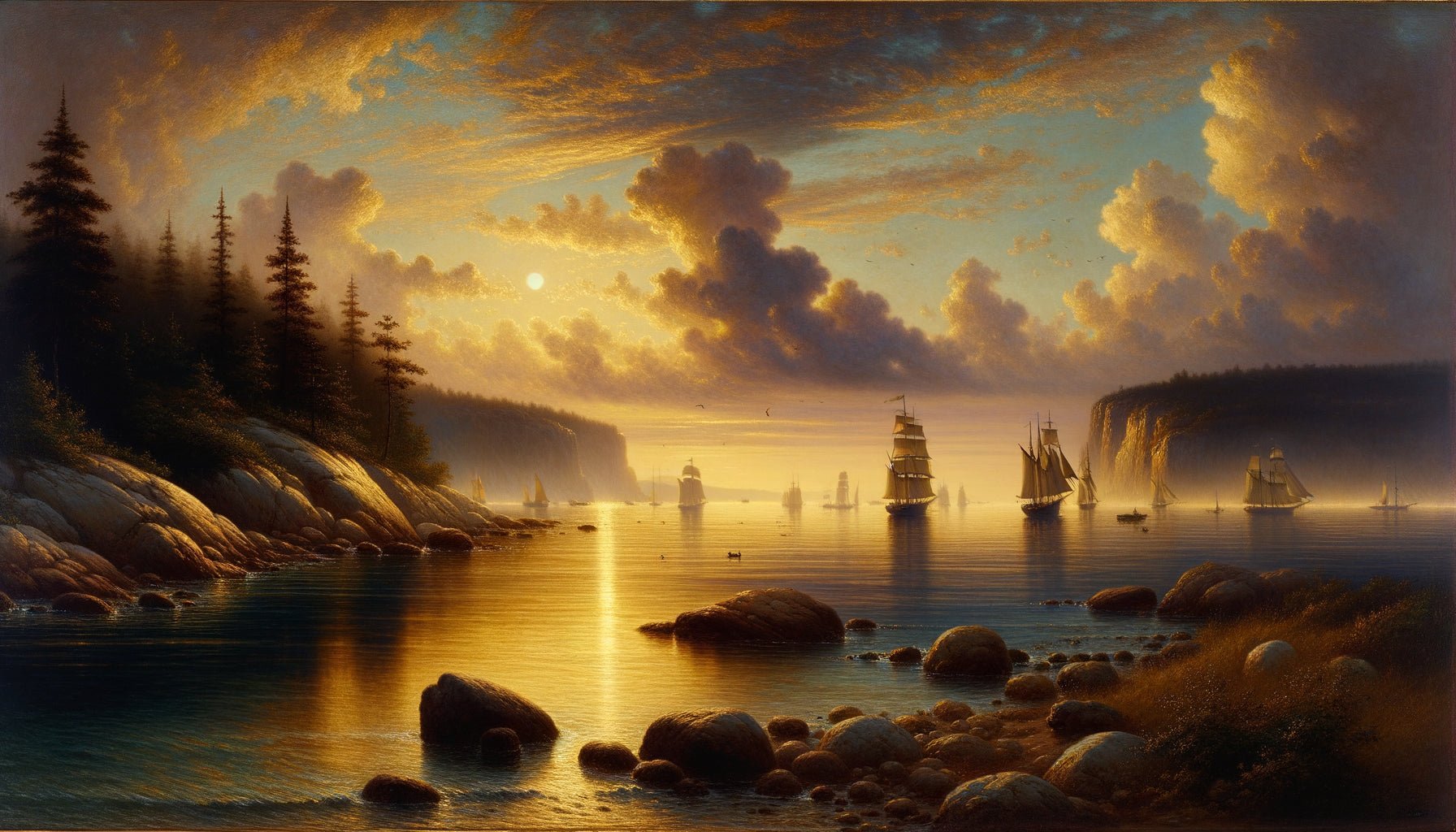
The Claude Glass takes its name from Claude Lorrain, that 17th-century French painter whose landscapes bathed in golden light made Europe dream. His canvases depicted an idealized nature, harmonious, where every element found its place in a perfect composition. Aristocrats and intellectuals of the 18th century revered these works to the point of wanting to find this aesthetic in their own travels.
Thus was born this fascinating object: a tinted convex mirror, generally black or dark gray, sometimes slightly domed, mounted in an elegant pocket case. Its dark surface was not a defect, but rather its main quality. By reflecting the landscape, this mirror operated several simultaneous transformations: it reduced the scale of the view, softened overly harsh contrasts, unified tones into a subtle chromatic harmony, and above all, it gave the scene that characteristic golden patina of Claude Lorrain's paintings.
Enlightened travelers no longer went on excursions without their black mirror. They would position themselves facing the landscape, then gracefully turn to observe the view in the mirror. This practice, as strange as it may seem today, was considered the height of refinement. The Claude Glass literally transformed the real world into a living painting.
When reality becomes a work of art: the optical magic explained
What exactly happened when one observed a landscape through a black mirror? The transformation was as much about optical physics as it was about psychology of perception. Firstly, the tinted surface filtered wavelengths of light, attenuating garish colors and creating a harmonious palette of warm tones. Too vivid greens became deep forest shades, glaring blues transformed into delicate azure.
Secondly, the mirror's convexity compressed the visual field, creating a staging effect comparable to framing a painting. The landscape was literally composed, with its successive planes perfectly organized. This spatial compression eliminated distracting details and focused attention on the essential: the dramatic structure of the landscape, its lines of force, its balance.
Thirdly, and perhaps most subtly, the very act of turning one's back to the landscape created an aesthetic distance. By looking at the reflection rather than direct reality, the observer placed themselves in the position of a spectator facing a work of art. The world became representation, nature became culture. This mediation by the mirror transformed the raw experience into an aesthetic experience.
The influence on the romantic perception of nature
The Claude Glass was not just an optical gadget: it profoundly influenced how a whole generation perceived and described nature. 18th century travel accounts are full of descriptions of landscapes that seem directly inspired by the use of the black mirror. Romantic writers described mountains, lakes and forests with vocabulary borrowed from painting: composition, chromatic harmony, chiaroscuro.
This small mirror thus helped shape the romantic imagination of wild and sublime nature. The Swiss Alps, the Lake District in England, the Scottish Highlands: all these iconic landscapes were discovered and admired through the filter of the black mirror. The optical tool became an instrument of sensitivity.

Discover this inspiring artwork
The cultivated traveler's ritual: a guide to a disappeared practice
Using a Claude Glass followed a precise protocol that revealed the sophistication of this practice. The traveler first carefully chose their viewpoint, preferring heights offering a panoramic view. Once the ideal position was found, they took out their mirror from its velvet or morocco leather case.
Then came the characteristic gesture: to turn away from the landscape. This counter-intuitive posture was essential. The traveler would then raise the mirror to eye level, slightly tilted, and adjust its angle until they captured the perfect composition. Some mirrors were even mounted on telescopic handles to facilitate this manipulation.
The observer would then take the time to contemplate the reflection, noting mentally (or in their travel journal) the chromatic harmonies, the effects of light, the arrangement of masses. Some artists used the black mirror as a preparatory tool for drawing, sketching directly from the reflection rather than from nature. The mirror thus became an artistic filter, an interface between the world and its representation.
Accounts from the time describe this practice with a mixture of fascination and sometimes irony. The poet Thomas Gray, traveling in the Lake District in 1769, mentions his use of the black mirror with enthusiasm. Other observers, more critical, gently mocked these travelers who preferred to admire the reflection rather than reality itself.
From luxury object to modern inspiration: legacy of a vision
The Claude Glass was made by specialized artisans, often opticians or manufacturers of scientific instruments. The finest examples, mounted in engraved cases with silver clasps, cost a small fortune. Some mirrors were even reversible, offering two different shades: black for bright landscapes, grey for darker scenes.
This artisanal and precious dimension added to the social prestige of the object. Owning a black mirror signaled that one belonged to the cultural elite, that one mastered the codes of aesthetic appreciation. It was the 18th century equivalent of our high-end reflex camera: a technical tool combined with a status marker.
The little-known ancestor of photography
With the invention of photography in the 19th century, the Claude Glass gradually fell into disuse. Why use a mirror to transform a landscape into an image when you could now capture that image directly onto a sensitive plate? Yet, early photographers unconsciously perpetuated the aesthetics of the black mirror.
Pictorialist photographs from the late 19th century, with their sepia tones, softened contrasts and carefully balanced composition, exactly reproduced the effects of the black mirror. Even today, our Instagram filters that warm up tones and soften details only reinvent digitally what the Claude Glass was accomplishing optically three centuries ago.
Some contemporary photographers are rediscovering this historical tool. Experimental artists use it to create series combining photographed landscapes and reflections in tinted mirrors, questioning our mediated relationship with nature. The black mirror thus becomes a conceptual object, a reflection on representation itself.

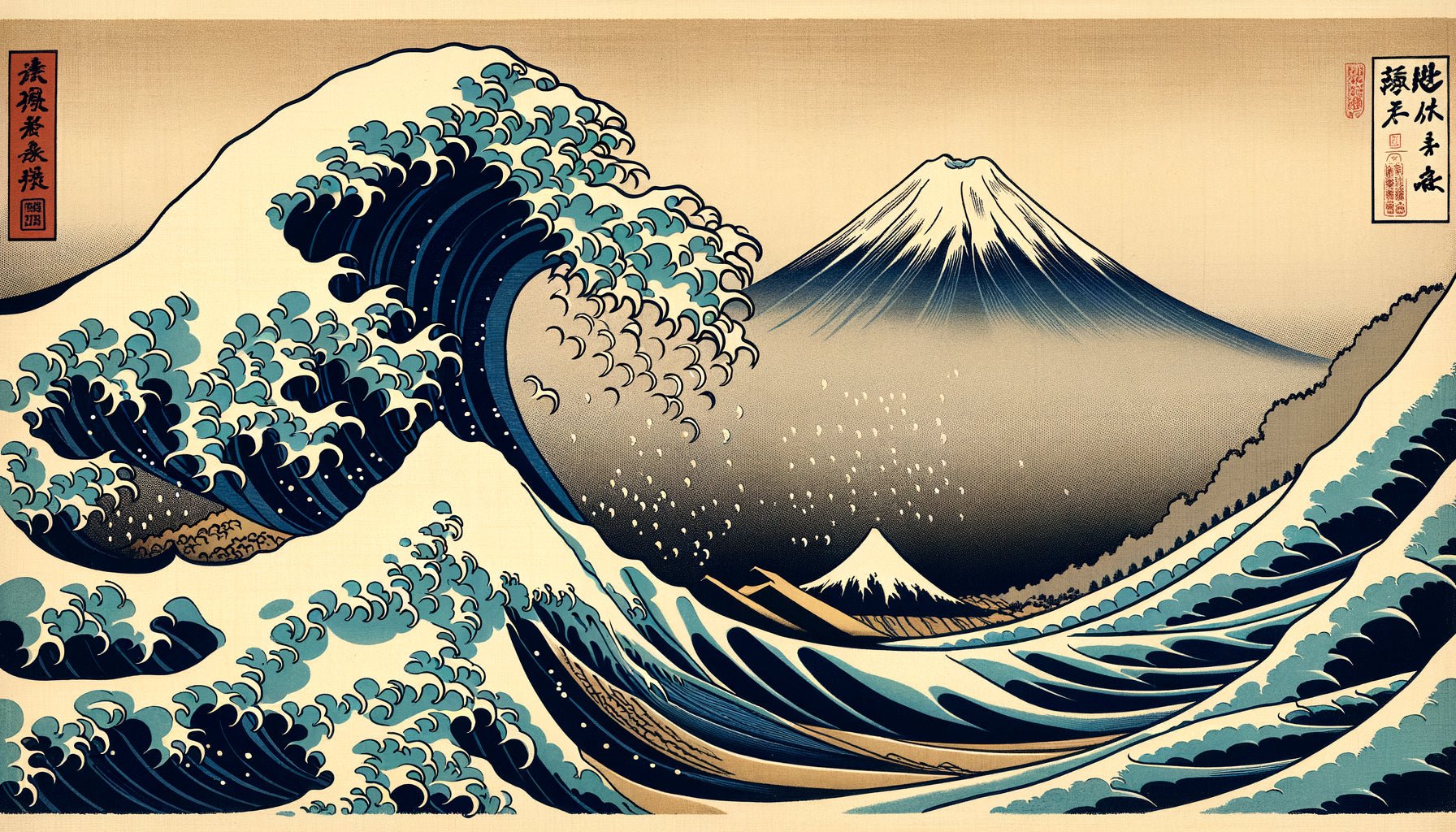
Discover this inspiring work
Why does this story still fascinate today
The history of the Claude Glass speaks to us because it resonates with our current practices. Haven't we all, during a magnificent trip, spent more time photographing the landscape than contemplating it directly? Don't we systematically apply filters to embellish our photos, just as the black mirror embellished reality?
These 18th-century travelers who turned their backs on the Alps to admire their reflection in a tinted mirror may seem ridiculous to us. But are they so different from us, watching a sunset through the screen of our smartphone? The black mirror reminds us that our aesthetic relationship with nature has always been mediated, filtered, composed.
More deeply, the Claude Glass questions us about the value of direct experience versus estethetized experience. Does transforming the world into a painting enrich it or impoverish it? Does this mediation distance us from reality or, on the contrary, allow us to see it better? These philosophical questions remain as relevant today as they were in the age of augmented reality and virtual experiences.
Transform your interior into a romantic art gallery
Discover our exclusive collection of landscape paintings that capture the timeless aesthetic of the great masters, without having to turn your back on your living room.
Rediscovering the art of seeing: a lesson for our time
If the Claude Glass teaches us something, it is that the art of seeing is cultivated. These 18th-century travelers did not look with their eyes alone, but with an entire visual culture, an aesthetic education, a worked sensitivity. The black mirror was only a tool; the real transformation took place in the mind of the observer.
Today, we are overwhelmed with images but not necessarily more capable of truly seeing. The black mirror reminds us that appreciating a landscape, whether real or represented, requires a form of learning. Understanding composition, perceiving chromatic harmonies, grasping the balance of masses: these aesthetic skills enrich our experience of the world.
Perhaps we should, in our own way, reinvent the Claude Glass ritual. Not necessarily by turning our backs on landscapes, but by taking the time to truly contemplate them, to mentally compose them, to appreciate them as natural works of art. Your next landscape artwork hanging in your home could become your own black mirror: a filter that teaches you to see beauty everywhere.
The legacy of the black mirror endures in our constant desire to capture beauty, to frame it, to possess it. Whether through a small tinted mirror from the 18th century or through the paintings we choose for our walls, we pursue the same quest: to transform our environment into an aesthetic space, to make our daily life a work of art. Travelers of the Enlightenment had their Claude Glass; we have our carefully composed collections of art that transform our interiors into personal galleries, reflections of our sensibility.
Frequently Asked Questions about the Claude Glass
Can authentic Claude Glasses still be found today?
Authentic black mirrors from the 18th century have become rare collector's items, mainly preserved in museums or private collections. A few specialized antique dealers occasionally offer them for sale, generally at high prices due to their historical rarity. However, several contemporary artisans have begun to recreate Claude Glasses using traditional techniques: convex tinted mirrors in black, gray, or sepia tones, mounted in elegant pocket cases. These modern reproductions offer the same visual experience as the originals and allow you to rediscover this fascinating practice without investing a fortune. Some photographers and artists use them as creative tools, exploring this historical aesthetic in a contemporary context. If you are curious to experiment with this romantic vision of landscape, these modern versions constitute an excellent introduction to this forgotten art of mediated contemplation.
How did the Claude Glass concretely influence landscape painting?
The influence of the black mirror on landscape painting was double and profound. First, many artists used it as a preparatory tool during their outdoor excursions. By observing the landscape in the mirror, they immediately saw a simplified and harmonized version of the scene, which facilitated the initial composition of their painting. Superfluous details disappeared, the main masses became clearly visible, and the color palette was already unified. Secondly, the Claude Glass contributed to defining a true pictorial aesthetic that dominated the era: warm golden tones, softened contrasts, a slightly veiled atmosphere reminiscent of old masters. British watercolorists such as Thomas Girtin or John Robert Cozens developed a style directly inspired by the vision of the black mirror. Even great Romantic landscape painters like Turner were influenced by this way of seeing that prioritized tonal harmony and balanced composition over meticulous rendering of details. The black mirror was thus both a practical tool and a conceptual filter that shaped the gaze of an entire generation of artists.
Why was it necessary to turn your back on the landscape to use the Claude Glass?
This seemingly absurd practice actually had several very pragmatic and philosophical reasons. Technically, turning your back on the landscape allowed blocking parasitic reflections and improving the quality of the image in the mirror. By positioning yourself with your back to the scene and holding the mirror in front of you, you created a natural darkroom where the reflected image was clearer and more contrasted. But beyond this optical aspect, this posture had an essential symbolic dimension: it physically materialized the aesthetic distance necessary for artistic appreciation. By turning away from direct reality to contemplate its representation, the traveler explicitly placed himself in the position of the spectator facing a painting. This mediation was voluntary and conscious: it was not about seeing nature as it is, but as it should be in an ideal pictorial composition. This practice perfectly embodied the aesthetic philosophy of the 18th century, where art was considered superior to raw nature, where composition outweighed simple observation. The black mirror taught that we never see the world directly, but always through cultural and artistic frames that shape our perception.