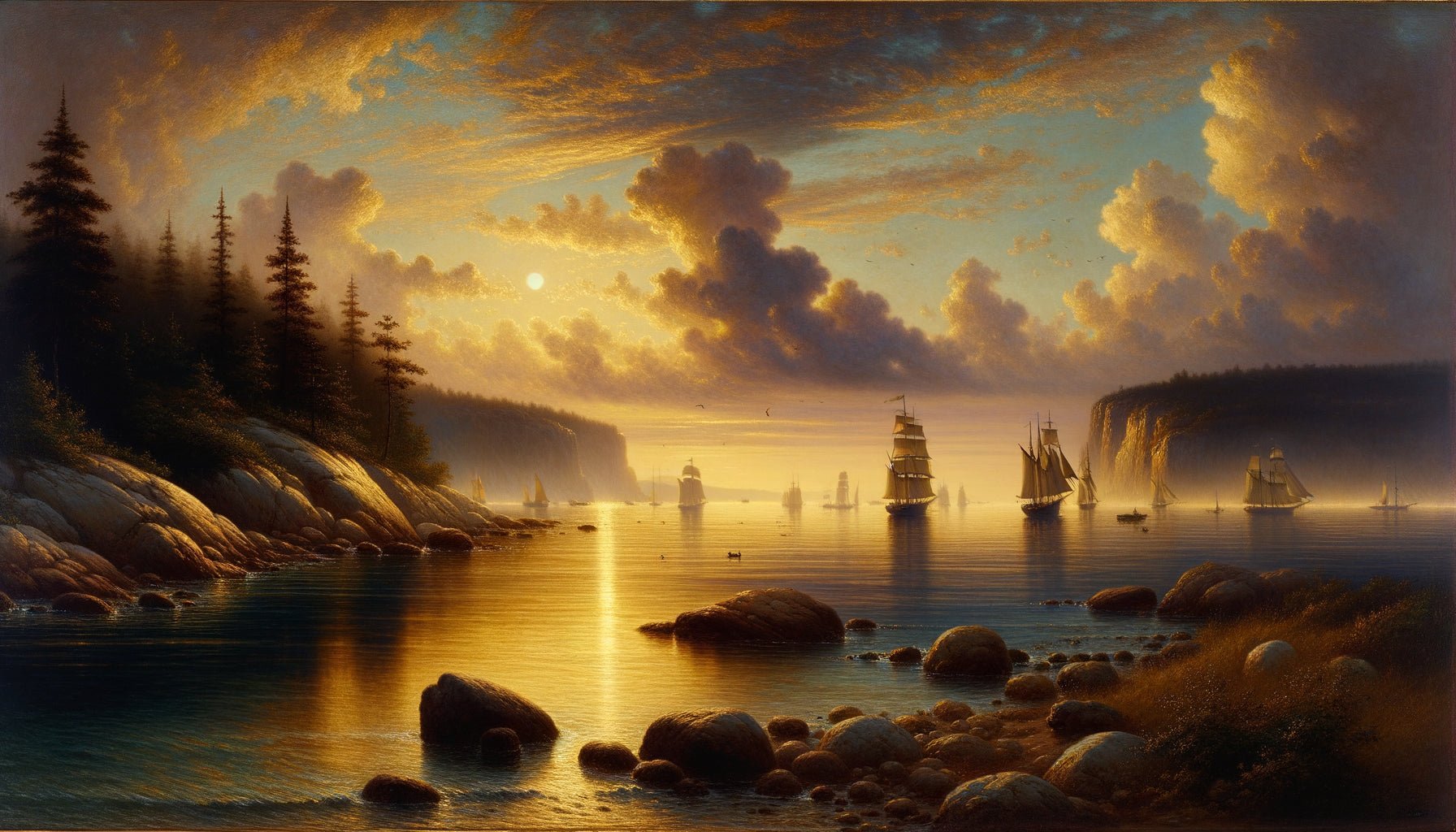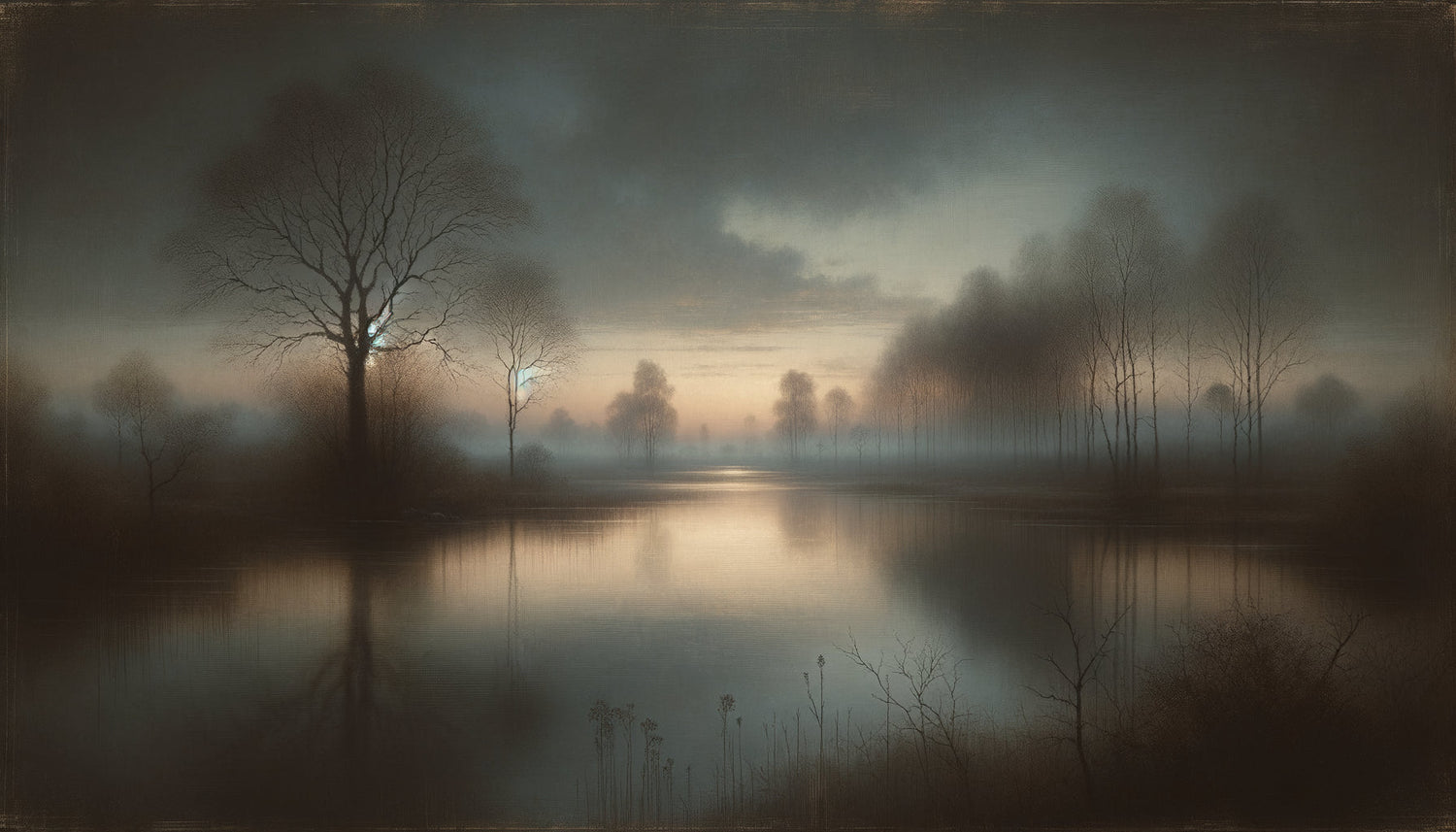
Before Lightroom filters flooded our feeds, before hazy atmospheres went viral on Pinterest, American painters were revolutionizing landscape art in the hushed silence of their studios. Between 1880 and 1915, American Tonalism invented this twilight aesthetic that obsesses us today: soft lights, veiled atmospheres, monochrome palettes. These artists understood long before anyone else that beauty lies in suggestion rather than evidence, in blur rather than sharpness.
Here's what American Tonalism brings to your decor: timeless sophistication that transcends decades without aging, a unique ability to create intimacy in any space, and understated elegance that never shouts but always captivates. At a time when our interiors are overwhelmed with visual stimuli, these works offer what we desperately seek: calm.
You may have felt this frustration looking at ultra-minimalist interiors lacking soul or decorations that are overloaded and tire the eye. You're searching for that particular atmosphere, that almost palpable quality of air you’ve admired in certain character homes, without knowing how to recreate it in your own home.
Rest assured: American Tonalism holds the keys to this visual alchemy. These painters spent thirty-five years perfecting the art of ambiance, composing with mists and fading lights. Their aesthetic legacy remains strikingly modern and miraculously integrates into our contemporary interiors.
I invite you to discover how this little-known artistic movement can transform your perception of decoration, and above all, how to integrate it concretely into your daily life to create those contemplative spaces we all need.
When America invents its own luminous melancholy
American Tonalism was born from a silent revolt. After the Civil War, as America industrialized at breakneck speed, artists like George Inness, James McNeill Whistler and Thomas Wilmer Dewing refused the ambient noise. They turned their backs on the spectacular landscapes of the Hudson River School, too dramatic, too assertive.
These pioneers of Tonalism sought something else: to capture the elusive, to paint not what the eye sees but what the soul feels. Their canvases become visual meditations, breathing spaces in an accelerating era. They work in transparent layers, soften outlines, and favor the hours when light hesitates – the misty dawn, the lingering twilight, night falling on the marshes.
European influence is there, of course – French Barbizon, Impressionists – but American Tonalism develops its own identity. More introspective, more spiritual, it transforms the ordinary landscapes of New England into sanctuaries of contemplation. A field in the mist becomes a cathedral of silence.
The twilight palette: those colors that instantly soothe
Carefully observe a tonalist work: you will never find colors that scream. American Tonalist artists worked within a restricted and refined color range, favoring ton-on-ton harmonies that create this characteristic atmospheric unity.
The grey-blues of early morning, those misty hues that envelop the hills. The muted ochres of twilight, when the earth seems to exhale the light it has absorbed. The greys of still water expanses. The golden browns of autumn grasses under a low sky. This Tonalism palette speaks directly to our nervous system: it slows the heart rate, invites contemplation.
What is fascinating about these color choices is their absolute modernity. Translate these colorful chords into a contemporary interior: you immediately get that timeless sophistication sought by the best designers of today. American tonalists intuitively understood what color psychology would confirm a century later: monochromatic and nuanced palettes create spatial harmony and mental tranquility.

Discover this inspiring artwork
The art of blur: why imprecision creates intimacy
In our hyperconnected interiors, saturated with HD screens and 4K definitions, American Tonalism reminds us of a forgotten truth: blur is not a defect, it is a quality. These painters systematically softened details, smoothed contours, created imperceptible transitions between sky and earth, between water and shore.
This tonal sfumato technique – the art of making lines disappear – produces a powerful psychological effect: it invites the eye to slow down, linger, complete what is suggested. Unlike images that give themselves entirely at a glance, a Tonalist work unfolds gradually. You return to it, you discover new nuances, new depths.
It is precisely what it brings into a living space: a discreet but magnetic presence that creates depth without visually cluttering. Where an image saturated with details quickly fatigues the brain, the tonal aesthetic rests the eye and mind. It functions as a silence in a conversation: it creates the necessary space for mental breathing.
Forgotten Masters Who Deserve Your Attention
George Inness remains the great spiritualist of American Tonalism. His landscapes of New Jersey and the Delaware Valley transcend simple representation to become mystical experiences. He painted the soul of places, not their appearance. His stormy skies, meadows bathed in oblique light possess that meditative quality which transforms a simple living room into a space for reflection.
James McNeill Whistler, with his famous Nocturnes, pushes Tonalism towards pure abstraction. His views of the Thames in London's fog reduce the visible world to chords of color, harmonies almost musical. Indeed, he titled his works like compositions: 'Nocturne in Blue and Gold', 'Symphony in Grey and Green'. This synesthetic approach to American Tonalism resonates particularly today.
Henry Ward Ranger, Dwight Tryon, Thomas Dewing: these names circulate little in conversations, yet their tonalist works possess that magnetic quality which stops time. They knew how to capture those suspended moments – the silence of a summer evening, the solitude of a winter landscape – with an emotional accuracy that transcends eras.

Discover this inspiring artwork
How to Integrate Tonalist Aesthetics into Your Interior
The energy of American Tonalism is not limited to museums. It naturally finds its way into contemporary interiors that seek balance between character and serenity.
In a bright living room, a large canvas with grey-blue tones from Tonalism anchors the space without weighing it down. Placed above a natural linen sofa, it dialogues beautifully with textured textiles and a neutral palette. The twilight atmosphere of the work creates a soothing counterpoint to daylight.
In a bedroom, tonalist aesthetics unleash their full power: these veiled landscapes, these declining lights naturally accompany the bedtime ritual, prepare the mind for rest. Favor medium formats, muted tones that absorb artificial light rather than reflect it.
In an office or reading space, American Tonalism offers this contemplative presence that promotes concentration without distraction. A small format, a misty seascape, a woodland in the twilight: these subjects create mental windows, visual breathing spaces between intense work sessions.
The trick of discerning decorators? Combine a tonalist artwork with indirect and warm lighting that extends the canvas's crepuscular atmosphere. Absolutely avoid direct spotlights which would betray the very spirit of the movement. Tonalism cannot stand obvious brightness: it thrives in elegant twilight.
Why this aesthetic resonates so strongly today
There is something profoundly current about American Tonalism. At a time when our screens pour out millions of saturated, contrasting, shouting images, these murmuring landscapes offer a necessary visual refuge. They embody the slow movement applied to art: look less but better, prioritize depth over immediate impact.
The current success of the 'moody' aesthetic in decoration, interior photography, graphic design is no coincidence. We are collectively rediscovering what American tonalists already knew in 1890: veiled atmospheres, soft lights, restricted palettes create authentic emotion where spectacle only produces fleeting stimulation.
Tonalism also reminds us that true sophistication does not lie in accumulation or ostentation, but in subtlety and suggestion. A single well-composed grey chord is better than a poorly mastered explosion of colors. It's a style lesson that transcends trends and decades.