Having spent fifteen years navigating European art galleries and auction houses, I have always been fascinated by a troubling paradox: while Nordic dragons and Greek gods literally flood the decorative art market, wall paintings depicting Celtic mythology are conspicuously absent. Yet, this mythology possesses extraordinary narrative richness, powerful visuals, and a deeply rooted cultural heritage in our lands. But where are Cernunnos, Brigid, and the legends of the Sidh on our walls?
Here's what this scarcity of Celtic wall paintings reveals: a complex history of cultural erasure, oral transmission, and modern competition that explains why these works remain treasures for discerning collectors. This rarity also creates a unique opportunity for those who wish to own something truly distinctive.
If you are looking to decorate your interior with pieces charged with mystery and authenticity, you have probably noticed this frustration: wall paintings on Celtic mythology are difficult to find. Between generic reproductions and poorly documented works, the market seems to ignore this millennial tradition.
Rest assured: this scarcity is due to specific historical and cultural reasons, not a lack of interest. Moreover, understanding these mechanisms will allow you to better appreciate these works when you find them, and to make informed choices for your collection.
In this article, I take you behind the scenes of this mysterious absence, exploring the deep reasons that explain why Celtic wall paintings remain so rare in the decorative art market.
The ghost heritage: when oral tradition becomes an artistic obstacle
The first reason for the scarcity of wall paintings on Celtic mythology lies in the very nature of this tradition: it was almost exclusively oral. Unlike the Greeks and Romans who sculpted, engraved, and painted their gods on every possible medium, the Celts transmitted their stories by word of mouth from druids and bards.
This oral transmission means that there is no ancient and consolidated visual corpus. Contemporary artists wishing to create wall paintings on this mythology must first interpret medieval texts written long after Christianization, such as the Irish Lebor Gabála Érenn or the Welsh Mabinogion. This step of interpretation adds a complexity that Mediterranean mythologies do not have, already amply illustrated since antiquity.
I have observed that many artists hesitate to embark on creating Celtic wall paintings for fear of inaccuracy or clumsy cultural appropriation. This caution, although understandable, directly contributes to the scarcity of these works in the market.
The weight of Christianity in visual erasure
The evangelization of Celtic territories between the 4th and 8th centuries led to a systematic erasure of pagan representations. The few images that remained were destroyed, Christianized, or reinterpreted. Wall art from that era, if it existed, simply did not survive this period of massive cultural transition.
This historical rupture explains why today's wall art market favors mythologies whose visual continuity has never been broken. Collectors often seek works that draw on an established iconography, something Celtic mythology can only offer through modern reconstructions.
The overwhelming competition from Mediterranean mythologies
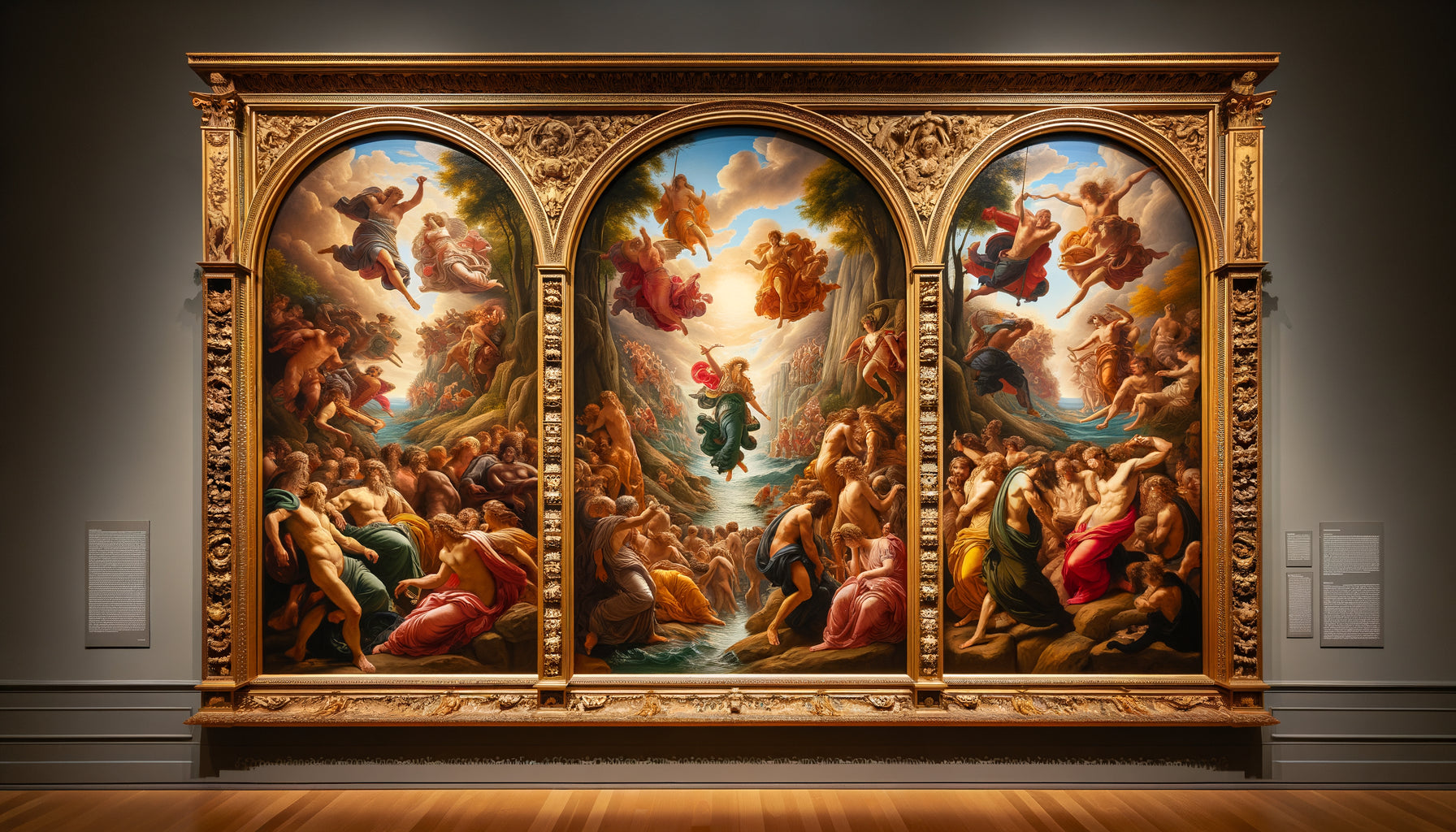
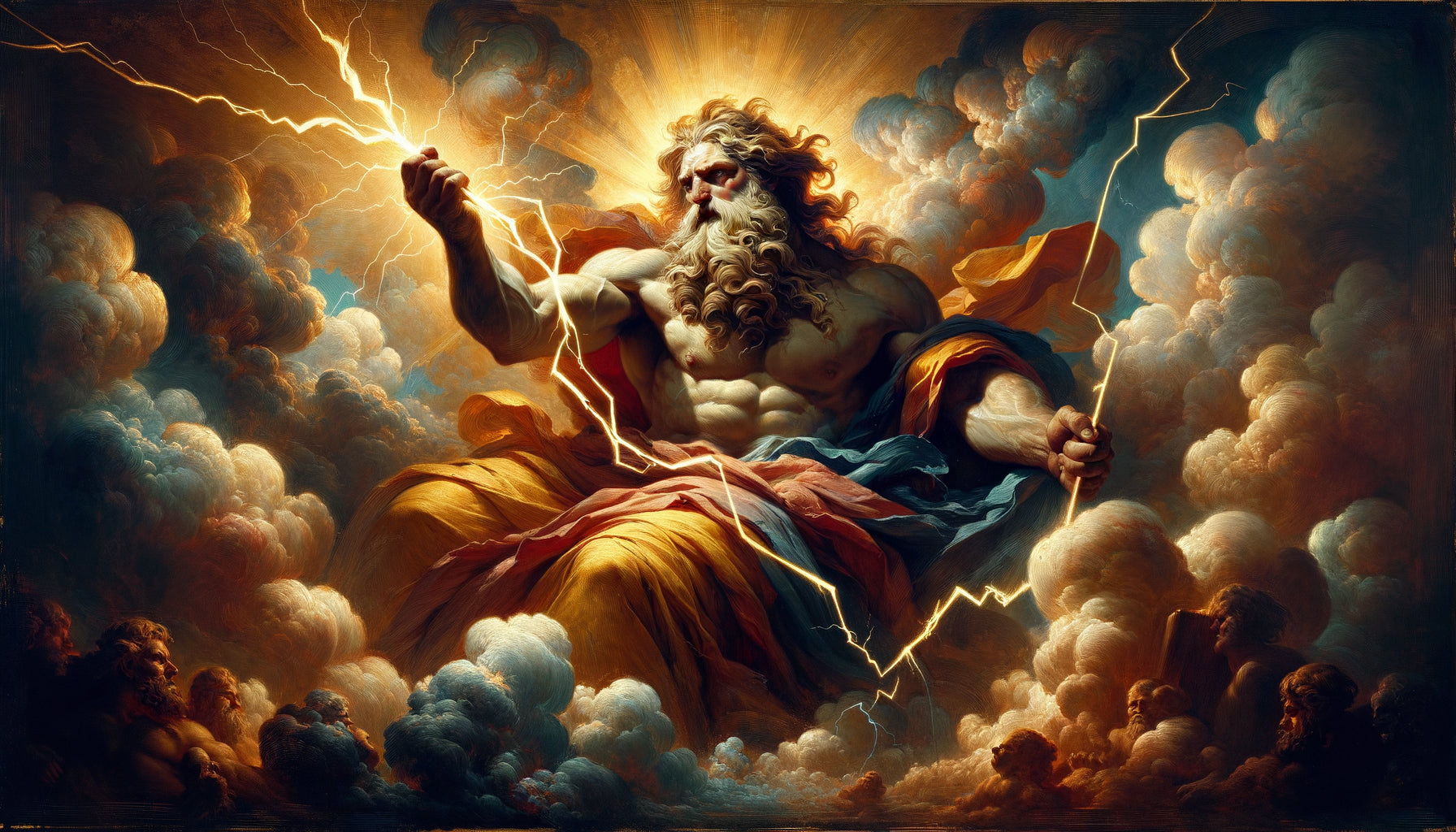
Let's enter a typical decorative art gallery: you will easily find a dozen wall art pieces depicting Zeus, Athena, Apollo, or scenes from the Iliad. Greco-Roman mythology literally dominates the market, and for good reason: it benefits from 2500 years of continuous visual exploitation.
This dominance creates an eviction effect. Editors and creators of wall art naturally invest in what sells easily. Celtic mythologies, less known to the general public, represent a commercial risk that few dare to take. I have met several artists who confided in me that they had abandoned projects for Celtic wall art due to insufficient demand.
Nordic mythology is currently experiencing a resurgence thanks to popular culture (series, films, video games), but Celtic mythology remains in the blind spot despite its narrative richness. Wall art follows this market trend, favoring Thor and Odin over Lugh and the Morrigan.
The syndrome of visual familiarity
Consumers buy what they recognize. Wall art depicting Greek deities benefits from centuries of familiarity thanks to classical education, museums, and popular culture. Conversely, how many people can name three Celtic deities without hesitation?
This lack of knowledge hinders the production of wall art on Celtic mythology. Creators know that a painting of Poseidon will sell faster than a painting of Manannan mac Lir, even if both are marine deities of equal narrative power.

When symbolic complexity discourages creators
Celtic mythology possesses a formidable symbolic complexity. The triads, metamorphoses, non-linear time cycles, and intertwining regional narratives make it difficult to create immediately readable wall art. How can one visually represent the concept of the Sidh, this Otherworld that is neither paradise nor hell?
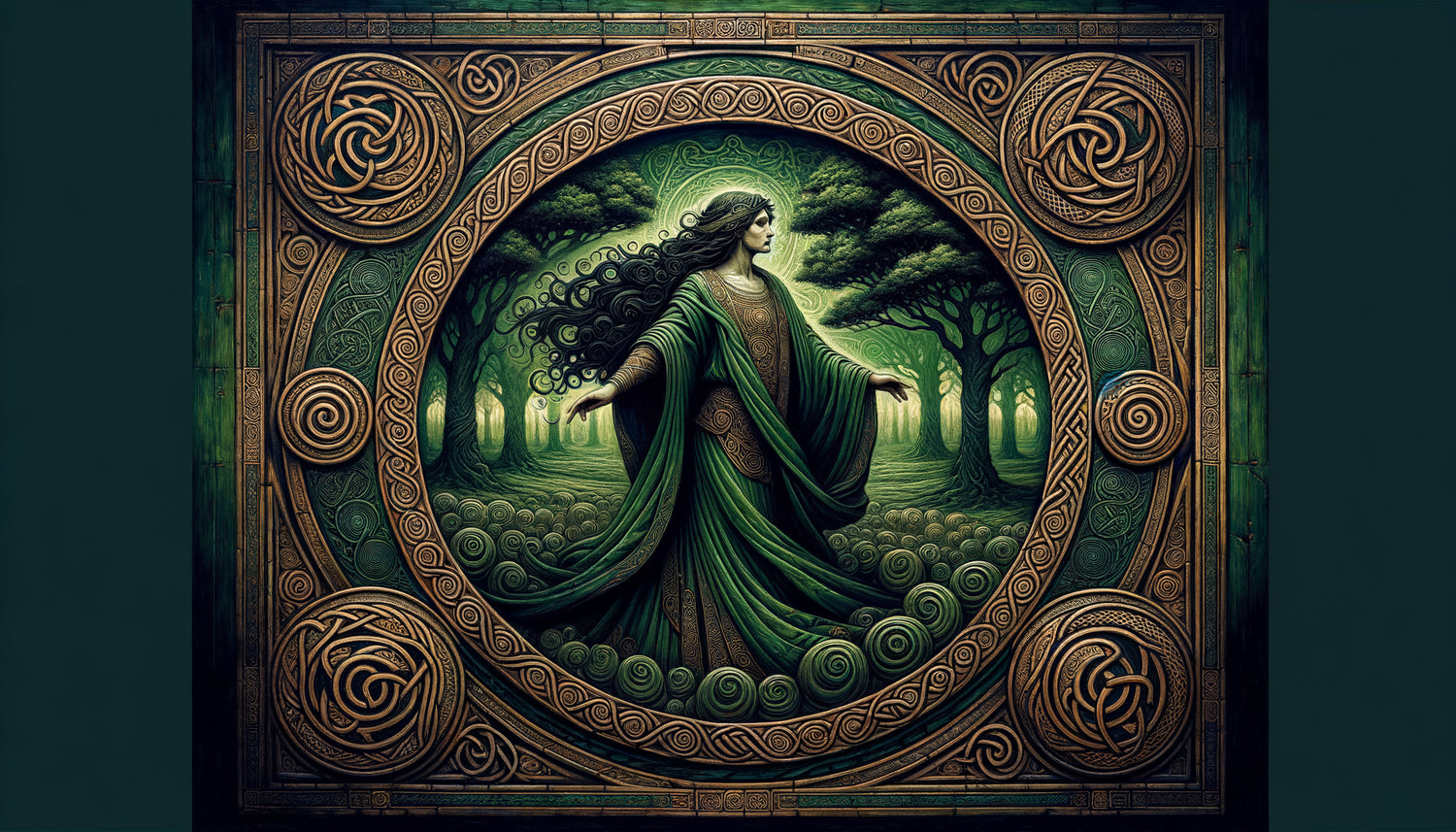
I have seen talented artists abandon creating Celtic wall murals because they could not translate this complexity visually without falling into cliché or excessive simplification. The Celtic knots, triskeles, and spirals are beautiful, but they do not tell the stories of Cúchulainn or Rhiannon on their own.
This difficulty in visual translation contrasts sharply with Greek mythology, where each god possesses recognizable attributes (Poseidon's trident, Athena's aegis). Celtic wall murals require a far superior level of creativity and research, which explains their rarity in a market that favors rapid production.
The niche market: between authenticity and fantasy
Celtic mythology wall art that actually exists divides into two problematic categories. On one side, ultra-academic works faithful to medieval sources but often austere and unadorned. On the other, fanciful creations that mix Celtic symbols, New Age aesthetics, and fantasy elements without historical coherence.
This polarization complicates the task of demanding collectors who seek wall art that is both authentic and aesthetically powerful. The market struggles to find this delicate balance, which maintains the supply of quality in a frustrating scarcity.
I have also observed that authentic Celtic wall murals are often produced by independent artists in very small series, or even as unique pieces. This artisanal approach, while guaranteeing quality, drastically limits availability on the mass market.
The effect of neo-pagan movements
Paradoxically, the growing interest in neo-pagan spiritualities has not proportionally increased the supply of quality wall murals. On the contrary, it has sometimes diluted artistic quality by prioritizing esoteric symbolism over mythological narrative and aesthetic excellence.
Collectors of high-end decor are thus caught between two fires: works that are too academic for their interiors or creations that are too loaded with New Age symbolism which do not correspond to their search for cultural authenticity.

The Subtle Renaissance: Where to Find Rare Excellence
Despite all these obstacles, a subtle renaissance of wall art on Celtic mythology is underway. Contemporary artists, often from Ireland, Scotland, Wales or Brittany, are revisiting these legends with an approach that is both respectful and contemporary.
These creators understand that scarcity can become an asset. By offering high-quality Celtic wall art, they meet a growing demand from collectors who are specifically looking for what is out of the ordinary. These works become conversation pieces, markers of a refined and informed taste.
The key lies in the ability to create wall art that truly tells a story, that captures the wild and mysterious spirit of Celtic mythology without falling into pastiche. When an artist achieves this, their work acquires considerable value, precisely because it is rare.
Are you looking for this precious rarity for your interior?
Discover our exclusive collection of Myth and Legends paintings that celebrate the Celtic heritage with the excellence it deserves, far from clichés and mass production.
Transforming Scarcity into a Unique Collection Opportunity
The scarcity of wall art on Celtic mythology is therefore not accidental. It results from a convergence of historical, cultural and commercial factors that have kept these works in the shadows. But this scarcity also represents an extraordinary opportunity for decoration enthusiasts who want to stand out.
Owning an authentic wall painting on Celtic mythology means asserting a taste for cultural depth, for less-told stories, for beauty that requires an effort of discovery. It is choosing Cernunnos rather than Zeus, not by rejecting classical tradition, but by desiring to explore other equally rich imaginary territories.
Imagine your living room transformed by the presence of Morrigan, triple goddess of war and sovereignty, or Lugh, the god of many talents, master of all arts. These mysterious presences create an atmosphere that overused mythologies can no longer offer. Your interior then tells a unique story, that of a collector who doesn't follow trends but creates them.
Start by researching Celtic tales that resonate with you. Look for artists who work with respect and creativity on these themes. And when you find that rare wall art which truly captures the spirit of this forgotten mythology, you will understand why its rarity makes it an incomparable treasure.
Frequently asked questions about Celtic mythology wall art
Why does Celtic wall art often cost more than other mythologies?
The higher price of wall art depicting Celtic mythology is mainly due to its rarity and the considerable research work it requires. Unlike Mediterranean mythologies which have an established iconography since Antiquity, each Celtic creation demands an original interpretation of medieval sources. Artists must invest hours of documentation to create authentic and consistent representations. Moreover, this wall art is often produced in small series by independent creators rather than mass-produced by factories, which naturally increases its value. This rarity makes each piece an investment in originality and cultural distinction, rather than a simple decorative purchase.
How to recognize an authentic Celtic mythology wall art from a fanciful reproduction?
An authentic wall art depicting Celtic mythology can be recognized by several essential criteria. First, check if the artist cites his sources: medieval texts such as the Mabinogion, Lebor Gabála or Táin Bó Cúailnge are essential references. The symbols used must have historical consistency: triskeles, spirals and Celtic knots have precise meanings and should not be simply decorative. Beware of anachronistic mixtures like Celtic deities with Norse runes or Wiccan pentacles. Good Celtic wall art also captures the particular atmosphere of this mythology: a deep connection to nature, transformations and metamorphoses, an ambiguity between the visible and invisible world. Finally, prioritize artists who have a cultural link with the Celtic lands or who demonstrate real documented expertise.
What Celtic mythology themes are best suited for a wall art in a modern interior?
For a modern interior, certain themes of Celtic mythology lend themselves particularly well to wall art. Representations of Cernunnos, the horned god of nature and fertility, bring a majestic presence and a connection to natural energy. The triple goddess, in her aspects of maiden, mother, and crone, offers a visually balanced and symbolically rich composition. Scenes from the four major Celtic festivals (Samhain, Imbolc, Beltane, Lughnasadh) allow for the creation of a coherent series that evolves with the seasons. Arthurian legends, although later, offer powerful narrative scenes such as the Lady of the Lake or the quest for the Holy Grail. For clean spaces, abstract representations of the Celtic Tree of Life or the cauldron of regeneration work remarkably well. The important thing is to choose a theme that resonates personally with you, because the energy of these wall art truly transforms the atmosphere of a space.