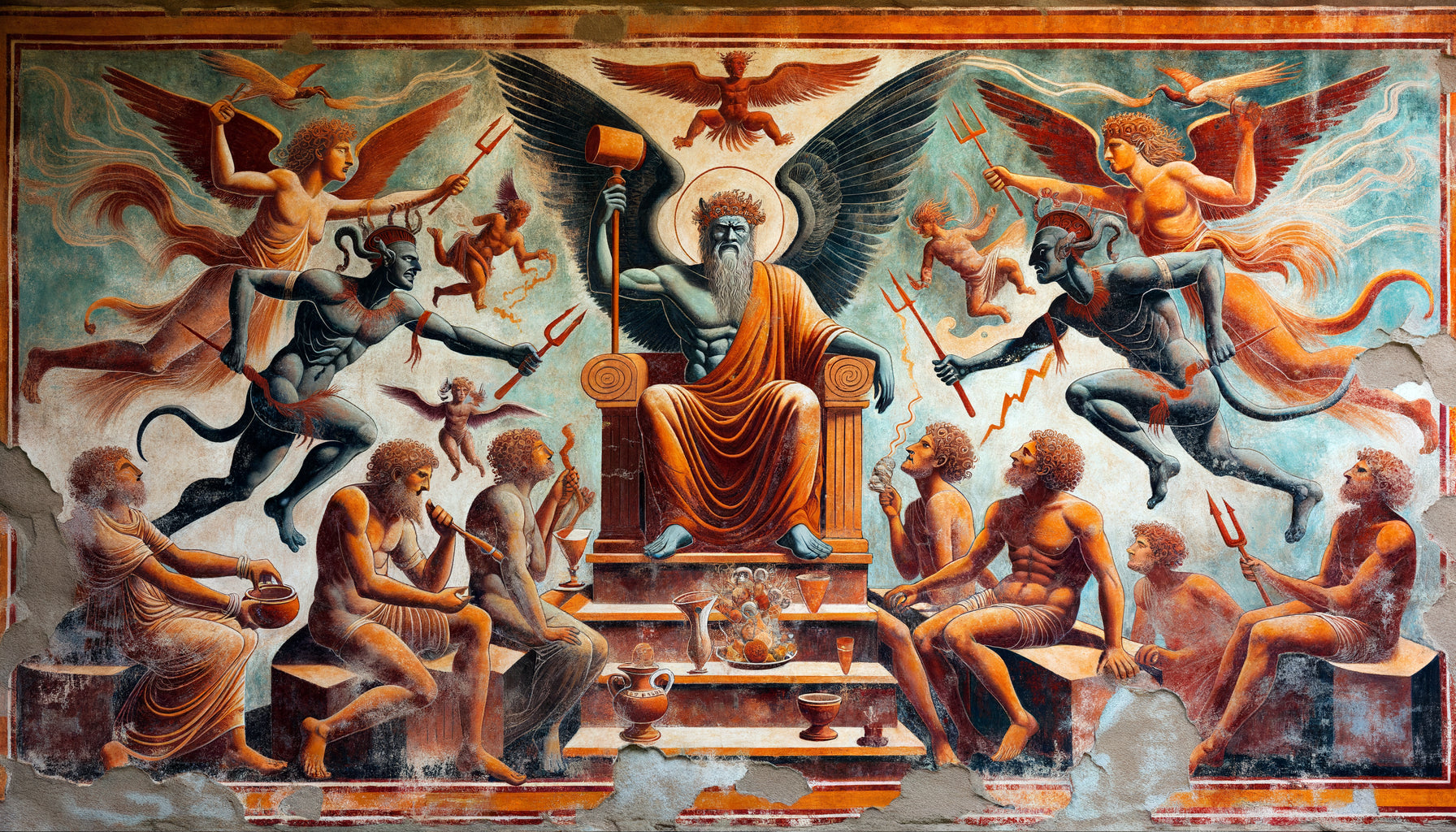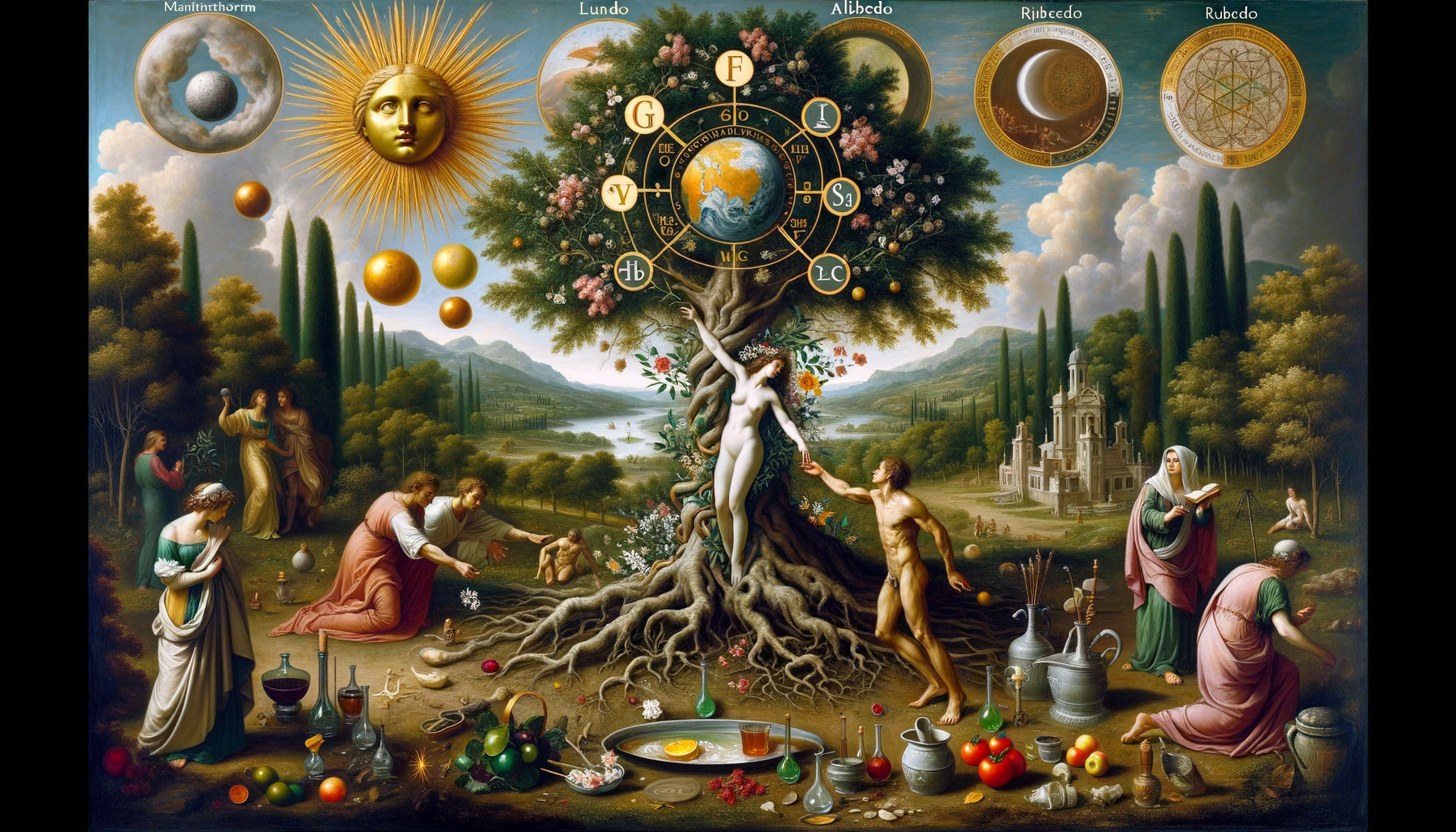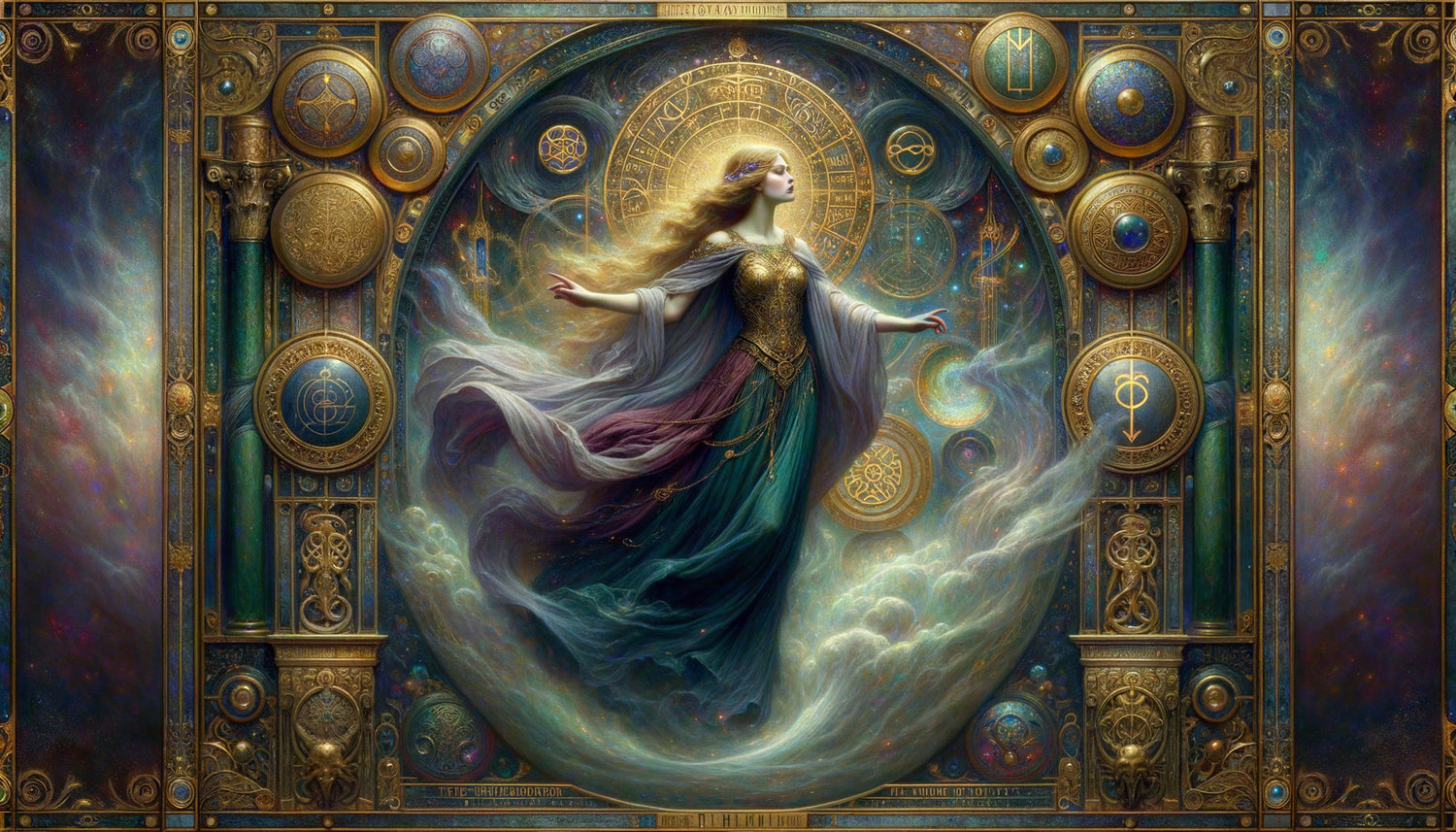
In the mists of Parisian and Viennese workshops at the end of the 19th century, a generation of artists eager for absoluteness scoured Icelandic manuscripts and forgotten sagas. While industrial Europe was building its stations and factories, Symbolist painters delved into tales of Valkyries, one-eyed gods, and cosmic twilights. Their quest was not that of archaeologists, but of visionaries seeking to resurrect spiritual universes swallowed by modernity.
Here's what the Symbolists brought to forgotten Norse myths: a pictorial renaissance that transformed ancient narratives into spiritual manifestos, an aesthetic of mystery that fascinated bourgeois salons, and a visual language that would influence contemporary cinema. These artists did not simply illustrate: they reinvented, metamorphosed, made the Poetic Edda dialogue with their modern anxieties.
You may admire these majestic works in museums without grasping their revolutionary dimension. How could almost forgotten Scandinavian myths become the beating heart of an artistic movement that was to shake up art history? This misunderstanding is normal: the Symbolists spoke a coded language, woven from erudite references and unspeakable emotions.
Yet, understanding this creative alchemy completely transforms our view of contemporary wall art. The mythological paintings that adorn our interiors today are directly descended from this silent revolution. I invite you to discover how these visionary painters awakened sleeping gods and why their legacy continues to inhabit our imaginations.
When Norse Gods Entered Parisian Workshops
The 1880s mark a fascinating turning point. While naturalism meticulously documented reality, a handful of artists turned to medieval Scandinavian manuscripts. Symbolist painters discovered the Poetic Edda, this corpus of Icelandic myths compiled in the 13th century, and found therein a raw material far more disturbing than academic Greco-Roman mythology.
Odin the traveler, Freyja the sorceress, the chained wolf Fenrir: these figures emerged in compositions with a magnetic strangeness. Unlike the smooth and white Olympian gods of the neoclassics, the Norse deities bore the mark of tragedy. They knew that Ragnarök, the twilight of the gods, awaited them inevitably. This mortal dimension fascinated the Symbolists who saw in it a reflection of their own era, caught between technological progress and existential anguish.
Painters such as Englishman Edward Burne-Jones or Norwegian Peter Nicolai Arbo drew from these narratives an unprecedented dramatic intensity. Their monumental canvases transformed forgotten Norse myths into visual cathedrals where the viewer got lost, searching for the hidden meaning behind each symbol, each muffled color, each enigmatic gaze.
The Aesthetic of Mist and Runes
How to represent the invisible? This question haunted the Symbolists. To reinterpret Norse myths, they developed a radically new pictorial language. Gone were sharp outlines and rational perspectives: their compositions bathed in twilight atmospheres, mists where forms dissolved.
Colors themselves became narrative. Nocturnal blues evoked endless polar nights, pale golds suggested cursed treasures, deep greens recalled primordial forests where trolls roamed. Each shade carried a symbolic charge that the initiated viewer could decipher as one reads runes.
The Valkyries as Modern Muses
The Valkyries perfectly embodied Symbolist ambiguity. Celestial warriors choosing the dead in battle, they represented both beauty and death, heroism and inexorable fate. Symbolist painters transformed them into figures of femme fatales, blending erotic fascination and sacred terror.
In the works of the time, these messengers of Odin rode through tormented skies, their armor gleaming under imagined auroras. They were no longer simple mythological characters but allegories of the modern soul, torn between ideal and disillusionment. This bold reinterpretation brought together Icelandic sagas and fin-de-siècle psychology.

Why these myths resonated with their time
The late 19th century was experiencing a deep spiritual crisis. Scientific positivism explained the world, but left the soul orphaned. Forgotten Norse myths offered an alternative spirituality, non-dogmatic, rooted in nature and mystery rather than religious institutions.
Symbolists found in them narratives where the sublime and the terrible coexisted, where even the gods themselves were vulnerable. Ragnarök, this Scandinavian apocalypse followed by a rebirth, spoke powerfully to a generation seeing its ancient world collapse under the blows of the industrial revolution. Reinterpreting these myths was seeking meaning in modern chaos.
This quest was not purely intellectual. Artists wanted to create works that transform the viewer, that tear them from everyday prose and plunge them into dreamlike dimensions. Their paintings functioned as portals to parallel universes where ancient Norse wisdom still spoke.
From the studio to your living room: a living heritage
Today, when you hang a painting evoking Nordic legends, you extend this symbolic tradition. Contemporary works inspired by Scandinavian myths always carry this double dimension: refined decoration and gateway to the imagination.
The intertwined dragons, cosmic trees, mysterious warriors that adorn our interiors descend directly from symbolic reinterpretations. These 19th-century artists created a visual vocabulary that still permeates our popular culture, from sleek Scandinavian design to the most complex fantasy universes.
How to recognize symbolic influence
Some clues are unmistakable. A contemplative atmosphere rather than a narrative, characters with lost gazes in an inner elsewhere, a palette of muted or strangely luminous colors, mysterious symbols scattered throughout the composition: this is the signature of the symbolic heritage.
Symbolist painters did not tell Nordic myths like comic books. They captured their spiritual essence, that particular vibration that makes a story cross the centuries. Their genius was to understand that these ancient stories spoke of eternal truths: the quest for meaning, the acceptance of destiny, the tragic beauty of existence.

The three keys to symbolic reinterpretation
Let's synthesize the revolutionary approach of these artists. First key: the primacy of emotion over narration. Rather than faithfully illustrating a mythological episode, symbolists sought to convey the feeling it evoked. A painting showing Odin was not a documentary portrait but a meditation on wisdom and sacrifice.
Second key: bold cultural hybridization. Symbolist painters freely mixed Nordic references, oriental influences, Christian symbolism and neoplatonism. This creative freedom produced works of inexhaustible richness, where each detail opened up new avenues for interpretation.
Third key: assumed ambiguity. Unlike academic art that explained everything, the Symbolists cultivated mystery. Their reinterpretations of Norse myths deliberately left areas of shadow, inviting the viewer to complete the meaning, to project their own questions. This openness ensured that the works remain alive, generation after generation.
Let Norse myths awaken your imagination
Discover our exclusive collection of Myths and Legends wall art that perpetuates this Symbolist tradition by transforming your space into a sanctuary of the imagination.
Imagine your interior inhabited by these legends
Close your eyes for a moment. Visualize your living room bathed in the evening light. On the main wall, a masterful composition evoking Norse myths captures the last rays of sunlight. The deep blues seem to vibrate, mysterious silhouettes invite contemplation. Your guests stop, fascinated, ask questions. You share what you have discovered about the Symbolists and their spiritual quest.
This painting is no longer just decoration: it becomes a starting point for rich conversations, a meditative anchor in your daily life, a constant reminder that beauty and mystery can coexist with modernity. The Symbolist painters of the 19th century wanted to transform vision: their legacy offers you this possibility today.
Start simply. Observe the works that evoke these universes. Let them resonate within you. Choose the one that dialogues with your own sensitivity. You will thus prolong a centuries-old tradition: that of seeking in forgotten myths answers to eternal questions.
Frequently asked questions
Why did the Symbolists prefer Norse myths to Greek myths?
Excellent question that touches on the heart of their approach. Norse myths offered a radically different atmosphere: darker, more tragic, less codified by academic tradition. While Greco-Roman mythology had been rehashed for centuries by classical education, Scandinavian sagas retained a freshness, a strangeness that stimulated the imagination. The Symbolists also found in them a non-Mediterranean pagan spirituality, linked to forests, ice, endless nights – elements perfect for expressing their obsessions about mystery and the unknown. These myths spoke of inevitable destiny, wisdom dearly bought, beauty mixed with violence: exactly what fascinated this generation of artists breaking away from the progressive optimism of their time.
How to integrate this symbolist aesthetic into a contemporary interior?
The beauty of the symbolist heritage lies in its surprising compatibility with modern decor. Prioritize works with clean compositions but full of atmosphere: a stylized cosmic tree, a graphic Valkyrie silhouette, abstract runic motifs. These elements work wonderfully with Scandinavian minimalism or industrial interiors. The trick is to create a strong focal point – an imposing mythological painting – surrounded by neutral elements that allow it to breathe. Symbolist colors (nocturnal blues, ancient golds, forest greens) harmonize perfectly with contemporary palettes. Also consider the lighting: soft, indirect light enhances these works that play on chiaroscuro. The goal is not to create a museum but a space where everyday life meets the mythical, where modernity is enriched by symbolic depth.
Do you need to know Norse mythology to appreciate these works?
Absolutely not, and that's precisely the genius of symbolist painters! They created works that function on multiple levels. You can be touched by the atmosphere, the colors, the composition without specifically identifying Odin or Freyja. Emotion always precedes scholarship. These paintings speak first to intuition, feeling, before engaging the intellect. Of course, knowing the stories enriches the experience – understanding that a raven symbolizes Odin's wisdom or that a hammer evokes Thor adds layers of meaning. But the symbolists built their compositions to resonate universally: the solitary figure contemplating immensity, the battle between light and darkness, the cycle of life and death. These themes cross all cultures. Start with what moves you visually, knowledge will come naturally afterwards, gradually enriching your relationship with the work.