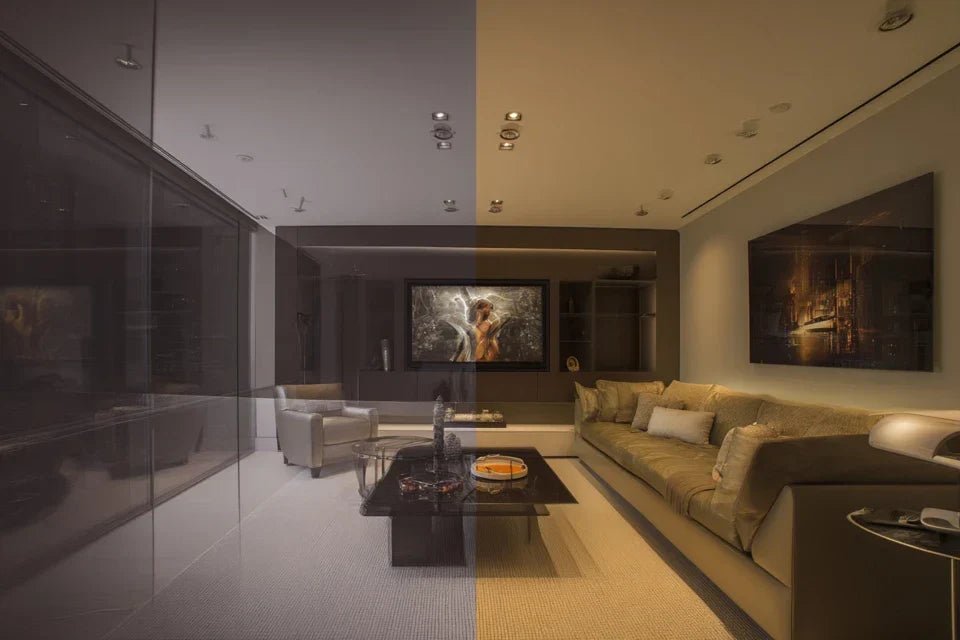
You've just splurged on that stunning artwork you’ve been admiring for weeks. But then doubt creeps in: what support should you print it on? Canvas, dibond, acrylic glass... you find yourself lost in a technical maze when all you wanted was to enhance your interior.
This hesitation is physically felt. The mix of excitement and anxiety when you imagine your artwork hanging on the wall, but the fear of making the wrong choice paralyzes your decision. Will it be elegant enough? Will it stand the test of time?
You may have already tried "cheap" prints that yellowed, warped or lost their luster in a few months. Or worse: that moment of embarrassment when your guests notice the difference in quality between your artworks.
Rest assured, it's not your fault. The market is full of confusing technical information that obscures the essential: which support truly corresponds to your vision and lifestyle.
By the end of this article, you will know exactly which support to choose according to your aesthetic criteria, your budget and your practical constraints. No more hesitation in front of a beautiful artwork: you will have all the keys to transform your crush into a durable wall masterpiece.
Why choosing the support can transform (or ruin) your work of art?
Imagine two versions of the same artwork: one radiates depth and presence, the other seems dull and ordinary. The difference? The chosen support. It's like comparing a diamond set in fine gold versus embedded in plastic. If you wait, this artwork that makes you dream today may no longer be available tomorrow.
🎨 Customer testimonial: Marie, an interior architect, tells us: "I had ordered the same visual on three different supports for an undecided client. When he saw the three versions side by side, there was no comparison. The acrylic glass gave a striking depth, the canvas brought that warm authenticity, and the dibond offered this elegant modernity. Three completely different atmospheres for the same artwork!"
💬 Conversation with a decor expert
The support doesn’t just carry your image, it reveals its soul: A good choice amplifies the artwork's emotion, creates harmony with your interior and guarantees a lasting investment. Allow 2 weeks to receive your creation on the perfect support.
What’s Really Happening When You Hesitate Between Supports
Do you recognize yourself in these situations? You spend hours staring at your screen comparing options. You ask three friends for advice who give you three different answers. You postpone your order “to think about it”.
What’s really happening is that you lack clear decision-making criteria. It's not a problem of indecision, it's a lack of concrete information tailored to your situation.
It’s like choosing a car knowing only the color. No wonder you go around in circles!
The Misconception About the “Universal Support”
Contrary to popular belief, there is no ideal support for all artworks. Each support has its own personality and reveals different aspects of your work.
It’s like in cooking: you don't use the same saucepan to simmer a beef stew and make thin pancakes.
This revelation changes everything: instead of looking for THE right choice, you will identify YOUR good choice according to your priorities. No more stress, place for personalized strategy!
🧪 Instant test: Look at the artworks you admire at your friends' homes or in magazines. Try to guess their support by observing the reflections, texture, thickness. You are already developing your expert eye!
The Illusion of “Cheap First, Then We’ll See”
Many think it's better to start with an economical support and "upgrade" later. Costly mistake! The psychological mechanism works against you: once you get used to a lower quality, the “wow” effect of your artwork diminishes.
It’s like drinking instant coffee for months then discovering a grand cru: impossible to go back.
Result? You end up rebuying, spending more, and above all losing months not fully enjoying your artwork. Not to mention the daily frustration of seeing a result below your expectations.
The Trap of Pure Technical Comparison
Many get lost in technical specifications (weight, UV protection, resolution) forgetting the essential: the emotion that the artwork evokes in your space.
You can decipher all the clues betraying this approach: technically perfect artworks but without soul, choices based solely on durability ignoring aesthetics, or conversely, beautiful supports but unsuitable for use.
The impact? A mismatch between your expectations and the final result, that feeling of “something is wrong” without knowing what.
🔍 5 signs you’re in this spiral:
- You multiply comparison tabs: Sign that you are looking for the miracle solution that does not exist
- Wondering "what would the pros do?" : Reveals that you are looking for a universal rule rather than your personal solution
- You keep postponing your purchase with each new piece of information: Indicates paralysis due to unranked options
The trigger factor: your personal priorities
What really makes the difference is identifying your 3 non-negotiable criteria. It's a domino effect: once this hierarchy is clear, all other choices become obvious. Premium aesthetics? Ease of maintenance? Controlled budget? Maximum durability? You can check it immediately by listing what really matters to you.
Golden rule for choosing a support: First define your 3 main priorities, then select the support that best satisfies them. It's infinitely more effective than comparing all characteristics.
| ❌ Haphazard approach | ✅ Strategic approach | 💡 Why it works | 🎯 Practical benefit |
|---|---|---|---|
| "The most expensive is necessarily the best" | "The one that best suits my priorities" | Each support excels in different areas | Maximum satisfaction for your budget |
| "All supports are equal in the end" | "Each support has its specialty" | The difference is visible and durable | Result aligned with your expectations |
| "I'll take the most resistant one" | "I choose according to my actual use" | Avoids unnecessary over-sizing | Budget optimization and satisfaction |
| "The salesperson will know how to advise me" | "I know my criteria before I buy" | You keep control of the decision | Assumed and personalized choice |
The simple method for choosing your ideal support in 3 steps
Breathe, the hardest part is behind you. Now that you understand the mechanisms, choosing becomes a piece of cake. Imagine this method as building a house: solid foundations, then structure, then finishing touches. At the end, you will have the certainty of having made the best decision for YOUR situation.
🗺️ Overview of your journey: First, you define your profile and priorities (the foundations). Then, you discover the characteristics of each support (the structure). Finally, you refine your choice according to your practical constraints (the finishing touches). Result: an informed decision in less than 20 minutes.
Step 1: Define your decor profile and priorities
Starting with this step is like planting the right seeds: everything that follows will grow naturally. Once these foundations are laid, you'll already feel the satisfaction of seeing clearly what you want.
🎯 Your personal diagnostic tools
- Your current decor style: Observe your living room like a detective. Clean lines and noble materials? You lean modern. Natural textures and patinas? You are more authentic. Bright colors and original shapes? Boldness characterizes you. This base determines 70% of your final choice.
- Your real lifestyle: Be honest about your daily life. House with children and pets? Prioritize resistance. A well-kept bachelor apartment? Aesthetics are paramount. Frequent reception space? The "wow" effect becomes crucial.
- Your attitude to decor investment: Do you prefer to invest once for 20 years or renew more often? This philosophy naturally leads towards certain supports rather than others.
Now, let's move on to practice with your self-diagnosis:
🔍 Your personalized questionnaire
Identify your priority location: Visualize precisely where your artwork will be hung. Main living room? Bedroom? Office? The location determines exposure to light, humidity, and frequency of observation. A living room painting requires more presence than a bedroom work.
⏱️ Time: 3 minutes | ✅ Successful when: You can mentally see the artwork in its final place | ⚠️ Attention: Do not choose for a "theoretical location" but for the actual place where you will hang it
Evaluate your “aesthetic threshold”: Are you the type to immediately notice a detail that is off? Or do you prioritize the overall atmosphere? Perfectionists often opt for acrylic glass, authenticity lovers for canvas, and modernists for dibond.
⏱️ Time: 2 minutes | ✅ Successful when: You can say "I am rather detail-oriented/globalist" | ⚠️ Attention: Be honest, not idealistic about your personality
Clarify your “comfort budget”: Beyond the price, what amount will allow you to enjoy it serenely without regret or financial stress? This emotional budget is often more important than the strict accounting budget.
⏱️ Time: 1 minute | ✅ Successful when: You have a clear range in mind | ⚠️ Attention: Do not underestimate the psychological impact of a "tight" purchase on your daily enjoyment
✨ Validation of step 1: You must be able to complete this sentence: “For my [location], as a person [lifestyle], I prioritize [priority 1], [priority 2], and [priority 3] in that order.” If it's blurry, repeat the exercise focusing on your first instinct.
OUR RECOMMENDED PRODUCTS
Step 2: Discover the personalities of each support
Now that you know each other, let’s introduce them! Each support has its unique personality, its strengths, its specialties. This step is richer because you will feel the alchemy between your expectations and the characteristics of each option.
🎨 The winning trio of premium supports
- Canvas : The timeless classic. Textured surface, authentic rendering, "art gallery" effect. Excellent for classic, country chic, or industrial styles. Lightweight and easy to handle. Weaknesses: sensitive to humidity and direct UV light. Perfect for lovers of authenticity.
- Dibond (aluminum composite) : The elegant modern choice. Smooth surface, vibrant colors, lightweight and rigid. Champion of durability and resistance. Ideal for contemporary, minimalist styles, offices. Weaknesses: can seem "cold" in some traditional interiors. The choice of modern perfectionists.
- Acrylic Glass : The luxurious option. Striking depth, elegant shine, "museum display" effect. Magnifies colors and contrasts. Perfect for sophisticated styles, contemporary art. Weaknesses: heavier, shows fingerprints. The ultimate choice for those who appreciate prestige.
🤝 Find your perfect match
Test compatibility with your image: Analyze the visual you have chosen. Detailed and contrasted photo? Acrylic glass will reveal every nuance. Artistic illustration with warm colors? Canvas will bring that natural softness. Clean graphic design? Dibond will offer that modern precision.
⏱️ Time: 5 minutes | ✅ Success when: You can imagine the rendering of your image on each support | ⚠️ Attention: Some visuals "pop" on one support and become dull on another
Evaluate consistency with your interior: Visualize each support in your space. Does the acrylic glass harmonize with your current materials? Does the canvas warm up the desired atmosphere? Does the dibond bring that modern touch you are looking for?
⏱️ Time: 7 minutes | ✅ Success when: A support "feels right" with your decor | ⚠️ Attention: Don't force a style that you like in theory but clashes with your reality
Check practical compatibility: Weight of the painting versus the solidity of your wall. Exposure to direct light. Ease of cleaning according to your habits. These "down-to-earth" details avoid unpleasant surprises after purchase.
⏱️ Time: 3 minutes | ✅ Success when: No practical points pose a problem for you | ⚠️ Attention: A plasterboard wall does not support the same weight as a stone wall
🎯 Step 2 Checkpoint: One support should stand out by ticking 80% of your criteria. If several supports tempt you equally, it means that your priorities from step 1 lack precision. If none convince you completely, that's normal - step 3 will refine your final decision.
Step 3: Refine and Validate Your Final Choice
You're almost there! This final step transforms your "likely good choice" into assured certainty. Here, you refine the details and anticipate the final result to eliminate any future regrets.
🔬 Precision Refinement
Simulate your daily life with the artwork: Imagine yourself in 6 months. How do you maintain your piece? How do you react when guests notice it? This projection reveals your true long-term needs beyond an impulse purchase.
⏱️ Time: 4 minutes | ✅ Successful when: You see yourself satisfied with your choice over time | ⚠️ Attention: Distinguish the excitement of buying from the happiness of daily use
Check budget/ambition consistency: Does your choice respect the balance between your financial means and your aesthetic requirements? A good choice generates neither frustration of "doing cheap" nor stress of "spending too much".
⏱️ Time: 2 minutes | ✅ Successful when: You are at peace with the investment | ⚠️ Attention: The "while we're at it, let's go for high-end" effect can unbalance your overall decor budget
Anticipate technical questions: Exact format, wall mounting system, delivery time. These practical details finalize your order with complete peace of mind. It's better to clarify them now than improvise when hanging it.
⏱️ Time: 3 minutes | ✅ Successful when: All practical aspects are clarified | ⚠️ Attention: Mounting systems vary depending on the weight and format
🏆 Final Validation: Your choice is ready when you can explain in one sentence why this piece is perfect for YOUR situation. No long technical justification, just: "I chose X because it perfectly corresponds to my priorities Y and Z." This is a sign of a mature and assumed decision.
Intelligent progression rule: Move on to the next step only when you have a clear and instinctive answer to the questions in the current step. Initial slowness guarantees the final speed of decision-making.
Now that you master the method, here are the expert subtleties that will make the difference. These technical details separate a "correct" choice from an "exceptional" choice and give you an edge over 90% of buyers.
💎 Pro Secret - Revealing Lighting: Observe your future location at different times of the day. A shiny piece (acrylic glass) magnifies details in natural light but can create annoying reflections with direct artificial lighting. Canvas remains constant, Dibond offers the best compromise. This simple check avoids 80% of post-purchase disappointments.
❓ Question from Sylvie, amateur decorator
"I'm hesitating between two supports for my kitchen artwork. Which one will be more resistant to humidity and odors?"
Excellent question Sylvie! Humidity is indeed the number 1 enemy of some supports. For a kitchen, I recommend dibond without hesitation: waterproof, easy to clean, and colors don't fade even with cooking fumes. The acrylic glass also works but requires more maintenance (grease stains). Avoid canvas in this room: it absorbs odors and can warp with humidity. A simple rule: the more "living" the environment is (kitchen, bathroom, children's bedroom), the more you should favor synthetic supports.
🧪 Practical test for Sylvie: Place a piece of paper near your cooking area for a week. If it yellows or warps, your artwork will suffer the same fate with a natural support. This is your personalized compatibility test!
The 5 mistakes that can ruin your investment (and how to avoid them)
Attention, these mistakes are sneaky because they seem logical at first glance. I see them regularly and they cost money in terms of satisfaction and sometimes in money. Fortunately, they are easy to avoid when you know them.
- 🚫 Mistake of "format first, support afterwards": Choosing the size then looking for a compatible support. Problem: some formats only reveal their potential with the right support. A panoramic canvas loses its impact, a square on acrylic glass can seem disproportionate. Do the opposite: define image + support + format as a coherent whole. 🚫 Trap of the "generalist recommendation": Following advice that does not take into account your specific context. "Dibond is the best" may be true for an office but false for a cozy living room. Each tip must be contextualized to YOUR situation. Beware of overly universal opinions. 🚫 Mistake of "cheapest first": Starting with the cheapest “to see”. Guaranteed result: aesthetic disappointment that makes you doubt your artistic taste. A mediocre artwork on the best support remains mediocre, but a beautiful work on a low-end support becomes ordinary. Respect your favorites with the support they deserve. 🚫 Trap of "unnecessary overquality": Choosing the highest quality support as a matter of principle. If your priority is ease of maintenance for a child's room, premium acrylic glass becomes restrictive. Adapt the quality to the actual use, not the ideal theoretical use. 🚫 Mistake of the “unprepared emotional purchase”: Ordering on a whim without checking practical constraints. Discovering after ordering that your wall cannot support the weight, that the fixing requires special tools, or that the deadlines do not correspond to your expectations. 5 minutes of verification avoids weeks of frustration.
🛡️ Your checklist before ordering: You have defined your 3 main priorities and the support clearly satisfies them. The location, lighting and practical constraints are checked. Your budget is comfortable, not strained. You visualize the final result and it excites you. If any of these points are off, take 24 hours to reconsider before validating.
🎁 Special offer for readers
Because you took the time to inform yourself, enjoy 10% discount on your first order:
⏰ Valid 72 hours after reading • Applicable to all our products
🤔 Frequently asked questions about choosing the support
Expect a 20-40% difference between canvas and acrylic glass for the same format. This difference pays off over 2 years: superior durability, daily pleasure, and perceived value by your guests. To optimize: start with your main room with the premium support, then decline in the other rooms. Concrete example: Sarah invested an extra €80 for acrylic glass in her living room. Result: 3 years later, still very satisfied, while her bedroom canvas needs to be replaced.
Manufacturing: 5-10 days depending on the support (canvas faster, acrylic glass longer). Delivery: 3-5 days in France. Installation: 15 minutes for standard formats, 30 minutes for large formats. To optimize: order at the beginning of the week to receive it on the weekend, and plan appropriate fixings according to your wall (plasterboard = special dowels, concrete = percussion drill).
Yes, with the right fixings! A 40x60cm piece of acrylic glass weighs about 2kg, easily supported with quality molly dowels. For 80x120cm (6-8kg), use fixings on studs or distribute over several points. Simple rule: if your wall can support a bathroom mirror, it will support your artwork. If in doubt, a professional installer costs €30-50 for complete peace of mind.
Canvas: Gentle dusting with a dry brush every 6 months. Dibond: Microfiber cloth slightly damp, never abrasive products. Acrylic glass: Window cleaner without ammonia, circular motion. Pro tip: A monthly minimal care is better than an intensive cleaning every six months that could damage the surface.
Yes, it's even recommended for large formats or significant budgets! Order a small 6x6 inch (10x15cm) sample of your visual on 2-3 supports. Cost: €15-€25 per sample, refunded upon final order. Benefit: absolute certainty and sometimes surprising discovery (a support that didn't tempt you reveals your image magically). Delivery time: 3-5 days, an investment rewarded by peace of mind.
🌟 Your new reality: wall art that truly enhances your interior
In a few weeks, you will contemplate your artwork perfectly integrated into your space. The deep satisfaction of successful harmony between your tastes, your interior and your investment. Your guests will immediately notice this touch of sophistication, and you will feel that discreet pride in the perfectly mastered choice. No more hesitation in front of a beautiful painting: you now know how to reveal the potential of every crush.
But this guide offers you much more than just choosing a support. You have developed this intuitive decor expertise that applies to all your future artistic purchases. This confidence in your aesthetic decisions transforms your relationship with decoration: no more random purchases, but assumed and successful investments.
Understanding was indeed the most complex part. Now, your first concrete step: identify that artwork that has been making you dream for too long and apply your new method. In 15 minutes, you will know exactly which support will do it justice. Your interior is waiting for that final touch perfectly chosen.
✨ You're there: From hesitation to expertise in a single article. Your eye has been refined, your method is established, all that remains is to take action. The painting of your dreams on the perfect support awaits you. It’s up to you!