Imagine your Caribbean villa bathed in light, its immaculate white walls awaiting this masterpiece: a contemporary canvas that will converse with the turquoise horizon visible from your terrace. In Saint-Martin or Saint-Barthélemy, art becomes the ultimate expression of an art de vivre where refinement meets tropical escape. But you've found this perfect piece in Paris, and suddenly a crucial question arises: how to ship it to your island refuge without losing half its value in customs fees?
Here's what the specific customs regulations of Saint-Martin and Saint-Barthélemy offer you: exceptional tax advantages for your paintings, simplified procedures thanks to the specific status of these territories, and unique opportunities to build an art collection in a privileged setting. These two pearls of the French West Indies are not like other destinations: their derogatory customs regimes completely change the rules of the game for art lovers.
The frustration is real: you thought ordering a painting to the islands was a grueling ordeal, between prohibitive taxes, endless forms and uncertain deadlines. Many give up decorating their West Indian properties with works of art for fear of administrative complications and astronomical surcharges. Rest assured: reality is much more favorable than you imagine. These territories benefit from exceptional customs statuses that considerably simplify the import of artworks. I will reveal to you how to navigate these specific customs regulations serenely and transform your West Indian space into a true personal gallery.
We deliver everywhere, including to French Overseas Territories!
Metropolitan France, Guadeloupe, Martinique, Guiana, Reunion, Mayotte... Wherever you are, discover our exclusive collection of paintings deliverable to French Overseas Territories delivered directly to your home.
Saint-Martin and Saint-Barthélemy: islands with an exceptional customs status
Unlike classic overseas departments such as Guadeloupe or Martinique, Saint-Martin and Saint-Barthélemy occupy a unique position in the French administrative landscape. These overseas communities are not part of the European customs territory, which radically changes the game for your paintings. Saint-Barthélemy, this popular destination for the international jet set, left Guadeloupe in 2007 to become an autonomous territorial collectivity. Saint-Martin, for its part, shares this peculiarity of being outside the European zone for customs matters.
This fundamental specificity means that your paintings intended for these islands do not automatically benefit from the free movement of goods within the European Union. But be warned: what might seem like a disadvantage turns into a real tax advantage. These territories have implemented extremely favorable customs regimes, with quasi-inexistent duties on many products, including works of art. In Saint-Barthélemy in particular, the absence of VAT and minimal import duties create a particularly attractive fiscal environment for collectors.
The little-known tax advantages for your artworks
Let's talk about concrete figures. In Saint-Barthélemy, there is no local VAT. Imagine: a painting purchased for 2000 euros in mainland France would normally include 20% VAT. In this legal tax haven that is Saint-Barthélemy, this tax simply does not exist. Import duties on works of art are also extremely low, often limited to a few symbolic percentage points. This exceptional situation explains why so many high-end residences on the island rival each other in elegance with impressive art collections.
Saint-Martin has a slightly different but equally interesting profile. The French part of the island applies moderate taxation with reasonable import duties on paintings. Unlike mainland France, where importing artworks can be accompanied by complex formalities, Saint-Martin offers a simplified framework. Local customs services, accustomed to international flows thanks to the island's dual nationality (French and Dutch), process declarations with remarkable efficiency.
How to optimize your customs declaration
The key is to prepare your file. To ship your paintings to these destinations, always have the detailed invoice mentioning the exact nature of the work, its dimensions, technique and value. This transparency greatly facilitates the work of customs and accelerates clearance. Do not hesitate to specify that it is a decorative artwork intended for personal use rather than commercial use: this distinction can favorably influence the processing of your shipment.
Certificates of authenticity, if they exist, are also valuable documents. They reassure customs authorities about the legitimacy of your acquisition and may even play in your favor in case of an in-depth inspection. For paintings of significant value, consider taking out marine or air transport insurance: beyond financial protection, it demonstrates the seriousness of your approach.

Mistakes to Absolutely Avoid When Shipping
The first pitfall is false declarations. Deliberately undervaluing a painting to reduce hypothetical taxes invariably backfires. The customs officers of Saint-Martin and Saint-Barthélemy, despite their generally benevolent approach, have sophisticated assessment tools and can increase duties if suspicion arises. Worse still, you risk a temporary seizure of your artwork pending an expertise, delaying your decoration project.
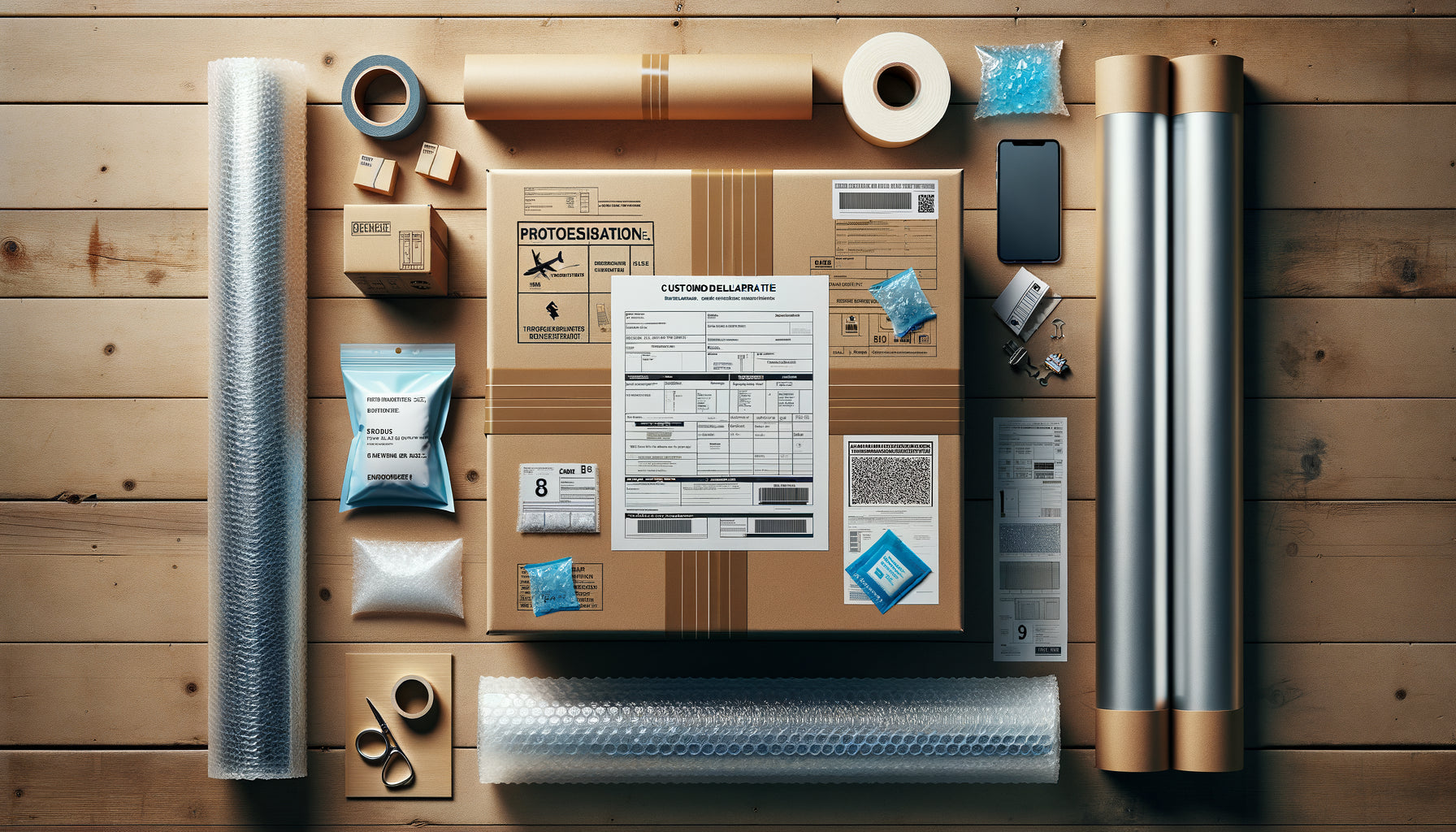
The second frequent pitfall: unsuitable packaging. The tropical humid climate of these islands requires reinforced protection during transport. A poorly packaged painting can suffer from exposure to maritime humidity during transit, especially if delays occur in the logistics chain. Invest in professional packaging with bubble wrap, rigid cardboard and ideally moisture protection. This practical precaution has nothing to do with customs but guarantees that your artwork arrives in the exact condition it left the artist's studio.
The third mistake to avoid: neglecting deadlines. Even with the simplified procedures of these territories, allow between 10 and 21 days for complete delivery from the mainland. Maritime rotations to these islands are not daily, and peak tourist season (December to April) can congest logistics services. Anticipate your orders of paintings for Saint-Martin or Saint-Barthélemy if you are preparing to open a vacation rental villa or furnishing a property before your seasonal arrival.
Choosing the Right Carrier: Maritime or Air Freight?
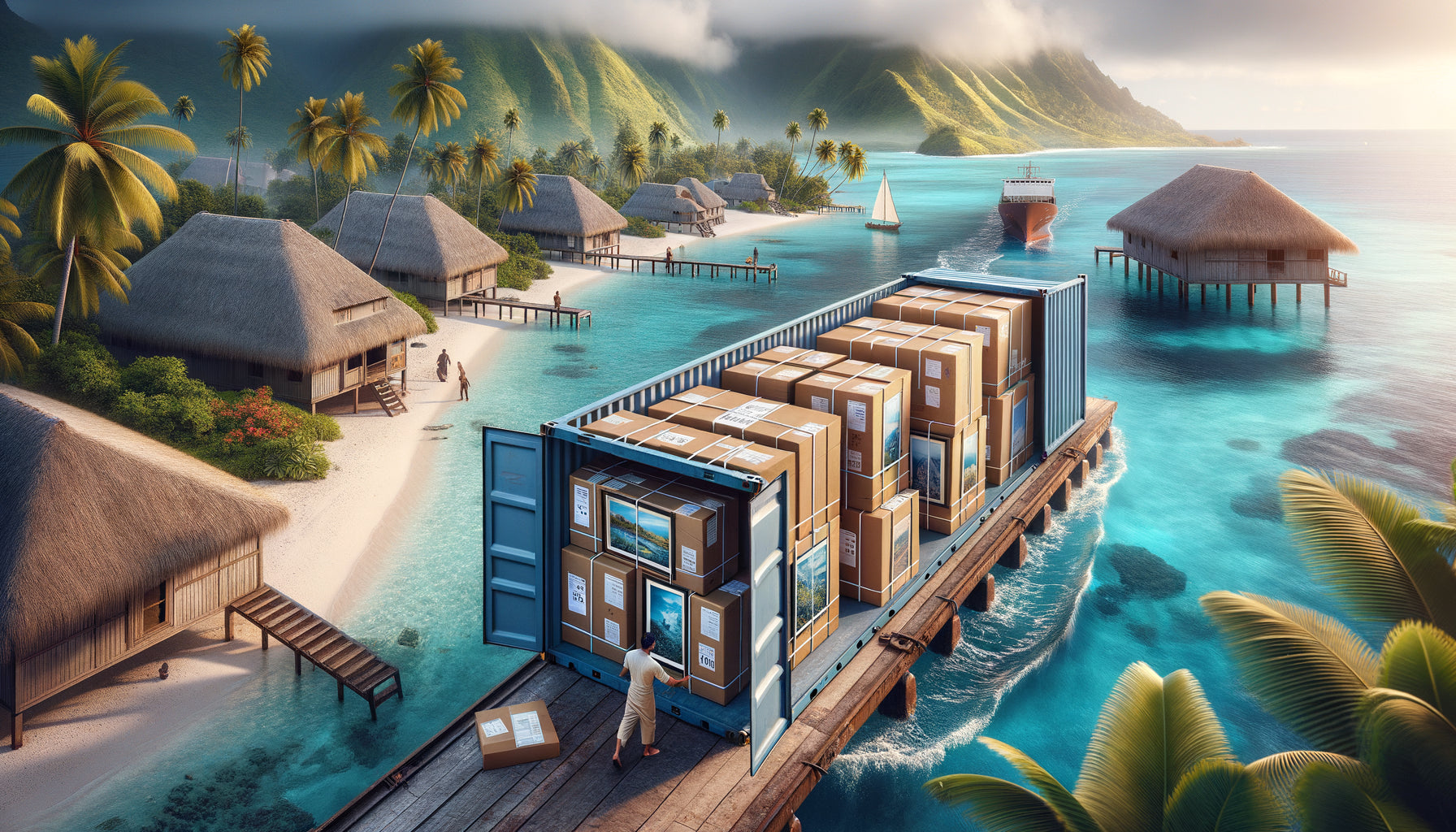
This question deserves consideration. Maritime freight to Saint-Barthélemy and Saint-Martin offers attractive rates, particularly for grouped shipments or large format paintings. Expect between 80 and 200 euros depending on dimensions and weight. The delivery time extends from 15 to 30 days, a reasonable duration if you plan ahead. The main advantage is the ability to transport bulky works that would be prohibitive by air.
Air freight, which is more expensive (often double maritime), is appealing for its speed: maximum 5 to 10 days. For a medium-sized painting, the additional investment remains reasonable if you are in a hurry. Air shipping also reduces exposure to humidity and temperature variations, an important advantage for delicate works. Some specialized carriers even offer dedicated art services with enhanced tracking and integrated insurance.
Specialized carriers for the Antilles
Choose operators who are intimately familiar with the customs specificities of Saint-Martin and Saint-Barthélemy. These professionals handle preliminary declarations, optimize routing, and often have agreements with local authorities that streamline customs clearance. Companies such as Caribbean subsidiaries of major logistics groups or specialized local players offer personalized support. Their expertise transforms a potentially stressful procedure into a simple administrative formality.
Don't hesitate to request detailed comparative quotes explicitly mentioning the included customs clearance fees. This transparency avoids unpleasant surprises and allows you to precisely budget your project for artwork destined for these destinations. The best providers will even provide you with a local contact on the island to coordinate final reception.

Building an art collection in your Antillean villa
Beyond the technical aspects, let's consider the inspiring dimension of this subject. Owning a residence in Saint-Martin or Saint-Barthélemy offers the unique opportunity to create an artistic universe in dialogue with the exceptional environment of these islands. Contemporary paintings in blues and whites resonate beautifully with marine landscapes. Abstract works with rich textures create fascinating counterpoints with the purified simplicity of modernized Creole architecture.
Some collectors develop coherent themes: photographic series on the ocean, abstractions evoking corals, portraits of Caribbean artists... This curatorial approach transforms your property into a personal exhibition space where each piece tells a story. The favorable customs specificities of these territories actually facilitate this process by making the gradual acquisition of a true collection economically viable.
Also consider discovering local artists during your stays. Saint-Barthélemy hosts several internationally renowned galleries, while Saint-Martin is developing a vibrant local art scene. Buying directly on site further simplifies customs issues since you avoid international import. This approach also supports the island's cultural economy while guaranteeing the Caribbean authenticity of your collection.
The future of artistic exchanges with these territories
Recent developments suggest a continued easing of formalities. The authorities of Saint Martin and Saint Barthélemy have realized that their residential appeal also depends on the ease of personalizing properties with quality decorative elements. Dematerialization initiatives for customs procedures are underway, already allowing some declarations to be pre-filled online before even shipping your paintings.
This trend is part of a broader cultural development vision. These islands no longer want to be seen as solely beach destinations but as true poles of refinement where art naturally finds its place. Tax exemptions on artworks contribute to this high-end positioning strategy. As an art enthusiast established in these territories, you fully benefit from this favorable dynamic.
Imagine yourself in a few weeks, contemplating from your terrace that longed-for painting, perfectly hung facing the shimmering bay. The customs process you dreaded will ultimately have turned out to be much simpler than expected thanks to the exceptional advantages of Saint Martin and Saint Barthélemy. Your Caribbean living space will have gained that touch of elegance that makes all the difference between a simple vacation residence and a true aesthetic refuge. What action to take now? Select your favorite works, prepare your documents and confidently embark on this Caribbean artistic adventure. The customs particularities of these islands are no longer obstacles but allies in your quest for the ideal living environment.
Frequently Asked Questions about Shipping Paintings to Saint Martin and Saint Barthélemy
Do I have to pay French VAT when I ship a painting to Saint Barthélemy?
No, and that's precisely one of the major advantages of this territory! Since Saint Barthélemy is not part of the European customs area and does not apply local VAT, you are exempt from this tax. Specifically, if you buy a painting from a mainland seller for delivery to Saint Barthélemy, they should invoice you the price excluding tax. Be sure to specify the final destination when ordering so that the seller correctly applies this exemption. This customs particularity represents an immediate saving of 20% on the purchase price, a considerable advantage that makes acquiring works of art particularly attractive to island residents. Keep your HT invoice and transport documents as proof of actual destination.
What documents must I absolutely provide for the customs clearance of my paintings?
Administrative simplicity is the rule in Saint Martin and Saint Barthélemy, but a few documents remain essential. Firstly, a detailed commercial invoice mentioning the precise description of the artwork (dimensions, technique, subject), its value and the full identity of the sender and recipient. Secondly, a customs declaration that your carrier will generally prepare for you based on the information you provide them. Thirdly, for works of significant or antique value, a certificate of authenticity or provenance strengthens your file. If you regularly import paintings, a copy of your proof of residency on the island can speed up procedures. These customs particularities remain flexible: the objective of the authorities is to facilitate the installation of residents, not to complicate their daily life.
How much does it actually cost to ship a painting to these islands?
The total cost is made up of several elements that must be clearly distinguished. The transport itself varies according to size and weight: count between 80 and 150 euros by sea for a standard painting (less than one meter on each side), and 150 to 300 euros by air. Customs clearance fees with a freight forwarder range from 30 to 80 euros depending on the complexity of the file. In Saint Barthélemy, customs duties on paintings are almost symbolic, often less than 5% of the declared value. In Saint Martin, expect between 5 and 10% in duties. In total, for a painting worth 1000 euros, you will invest approximately 200 to 400 euros all charges included, a very reasonable sum considering the tax advantages and favorable customs particularities of these destinations. Do not forget to add transport insurance (1 to 3% of the insured value) for complete peace of mind.