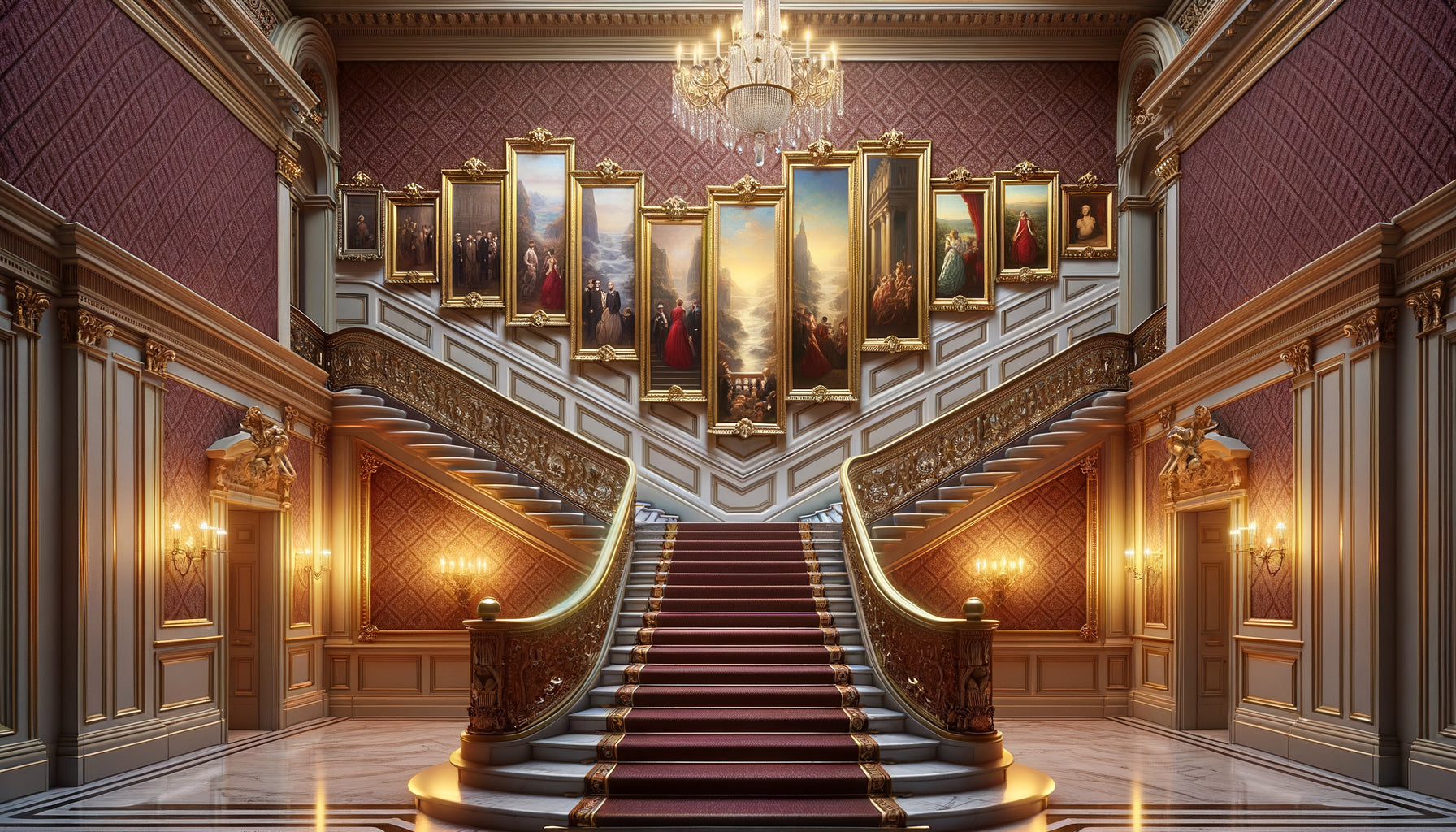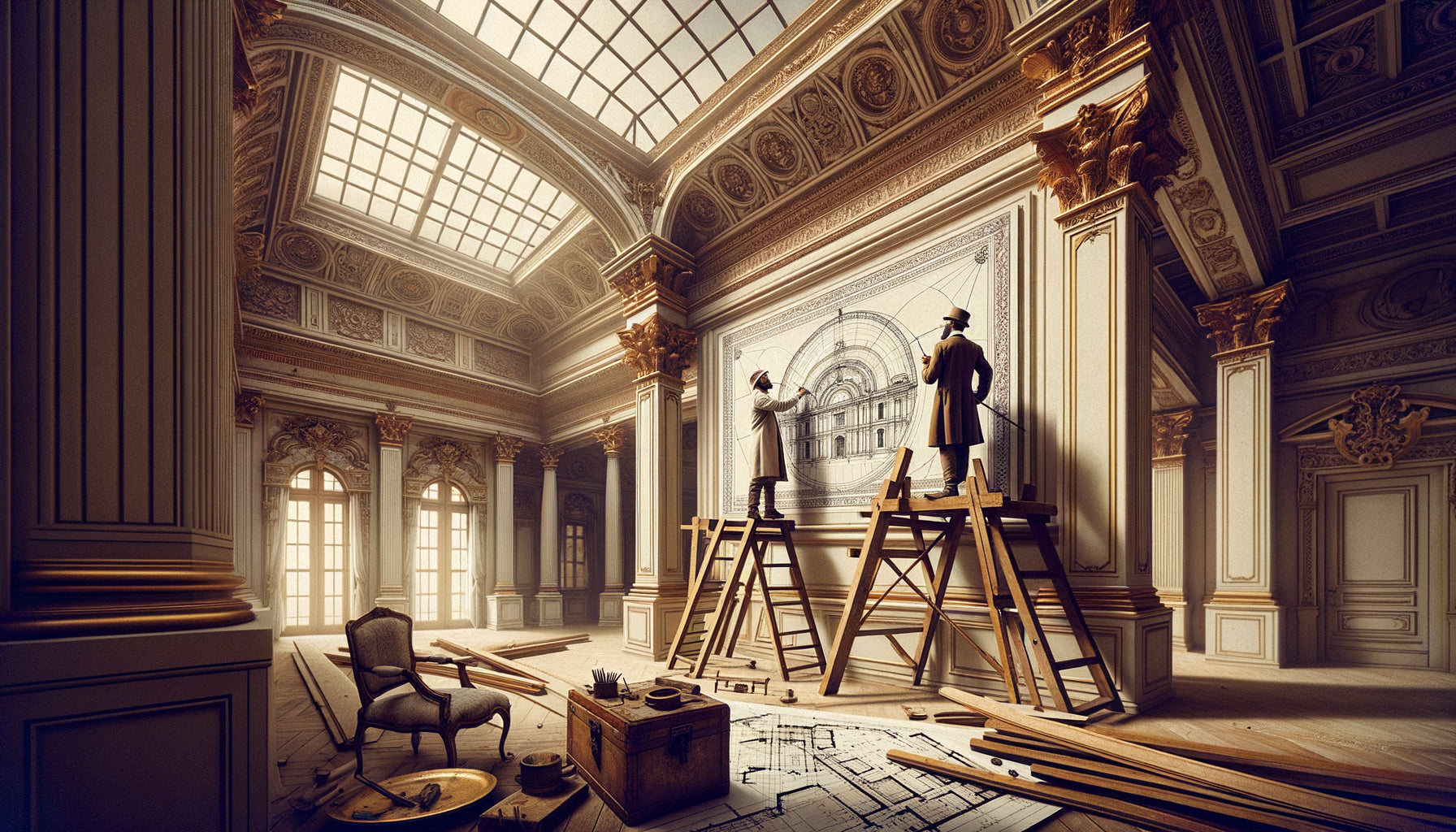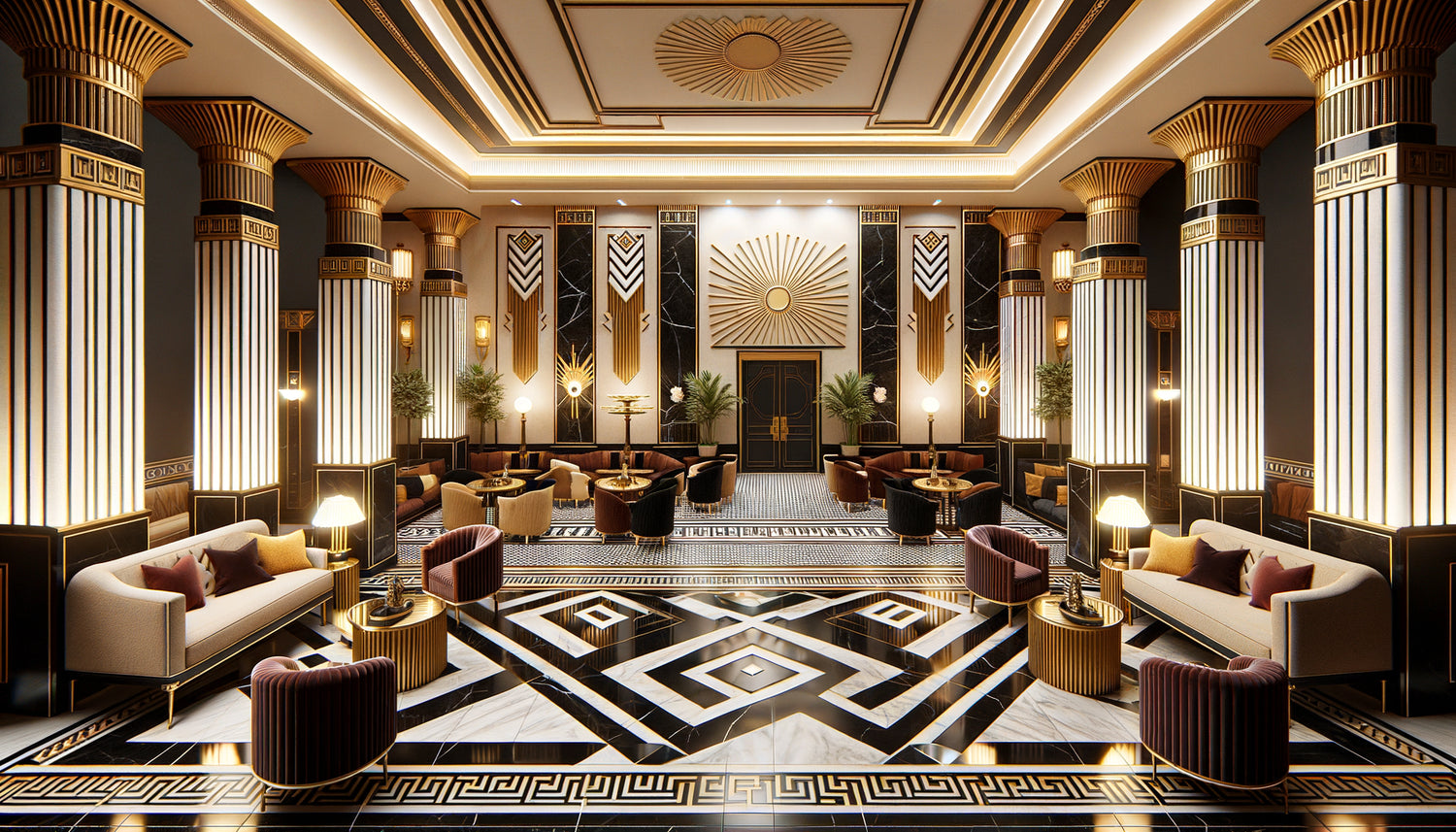
Imagine stepping through the heavy bronze doors of a Milanese palace in 1925. The hall welcomes you with an explosion of geometric lines, veined marble and stylized frescoes where modernity meets opulence. Every surface seems to vibrate with a new energy, resolutely turned towards the future. This is no coincidence: you have just entered a temple of Art Deco, the artistic movement that redefined luxury hospitality in Italy's roaring twenties.
Here’s what Art Deco brought to Italian grand hotels in the 1920s: a modern and refined aesthetic that married luxury and functionality, a distinctive visual identity that transformed each establishment into a total work of art, and a promise of cosmopolitan sophistication that attracted an international clientele seeking excellence.
Yet, this artistic dominance remains little known. Many associate Art Deco with Paris or New York, ignoring that Italy developed its own interpretation of this style, tinted with references to its glorious Roman past and centuries-old artisanal know-how. Hotel owners at the time understood: to attract the international elite, it was necessary to create spaces that embodied modernity without denying heritage. Rest assured, this fascinating story requires no expertise in art history. I will reveal how Art Deco conquered Italian palaces and why its influence still persists today in the codes of hotel luxury.
Art Deco: when geometry meets Roman grandeur
In the 1920s, Italy emerged transformed from World War I. Grand hotels, symbols of national prestige, sought to reinvent themselves for a cosmopolitan clientele eager for novelty. It is precisely at this moment that Art Deco emerges as the ideal answer: a style that celebrates industrial modernity while retaining a luxurious and artisanal dimension.
Unlike Italian Liberty (the local equivalent of Art Nouveau), considered too floral and outdated, Art Deco seduced with its clean lines, its geometric motifs and its precious materials. Italian architects and decorators brilliantly adapted this universal language by integrating references to Ancient Rome: stylized columns, geometrized imperial eagles, mosaics with modernized patterns.
The Grand Hotel et de Milan, the Excelsior of Rome or even the Baglioni of Venice all undertook major renovations in this style. Entrance halls became cathedrals of marble and chrome, lounges featured palisander woodwork adorned with ivory inlays, and restaurants were decorated with frescoes where antique nymphs and skyscrapers coexisted harmoniously.
The artists who shaped Italian hotel elegance
Behind this transformation lie names now forgotten by the general public, but who revolutionized the aesthetics of hospitality. Gio Ponti, before becoming the undisputed master of Italian post-war design, began his career creating Art Deco porcelain services for grand hotels. His creations blended bold geometric patterns and classic references in perfect harmony.
The painter and decorator Guido Cadorin adorned the lounges and restaurants of several Venetian palaces with sumptuous frescoes where Art Deco geometry met Tiepolo's shimmering colors. His compositions transformed dining spaces into veritable visual spectacles, where each dinner became a total aesthetic experience.
Venetian mosaic workshops, heirs to a millennial tradition, adapted their expertise to the requirements of the Art Deco style. The floors of the halls, composed of thousands of marble and glass tesserae, depicted fan-shaped, zigzag and chevron patterns that guided the eye and structured space with mathematical elegance.
Prestige materials at the service of the style
Italian Art Deco was distinguished by a sumptuous use of local materials. Carrara marble, obviously, but worked in thin slabs with exposed veins, creating unprecedented games of transparency. Precious woods – rosewood, ebony, amaranth – were inlaid in geometric patterns with clockwork precision. Murano glass found a new expression in stylized chandeliers, abandoning baroque arabesques for cascades of luminous prisms.
Milanese ironworkers created stair railings and elevator grilles where metal adopted forms inspired by Egyptian temples and Babylonian ziggurats, testifying to the Art Deco enthusiasm for ancient civilizations reinterpreted through the prism of modernity.

Why hoteliers massively adopted this style
The near-unanimous adoption of Art Deco by Italian grand hotels in the 1920s was not simply a matter of fashion. It responded to specific strategic imperatives. Firstly, this style embodied the cosmopolitan modernity sought by a wealthy international clientele. An American industrialist, a British aristocrat or a Swiss banker immediately felt at home in these décors that spoke the universal language of contemporary luxury.
Secondly, Art Deco allowed Italian establishments to differentiate themselves from their French and Swiss competitors while asserting a resolutely modern identity. References to Roman antiquity integrated into the Art Deco vocabulary created a unique signature, an 'Italian style' that reinforced the country's attractiveness as a luxury destination.
Thirdly, this artistic movement perfectly adapted to the new functional requirements of modern hospitality. Clean lines facilitated circulation, durable and easy-to-maintain materials (chrome, glass, polished marble) met growing hygiene standards, and electric lighting – still a novelty in many establishments – found an ideal setting in Art Deco aesthetics.
The little-known legacy that still influences our interiors
If you admire today a boutique hotel with its beveled mirrors, geometric sconces and chevron patterns, you are actually contemplating the direct heritage of this aesthetic revolution of the 1920s. Italian Art Deco established visual codes that still define our conception of luxury hospitality: reassuring symmetry, the use of contrasting materials, the balance between ornamentation and functionality.
Many of these historic palaces have also carefully preserved their original decorations. The Grand Hotel de Rome, after a meticulous restoration, still presents its spectacular Art Deco living room with walnut paneling and coffered ceilings adorned with gold leaf geometric motifs. These spaces function as time machines, offering contemporary visitors an immersion in the golden age of hospitality.
More subtly, the principles of Art Deco – hierarchical arrangement of spaces through decoration, creation of distinct atmospheres according to functions, attention to transitions between public and private areas – continue to inspire contemporary hotel designers. The next time you enter a modern lobby where marble meets brass in graphic compositions, think of these Italian decorators who, a century ago, invented this visual language.
Reproducing the Art Deco spirit in your own space
You don't need to own a palace to capture the essence of this timeless elegance. The Art Deco spirit translates wonderfully into contemporary residential interiors. Start by favoring geometric shapes: hexagonal mirrors, tables with sharp angles, fan patterns on textiles. Play with material contrasts: combine dark wood with brushed brass, combine deep velvet with veined marble.
Lighting is a crucial element. Opt for sculptural luminaires with vertical lines that create plays of light and shadow, reminiscent of the grand chandeliers in palace halls. Works of art also play a central role: prioritize compositions with strong lines, contrasting color palettes (black and gold, deep blue and silver, emerald and copper).
Transform your space into an echo of the Italian palaces of the Roaring Twenties
Discover our exclusive collection of wall art for luxury hotels that captures the geometric elegance and refined opulence of Italian Art Deco, to bring to your walls this timeless sophistication that has seduced the international elite.

When history inspires the future of hospitality design
The extraordinary success of Art Deco in Italian hotels in the 1920s teaches us a lesson that is still relevant today: authentic luxury is born from the meeting between formal innovation and respect for cultural heritage. These establishments did not simply import a fashionable Parisian style; they reinterpreted it through the prism of their own identity, creating a unique synthesis that spoke to both the international codes of prestige and the Italian soul.
This ability to adapt without copying, to modernize without denying, to seduce without sacrificing authenticity remains the secret of interiors that stand the test of time without losing their power of attraction. The most beautiful spaces are never frozen capsules in time or style exercises with no roots, but living dialogues between eras and traditions.
Today, as interior design oscillates between aseptic minimalism and eclectic overload, Italian Art Deco from the 1920s reminds us that a third path exists: that of structured elegance, readable luxury, sophistication that does not shout but imposes itself with a quiet evidence. It is this quality that you immediately feel when entering a truly successful space, this ineffable impression that everything is exactly where it should be, that every element participates in a higher harmony.
Visualize your space transformed. Imagine it welcoming your guests with the same silent confidence that once characterized grand Italian hotels as they opened their doors to travelers from around the world. This elegance is not a relic of the past – it awaits you, ready to reinvent your daily life into a sanctuary of thoughtful beauty. Start with a single piece, a work that captures this spirit, and let it gradually transform your perspective on the space around you. Aesthetic excellence is not a distant destination, but a choice you make today.
Frequently Asked Questions About Art Deco in Italian Hotels
Can you still visit Italian hotels with their original Art Deco decor?
Absolutely, and it's an experience not to be missed! Several prestigious establishments have carefully preserved their interiors from the 1920s. The Grand Hotel et de Milan retains its historic lounge intact, with its original woodwork and period lighting fixtures. In Rome, some spaces at the Grand Hotel de la Minerve still feature remarkable Art Deco elements. In Venice, the Hotel Excelsior au Lido maintains its Roaring Twenties atmosphere. Even if you don't stay there, many of these palaces allow visits to their public areas – their bars and tea rooms are perfect for immersing yourself in this aesthetic while enjoying a drink. It’s an accessible and inspiring way to understand this style in a real context, far more evocative than any art history book.
What is the difference between Italian and French Art Deco?
Excellent question that reveals the subtlety of this movement! French Art Deco tended towards a refined Parisian sophistication, with a preference for black lacquers, shiny chromes, and extremely geometric shapes. Italian Art Deco, on the other hand, systematically integrated references to Roman antiquity – stylized columns, reinterpreted mosaic patterns, geometrized imperial eagles. Italian artisans also favored noble local materials: Carrara marble with spectacular veining, Murano glass in deep colors, precious woods inlaid using ancestral techniques. The result? A warmer, more tactile Art Deco that dialogued with centuries of artisanal excellence while asserting its modernity. This unique fusion explains why Italian Art Deco interiors have often aged better than their sometimes too radical French counterparts.
How to integrate Art Deco elegance into a contemporary interior without falling into pastiche?
The secret lies in embracing principles rather than copying forms. Rather than recreating a 1920s decor, focus on what defined Art Deco: the structuring geometry, the mastered contrast of materials, the clear visual hierarchy. In a contemporary living room, this can be translated into a large mirror with geometric lines that structures a wall, a dark wood and brass console that creates a focal point, cushions with chevron patterns that energize a sleek sofa. Lighting also plays a crucial role: opt for sculptural lighting fixtures rather than anonymous recessed spotlights. In terms of color palettes, Art Deco combinations – black and gold, navy blue and silver, emerald green and copper – work beautifully in modern interiors. The trick is to dose it: one or two strong elements are enough to evoke this spirit without turning your space into a museum.