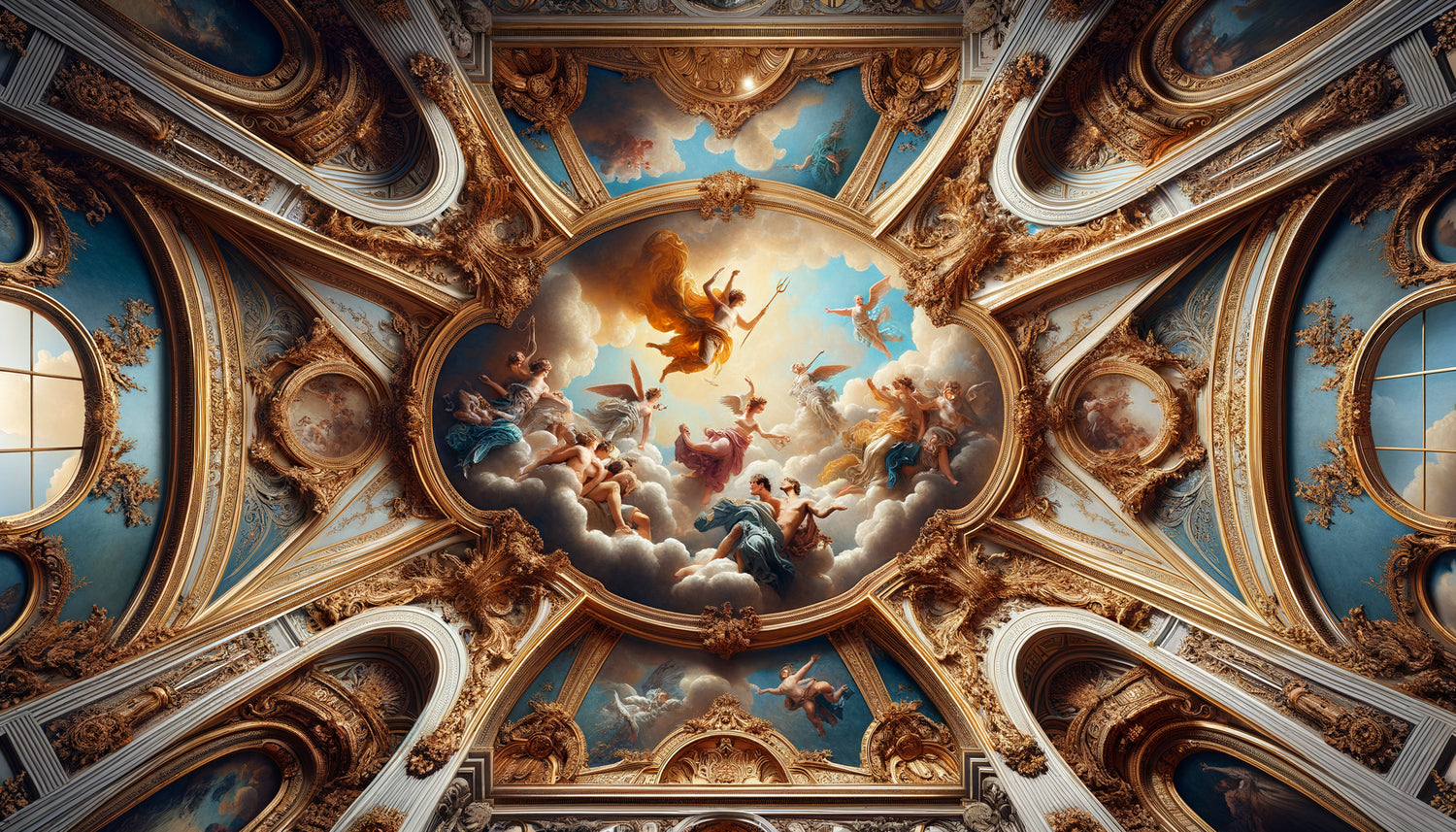
Look up in the hall of Le Meurice or under the dome of The Ritz. Above you, Apollo drives his solar chariot, Venus emerges from the waves, Bacchus dances among the vines. These majestic frescoes are not mere decorations. They tell a story of ambition, power and seduction orchestrated by 19th-century hoteliers.
Here's what these mythological scenes on Parisian ceilings reveal: a coded language of social prestige, a promise of transformation for travelers, and a strategy to immortalize their patrons. Each painted deity served a specific purpose in the luxury experience.
Today, we admire these ceilings as we walk through vestibules, camera in hand, without realizing that we are walking under a cultural manifesto. We see beautiful paintings where contemporaries read political, social and philosophical messages as clear as a newspaper page.
Yet, deciphering this symbolism requires no training in art history. You just need to know the context of their creation and the visual codes shared by the elite of the time. In minutes, you will understand why a hotelier chose Hermes over Mars, Diana over Juno.
This article reveals the hidden intentions behind these suspended masterpieces, and how they transformed a simple stay into an initiatory journey.
The mythological ceiling: cosmopolitan calling card of the hotelier
In Paris during the Belle Époque, opening a grand hotel meant competing with aristocratic palaces. Visionary hoteliers like César Ritz understood that their international clientele – Russian princes, American industrialists, Indian maharajas – shared a common cultural language: Greek-Roman mythology.
A ceiling adorned with mythological scenes immediately declared the owner's erudition. It affirmed: here reigns someone who knows Ovid, who has done the Grand Tour, who belongs to the cultivated European elite. It was a visible cultural passport from the entrance hall.
Mythology also offered neutral territory. Unlike religious or national historical scenes that could divide, the gods of Olympus belonged to everyone. A New York banker and a Viennese count could equally appreciate the judgment of Paris or the abduction of Europe, universal references of their classical education.
Art as an investment in reputation
Commissioning these frescoes from academic painters cost a fortune – sometimes the equivalent of two years' income. But this investment guaranteed coverage in illustrated newspapers, travel guides and society notebooks. The mythological ceiling thus became the first marketing tool of the establishment, reproduced in engravings and distributed throughout Europe.
Apollo and Mercury: the deities of a thriving trade
Browse the grand Parisian hotels and you will notice the prevalence of two figures: Apollo, god of light and arts, and Mercury, messenger of the gods and protector of commerce. This choice is no coincidence.
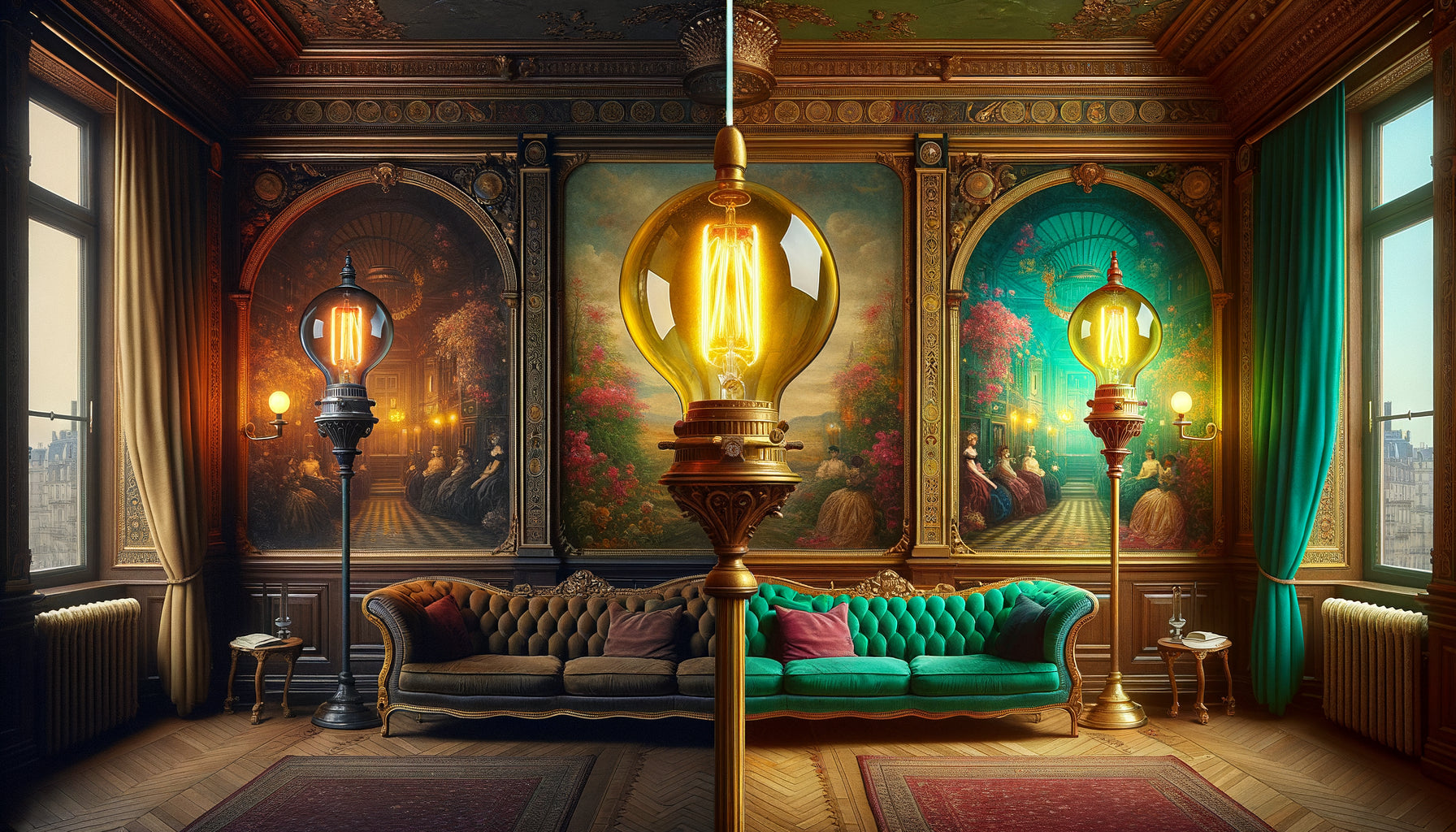
Apollo embodied the ideal of civilization that the hotel promised: artistic refinement, harmony, Apollonian beauty. Representing him on a ceiling announced that guests were entering a space where culture and elegance reigned. In the Grand Hôtel du Louvre, Apollo driving his solar chariot also symbolized modern enlightenment – these establishments were among the first to adopt electric lighting.
Mercury, with his winged sandals and caduceus, protected travelers and commercial transactions. For a hotelier, displaying him was akin to placing their establishment under the divine patronage of travel and prosperity. At the Terminus Saint-Lazare, Mercury occupies a central place, reminding arriving train passengers that they were under divine protection during their stay.
An iconography of movement and modernity
These two deities shared another trait: dynamism. Apollo traverses the sky, Mercury flies between worlds. In an era fascinated by speed – express trains, nascent automobiles, telegraph – these mythological figures anchored innovation in classical tradition. They said: this progress is not a break, but the fulfillment of eternal human aspirations.

Venus and the Graces: promising transformation through luxury
Scenes featuring Venus, goddess of beauty, and her companions the Graces frequently appear in reception areas and lounges. Their message was particularly directed at female customers experiencing social emancipation.
Staying in these hotels promised a transformation. Like Venus emerging from the waters, transformed and radiant, guests – especially newly rich American women seeking to acquire European polish – hoped to leave embellished, refined, transformed by the Parisian luxury experience.
At the Ritz, the fresco depicting Venus’s toilette in the room of the same name was no accident. It suggested that the beauty rituals practiced at the hotel – hairdressers, milliners, couturiers on site – participated in an age-old divine tradition. Being beautiful at the Ritz meant imitating Venus herself.
Luxury as a mystical initiation
Scenes of mythological transformation – Daphne becoming laurel, Narcissus contemplating his reflection – served as visual metaphors. They promised that crossing the threshold of the hotel initiated an inner journey, not just a geographical one. You were no longer simply Madame Dupont from Lyon, but a heroine in your own personal odyssey.
Bacchus and parties: legitimizing worldly pleasure
In the restaurant halls and smoking rooms, Bacchus and his bacchanalian retinue reigned supreme. These scenes of wine celebrations, ecstatic dances, and sensual pleasures fulfilled a subtle psychological function: they morally authorized excesses.
Europe at the turn of the century lived in constant tension between strict bourgeois morality and the desire for enjoyment. By placing feasts under the benevolent gaze of Bacchus, hoteliers transformed potential debauchery into legitimate cultural celebration. One did not get drunk vulgarly, one communed with Dionysian mysteries.
At the Grand Hotel, the ceiling of the banquet hall depicted the mythological grape harvest. Implicit message: the exceptional wines served here descended directly from the nectar of the gods. Each bottle opened participated in a millennial ritual, not just a simple consumption.
Gastronomy elevated to the rank of divine art
These bacchanalian ceilings transformed hotel restaurants into temples of gastronomy. They established a continuity between Olympian banquets and Escoffier’s cuisine. Dining under a ceiling depicting the feast of the gods made you participate in their immortality, if only for the time of a meal.

The heroes travelers: Ulysses, Jason and the cult of adventure
Some hotels favored heroic scenes: Ulysses facing storms, Jason conquering the Golden Fleece, Aeneas founding a new civilization. These choices targeted a male clientele of explorers, entrepreneurs, and adventurers of industrial capitalism.
These mythological heroes offered flattering mirrors to Texan oil magnates, Argentine traders, and colonial engineers. They too crossed oceans, faced the unknown, built empires. The mythological ceiling validated their ambitions as modern epics.
At the Hôtel Terminus des Invalides, the smoking room ceiling depicted the Labors of Hercules. Transparent symbolism for these captains of industry: their titanic efforts were part of the lineage of legendary exploits. Their fatigue was heroic, their rest deserved like that of a demigod.
Immortality by association: when patrons slipped among the gods
The most fascinating aspect of these mythological ceilings remains the subtle inclusion of patrons in the scenes. Academic painters excelled at the art of disguised portraiture. A face of Apollo strangely resembled the son of the owner. A nymph presented the features of the financier's wife.
This practice extended a centuries-old aristocratic tradition, but now accessible to the nouveau riche. For the price of a fresco, one literally bought their place in Olympus. Your face mingled with that of the immortals, visible by thousands of travelers.
At the Lutetia, some historians have identified in the figures of Diana's procession portraits of members of the Boucicaut family, founders of Le Bon Marché and investors in the hotel. Their immortality was assured, not by statues in forgotten squares, but by a daily presence in a place of life and transit.
Mythology as a new coat of arms
Where the old nobility displayed coats of arms, the triumphant bourgeoisie endowed themselves with personalized myths. These ceilings functioned as narrative blazons, telling not the family lineage, but the personal ascent disguised as a heroic destiny.
Infuse this mythological majesty into your spaces
Discover our exclusive collection of luxury hotel wall art that captures the timeless spirit of Parisian grand establishments and transforms each room into a prestige gallery.
Under the gaze of the gods: the traveler's transformed experience
Understanding this symbolism radically changes our perception of these spaces. The next time you look up at a mythological ceiling in a Parisian grand hotel, you will no longer see simple Belle Époque decorations. You will decipher a complete ideological program: affirmation of status, promise of transformation, legitimation of pleasure, celebration of ambition.
These frescoes transformed commercial transactions – renting a room, ordering dinner – into quasi-spiritual experiences. They elevated material comfort to the rank of existential quest. They allowed the nouveau riche to buy not only luxury but also transcendence.
Today, as these heritage hotels meticulously restore these ceilings, they are preserving much more than art. They keep alive a system of signs, a visual grammar of prestige that continues, consciously or unconsciously, to shape our experience of contemporary luxury.
Look up. The gods still watch over you, and they still whisper the same promises of immortality to those who know how to hear them.
FAQ : Deciphering the mythological ceilings of Parisian grand hotels
Why mythology rather than historical or religious scenes?
Greco-Roman mythology offered a universal language understood by the entire international elite of the time. Unlike religious scenes that could divide a multicultural clientele (Catholics, Protestants, Orthodox, Jews), or national historical scenes that favored one country, the Olympian myths belonged to everyone. They were part of the common educational foundation of the upper classes, regardless of their origin. A Russian, American, or Ottoman client had all studied Ovid and Homer. This cultural neutrality was commercially strategic. Moreover, mythology allowed for the representation of nude bodies and sensual scenes that contemporary morality forbade in other contexts – under the guise of academic art, one could display a scandalous sensuality.
Can these mythological ceilings still be seen today?
Absolutely, and some are beautifully preserved. The Meurice, the Ritz Paris, the Hôtel de Crillon and the Lutetia have all restored their historical ceilings during recent renovations. Even if you do not stay in these establishments, you can often admire these works while having tea or a drink in their public spaces. The Grand Hotel du Louvre (now transformed) retains some of its frescoes visible during special events. Heritage Days in September also offer rare opportunities to access certain areas usually reserved for private use. These visits are well worth the detour: you contemplate works commissioned from the greatest academic painters of their time, often more accessible than museums and in their original context.
How to recognize the different gods without being an expert in mythology?
Painters used a system of codified iconographic attributes that you can easily learn. Apollo always wears a laurel wreath and drives a radiant sun chariot. Mercury is recognizable by his winged sandals, winged helmet, and caduceus (staff entwined with serpents). Venus is often accompanied by doves, roses, or Cupid, and frequently emerges from the waves. Bacchus holds a thyrsus (a staff crowned with ivy) and a cup of wine, surrounded by panthers or vines. Diana carries a quiver and a crescent moon. Mars wears armor and a warrior's helmet. Once you have memorized these few attributes, you will decipher 80% of mythological scenes. Hotels sometimes offer explanatory brochures or guided tours that contextualize these works – don’t hesitate to ask the concierge.