

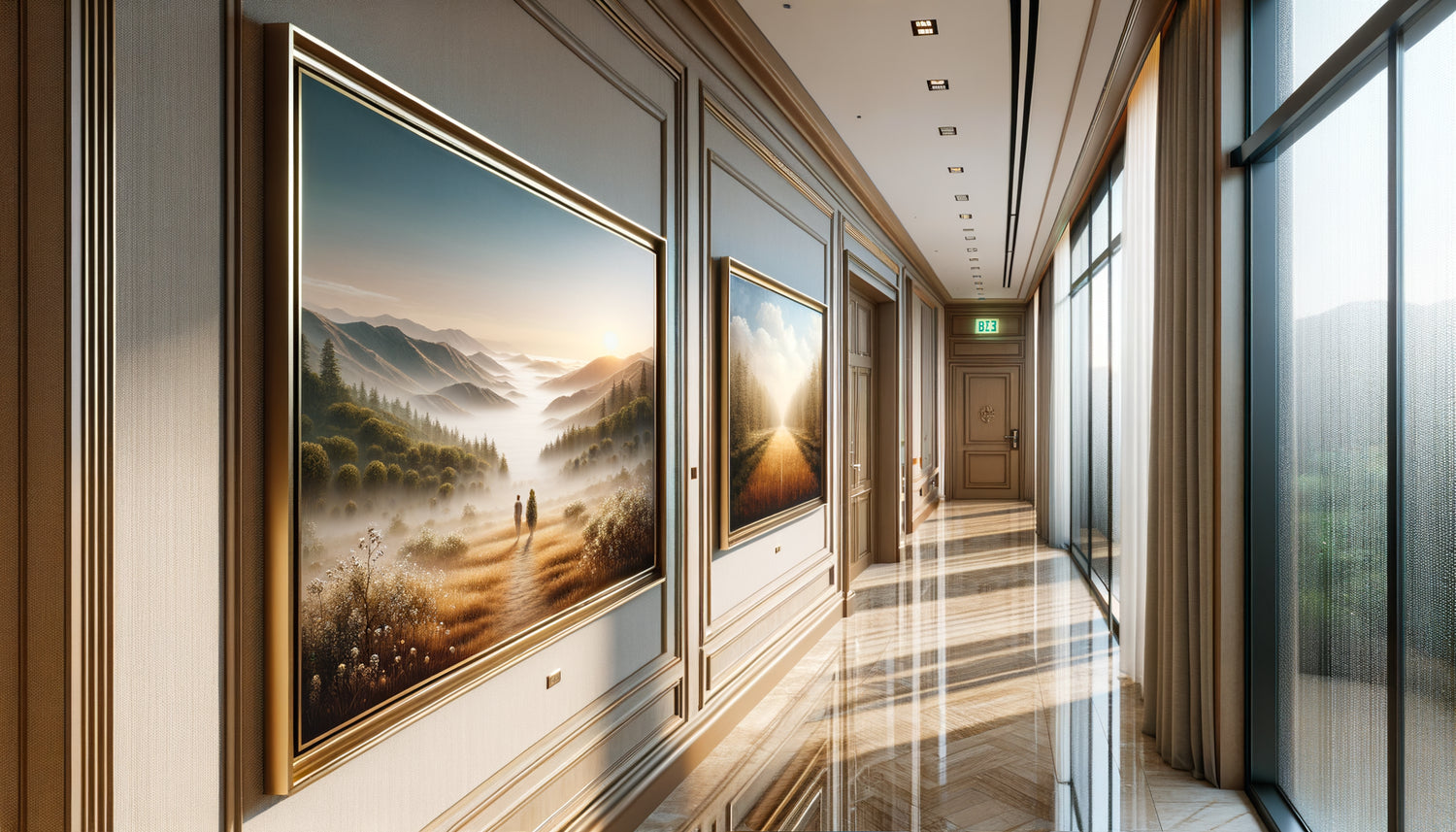
The scene repeats every week in the hushed hallways of luxury hotels: a magnificent artwork on the wall for three years begins to tarnish, colors lose their vibrancy, and management hesitates between costly restoration and replacement. This issue of the durability of paintings in hotel settings haunts all establishment managers who invest significant budgets in their wall decor.
Here's what choosing between acrylic and oil paint brings to your hotel context: up to 50% greater durability depending on the technique, a significant reduction in maintenance costs, and optimal preservation of artistic investment over time.
The frustration is real: you invest in artworks to create a unique atmosphere, but between the humidity of bathrooms, temperature variations, intense light exposure, and daily cleaning, your paintings age prematurely. No one clearly explains which pictorial technique really resists the specific constraints of hospitality.
Rest assured: after twelve years supporting four and five-star establishments in selecting their collections, I have observed the behavior of hundreds of artworks under real conditions. I will reveal to you exactly what technical criteria determine the resistance of a painting in a hotel setting, and how to make the most judicious choice according to your spaces.
Oil paint versus hotel constraints: nobility and fragility
Oil paint benefits from a centuries-old reputation for nobility and longevity. In museums, some works cross centuries without losing their splendor. But the hotel setting differs radically from controlled museum conditions.
Oil offers an incomparable chromatic depth, those subtle glazes that give portraits and landscapes an almost living dimension. The technique allows exceptional gradients, particularly appreciated in presidential suites and high-end reception areas. The slow drying of oil – several months, sometimes a full year – creates a dense molecular structure which, once stabilized, resists moderately well to hygrometric variations.
However, this same slowness of drying is its Achilles' heel in a hotel setting. An oil painting remains sensitive to impacts for months after its creation. In a busy hallway where suitcases and service carts pass daily, a recent snag risks irreversible damage. I have seen magnificent €3,000 artworks irreparably damaged three weeks after their installation in a corridor leading to the elevators.
Oil also has an increased sensitivity to UV. In a lobby bathed in natural light or under powerful spotlights, the oily binder yellows gradually, subtly but inexorably altering the light tones. This phenomenon, imperceptible daily, becomes flagrant after two or three years of continuous exposure.
Acrylic in hotel settings: modern resilience
Acrylic paint revolutionized hospitality art décor since the 2000s. Its fast drying time – a few hours for one layer, a few days for a complete artwork – gives it almost immediate stability. An acrylic canvas can be installed a week after its creation without any risk.
The real strength of acrylic in hospitality lies in its chemical composition. Acrylic polymers form a flexible and resistant plastic film when drying, impermeable to humidity and temperature variations. In areas with constraints – spas, restaurants, air-conditioned corridors – this resilience makes all the difference.
I have followed for five years acrylic artworks installed in a thermal hotel where hygrometry oscillates between 45% and 75% depending on the seasons. No visible alteration, where oils would have required at least two restoration interventions. Acrylic paint withstands these variations that would crack or warp a traditional technique without flinching.
Acrylic also has superior UV resistance. Modern pigments, combined with the polymer binder, retain their brilliance even under intense light exposure. In glazed common areas or under powerful architectural lighting, this characteristic becomes decisive for preserving the investment.
Cleaning is another major advantage: the acrylic surface, once dry, tolerates delicate dusting with a slightly damp microfiber cloth. In hospitality settings where daily maintenance is essential, this ease of maintenance considerably reduces long-term costs.

Comparative analysis: resistance criteria in real conditions
After documenting the aging of more than 400 artworks in different types of establishments, certain criteria emerge clearly to assess the resistance of pictorial techniques in hospitality.
Resistance to humidity and thermal variations
Acrylic largely dominates this criterion. Its natural impermeability makes it ideal for humid areas: entrances with frequently opened doors, restaurants with adjoining kitchens, wellness spaces. Oil, despite its protective varnish, remains permeable to ambient humidity which, over several years, can cause micro-cracks in the pictorial layer.
In air-conditioned rooms where the temperature varies by 10°C between day and night during the interseason, acrylic retains its flexibility while oil, more rigid, can develop premature cracking.
Shock and handling resistance
Once completely dry, oil paint offers excellent resistance. But this stability requires patience – a minimum of six to twelve months. On the other hand, acrylic reaches its maximum strength in just a few days, a decisive advantage during quick renovations or seasonal decor changes.
For paintings located in high-traffic areas – hallways, stairwells, circulation spaces – acrylic offers superior resilience to repeated micro-impacts: vibrations, air movements, accidental contacts.
Color fastness over time
Paradoxically, while oil is associated with durability, modern acrylic now rivals and even surpasses it in chromatic longevity under certain conditions. High-quality acrylic pigments, protected by their polymer matrix, are more resistant to yellowing and photodegradation.
However, oil excels in spaces with controlled lighting – private living rooms, libraries, meeting rooms with indirect lighting – where its depth and subtle color expression is fully expressed without suffering from aggression.
Hotel areas and adapted technical recommendations
The question is not so much declaring one technique superior in absolute terms, but adapting the choice of paint to the specific context of each hotel space.
Lobbies and reception areas: prioritize acrylic for highly lit and busy areas. Oil remains relevant in alcoves, intimate corners with subdued lighting where its nobility is expressed without constraint.
Rooms and suites: both techniques coexist harmoniously. Acrylic for standard rooms where decorative renewal is more frequent, oil for high-end suites benefiting from meticulous maintenance and a more stable environment.
Restaurants and bars: acrylic prevails due to its resistance to suspended grease, temperature variations (proximity to the kitchen), and frequent cleaning. Its ease of maintenance drastically reduces interventions.
Hallways and circulation areas: acrylic without hesitation. Resistance to vibrations, light impacts and temperature variations makes it the rational choice for these demanding areas.
Wellness and spa areas: exclusively acrylic. The high and constant ambient humidity excludes oil which would require prohibitive maintenance.

Beyond Technique: The Role of Support and Finish
The durability of a work in a hotel setting does not depend solely on the pictorial technique. The support and protective finishes play a decisive role, often neglected.
A professional-grade linen canvas, stretched over a keyed frame with adjustable tension, will offer much better longevity than an inexpensive canvas, regardless of the technique used. Linen absorbs and releases moisture more evenly than cotton, limiting deformations.
The final varnish constitutes the first line of defense against external aggressions. For acrylics, a satin acrylic varnish offers optimal protection while facilitating cleaning. For oils, traditional dammar varnish remains a reference, but modern synthetic varnishes offer superior UV protection – essential in brightly lit hotel environments.
The framing also deserves attention: a frame with marie-louise creates a space between glass and paint, avoiding condensation in direct contact. In humid areas, this spacing becomes crucial to prevent mold and alterations.
Your establishment deserves artworks that stand the test of time without losing their luster
Discover our exclusive collection of luxury hotel wall art that combines aesthetic excellence and technical resistance, specially designed to withstand the demands of a hotel environment.
Investment and Profitability: Calculating the Real Cost Over 10 Years
The durability of paintings in hospitality is directly linked to the profitability of the artistic investment. A less expensive painting that needs to be replaced every three years ultimately costs more than a premium work preserved for ten years without intervention.
Let's take a concrete example: a professional-grade acrylic artwork costing 1200 euros, installed in a high-traffic hallway, will only require annual cleaning (15 euros of service). Over ten years: 1350 euros invested.
A comparable oil painting at 1500 euros in the same location will probably require additional protective varnishing after three years (180 euros), possibly retouching and restoration after six years (350 euros), and more delicate professional cleaning annually (25 euros). Over ten years: 2280 euros.
The difference of €930 on a single artwork becomes considerable when multiplied by the 50, 100 or 200 artworks in an establishment. The choice of painting technique directly impacts the profitability of your decorative strategy.
This doesn't mean that oil should be systematically excluded, but rather used strategically in spaces where it will flourish without excessive constraint, reserving acrylic for demanding areas.
The final decision: a hybrid and reasoned approach
After twelve years observing the behavior of artworks in dozens of establishments, my conviction has strengthened: the best strategy in a hotel setting combines both techniques judiciously according to zones and objectives.
Acrylic is essential in 70% of spaces in a contemporary hotel: passageways, humid areas, brightly lit places, corners requiring simple maintenance. Its resilience, long-term value for money, and ease of maintenance make it the rational choice for most locations.
Oil retains its relevance in 30% of premium spaces: high-end suites, private lounges, libraries, interior galleries with controlled lighting. In these protected contexts, its nobility and depth justify the investment and particular attention it requires.
This hybrid approach simultaneously optimizes aesthetic impact, artwork durability, and overall profitability of your artistic investment. It allows for a subtle spatial hierarchy: oils signal exceptional spaces, acrylics harmoniously dress the entire establishment.
The hotel context demands artworks that combine beauty and resilience. By understanding precisely the strengths and limitations of each painting technique, you transform your art collection into a lasting investment that enhances your establishment for years, without excessive maintenance or premature replacement.
Frequently asked questions about the resistance of paints in hotels
Can you really visually differentiate between acrylic and oil for a hotel client?
A legitimate question that worries many directors! The short answer: for 95% of your clientele, no, the visual difference is not perceptible, especially with current professional quality acrylics. Modern application techniques allow to reproduce glazes, impastos and subtleties traditionally associated with oil. What really matters for the customer experience is the overall artistic quality – composition, colors, coherence with the atmosphere – much more than the technique used. Oil brings a symbolic value and specific chromatic depth appreciated by connoisseurs in premium spaces, but well-executed acrylic creates an equivalent visual impact in most hotel contexts. Focus on choosing quality artworks rather than the painting technique, which remains a technical consideration more than a perceptual one.
How long after creation can I install a painting without risk?
This is probably the most important question for planning your decoration projects! For a professional quality acrylic paint, allow a minimum of 7 to 10 days after the last coat of varnish. It reaches its maximum strength in about three weeks. This short timeframe allows great flexibility during renovations or openings under time constraints. For an oil painting, patience becomes a virtue: wait at least 6 months, ideally 9 to 12 months before installation in a constrained area. Fresh oil remains vulnerable to shocks, vibrations and temperature variations which can cause irreversible damage. If you need to install quickly, acrylic is the way to go. If you are planning a permanent collection for protected spaces with several months' lead time, oil becomes feasible. This difference in drying time explains why so many establishments now prefer acrylic for their main collection, reserving oil for specifically anticipated acquisitions.
What budget should I plan for the annual maintenance of a collection of 50 paintings?
Excellent question that directly addresses the profitability of your artistic investment! For a collection mainly acrylic (40 works) with some oils in protected areas (10 works), allow between €800 and €1200 annually for routine maintenance. This budget covers annual professional dusting of acrylics (€15-€20/work), delicate cleaning of oils (€25-€35/work), and a check of fixings and frames. Add approximately €200-€300 every 3-4 years for targeted interventions: varnish reinforcement, minor retouching, replacement of hanging systems. If your collection were entirely in oil in constrained areas, this budget would easily double (between €2000 and €2500 annually) with more frequent restorations. Maintenance therefore represents 1-2% of the value of the collection annually for well-chosen works correctly placed. A reasonable investment that preserves your artistic heritage and maintains optimal visual impact for your clientele. The real savings are made at the time of initial selection: technique adapted to the installation location.


