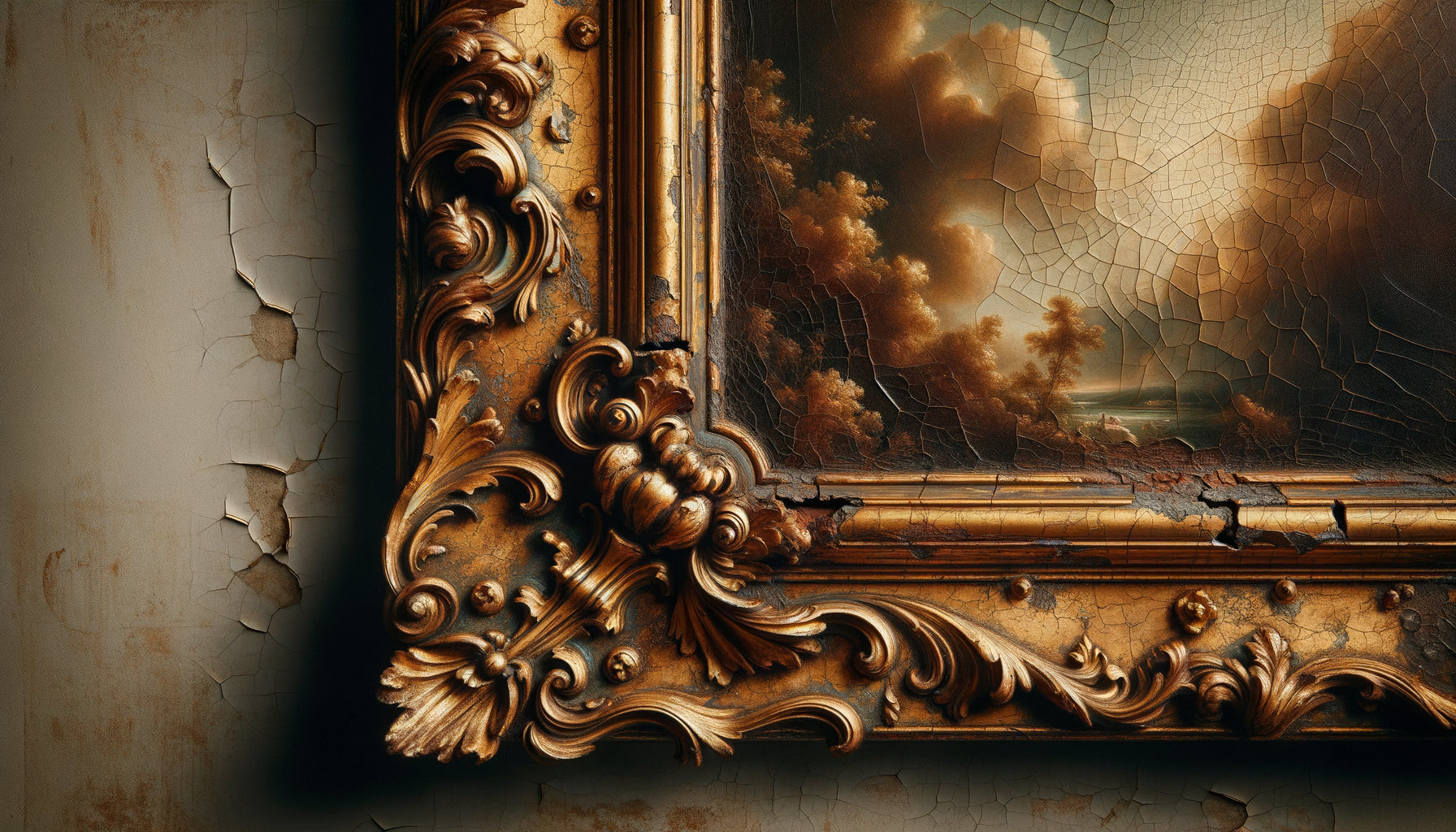
The other day, while browsing a provincial auction, I saw a scene that has repeated itself for thirty years: a couple fascinated by a French romantic landscape, hesitating, murmuring "but how much is it really worth?" This question echoes through living rooms, galleries, and auction houses. And the answer is never simple, because the market for 19th-century historical paintings operates according to precise codes that few people master.
Here's what a 19th-century historical painting in good condition can bring you: a window into a major artistic era, a heritage investment that transcends generations, and an incomparable decorative presence that instantly transforms the atmosphere of a room. But to acquire an authentic work, you must first understand the mechanisms that define its value.
The problem? Most enthusiasts get lost in the range of prices. Between a few hundred euros and several million, the gap seems abyssal. You hesitate, you give up, convinced that these treasures are inaccessible or that you risk being scammed.
Rest assured: the market is much more accessible than one might imagine. With the right keys to interpretation and an understanding of the factors influencing valuation, you can identify remarkable opportunities and build a coherent collection. I'm going to reveal what thirty years of expertise have taught me about the real prices of 19th-century paintings.
The actual range: between myth and reality of the market
Let's talk about concrete figures. The average price of a 19th-century historical painting generally oscillates between €800 and €15,000 for authentic works in good condition. This range is explained by a precise hierarchy that every collector must know.
The paintings of small regional masters – these talented artists who exhibited at the Salons without achieving supreme notoriety – make up the essential part of the accessible market. A signed Breton seascape, a quality bourgeois portrait, a Barbizon school landscape: between €800 and €3,500, you will find authentic, moving, perfectly preserved pieces.
Above that, the intermediate category (€3,500 to €8,000) brings together artists recognized regionally, those whose names appear in specialized dictionaries, who have received medals, and whose museums preserve some canvases. The signature begins to carry real market value.
Between €8,000 and €15,000, you access the second-tier artists of the French school: names that mattered, impeccable techniques, documented provenance. This is the territory of informed collectors who build coherent ensembles.
The five criteria that tip the price
After thousands of transactions, I have identified the true levers of valuation for a 19th-century painting. And contrary to popular belief, it's not always age that is paramount.
The artist's reputation: the multiplier factor
A name changes everything. Between an anonymous landscape and the same painting signed by a listed artist, the coefficient can reach 5 to 10. 19th century artist quotes are now accessible via specialized databases: Artprice, Artnet, auction house archives. An artist with regular auction results has an objective value.
The subject depicted: the eternal power of image
Some themes transcend eras. Orientalist scenes (harems, North African markets, caravans) consistently reach peaks. Portraits of aristocratic children, animated seascapes, Parisian genre scenes sell better than still lifes or abstract landscapes. The market remains emotional: we buy what touches us, tells us a story.
The condition: the absolute imperative
A painting in good condition means: stable varnish, intact pictorial layer, original or professionally restored frame, absence of crude repaints. Well-executed old restorations do not significantly alter value. On the other hand, a torn canvas, oxidized varnish to the point of masking colors, sagging frames: the discount can reach 60 to 70%.
The dimensions: the question of integration
The decoration market directly influences prices. Medium formats (50x70 cm to 80x100 cm) negotiate better than very large formats, difficult to place in contemporary interiors. Paradoxically, small studies (20x30 cm) also achieve nice prices due to their intimate character and ease of hanging.
Provenance and history: the traceability premium
A painting with its history – documented exhibitions, identified collections, publications – acquires a legitimacy that reassures and enhances value. Collection stamps on the back, exhibition labels, mentions in critical catalogs add a valuable patrimonial dimension.

Schools and movements: the wide range of valuations
Not all paintings from the 19th century are equal in value according to their stylistic affiliation. The artistic movement considerably influences average prices.
The French Romantic school (1820-1850) offers fascinating opportunities. Dramatic landscapes, medieval ruins, troubadour historical scenes: between 1,200 and 6,000 euros for artists of secondary importance. The Neoclassical period (portraits, antique scenes) remains more confidential, therefore more accessible.
The Barbizon school and realism (1840-1870) constitute the heart of the French market. Demand remains strong for these forest landscapes, authentic peasant scenes. Count 2,000 to 12,000 euros for followers of Corot or Daubigny. Originals by masters obviously exceed these ranges.
The Academicism and genre scenes (1860-1900) seduce with their technical virtuosity. These polished bourgeois portraits, gallant scenes, opulent interiors: 1,500 to 8,000 euros for honorable signatures. The Anglo-Saxon market particularly appreciates these pieces.
The Orientalism remains the most valued segment. Even a minor artist who traveled to North Africa sees his works sold above 3,000 euros. Harem scenes, fantasia, colorful souks: 5,000 to 25,000 euros for established names.
Where to buy a historical painting intelligently?
The acquisition channel directly influences the price of a 19th-century painting. Each circuit has its advantages and pitfalls.
The regional auction houses remain my favorite hunting ground. Far from the Parisian spotlights, one discovers unknown wonders at still reasonable prices. A cautious estimate, few specialized amateurs: bids start low. I have acquired exceptional pieces between 300 and 2,000 euros there.
The national auction houses (Drouot, Artcurial, Osenat) offer more guarantees of expertise, detailed catalogs, but the average prices rise mechanically. The competition from dealers and collectors drives up bids. Add 20 to 30% buyer's fees to your budget.
The specialized galleries offer works that have been appraised, restored, with certificate and guarantee. The service has its price: count 30 to 50% more than in public sale. But the security and personalized advice are worth this investment for a novice.
Generalist antique shops and flea markets still hold surprises. A dusty painting at the back of a shop can hide an interesting signature. But it takes a trained eye and accepting the risk. Without prior expertise, only invest modest amounts.

Pitfalls to avoid at all costs
Thirty years of expertise have confronted me with all the pitfalls of the historical paintings market. Here are the mistakes that cost a lot.
False signatures abound. An anonymous 19th-century painting on which a famous name is added: the classic trap. Always systematically check stylistic consistency, consult raisonné catalogs, be wary of signatures that are too emphasized or appear recent.
Invasive restorations considerably devalue a work. A completely repainted painting retains only decorative value, more than patrimonial value. Examine in raking light: repaintings appear differently. A glossy varnish often masks heavy interventions.
Optimistic attributions flourish in descriptions. “Attributed to,” “Workshop of,” “Manner of”: these cautious formulas mean “we are not sure.” The price should reflect this uncertainty. Never pay the price of an original for an attribution.
Emotional purchase without research remains the ultimate trap. This painting moves you, perfect. But before investing more than 1000 euros, take time to reflect, consult price bases, compare with similar works sold recently.
Ready to welcome history into your home?
Discover our exclusive collection of historical paintings that transform your walls into authentic art galleries.
Building a collection: investing intelligently
Acquiring a 19th century painting is not just an isolated purchase. Savvy collectors build coherent sets that increase in value over time.
Start by defining a thematic thread: a region (the Provençal school, Breton painters), a subject (seascapes, female portraits, orientalist scenes), a specific period (late Romanticism, rural realism).
Prioritize quality over quantity. It is better to have three excellent paintings at €4,000 each than a dozen mediocre works. A signed painting, in good condition, by a documented artist will always retain its value, or even see it increase.
Document your acquisitions meticulously. Photograph the signatures, stamps on the back, keep certificates of authenticity, invoices, sale catalogs. This patrimonial traceability will greatly facilitate a future resale or family transmission.
Properly maintain your works. A well-preserved historical painting crosses decades without losing value. Avoid direct sunlight, maintain stable humidity (40-60%), gently dust, have the varnish revised every 20-30 years by a qualified restorer.
Imagine yourself in five years, contemplating this romantic scene hanging in your living room. Guests stop, intrigued, touched by this window open onto 1850. You tell the story of the artist, the circumstances of your discovery. This painting is no longer just a decorative element: it is a fragment of history that you have saved from oblivion, a heritage that you will pass on. Start today: consult upcoming sales, visit a specialized gallery, refine your gaze. The painting waiting to enter your life already exists somewhere.