


Feng Shui Wall Gallery: Single Artwork or Multiple Composition?
October 11, 2025 · 15 min read · by Walensky
You've been staring at that empty wall in your living room for weeks, wavering between wanting to hang the beautiful artwork you spotted and fearing making the wrong choice. Should you opt for a statement piece that captivates the eye, or create an harmonious composition of several works?
This hesitation is keeping you up at night, especially when you discover the principles of feng shui which seem to impose strict rules on the arrangement of artworks. You can already imagine your guests' glances, scrutinizing your decorative choices with a critical eye.
You've probably already tested several virtual configurations, mentally moved frames, consulted decorating magazines... without ever being completely convinced. Analysis paralysis sets in, and your wall remains desperately bare.
Rest assured, this indecision is perfectly normal. The problem isn't a lack of taste, but the fact that no one has explained to you how energy actually flows in a space and how artworks can amplify or disrupt it.
By the end of this article, you will know exactly which approach to take to create a wall gallery that not only enhances your interior, but also promotes a harmonious energy flow according to the millennial principles of feng shui.
Why Your Choice Today Determines Tomorrow's Energy?
Each day spent with a poorly thought-out arrangement subtly affects your well-being without you realizing it. It’s like living with a constant, slight hum: you get used to it, but it drains our vital energy. Delaying this decision, is missing out on months of energetic harmony in your home.
🏠 Expert Testimony : Marie, a decorator specializing in feng shui, says: "I've seen clients completely transform their daily lives by simply rethinking their wall gallery. A poorly balanced composition in the living room created recurring family tensions, while a harmonious arrangement restored serenity in just weeks."
Conversation with a Decor Expert
The golden rule: your feelings take precedence over dogma : If a layout instantly gives you a feeling of well-being and mental clarity, then the energy is flowing correctly. You should feel this harmony from the first days of installation.

What Your Current Hesitation Really Reveals
If you're still hesitating, it's probably because you recognize yourself in these three situations: you remain frozen in front of your wall wondering "where to start?", you change your mind every week between different options, or you keep postponing your purchase for fear of regretting it.
This creative paralysis is not a character flaw. It simply reveals that you intuitively sense the energetic importance of this choice, without having the keys to decipher it. Your subconscious mind is trying to protect you from a mistake it cannot yet identify.
It's exactly like someone who feels that a recipe won't work without being able to explain why: your feng shui intuition is expressing itself, but it needs to be educated to become a reliable guide.
The First Hidden Cause: The Illusion of Perfect Symmetry
Contrary to what one might think, feng shui does not seek geometric symmetry but energetic balance. Many fail by trying to reproduce "Instagram" arrangements that are perfectly symmetrical and create static and lifeless energy.
Imagine a Japanese garden: its beauty doesn't come from the identical repetition of elements, but from asymmetrical harmony which naturally guides the eye and soothes the mind. The same logic applies to your wall gallery.
This revelation changes everything in your approach: instead of seeking mathematical balance, you will learn to feel energetic balance, which opens up infinitely more creative and personalized possibilities.
🔍 Immediate test: Look at a photo of a wall gallery that spontaneously pleases you on Pinterest. Observe: is it perfectly symmetrical? Probably not. Note rather how your eye naturally moves from one work to another, creating a fluid visual path.
Most people choose their artworks solely based on their personal aesthetic tastes, ignoring that each color generates a specific energetic frequency which influences the atmosphere of the room according to feng shui principles.
It's like choosing the music for a party only based on your preferences, without considering the effect it will have on the guests: some tones create conviviality, others intimacy, and still others concentration.
Understanding this feng shui color psychology transforms your wall gallery into a true wellness tool, capable of positively influencing your mood and that of your family.
The trap of size and placement
Many neglect a crucial factor: the hanging height and the proportion of artworks in relation to the energy flow of the room. A beautiful painting can disrupt harmony if it intercepts an important energy flow.
You can identify this phenomenon in your own space: observe where you naturally look when entering the room, where your guests instinctively head, what paths you most often take.
This invisible energy map determines the optimal placement of your artworks and directly influences your feeling of comfort and fluidity in the space.
5 signs that your current layout is blocking energy:
- Feeling of oppression when entering the room: The eye does not naturally find a resting point, creating subconscious tension
- Tendency to avoid certain areas of the living room: Your body instinctively avoids spaces where energy stagnates or circulates poorly
- Unexplained fatigue after spending time in this room: Disrupted visual harmony requires constant adaptation from your brain
The trigger factor: the intention behind each choice
What really makes the difference between a harmonious gallery and a simple decorative assemblage is the conscious intention that you put into each decision. Like a chef who cooks with love versus someone who mechanically follows a recipe, the transmitted energy is not the same.
Universal practical rule: Before each purchase or placement, ask yourself "what emotion do I want to cultivate in this space?". If you can't answer clearly, postpone the decision. Your gallery should serve your well-being, not just your aesthetics.
| ❌ Classic decorative approach | ✅ Conscious feng shui approach | 💡 Key difference | 🎯 Feeling experienced |
|---|---|---|---|
| I choose according to my current tastes | I choose according to the energy I want to cultivate | Clear intention behind each decision | Durable harmony that resists trends |
| I fill the space to avoid emptiness | I let the energy breathe between the artworks | Respect for energy flow zones | Feeling of space and fluidity |
| I copy arrangements seen elsewhere | I create according to my personal feeling | Adaptation to your unique space | Authentic coherence with your personality |
| I aim for visual perfection | I seek energy balance | Prioritize well-being over pure aesthetics | Soothing and vitality on a daily basis |

Our favourite
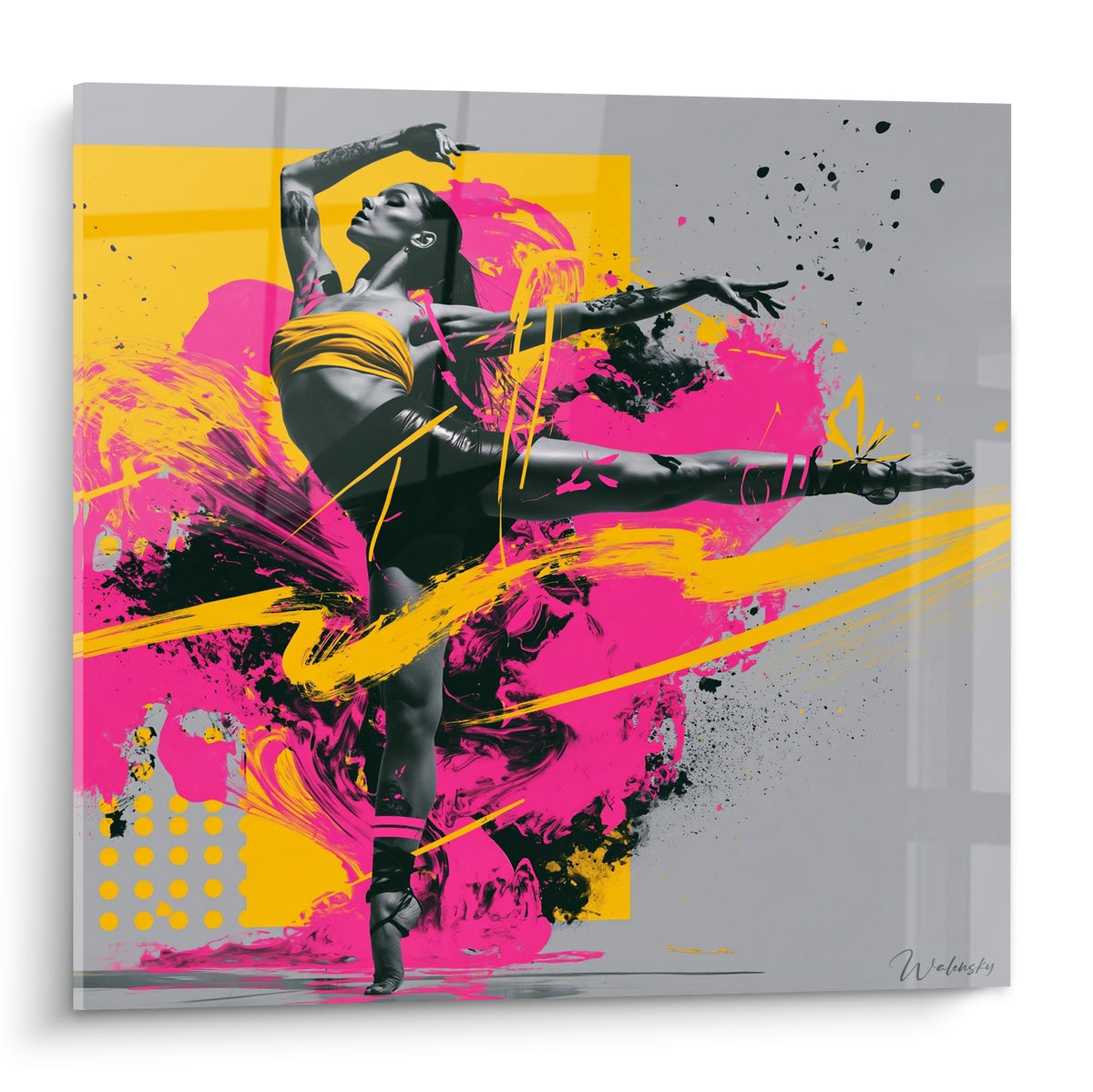
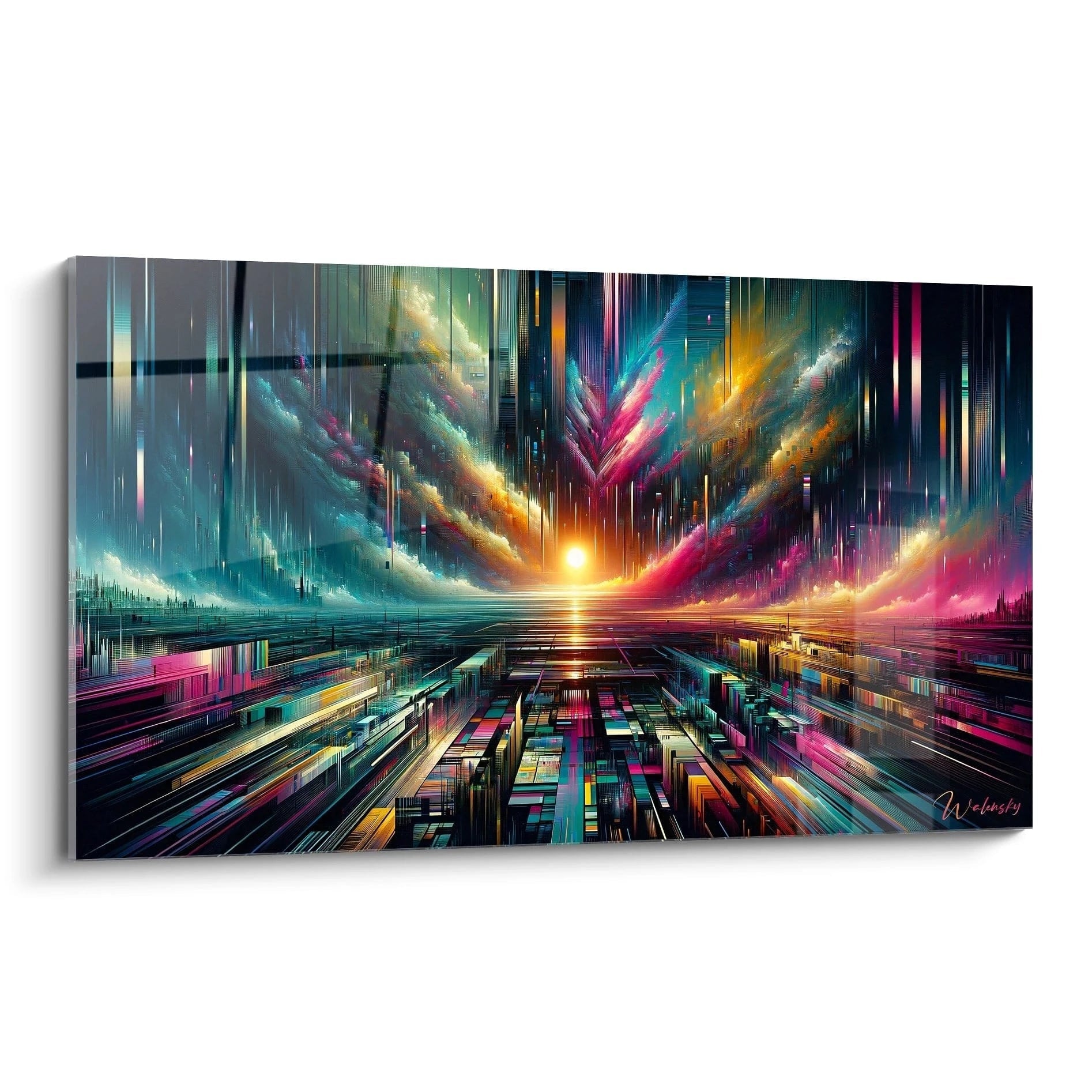
Abstract Geometric Composition Painting Yellow Pink Violet Tones - Luminous Harmony - Feng Shui Southwest Earth Edition
213,90€
Discover this artworkThe progressive method to create your ideal feng shui gallery
Now that you understand the energetic mechanisms, let's move on to practice with a gentle and progressive approach. We will build your gallery like a zen garden : first prepare the ground, then plant the main elements, and finally refine the details. This progression will allow you to feel the energy evolve at each stage.
🗺️ Your journey in 3 steps: Energetic assessment of your space (you identify natural flows), choice and placement of the central element (you anchor the main intention), then harmonization with complementary works (you create the final visual symphony).
Step 1: Deciphering Your Space and Its Natural Energies
Starting with this energetic reading is essential because it reveals the unique personality of your room. It's exactly like getting to know a person before choosing clothes for them: you must first understand their character to sublimate their natural beauty.
What You Will Need for This Analysis:
- A notebook and a pen: To note your observations over several days because the energy varies depending on the light and times. Choose a notebook that you like to touch, as you will be recording intimate feelings in it. Avoid mobile applications which create distance from your sensations.
- A measuring tape: Not for precise measurement, but to feel the proportions and understand the scale of your space. The physical sensation of measuring connects you intuitively to the energetic dimensions of the room.
- A pocket mirror: This traditional feng shui tool allows you to see your space from new angles and identify energy accumulation zones that you do not usually notice.
Now, let's move on to active observation of your space:
How to Read the Invisible Energies of Your Room
Map your natural movements: For 3 days, discreetly note where you head when entering the room, where you spontaneously sit, and what paths you take. These unconscious routes reveal the natural energy flows that your gallery must respect and amplify.
⏱️ Time: 5 minutes per day | ✅ Successful when: You identify 2-3 very clear recurring routes | ⚠️ Attention: Do not force your movements to "do well", authenticity is crucial.
Identify your “emotional anchor point”: Find the exact spot where you feel most at peace in the room. This is often where the main artwork should be placed, as it is your natural energy center. Test different views from this point.
⏱️ Time: 15 minutes | ✅ Successful when: A location instantly soothes you | ⚠️ Attention: Distinguish physical comfort (plush armchair) and energetic comfort (feeling of rightness).
Note variations in lighting and ambiance: Observe your wall candidate at different times: morning, afternoon, evening, cloudy day. The light energy drastically influences the perception of colors and shapes of your future artworks.
⏱️ Time: 10 minutes x 4 moments | ✅ Success when: You already visualize how certain artworks would look depending on the light | ⚠️ Attention: Photos do not convey the real ambiance, rely on your physical presence.
✨ Validation of step: You must now "feel" your room differently, as if you knew its moods and preferences. You instinctively know where to place your gaze and feel the natural desire to place beauty there. If it's blurry, allow yourself a few extra days of observation.
— Our selection


OUR RECOMMENDED PRODUCTS
Step 2: Choosing your masterpiece with intention
Now that you know your space intimately, we move on to the conscious choice of your central artwork. This step is more rewarding because you are no longer choosing "randomly" but with the certainty that your selection will harmonize perfectly with the energy of your room.
Tools for an informed choice:
- Your completed observation notebook: It becomes your personal guide to avoid being influenced by superficial crushes. Review your notes before each selection to stay on track with your energetic intentions.
- Samples or visualizations: High-quality photos, color samples, or even better, the possibility of testing the artwork at home temporarily. The important thing is to feel the resonance between the artwork and your space before making a final commitment.
- A period of settling: Intentionally plan 48 hours between the crush and the purchase. This time allows your feng shui wisdom to express itself beyond immediate emotion.
The energetic selection process
Define the central emotion sought: Before any aesthetic research, clarify the state of mind you want to cultivate in this room: serenity, vitality, inspiration, conviviality... This intention will intuitively guide all your choices towards consistency.
⏱️ Time: 20 minutes of reflection | ✅ Success when: You can formulate your intention in a clear sentence | ⚠️ Attention: Avoid vague intentions like "that it's beautiful", be specific about the feeling.
Test color-space resonance: Use your pocket mirror to observe how the dominant colors of the artwork candidate interact with your space at different times of the day. A color can be beautiful in the morning and dull in the evening.
⏱️ Time: 15 minutes per artwork candidate | ✅ Successful when: An obvious color harmony is revealed | ⚠️ Attention: Your phone screen distorts colors, prefer real samples.
Step 3: Create overall harmony with finesse
This final step transforms your space into a true personal sanctuary. You now master the subtle art of energetic balance, and each addition reinforces the global harmony rather than diluting it. This is where the beauty of feng shui applied to wall art reveals itself.
The art of energetic composition
Create "visual breaths": Between your artworks, create spaces of visual silence that allow energy to circulate freely. These empty spaces are not a lack, but the necessary balance for feng shui harmony.
⏱️ Time: 30 minutes of adjustments | ✅ Successful when: Your gaze naturally rests from artwork to artwork without effort | ⚠️ Attention: Resist the temptation to fill all available spaces.
Balance yin and yang energies: Consciously alternate between soothing artworks (yin: soft tones, curved shapes, serene subjects) and energizing ones (yang: bright colors, straight lines, movement). This balance creates a vibrant but stable energy.
⏱️ Time: 45 minutes | ✅ Successful when: You feel both calm and vitality in the space simultaneously | ⚠️ Attention: An imbalance towards too much yin lulls, too much yang agitates.
Feng shui progression rule: You are ready for the next step when you enter the room and instantly feel a sense of harmony, without having to "think" about what's wrong. Your body and mind recognize the energetic balance.
You now master the energetic fundamentals of feng shui wall gallery. Let's deepen with some expert secrets that make the difference between a beautiful decoration and a true daily wellness tool.
🎯 Master feng shui technique: The "energetic triangle rule" - arrange your three main artworks forming an invisible triangle whose angles are never right. This asymmetry creates a perpetual energetic movement that keeps the space alive and inspiring, avoiding energy stagnation.
Frequent question from our readers
"Do I absolutely have to choose between a single artwork or a multiple composition? I can't decide..."
This hesitation actually reveals a right intuition: your space is "speaking" to you, but you haven't yet learned to decipher its message. Each room has its own energetic personality, and some naturally call for a strong, solitary work, while others thrive in the visual conversation of several pieces. Trust your initial feeling when visualizing each option.
🔍 Quick practical test: Temporarily attach a large image (even printed) of each option to your wall with masking tape. Live with each configuration for 48 hours and note your morning feelings: you then intuitively know which approach nourishes your energy.
— You may also like


Energy pitfalls to avoid at all costs
Even with the best intentions, some mistakes can disrupt the feng shui harmony of your gallery. These pitfalls are so common that even experienced decorators sometimes fall for them. Recognizing these traps avoids months of subtle discomfort.
- ⚠️ Compulsive accumulation of works: Constantly adding new pieces out of fear of emptiness creates an energy chaos. Your space becomes agitated, and so does your mind. Learn to savor the harmony achieved before any new addition. This impulse is normal among art enthusiasts.
- 🚫 Ignoring feng shui hanging height: Systematically placing everything at standard eye level (160cm) without considering the specific energy flows of your room. Some spaces require varying heights to create a harmonious visual rhythm.
- ❌ Choosing only according to Instagram trends: Copying viral compositions without considering the unique energy of your home creates a subtle but persistent dissonance. Your space reflects your essence, not that of an influencer.
- ⛔ Neglecting energetic lighting: Installing works without thinking about their interaction with natural light throughout the day. A composition can be beautiful in the morning and depressing in the evening if poorly lit.
- 🔴 Forcing perfect symmetry: Imposing a rigid mathematical balance that freezes energy instead of letting it circulate. Feng shui favors dynamic balance over static symmetry.
🛡️ Your early warning system: Monitor these alarm signals - feeling of unexplained fatigue after time in the room, tendency to avoid certain areas of your living room, gaze that "hooks" on details instead of flowing smoothly, or a persistent impression that "something is wrong" without being able to identify it.
— In the same vein


Your most frequently asked questions about the feng shui gallery
Your energy transformation begins now
In a few weeks, when you enter your living room, you will feel that magical sensation of instant harmony. Your gaze will naturally glide from artwork to artwork in a soothing visual ballet, your mind will automatically find calm, and your guests will notice this particular atmosphere that distinguishes your home from others.
Beyond aesthetic beauty, you will have developed an energy sensitivity that transforms your approach to your entire interior. This new ability to "feel" the harmony of spaces will accompany you in all your future decorative choices, creating a positive radiating effect throughout your home.
Understanding was indeed the most complex part. Now that you have the keys, your first gesture can be as simple as observing your wall differently by closing your eyes for a few seconds then opening them again: you will already see your space with your new feng shui perception.
✨ Your moment of transformation: The energy harmony you seek is already within you, waiting to be revealed by the right works in the right place. Trust this new wisdom and let it guide your choices towards the beauty that truly resembles you.
Also read: 🧘 Read more articles on energy harmony
</div
Explore our collections


