The first time I framed a textured canvas for Halloween without thinking about the depth of the frame, the result was disastrous. The thick paste reliefs that I had created with such care touched the glass, creating unsightly bright spots. Worse still, trapped moisture eventually altered the colors of my relief pumpkin. A technical error that turned a spectacular piece into a failed decoration.
Here's what choosing the right frame depth brings to your textured Halloween painting: optimal highlighting of reliefs without destructive contact, durable preservation of your material effects, and a wall presence that amplifies the mysterious atmosphere of your decor. After working on more than two hundred textured works for seasonal exhibitions, I can say that this technical dimension becomes the invisible foundation of your decorative success.
You've probably spent hours building these captivating textures — those raised spiderwebs, those pumpkin sculptures in structured paste, those unsettling cracks that bring your creations to life. But faced with frame options, uncertainty paralyzes you. Too deep and the work seems heavy, not enough and your reliefs risk being crushed. This technical confusion threatens to spoil your creative investment.
Rest assured: understanding frame depths suitable for textured Halloween paintings does not require complex technical training. With a few precise guidelines from practice, you will transform this constraint into an aesthetic asset. I will guide you through the essential criteria for choosing the ideal depth according to your texture technique, guaranteeing that your creation receives the setting it deserves to captivate your guests throughout the season.
When texture dictates depth: understanding Halloween reliefs
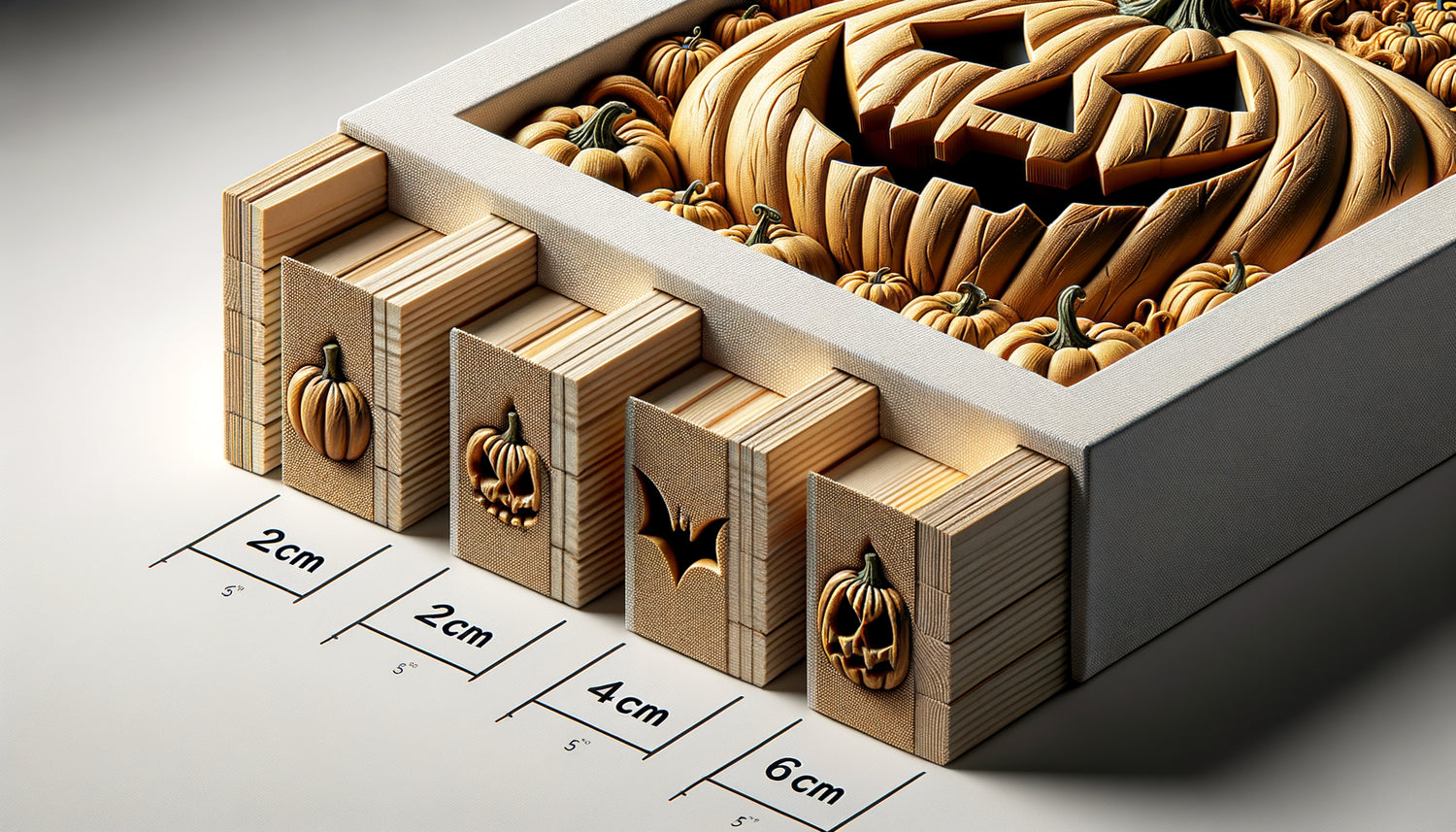
The frame depth responds directly to the thickness of your textured applications. For a textured Halloween painting with light reliefs — simple palette knife strokes or gel medium in thin layers — a standard frame of 1.8 to 2 cm is more than sufficient. These subtle textures create delicate shadow play without requiring extra space.
But as soon as you incorporate pronounced textures typical of Halloween atmospheres — sculpted skulls in thick paste, twisted branches in relief, textured bark with modeling paste — depth becomes critical. These techniques can add 3 to 8 mm of thickness to your surface. A frame of 3 to 4 cm then becomes the minimum to avoid your reliefs dangerously protruding from the frame or touching any protective glazing.
I have found that Halloween paintings with three-dimensional inclusions — metal wires forming webs, small glued objects, accumulations of materials — require even greater depths. For these spectacular mixed media works, prioritize frames of 4 to 6 cm which generously accommodate your experiments without compromising the structure.
The trap of a frame that is too thin for thick textures
A frame that is not deep enough for a textured Halloween painting creates several concrete problems. First, the impossibility of properly framing the artwork if you want to protect it under glass: the reliefs touch the glass, creating pressure points that alter the texture and cause unsightly reflections. Then, the canvas appears visually crushed, losing that sculptural dimension which is the charm of voluminous Halloween creations.
Not to mention the structural risk: a very thick texture on a thin frame unbalances the whole thing. The artwork tilts forward on the wall, the fixings weaken, and the tension of the canvas is compromised by the localized load of the reliefs.
Standard depths and their creative destinations
To orchestrate your choices, here is a proven correspondence system between frame depths and textured Halloween painting techniques that I systematically apply in my seasonal projects.
1.8 to 2 cm frames (standard depth) : Ideal for light gesso textures, fine crackle effects, sandy glazes. These depths are perfectly suited to Halloween paintings with a dominant atmospheric feel where the texture serves the ambiance without imposing sculptural volume. Your ghostly mists, your grainy night skies, your velvety shadows find their natural support here.
3 to 4 cm frames (intermediate depth) : The versatile choice for the majority of textured Halloween paintings. This dimension comfortably accommodates reliefs in modeling paste, generous impastos, accumulations of material up to 5 mm thick. Your pumpkins carved with a knife, your twisted tree bark, your three-dimensional relief tombstones flourish without constraint. It is my preferred depth for 70% of my seasonal creations.
5 to 6 cm frames (gallery depth) : Reserved for ambitious textured artworks that push the boundaries between painting and sculpture. These impressive depths transform Halloween painting into a wall installation. Mixed techniques with inclusions — metallic spiderwebs, fabric fragments, assemblages of materials — find here the necessary space. The additional advantage: the edges of the frame become an expressive surface in their own right, which you can paint to extend the scene or leave raw for a contemporary gallery effect.
The wall presence effect according to depth
Beyond the technical aspect, the depth of the frame radically alters the visual presence of your textured Halloween painting. A thick frame creates a more pronounced shadow on the wall, giving the artwork a three-dimensional existence that reinforces the mysterious atmosphere. This is particularly effective with side lighting which dramatizes both the reliefs and the shadow of the frame simultaneously.
Thin frames, conversely, create a discreet integration into the wall, allowing the texture of the painting itself to monopolize attention without volumetric competition. For a Halloween decor where multiple works coexist, this discretion can be a strategic asset.

Anticipating the framing: depth and presentation options
Your decision on frame depth should incorporate your future framing intentions. If you plan to protect your textured Halloween painting under glass — particularly sensible for works displayed in environments where guests may touch them — mentally add 1 to 2 cm to the thickness of your reliefs to determine the minimum frame depth.
So-called American box frames, highly prized for their contemporary aesthetics and ability to showcase textures without touching them, require a frame of at least 3 cm for a harmonious result. The principle: the frame floats around the artwork with a space of 5 to 10 mm, creating a visual setting without physical contact. For this effect to work with a Halloween painting with significant reliefs, the depth of the frame must equal or exceed the depth of the frame.
If you prefer the frameless option — leaving the edges of the frame exposed — invest in high-quality frames with well-finished edges. Carefully paint these edges to continue your composition or in matte black for a professional gallery effect. Frames of 4 cm and more offer sufficiently wide edges to become a decorative element in their own right, extending your Halloween scene on the sides.
Weight and solidity: little-known equations of depth
A dimension often overlooked: the deeper the frame, the heavier the overall piece becomes, especially with the addition of thick textured pastes. A textured Halloween painting measuring 60x80 cm on a 5 cm deep frame with generous reliefs can easily weigh 4 to 5 kg. Your hanging system must be sized accordingly.
Opt for solid wood frames for depths greater than 4 cm. Agglomerated frames, while more economical, do not support the additional weight of thick textures and risk deforming over time, creating ripples that compromise the visual integrity of your creation.
For large textured Halloween paintings (over 80 cm on each side), require frames with a central reinforcing crossbar, especially if you are working with depths of 3 cm or more. This invisible transverse bar maintains the flatness of the canvas despite the weight of the textured materials, avoiding progressive sagging that would ruin your carefully constructed reliefs.
Practical test before massive texture application
Before embarking on the application of thick textures to a pre-stretched frame, I recommend this simple test: apply your thickest texture to a sample of rigid cardboard, let it dry completely, then measure the final thickness precisely. Add 1 cm safety margin, and you get the minimum frame depth needed for your Halloween painting.
This precaution eliminates unpleasant surprises and subsequent reframing costs — a delicate operation that can damage an already completed textured artwork.

Depth and mixed techniques: when Halloween becomes sculptural
The most spectacular Halloween creations fuse painting and three-dimensional elements: jute twine forming webs, small natural branches, fragments of aged fabric, miniature chains. These assemblages transform the textured Halloween painting into a captivating narrative bas-relief.
For these mixed approaches, the frame depth becomes a scenic space. A 5 to 6 cm deep frame allows for the integration of elements that protrude 2 to 3 cm from the painted surface, creating true levels of depth. Imagine a haunted manor scene where the windows are recessed, the metal grilles are in relief, and the shadows are painted in the background — this layering absolutely requires a generous frame.
I have developed a particularly effective technique for these sculptural Halloween paintings: working on thick frames whose canvas I locally hollow out to create alcoves where certain elements are recessed, while others protrude in relief. This orchestration of depths spectacularly amplifies the three-dimensional effect and invariably fascinates viewers.
Your walls deserve a Halloween decoration that captivates at first glance
Discover our exclusive collection of Halloween wall art that instantly transforms your interior into a mysterious universe thanks to its carefully highlighted textured reliefs.
Purchase and manufacturing advice: invest wisely
Faced with rows of frames, the temptation for economy can compromise your textured Halloween painting. Entry-level frames often feature insufficient light woods to support thick textures and time. For depths greater than 3 cm, invest in at least a mid-range frame, with reinforced assemblies.
If you manufacture your own frames — an economical option for large formats — use cleats of a section proportional to the final desired depth. For a 4 cm deep frame, minimum 40x20 mm cleats guarantee the necessary rigidity. Do not forget to slightly bevel the front edge of the frame to prevent the canvas from resting on a hard edge that would create a visible mark, particularly problematic with light textures that reveal every imperfection.
For prolific creators who produce several Halloween paintings each season, standardizing your frame depths considerably simplifies framing and storage management. I personally work with two main depths — 2 cm for my atmospheric works and 4 cm for my textured creations — which allows me to optimize my material purchases and create a visual consistency in my grouped presentations.
The importance of choice at the design stage
Ideally, decide on the depth of your frame before even starting your textured Halloween painting. This anticipation influences your creative choices: knowing that you have a 5 cm deep frame, you will allow yourself more daring reliefs. Conversely, a thin frame will naturally lead you towards more subtle textures and glazing techniques.
This consistency between support and technical expression ensures that your creative vision is never limited by material constraints discovered too late.
When lighting reveals the importance of depth
The interaction between frame depth, paint texture and lighting creates the final magic of your Halloween decor. A deep frame accentuates the cast shadow on the wall, particularly spectacular with directional lighting. Position a light source at a 45° angle to your textured Halloween painting on a thick frame: the reliefs will project their shadows onto the canvas itself, while the frame will create a dramatic penumbra on the adjacent wall.
This layering effect of shadows — shadows of textures on the paint, shadow of the frame on the wall — multiplies the unsettling presence typical of Halloween aesthetics. Thin frames, front-lit, produce a flatter, less theatrical effect.
For immersive Halloween installations where several textured works dialogue, intentionally vary the depths of the frames: pieces on thick frames become prominent focal points, while those on thin frames play a more discreet visual accompaniment role. This spatial hierarchy structures your wall staging with a sophistication that even your guests will unconsciously notice.
Now imagine your living room transformed for Halloween: your textured creations hanging on the walls, each on its perfectly sized frame. The reliefs capture the flickering light of candles, shadows dance without anything touching your precious textures, and the depth of the frames creates this three-dimensional presence that makes all the difference between a simple decoration and a truly enchanting atmosphere. Start today by measuring your planned reliefs, add this essential safety margin, and choose the frame that will allow your talent to express itself freely throughout the season of mysteries.
FAQ: Your questions about frame depth for textured Halloween paintings
Can I add thick texture to a thin frame that I already have?
Absolutely, but with important precautions. If your existing frame is 1.8 to 2 cm deep, limit your textures to a maximum thickness of 3-4 mm to avoid the reliefs protruding excessively. Concentrate the thickest textures in the center of your composition and arrange flatter areas towards the edges. Forgo framing this work under glass — opt instead for an unframed presentation by carefully painting the edges of the frame. This constraint can become creative: I have created some of my most successful Halloween paintings precisely by playing with this limitation, creating strategically placed textures that appear even more dramatic due to their concentration. If your vision really requires significant reliefs, reframing remains possible but delicate — entrust this operation to a professional framer to avoid damaging your stretched canvas.
Do deep frames make hanging more complicated?
Not necessarily, but they require adapting your fixing system. For a 5-6 cm frame loaded with thick textures, forget simple nails or adhesive hooks that won't support the weight. Invest in wall fixings suitable for heavy loads — expanding metal anchors for solid walls, special plasterboard anchors for lightweight partitions. The real advantage of thick frames: their depth offers more fixing options on the back. You can install a cable system with two hanging points, distributing the weight better than a single central ring. I personally use Z-shaped hanging plates for my textured Halloween paintings on thick frames: one part screws into the wall, the other onto the back of the frame, creating a flush and ultra-stable hanging that supports up to 15 kg without budging. Just allow 30 minutes for careful installation rather than the 5 minutes of a simple nail.
Is there a universal frame depth for all Halloween textures?
If I had to recommend a single versatile depth to start with in textured Halloween painting, it would be the 3.5 to 4 cm frame without hesitation. This intermediate dimension comfortably accommodates 90% of textured techniques — from simple knife empattement to structured reliefs with modeling paste up to 5-6 mm thick. It allows for subsequent framing if desired, supports light inclusions such as wires or small glued elements, and offers sufficiently wide slices for a neat finish if you choose the unframed presentation. This depth also creates a beautiful wall presence with a visible shadow without being excessive. In terms of investment, these frames remain affordable while offering superior structural quality to standard versions. Since I standardized my seasonal creations on this depth, I have never encountered any frustrating technical limitations, and all my Halloween artworks present a consistent aesthetic appearance during group exhibitions. It's the intelligent compromise between creative freedom and material rationality.