

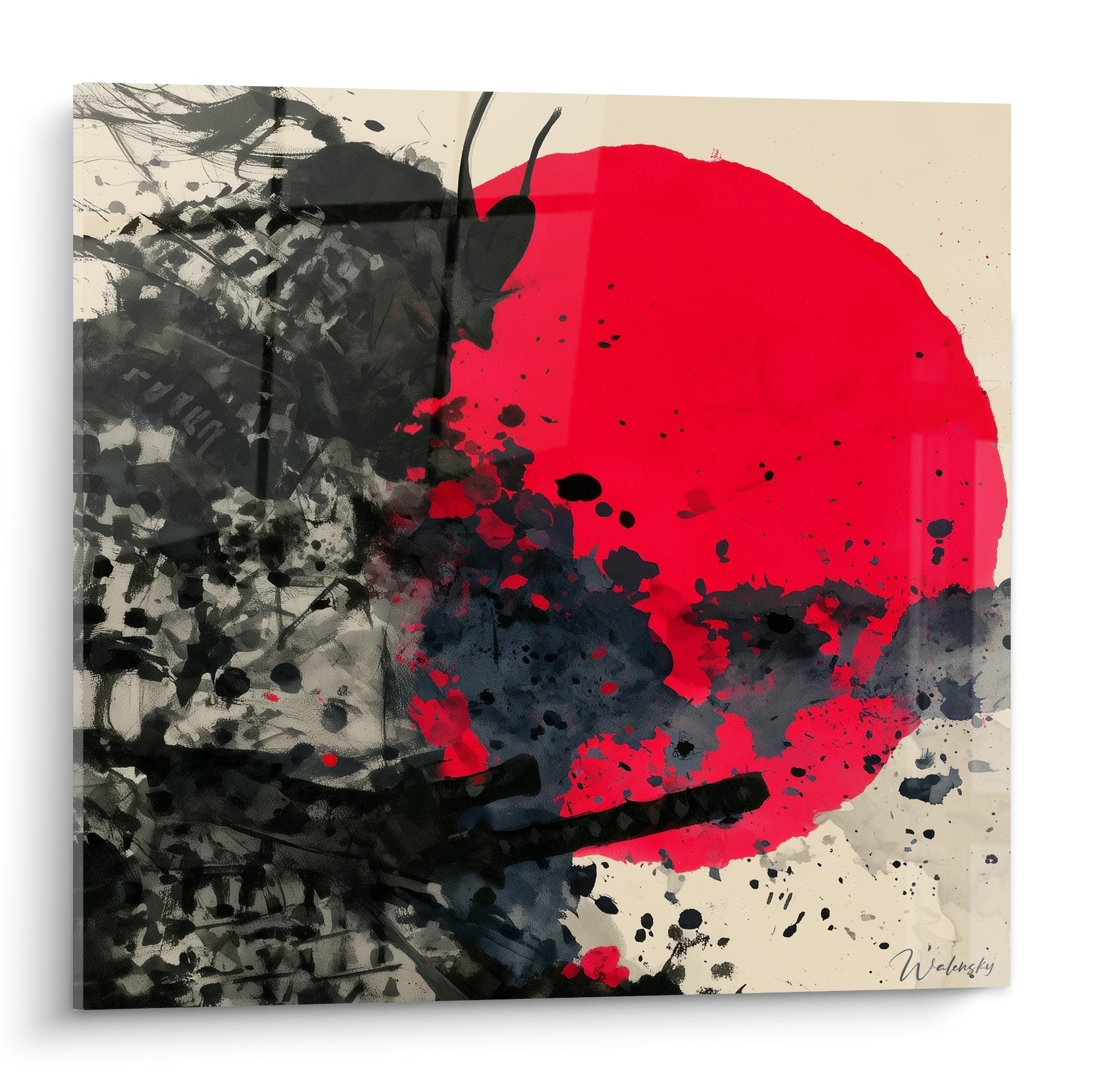

Framed Halloween Artwork: Choosing the Right Wood and Finishes
November 6, 2025 · 9 min read · by Walensky
Last year, I observed a revealing scene in my workshop: a customer was unpacking her freshly received Halloween print, her eyes shining with excitement. Then she tried to slide it into a standard frame bought from a discount store. The result? A beautiful artwork stifled by cheap plastic that reflected light like a fairground mirror. Her enthusiasm evaporated in seconds. I see this disappointment too often.
Here's what a custom frame brings to your Halloween paintings: it transforms a simple print into a collectible piece that enhances your seasonal decor, permanently protects your artistic investment, and creates the enchanting atmosphere you are looking for during the most mysterious season of the year.
You may have already experienced this frustration. You finally find THE perfect Halloween painting - that enigmatic witch, that gothic manor, those pumpkins with mischievous eyes. But when it comes to framing it, you encounter a wall of technical questions. What wood should you choose? What finish to avoid betraying the atmosphere? How to prevent your work from looking like a school poster?
Rest assured: custom framing is not reserved for gallery owners or wealthy collectors. It's simply a matter of understanding a few essential principles that will make all the difference between a mundane Halloween decor and a truly captivating staging.
The wood: the soul of your Halloween frame
Each wood species tells a different story. For your Halloween paintings, the choice of material is never neutral - it amplifies or dilutes the atmosphere you are trying to create.
Solid oak remains my first love for gothic and mysterious scenes. Its veined structure and natural density immediately evoke old manors and dusty libraries. When framing a painting depicting a haunted castle or a misty forest, oak brings that reassuring solidity that anchors the fantastic in reality. Its natural patina enriches with time, as if the frame ages with the story it contains.
Walnut, darker and more refined, is perfect for minimalist compositions or contemporary Halloween illustrations. I recently framed a series of black silhouettes of cats and crows in American walnut: the contrast between the chocolate wood and the clean shapes created a disturbing, almost hypnotic elegance. It's the ideal choice for those looking for a Halloween decoration that is sophisticated rather than folkloric.
For Halloween artworks with warm tones - luminous pumpkins, autumnal scenes, orange and gold compositions - maple or cherry wood offer this golden luminosity that dialogues beautifully with the colors of the subject. These light woods create a welcoming setting without visually competing with the artwork.
The finishes that transform the atmosphere
The same oak frame can tell ten different stories depending on its finish. This is where your framed Halloween artwork truly comes to life.
The oiled finish: authenticity and character
Natural oil penetrates the wood fibers without creating a film on the surface. The result? A texture you can feel under your fingertips, which retains that organic presence so precious for Halloween atmospheres. This finish reveals every knot, every irregularity of the wood as scars from a mysterious past.
I particularly recommend this option for vintage illustrations, antique engravings or black and white photographs. Linseed oil or Danish oil preserves the matte appearance of the wood while protecting it from humidity - crucial if you install your Halloween artwork in an entrance hall or unheated hallway during autumn.
The satin varnish: discreet elegance
Halfway between matte and glossy, satin varnish provides superior protection without the plasticky feel of glossy finishes. It's my default choice for 60% of the custom frames I create for Halloween.
This finish works particularly well with colorful illustrations and modern compositions. It slightly unifies the grain of the wood while retaining its visible texture. In a contemporary interior, a walnut frame with satin varnish creates this understated sophistication that allows your artwork to blend harmoniously without shouting its seasonal character.
The aged patina: for romantic souls
Some of my clients deliberately seek this antique look, as if their Halloween artwork came from a dusty attic. The artisanal patina - obtained by brushing, uneven staining and beeswax - transforms a new frame into an object steeped in history.
This technique requires real expertise. Poorly executed, it looks like a clumsy disguise. Successfully done, it creates a perfect illusion: your contemporary print seems to have crossed the decades. I use it exclusively for reproductions of antique paintings, vintage tarot cards or gothic manor scenes.

Our favourite
Woman Painting Harvest Spell Golden Edition - Halloween Edition
233,90€
Discover this artworkThickness and profile: details that sculpt the space
The impact of the frame profile on the presence of a Halloween artwork is often overlooked. However, between a 2 cm flat frame and a sculpted 6 cm molding, the spatial effect changes dramatically.
Large, deep profiles (4 to 8 cm) create an architecture around the work. They cast shadows that reinforce the mysterious atmosphere. I recommend them for large compositions (from 50x70 cm) and for light walls where the artwork needs visual affirmation. A haunted manor in a thick dark oak frame becomes a window to another world.
Thin, discreet profiles (1.5 to 3 cm) are better suited to small formats, series of artworks or minimalist compositions. For a wall gallery of several Halloween artworks, thin frames create visual consistency without overwhelming the space. Then, prefer walnut or tinted oak so that the wood retains character despite its fineness.
As for sculpted moldings, they bring that baroque and theatrical side which can magnify certain works - or bury them under details. Empirical rule: the more detailed and colorful your artwork is, the more sober your frame should be. Conversely, a sleek black silhouette can support (and even demand) a worked molding that enriches the composition.
— Our selection


Wood-color combinations that work
After fifteen years of framing all kinds of works, I have noticed that certain combinations consistently work for Halloween artworks.
Black and white photography: oiled natural oak or dark walnut. The contrast between the monochrome photograph and the warmth of the wood creates a fascinating visual tension. Avoid light woods that soften the impact of black and white.
Orange and black illustrations: honey-tinted maple or cherry. These golden woods dialogue with warm tones without competing. A frame that is too dark would crush the subtle nuances of pumpkins and autumnal foliage.
Gothic scenes and manors: patinated dark oak or aged walnut. The architecture of the frame must echo that of the subject. A simple rectangular profile would betray the romanticism of the image.
Modern and graphic illustrations: satin walnut in a thin profile, or bleached oak for Scandinavian interiors. The modernity of the line demands a clean frame. Wood just provides enough materiality to anchor the work in your space.

— You may also like


The mat : breathing room or superfluous?
The question inevitably arises: should a mat be added between the Halloween wall art and the wooden frame? My answer depends on three factors.
For fine paper prints or watercolors, the mat is not just aesthetic: it's protective. It creates an air gap between the glass and the artwork, preventing moisture from causing mold or ink from adhering to the glass. Opt for a natural beige or charcoal gray rather than optical white which creates harsh contrasts.
For canvases or prints on rigid supports, the mat becomes purely aesthetic. It visually enlarges the work and gives it breathing room, particularly appreciated for small formats (20x30 cm or less). A 5 to 8 cm black mat around a raven illustration creates a striking dramatic effect.
On the other hand, for large formats with saturated colors, I do not recommend the mat which dilutes the visual impact. Your painting should touch the frame directly to retain its power.
Ready to enhance your autumn decor?
Discover our exclusive collection of Halloween wall art that will transform your interior into a true contemporary cabinet of curiosities.

In the same vein
Pumpkin Woman Painting October's Spell - Halloween Edition
233,90€
Discover this artwork →Maintenance: preserving the magic over time
A solid wood frame well chosen lasts decades without losing its soul. But a few simple gestures prolong its beauty.
For oiled finishes, monthly dusting with a soft cloth is sufficient. Once or twice a year, refresh the protection with a thin layer of oil applied to the cloth. The wood will drink the oil in a few hours and regain its original depth.
The varnished finishes require even less attention: cleaning with slightly soapy water removes fingerprints and accumulated dust. Avoid harsh chemicals that tarnish the varnish over time.
Regarding placement, keep your framed Halloween artworks away from direct heat sources (radiators, fireplaces) and excessive humidity. Wood expands with temperature variations: it dilates in summer, contracts in winter. It is a living material that requires a stable environment to maintain its integrity.
Conclusion: your artwork deserves better than an ordinary frame
Imagine your entrance on the first days of October. The slanting autumnal light illuminates your custom framed Halloween artwork. The grain of the oak captures the grazing light, creating areas of shadow and clarity that dialogue with the mysteries of the illustration. Your guests stop, intrigued, drawn to this presence that transforms a simple hallway into a personal gallery.
That is exactly the emotion that a thoughtful frame can create. There's no need to multiply decorations: a single perfectly framed artwork is enough to set the atmosphere you are looking for. The wood you choose, the finish you prefer, the profile you select - each decision builds this subtle alchemy between the work and your living space.
So before hanging your next Halloween artwork, take the time to ask yourself the right questions. What story do you want to tell? What atmosphere are you looking to create? Your frame is not a practical detail: it's the bridge between the artist's imagination and the reality of your daily life. Treat it with the attention it deserves.
FAQ: Your questions about framing Halloween artworks
What budget should you allocate for a custom frame for a Halloween artwork?
The price varies considerably depending on the format, wood species and finishes. For a standard 40x50 cm format, expect between €80 and €180 for a high-quality solid wood frame with glass and backing protection. Noble woods like walnut generally cost 20 to 30% more than oak. Hand-patinated finishes increase the price by 30 to 50%. My advice: consider this investment as definitive. A good frame will last for years and can even be reused for other works of similar format. It is incomparably more durable and elegant than industrial plastic or agglomerate frames that warp after a season.
Can you frame several different Halloween artworks with the same type of frame?
Absolutely, and it’s even an excellent approach to create a visual consistency in your seasonal decoration. Choose the same wood essence and finish for all your Halloween artworks, then play with formats to create a dynamic wall composition. For example, three satin walnut frames of different sizes (30x40, 40x50 and 20x30 cm) create a harmonious set while avoiding monotony. This approach works particularly well in a hallway or above a sideboard. The eye immediately perceives the decorative intention, and your artworks dialogue with each other instead of competing. Simply keep the same frame width (for example 3 cm for all) to maintain this visual unity.
Do dark wood frames make a room too dark for Halloween?
It's a legitimate concern, but in practice, even a very dark frame represents a relatively small surface area in a room. Its impact on overall brightness remains marginal. What really matters is the contrast with your wall. A dark oak frame on a cream-colored wall creates that striking contrast that attracts the eye and highlights your Halloween artwork. On the other hand, on an already dark wall (anthracite gray, navy blue), prefer lighter woods such as maple or natural oak so that your work does not blend into the background. The golden rule: look for sufficient contrast between the wall, the frame and the artwork. If possible, test by placing the framed picture against the wall before drilling: your eye will immediately tell you if the balance works.
Explore our collections


