Vintage or antique paintings: when the frame tells a story
October 11, 2025 · 16 min read · by Walensky
You're standing in front of that vintage painting that has been catching your eye for weeks, but something is holding you back. The frame seems too imposing, too full of history for your modern interior.
You can already imagine the perplexed looks of your guests, that unpleasant feeling of having done "too much" or "not enough" in your decorative choice.
You may have tried modern reproductions or minimalist frames, but nothing gives you that particular emotion, that soul that authentic antique paintings emanate.
It's perfectly normal to feel this hesitation. The real reason for your blockage? You’ve been led to believe that a vintage painting only fits in an antique decor, when the opposite is true.
By the end of this article, you will know exactly how to choose and integrate an antique painting into your interior, and you’ll discover why a vintage frame becomes your best decorative ally to create a unique and personalized home.
Why does your interior need a vintage soul now?
In a world where everything looks the same, owning an authentic vintage painting is becoming a real act of differentiation. Waiting risks having your rooms lose their personality in the surrounding decorative uniformity. Imagine your living room as a symphony: modern furniture sets the rhythm, but it's antique art that brings the melody.
🎨 Customer testimonial: "Sarah, a Parisian interior architect, had been searching for months to give character to her minimalist loft. The day she hung a 19th-century portrait above her contemporary sofa, her clients immediately noticed the difference. 'Your apartment finally tells a story,' they said.”
Conversation with a decor expert
The golden rule of vintage art: A vintage painting shouldn't harmonize with your decor, it should reveal it. Like a good perfume that reveals your personality, it brings that unique signature your guests will remember. In 2-3 weeks, you won’t be able to imagine your room without it.

What's Really Happening When You Hesitate in Front of a Vintage Painting
You're probably experiencing one of these three situations: you circle around the painting without daring to buy it, you find it beautiful but "not for your home," or you fear that it will dominate the space too much.
What lies behind these hesitations? Not a lack of taste, but a misunderstanding of vintage framing codes. Your decorative instinct is right; it's just the reading grid that’s missing.
It's like learning a new language: once you understand the "grammar" of old art, everything becomes fluid and obvious.
The Frame Doesn't Just Protect, It Dialogues
Unlike modern frames that are meant to be discreet, an antique frame is designed to tell a story. Each molding, each gilding has a narrative function, not just a decorative one.
Imagine the frame as an actor's costume: it doesn't hide the personality, it reveals and amplifies it.
This understanding changes everything in your approach to decor. You stop seeing the frame as an "obstacle" to your style and consider it a bridge between eras.
🔍 Quick test: Look at the interior photos you pin on Pinterest. Count how many contain at least one vintage or antique element. You'll be surprised to see that those are often the ones that attract you most!
Authenticity Trumps Perfection
We often believe that a vintage painting must be in perfect condition, with a gleaming frame. But collectors know that small imperfections tell the story of the work.
Think of a worn-out pair of jeans: it's their history that gives them charm and unique personality.
This authenticity brings an emotional depth to your interior that no reproduction can ever match. Your guests instinctively feel the difference.
Format Dictates Impact, Not Style
Many people think that vintage style = large imposing canvas. In reality, a small 19th-century portrait can transform a room as effectively as a large battle scene.
The placement and lighting determine the impact, not the dimensions of the painting.
This discovery opens up many possibilities, even in small spaces or with tight budgets.
🎯 3 signs that your decor eye is already ready:
- You are attracted to natural materials: Your sensitivity to wood, linen, and stone reveals a natural affinity for the authenticity of antique works
- You collect small, found objects: This habit shows that you already appreciate the stories behind objects
- You prefer subdued lighting: This indicates that you instinctively understand the importance of ambiance in highlighting a work
The catalytic effect of the first purchase
The first antique painting you choose often becomes the starting point of a larger transformation of your interior. It reveals your deep tastes and gives you the confidence to dare other authentic decorative choices. It's the positive domino effect: A well-chosen work educates your eye and naturally refines your next acquisitions.
Universal rule of thumb: If a vintage painting moves you at first glance, it already corresponds to your decorative personality. Trust this first impression rather than generic advice. Verify by imagining it in your favorite room.
| ❌ Common misconception | ✅ Market reality | 💡 Why this difference | 🎯 Concrete advantage |
|---|---|---|---|
| Antique items are always very expensive | Beautiful works can be found from €100-300 | The market favors famous names, not beauty | You can acquire real gems at a reasonable price |
| You need to be an expert to choose well | Your aesthetic intuition is enough | Emotion takes precedence over technical knowledge | You avoid soulless intellectual purchases |
| The frame dictates the style of the room | It adapts to the surrounding colors | The eye perceives overall harmony, not details | Total freedom in your other decor choices |
| Antique works are fragile | They have already survived decades | Materials from that era are often more durable | Durable investment for the whole family |

Our favourite
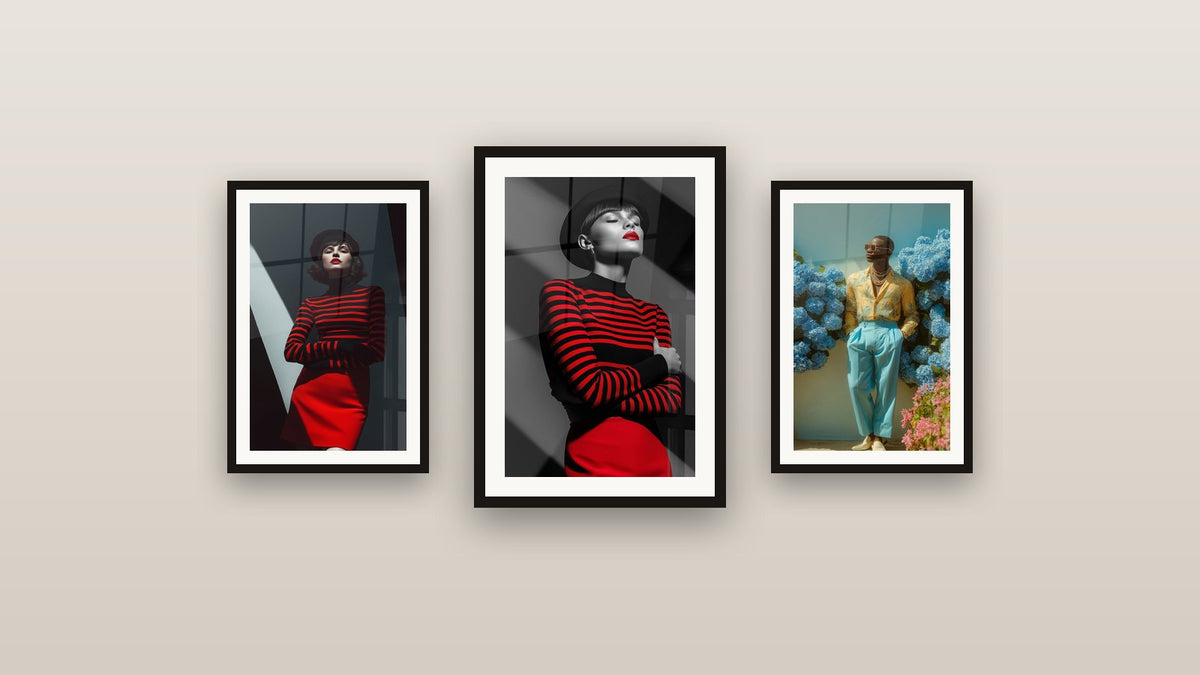
Elegant Man Painting Yellow Shirt Blue Sky Trousers - Flowery Nonchalance - Vintage Fashion Edition
233,90€
Discover this artworkHow to integrate your first vintage painting in 3 simple steps
Don't panic, we will proceed step by step. Imagine yourself as a chef discovering a new ingredient: first you tame it, then you combine it, finally you sublimate it. At the end, you will know exactly how to make old and modern dialogue in your interior.
🎯 Overview of your decor transformation: Step 1 - Choose the ideal location (the visual trigger), Step 2 - Harmonize with existing elements (natural integration), Step 3 - Create a setting to enhance it (final sublimation). Each step will give you an immediate visible result.
Step 1: Find the revealing location
Starting with the right location is like planting a seed in the right soil. This first success will give you confidence for the rest and immediately make you feel the difference in your interior. Once this step is mastered, you will instinctively know where to place your next acquisitions.
What you need to get started
- Measuring tape: To measure the ideal height (1.60m from the floor to the center of the artwork). More important than available width, as the eye first seeks vertical harmony. Avoid flexible seamstress' measuring tapes that distort measurements. Spirit level: Even a small model will do. A crooked vintage painting loses 50% of its impact and gives an amateurish impression. Smartphone apps can be helpful but are less precise. Flashlight or your phone: To test natural lighting at different times. Gilded frames reveal their beauty with grazing light, dark frames prefer direct light.Now let's move on to practice with method
Identify the focal wall: Look for the wall you naturally look at when entering the room. It is often the wall opposite the entrance or the one facing your usual position (sofa, bed). Reason: your painting will have maximum impact and guide the eye to your entire decoration.
⏱️ Time: 5 minutes | ✅ Successful when: You can see the entire wall at a glance from the entrance | ⚠️ Attention: Avoid backlit walls that create a silhouette effectTest the magic height: Measure 1.60m from the floor and discreetly mark with pencil. This is the optimal height for the center of the painting to be at eye level for an average adult. This rule works even for high or low ceilings.
⏱️ Time: 3 minutes | ✅ Successful when: The marker seems natural when you stand up | ⚠️ Attention: Do not measure from the top of the frame but from its centerValidate lighting: Observe your chosen wall in the morning, afternoon and evening. A good location remains pleasant to look at in at least two of these three moments. Reflections on the protective glass reveal problematic light sources.
⏱️ Time: 1 minute x 3 moments | ✅ Successful when: No annoying reflections, colors visible distinctly | ⚠️ Attention: Direct sunlight can discolor old pigments🎯 Validation of step 1: Your location is validated when you can precisely imagine your painting in that place and it makes you smile. If you are still hesitating, test by temporarily hanging an A4 sheet at the chosen height. In case of doubt, move around the room: the right location "imposes" itself naturally to the eye.
— Our selection


OUR RECOMMENDED PRODUCTS
Step 2: Create visual harmony
Now that your location is found, you will learn how to make your vintage artwork dialogue with your existing decor. This step is particularly rewarding as you will see your room transform before your eyes, gaining depth and personality. The effect is felt from the first glance of your loved ones.
The elements of harmony to master
- Existing color palette : Identify your 3 dominant colors (walls, main furniture, textiles). Your vintage artwork will integrate if it shares at least one shade with this palette. Warm tones (ochres, browns) naturally harmonize with wood and natural materials.
- Balance of visual masses : A vintage artwork brings "weight" to the decor. Balance with a colored cushion, a green plant or a decorative object in the opposite area. Think of a balance: distribute the visual attention.
- Narrative style consistency : Your antique frame must tell the same "story" as your decor choices. Romantic with linen and flowers, classic with leather and books, bohemian with ethnic fabrics.
Practical implementation of integration
Create a colored echo : Identify the dominant color of your artwork (often in the skin tones, clothing or landscape) and introduce this shade elsewhere in the room. A cushion, a vase, even a book can be enough to create this visual connection.
⏱️ Time : 10 minutes | ✅ Successful when : The eye naturally goes back and forth between the artwork and the colored echo | ⚠️ Attention : Too many echoes kill the effect - one or two are quite enough
Adjust ambient lighting : Reduce general lighting and add a soft light source (table lamp, wall sconce). Antique artworks prefer muffled atmospheres that reveal the depth of colors and the richness of textures.
⏱️ Time : 5 minutes | ✅ Successful when : The artwork seems "lived in" rather than simply lit | ⚠️ Attention : Avoid direct lighting that creates harsh shadows on the frame
📸 Validation of step 2 : Take a photo of your room with your phone. If the artwork seems to have "always been there", you've got it! Successful integration is recognized by this visual evidence. If something still catches your eye, adjust the colored echoes or lighting.
Step 3: Enhance the staging
You are now moving to the expert level: transforming your artwork corner in a true decorative centerpiece. This final step reveals your personality and makes your vintage artwork the starting point of a unique atmosphere that your guests will remember.
The secrets of professional staging
- Presentation support: Console, shelf or side table placed under the artwork. It creates a "scene" and allows you to add objects that dialogue with the work. Choose a height that leaves room for breathing (30-50cm below the frame). Dialogue objects: Art book open, small sculpture, vase with dried flowers. These elements "converse" with your painting and enrich the narrative. Limit yourself to 2-3 objects to avoid visual clutter. Treatment of surrounding wall: Let your work breathe! The empty space around the artwork is part of its enhancement. Resist the urge to fill: emptiness highlights fullness.
Create your personalized staging
Compose your still life: Arrange 1-3 objects on your support creating a visual triangle (a tall object, a medium one, a small one). Each element should tell something about you: your passion for travel, reading, botany...
⏱️ Time: 15 minutes | ✅ Successful when: The composition looks natural, not forced | ⚠️ Attention: Don't copy magazines, create YOUR story
Optimize the viewing angle: Test different viewpoints in the room. Your staging should be pleasant from at least 2 positions (entrance + main seating position). Adjust the height and orientation of objects accordingly.
⏱️ Time: 10 minutes | ✅ Successful when: Each angle reveals an interesting aspect | ⚠️ Attention: Avoid compositions that only work from the front
🏆 Final validation: Your staging is successful when it naturally sparks questions from your guests about the painting or the objects accompanying it. This is a sign that your composition tells a story and invites curiosity. You have created more than decoration: a real conversation corner.
Rule of progression: Move on to the next step only when the previous step fully satisfies you. Impatience harms the final harmony. It's better to take your time and create something that truly resembles you.
Now that you master basic integration, here are the subtleties that distinguish an informed enthusiast from a simple occasional buyer. These details will make all the difference in the impact of your decoration.
🎭 Collector's secret: The direction of the character's gaze (if there is one) influences the energy of the room. A gaze directed towards the inside of the room creates a feeling of welcome, towards the outside an opening onto the imagination. Test this effect by slightly moving your painting!
Recurring reader question
"I'm cracking for a magnificent painting but the gold frame seems too 'bling' for my contemporary interior..."
I completely understand this hesitation! That's exactly what Marie felt before acquiring her first Renaissance portrait. The trick? Antique gold leaf doesn't shine like modern gold leaf. It has a patina that absorbs light instead of reflecting it aggressively. In your contemporary interior, this patinated gilding will bring exactly the warmth and depth often lacking in spaces that are too neutral.💡 Validation test: Ask to see the painting under several lighting conditions (natural, artificial, subdued). If the gold leaf appears soft and warm rather than aggressive, then it will integrate perfectly into your home.
— You may also like


The 5 mistakes that sabotage your decor project
Before you start, I must warn you about these common pitfalls. These errors are so common that they affect 8 out of 10 buyers. But by knowing them, you will easily avoid them.
- 🚫 Choosing only from photos: The emotion of an antique painting doesn't come across on screen. The nuances, the texture of the frame, the thickness of the paint... all of this is felt in person. Always prefer to see the work physically, even if it requires a small detour. This "error" mainly affects buyers who are in a hurry.
- 📏 Underestimating the impact of dimensions: A 40x30cm painting may look ridiculous on a 4-meter wall, while an 80x60cm canvas will overwhelm a small living room. Always measure and visualize with newspaper. Sellers often forget to mention that the dimensions include the frame.
- 💡 Neglecting control lighting: Buying a painting in a dark or over-lit shop completely distorts the perception of colors. Always ask to see it near a window or under natural light. This is a reflex that all collectors have developed.
- 🏃 Rushing into the first love at first sight: Emotion is important, but take 24 hours to reflect on a meaningful purchase. Project yourself into your interior, imagine the painting in different situations (reception, intimacy, seasons...). The best purchases mature a little.
- 🎨 Wanting to stick to a specific style: Limiting yourself to "18th century" or "only landscapes" makes you miss out on gems. Your taste will evolve with your acquisitions. Stay open to surprises! Experienced collectors know that the best discoveries are often unexpected.
🛡️ Checkpoints before purchase: Check the condition of the frame (no missing important parts), the back fixing (solid hanging system), the absence of a suspicious smell (humidity, mold), and above all your enthusiasm intact after 10 minutes of observation. If you have any doubts, then it's not the right painting for you.
— In the same vein


Your most frequently asked questions about vintage paintings
For a first quality acquisition, count between 150 and 400€. In this range, you will find real works from the 19th or early 20th century with authentic frames. The trick? Favor medium formats (40-60cm) which offer the best impact/price ratio. Avoid very small formats often disappointing once hung.
Imperatively use wall plugs suitable for the weight (often 3-8kg for a framed painting). Prefer two fixing points rather than one to distribute the weight and avoid rotation. If your wall is made of plasterboard, invest in Molly or expanding wall plugs. The original hanging wire is often fragile: have it checked by a framer.
The impact is immediate as soon as it's hung! But harmonious integration takes 2-3 weeks, the time it takes for your eye to get used to it and you naturally adjust other decorative elements. Be patient: it is over time that you will really appreciate the depth that a authentic painting brings.
Absolutely! Contrary to popular belief, a vintage painting can even visually enlarge a small space by creating depth. The trick: choose scenes with perspective (landscapes, interiors) rather than frontal portraits. A 50x40cm format is enough to transform a studio of 25m².
For your personal enjoyment, the investment is successful if the painting still moves you after 6 months. Financially, works signed by local artists (19th-early 20th century) retain their value better than anonymous ones. But be careful: first buy for your eyes, the financial aspect is a bonus, not the main objective!
Your decorative transformation starts now
In a few weeks, when your friends cross your threshold, they will immediately feel this subtle but powerful difference. Your interior will finally tell your story, with that unique signature that an authentic vintage painting brings. You will have created much more than a decoration: a real home where it is good to live and receive.
This first acquisition will have taught you to trust your decorative instinct. You will discover that choosing with your heart rather than magazines develops a remarkable personal taste. Your next decor choices will naturally gain confidence and originality.
The hardest part was understanding the codes of ancient art. Now that you have mastered them, all that remains is to take the first step: visit a gallery, an antique dealer, or explore our online selection. Your painting awaits somewhere, ready to transform your everyday life.
✨ Your moment has come: Trust the emotion that guides you towards authenticity. Your interior deserves this extra soul that no reproduction can ever give it. The first look of your guests will confirm that you have made the right choice.
Also read: 📖 Read more articles on framing
</div
Explore our collections