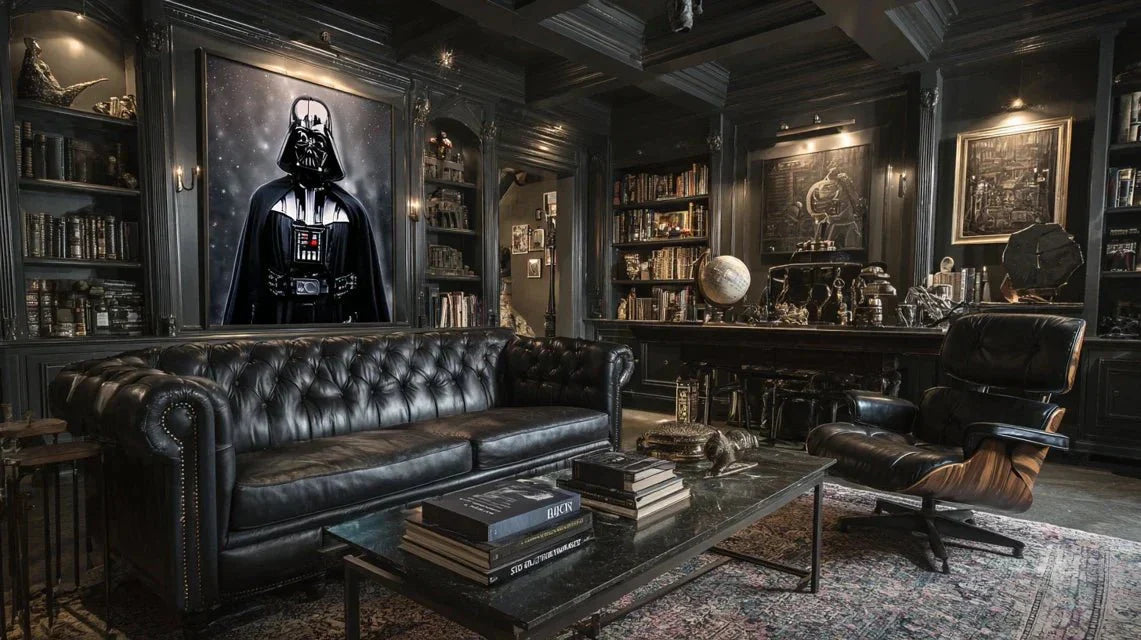
I still remember that visit to a collector in Stockholm in 2015. Between two sleek Scandinavian pieces of furniture stood a perfect replica of an Eames chair... revisited with chrome finishes evoking the interior of a spaceship. This encounter marked the beginning of my fascination with this phenomenon: how science fiction, from Star Wars to Blade Runner, transforms our interiors into futuristic spaces without sacrificing comfort.
Here's what the influence of SF brings to your decor: an avant-garde aesthetic that projects your interior into the future, a redesigned functionality inspired by spacecraft, and an immersive atmosphere that turns each room into a sensory experience.
For ten years as a design exhibition curator in London and Berlin, I observed this recurring frustration: how to integrate this passion for the SF universe into a living room without turning your apartment into a geek convention set? How to create this balance between cult references and contemporary elegance?
The good news? The visual codes of science fiction have become the fundamentals of modern design. What seemed futuristic in the 70s now defines high-end aesthetics. I'll show you how the influence of SF on decor is expressed in the most sophisticated interiors, and how you can adopt it with subtlety.
When spaceships reinvent our interiors
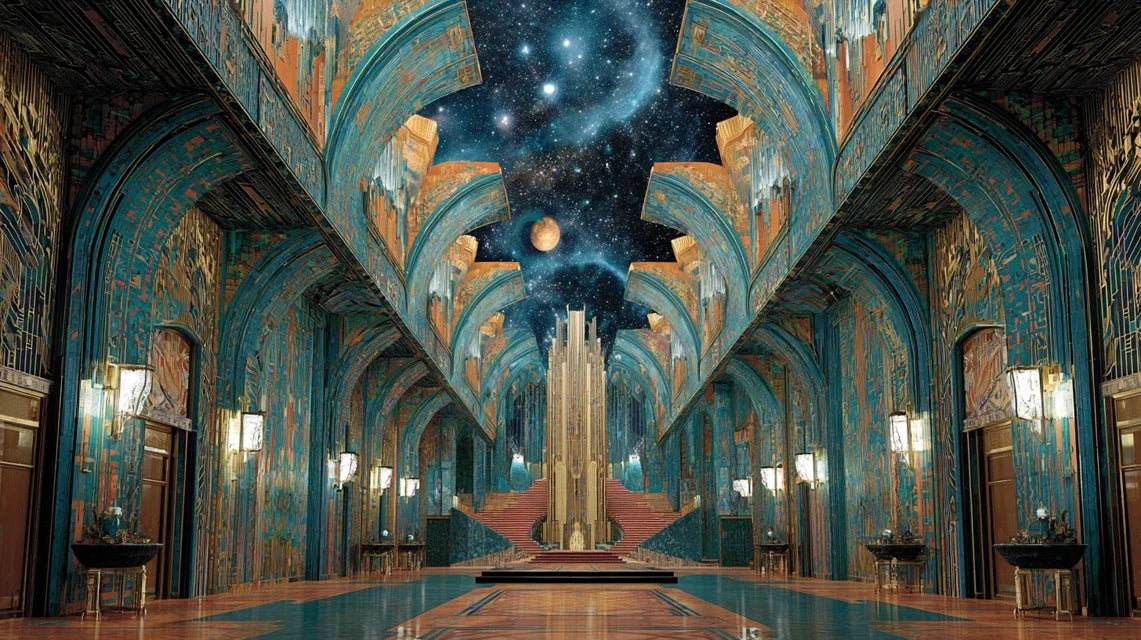
The interior architecture of the Millennium Falcon or Discovery One in 2001 : A Space Odyssey is nothing random. These designs have influenced three generations of interior architects. During a renovation in Copenhagen, I applied this principle: curved surfaces inspired by spaceship airlocks, backlit niches reminiscent of luminous dashboards, and reflective materials creating that infinite space feel so dear to SF.
Modular furniture? Directly derived from the spatial constraints imagined by set designers. These fold-away tables, these wall-integrated storage, these indirect lighting that seems to emanate from the surfaces themselves: all of this finds its origin in the fictitious necessity of optimizing every square centimeter of a spaceship. Today, this aesthetic perfectly meets the challenges of urban apartments.
The color palette of the future
Analyze cult sci-fi films: you consistently find this triptych pristine white / metallic gray / deep black, punctuated by touches of electric blue or bright orange. This palette, far from being cold, creates a soothing backdrop that the colorful accents energize. In a Parisian loft, I recreated the atmosphere of Her: walls in off-white, furniture with clean lines in taupe tones, and coral accents inspired by the film's holographic interfaces.
Metallic finishes play a crucial role. Not the aggressive chrome of the 80s, but these brushed steels, matte aluminum, oxidized brass that evoke futuristic patina. A simple mirror with stainless steel trim transforms a wall into a spaceship porthole.
Lighting: your best ally for a sci-fi atmosphere
If I had to choose one element to infuse a science fiction atmosphere into an interior, it would be lighting. LEDs, once geek gadgets, have become the ultimate sophisticated tool. Hidden light strips under the baseboards create that levitation effect dear to Star Trek. Recessed spots in the ceiling reproduce the diode constellations of spaceship bridges.
In an Amsterdam apartment, I installed a connected lighting system that simulates the day-night cycles of an orbital station: bluish light in the morning evoking dawn from space, golden hues in the evening reminiscent of sunsets seen through an observation dome. This scenographic lighting radically transforms the perception of space.
Suspensions as futuristic sculptures
Forget classic chandeliers. Geometric suspensions, these assemblies of polygonal shapes, these smoked glass globes with exposed light sources: all references to cockpit lighting. A perforated metal suspension diffuses fragmented light that projects patterns onto the walls reminiscent of spaceship ventilation grids. It is functional, sculptural, and deeply rooted in the sci-fi imagination.

Discover this inspiring artwork
Materials and textures: the tactile revolution
The influence of sci-fi on decor extends beyond the visual. It engages the sense of touch. The designers of Alien blended smooth surfaces and organic textures to create that characteristic tension. Translate this principle: pair a deep velvet sofa (sensuality) with a resin and steel coffee table (technology). This textile/industrial contrast generates sensory richness.
Acoustic panels made of geometrically cut foam are not only functional; they evoke the soundproofed partitions of control rooms. Polished concrete, with its gray hues and smooth surface, recalls hangar floors. Translucent epoxy resins incorporating luminescent pigments create those effects of depth found in holographic interfaces.
Glass: Transparency and Technology
Glass is ubiquitous in sci-fi, from the transparent screens of Minority Report to the partitions of space stations. Integrate glass partitions to segment space without enclosing it, tempered glass shelves that seem to float, tables with smoked glass tops revealing complex metal structures. These elements capture and refract light, creating an additional dimension.
Subtle References: The Art of Detail
The common mistake? Accumulating derivative objects. Success lies in integrating sophisticated visual references. Instead of a movie poster, opt for typography inspired by sci-fi credits to number your rooms. Rather than a figurine, choose an abstract sculpture whose forms evoke spacecraft without literally reproducing them.
Contemporary artworks naturally dialogue with the sci-fi aesthetic. Large-format photographs of lunar landscapes, minimalist geometric compositions reminiscent of computer interfaces, abstract canvases with color palettes inspired by nebulae: these choices elevate your decor without heavily thematizing it.
Invisible Technology
The most successful influence of sci-fi? This integrated technology that you don't see. Built-in speakers in the walls, USB ports hidden in baseboards, home automation systems controlling lighting and temperature: just like on spacecraft where every surface is functional. This minimalist approach where technology disappears in favor of experience defines contemporary luxury.
I equipped an office in Berlin with discreet touch surfaces controlling the environment: a swipe across a wall panel adjusts the lighting, a gesture on the table activates the retractable screen. This intuitive interaction with space, imagined by sci-fi films, is now accessible.

Discover this inspiring work
Create your own galaxy: the immersive reading corner
Transform a corner into an escape capsule. A suspended Ball Chair (directly inspired by 60s space aesthetics), surrounded by programmable LED panels displaying images of galaxies. Add a long-pile rug for tactile contrast, a architectural reading lamp with clean lines, and some plants for symbolic oxygen: you get your personal observation post.
This type of space demonstrates how the influence of science fiction on decoration creates functional areas that are also experiences. It's no longer just a reading corner; it's a futuristic refuge that dialogues with your imagination.
Ready to travel without leaving your living room?
Discover our exclusive collection of space paintings that transform your walls into windows to infinity and bring that sophisticated cosmic touch to your interior.
The balance between futurism and human warmth
The pitfall of science fiction decoration? Coldness. The solution? Watch Interstellar or The Expanse: even in space, humans create warm spaces. Integrate light wood with visible grain (organic contrast), soft textiles (cushions, blankets, rugs), and green plants that recall the hydroponic gardens of a space station.
In a house in Brussels, I paired an ultra-modern kitchen with lacquered white facades (laboratory atmosphere) with a massive oak central island and upholstered stools in midnight blue velvet. This tension between high-tech and comfort defines the 'livable sci-fi aesthetic: futuristic but human, impressive but welcoming.
The power of textiles
Never underestimate a graphic rug with geometric patterns, semi-transparent technical fabric curtains filtering the light like solar sails, or cushions with varied textures. These textile elements anchor the sci-fi decor in reality, making it tangible and comfortable. They are the bridge between futuristic aspiration and the visceral need for cocooning.
Imagine yourself in your redesigned living room. The grazing light of the evening passes through your semi-opaque curtains, creating that subdued atmosphere of ship bridges on standby. Your gaze glides over the clean surfaces, lingers on an abstract composition evoking a nebula, rests on your welcoming armchair. You have created more than an interior: an immersive environment that nourishes your imagination while serving your daily life.
The influence of science fiction on decoration is not a passing fad. It's the expression of a fundamental human aspiration: to project our habitat into the future while preserving our humanity. Start small: change your lighting, add a piece of furniture with futuristic lines, invest in a work evoking the cosmos. Each element brings you closer to that perfect balance between spatial dream and earthly comfort.
Your living room is no longer just a place to live. It's your personal spaceship, your escape capsule, your bridge between present and future. And unlike sci-fi heroes, you don’t need to leave Earth to experience it.