I spent twelve years equipping public institutions with furniture and decoration, and I still remember the call from a primary school principal, desperate. Three decorative paintings replaced in two years in their swimming pool changing room, all warped, moldy, beyond recovery. The humidity had won. This changing room, carefully repainted, looked like an abandoned corridor. Children ran through it without even looking up.
Here's what a humidity-resistant painting brings to a school swimming pool changing room: a welcoming atmosphere that lasts over time, health safety without mold or degradation, and a durable investment that enhances the collective space. No more artworks that warp after three months or those greenish stains that appear in the corners.
The frustration of institution managers is always the same: how to create a pleasant environment in a perpetually humid place, without having to replace the decoration every year? How to reconcile aesthetics and technical constraints when the budget is limited and no one has time to monitor the condition of each painting?
Good news: solutions exist, tested and approved in dozens of schools. I'm going to share exactly what works, why some materials resist where others fail, and how to choose a painting that will last through the years without weakening. You will transform this changing room into a space that children notice, appreciate, and respect.
Why humidity destroys ordinary paintings
A school swimming pool changing room is a hostile environment. The ambient humidity regularly exceeds 70%, sometimes 85% after intensive swimming hours. Water vapor condenses on the walls, soaks textiles, penetrates the smallest cracks. A classic painting with a cardboard or untreated wood backing absorbs this moisture like a sponge.
The paper warps in a few weeks. The cardboard decomposes. Adhesives lose their adhesion. The wooden frame deforms, creating spaces where water seeps in. And then come the molds, those black or greenish stains that settle in the corners, on the back of the painting, sometimes even on the printed surface.
I've seen school paintings beautiful, with lovely educational illustrations, completely ruined in less than six months. A college manager even showed me a frame whose back had literally fallen off, leaving the image floating in an empty frame. The initial investment, however modest, literally goes up in smoke.
What destroys a painting in a swimming pool changing room is not only direct water – splashes, projections – but above all this constant, invisible humidity that works day and night. That's why an ordinary painting, even protected by a closed frame, always ends up giving way.
The materials that stand up to humidity
The key to a humidity-resistant painting lies in three components: the support, the print, and the frame. Each must be designed to repel water and resist the saturated atmosphere of a changing room.
Waterproof Supports
Forget cardboard and paper. The supports that really work are rigid PVC, aluminum composite, acrylic glass and some wood panels treated with hydrophobic resins. PVC is particularly popular in public spaces: lightweight, resistant, totally waterproof. Aluminum composite offers extra rigidity for large formats. Acrylic glass brings a premium finish, with a magnificent depth effect.
These materials do not swell, warp or absorb moisture. A PVC-backed painting can stay in a swimming pool changing room for ten years without flinching. I have installed works on aluminum in municipal aquatic centers that are still impeccable after five years of intensive use.
Protected Prints
An image printed on paper, even glued to a rigid support, remains vulnerable. Direct UV prints on synthetic materials are the best option. The ink penetrates the material or forms a layer fused with the support. Result: no peeling possible, no water infiltration between the image and the support.
Sublimated prints on aluminum also offer excellent resistance. The process transforms the ink into gas which penetrates the polymer coating of the aluminum. The image literally becomes an integral part of the support. Impossible to peel it off, damage it with moisture.
Some paintings for swimming pool changing rooms also use traditional prints protected by a varnish or high-quality lamination. However, be careful: not all varnishes are equal. Opt for finishes explicitly guaranteed for humid environments.

What's Behind the Term Moisture Resistant
The market is full of paintings supposedly moisture resistant. But what does this promise really mean? I have learned to ask suppliers the right questions, and I recommend you do the same.
An authentic moisture-resistant painting has a 100% waterproof support, not just resistant. It uses UV stable inks that don't fade over time. Its fixing system – often a stainless steel or aluminum hanging system – doesn’t rust. Its back is also treated, as moisture attacks from the rear too.
Always request the exact composition of the support. Be wary of vague terms like composite material or rigid panel. Demand specifics: PVC, aluminum, acrylic glass. A serious supplier will respond without hesitation.
Also check for the existence of tests under real conditions. Some manufacturers test their paintings in a climate chamber with 80% humidity for months. Others have references installed in municipal swimming pools for several years. This concrete evidence is better than any data sheet.
Aesthetics and education: choosing the right visual
Technical resistance alone is not enough. A painting for a school pool changing room must also fulfill an educational and aesthetic mission. These spaces are frequented by children and adolescents, sometimes stressed by learning to swim, sometimes excited before class.
Soothing visuals work remarkably well: seascapes, colorful underwater backgrounds, illustrations of aquatic animals. They create a natural continuity with the activity. A primary school I equipped chose a series of paintings depicting Mediterranean marine species. Teachers use them for impromptu mini-lessons before entering the pool.
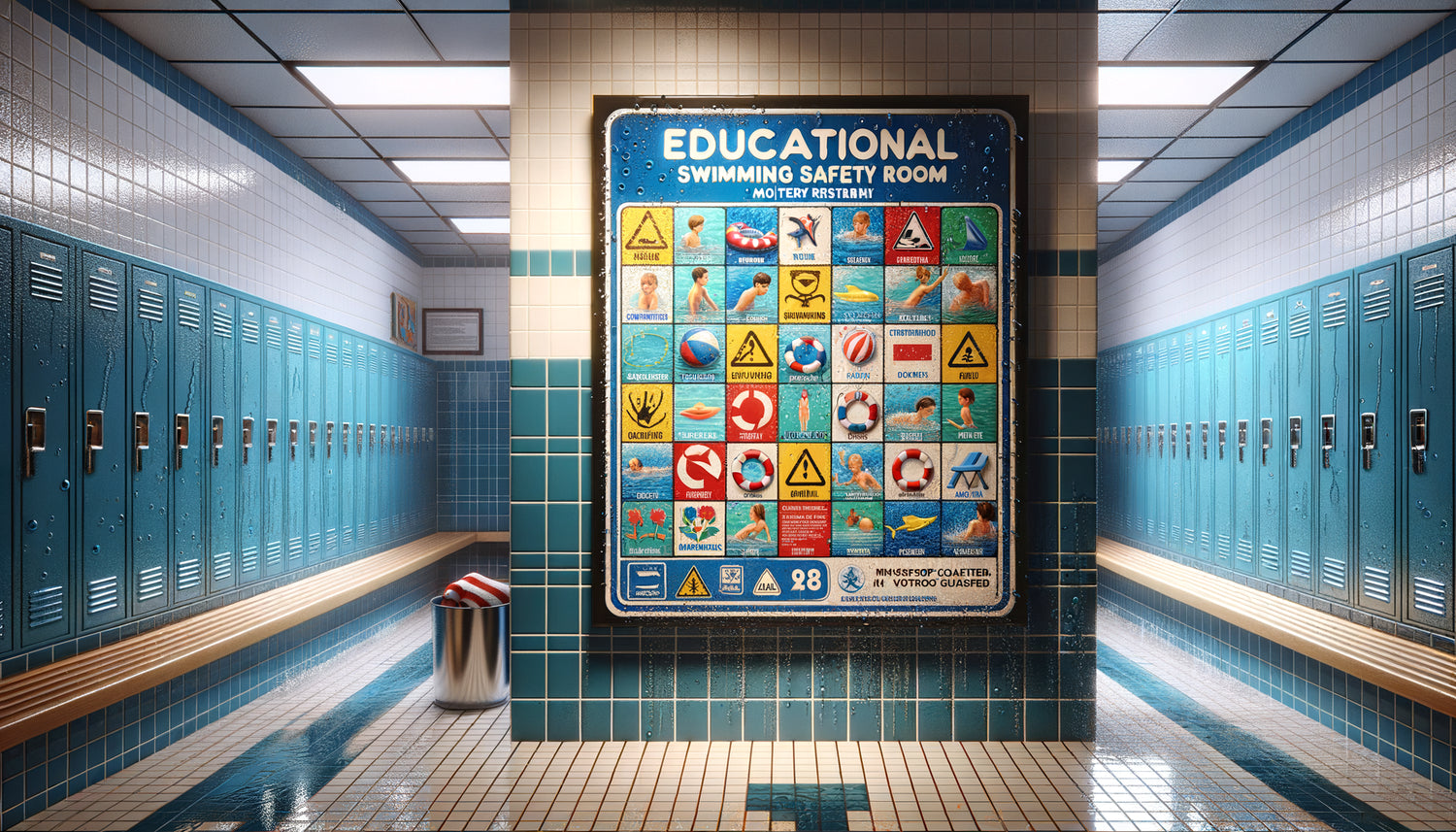
Subtle educational messages also have their place. Illustrated hygiene rules with humor, safety tips presented graphically rather than textually. One college opted for motivational quotes from Olympic athletes on moisture-resistant paintings, creating an inspiring atmosphere.
Avoid overly bright colors that add to the visual noise of a space already overloaded with stimuli. Prefer shades that harmonize with existing tiles and lighting. Blue, obviously, always works, but aquamarine, soft turquoise, certain grey-blues also bring a lot of elegance.

Installation and maintenance: the gestures that prolong the lifespan
Even the most moisture-resistant painting deserves a thoughtful installation. I have found that some locations pose more problems than others. Walls directly exposed to showers or areas with very heavy traffic are subject to more direct projections.
Prioritize slightly recessed areas, visible but protected. A wall perpendicular to the showers rather than facing them. Space above the benches rather than at children's height where bumps are frequent. Paintings also benefit from being installed with a slight space between the wall and the back of the frame, allowing for air circulation that prevents trapped condensation.
Stainless steel or aluminum mounting systems are essential. Ordinary hooks rust within a few months in a swimming pool changing room. Galvanized screws hold better, but specialized systems for humid environments remain ideal. Some paintings are hung using a rail system, facilitating replacement or periodic cleaning.
Maintenance is minimal but essential. A quick wipe with a damp microfiber cloth once a month is enough to remove limescale deposits and maintain the vibrancy of colors. Avoid harsh products that can damage protective varnishes. A visual inspection every three months allows you to detect any early problems – a peeling seal, a loosening fixing.
Transform your changing room into a welcoming and durable space
Discover our exclusive collection of wall art for School that perfectly resists the humidity of swimming pools while creating an inspiring atmosphere for children.
Budget and suppliers: invest wisely
The question of budget always comes up. A humidity-resistant painting does cost more than a basic framed poster. But the equation changes when you calculate over several years.
An ordinary painting costing 25 euros, replaced every 18 months, ultimately costs more than a painting costing 80 euros that lasts ten years. Not to mention the time spent dismantling, repurchasing, reinstalling. Schools operate on tight budgets, but the initial investment in quality always pays off.
Suppliers specializing in collective equipment understand these constraints. They often offer specific ranges for local authorities with discounted prices for multiple purchases. Equipping several changing rooms at once allows you to negotiate. Some manufacturers also offer extended warranties on their swimming pool paintings, a sign of their confidence in the product's durability.
Public tenders and calls for bids help structure these purchases. Integrating specific technical criteria – PVC or aluminum support, UV printing, minimum three-year warranty – into the specifications avoids unpleasant surprises. I have assisted several establishments in this process, and the difference in quality of the proposals received is spectacular when the specifications are clear.
Inspiring examples
Let me share some notable achievements. A technical high school in the Lyon region transformed its aging changing room with six large-format paintings depicting stylized waves in blue gradients. Aluminum composite support, sublimated print. Three years later, they are still impeccable. The headmaster confided to me that vandalism has practically disappeared – students spontaneously respect what is beautiful.
A rural primary school chose moisture-resistant educational prints depicting the water cycle, different Olympic swimming strokes, and age-appropriate world records. Sports teachers use them as teaching aids. The decorative investment has become a learning tool.
A middle school dared to be original with large format underwater photographs printed on acrylic glass. The sense of depth is striking. Students have nicknamed the locker room an aquarium. The feeling of immersion begins before even entering the pool.
These examples show that a swimming pool locker room print is never just a decorative element. It's a signal addressed to students: this space matters, your comfort and experience are important to us. This attention to detail influences the overall atmosphere, respect for the premises, even motivation towards aquatic learning.
Transforming the collective experience
Imagine your students entering a welcoming locker room where colorful and well-maintained prints create a positive atmosphere. No more bare and sad walls, no more warped frames that give an impression of abandonment. Just images that invite calm, concentration, and mentally prepare for aquatic activity.
Choosing a moisture-resistant print is investing in durability and experience. It's refusing to compromise between aesthetics and technical constraints. Solutions exist, tested and proven. You no longer have to accept rapid degradation or unsightly functionality.
Start by identifying the available space, the areas least exposed to direct splashes. Define your budget considering a five or ten-year timeframe. Contact specialized suppliers and ask the right questions about materials. Choose visuals that make sense for your audience. And install these prints knowing they will permanently transform the atmosphere of your establishment.
The swimming pool locker room deserves the same attention as classrooms. It is a place of passage, certainly, but also of emotional transition, preparation, sometimes apprehension. A visually pleasant space facilitates these transitions, reassures, inspires. You now have all the keys to make a choice that will last.
Frequently Asked Questions
Can a moisture-resistant print really last several years in a swimming pool locker room?
Absolutely, and I’ve seen the proof in dozens of establishments. The key lies in the choice of support – rigid PVC, aluminum composite or acrylic glass – which does not fear constant humidity. Unlike canvases on cardboard or untreated wood that degrade within a few months, these waterproof materials last for years without warping or developing mold. I have personally witnessed installations from five to ten years old in municipal aquatic centers, with artworks still impeccable. The initial investment is certainly higher than a basic frame, but you save repeated replacements, installation time, and maintain a welcoming environment for students. Durability is not a marketing promise, it's a technical reality when the right materials are used.
How to tell if a painting is truly suitable for humid environments?
That’s THE question to ask the supplier, and their answer will tell you everything about the seriousness of the product. First, ask for the exact composition of the support: a true anti-humidity painting specifies PVC, aluminum composite or acrylic glass, not vague terms like rigid panel. Then check the type of print – direct UV printing on synthetic material offers the best protection as the ink fuses with the support. Ask about tests performed: some manufacturers test their paintings in a climatic chamber at 80% humidity for months. Also ask for references from existing installations in swimming pools or aquatic centers. A supplier who can show you artworks in place for three or five years gives you much more reliable guarantee than a simple technical sheet. Beware of prices that are too low, which often hide unsuitable materials disguised as professional solutions.
What maintenance does a painting in a swimming pool changing room require?
Excellent news: maintenance is minimal, especially compared to the time lost replacing degraded paintings. A monthly cleaning with a slightly damp microfiber cloth is enough to remove calcareous deposits and maintain the brightness of colors. Avoid aggressive or abrasive products that could attack protective varnishes. A visual inspection every three months allows you to check that fixings remain solid and that no infiltration begins to form – which is very rare with good materials. If you have chosen paintings on PVC or aluminum with UV printing, they naturally resist water splashes and atmospheric chlorine. Installation with a slight space between the painting and the wall also promotes air circulation, avoiding trapped condensation. In practice, these paintings require less attention than a classic laminated poster, while maintaining their new appearance for years.