

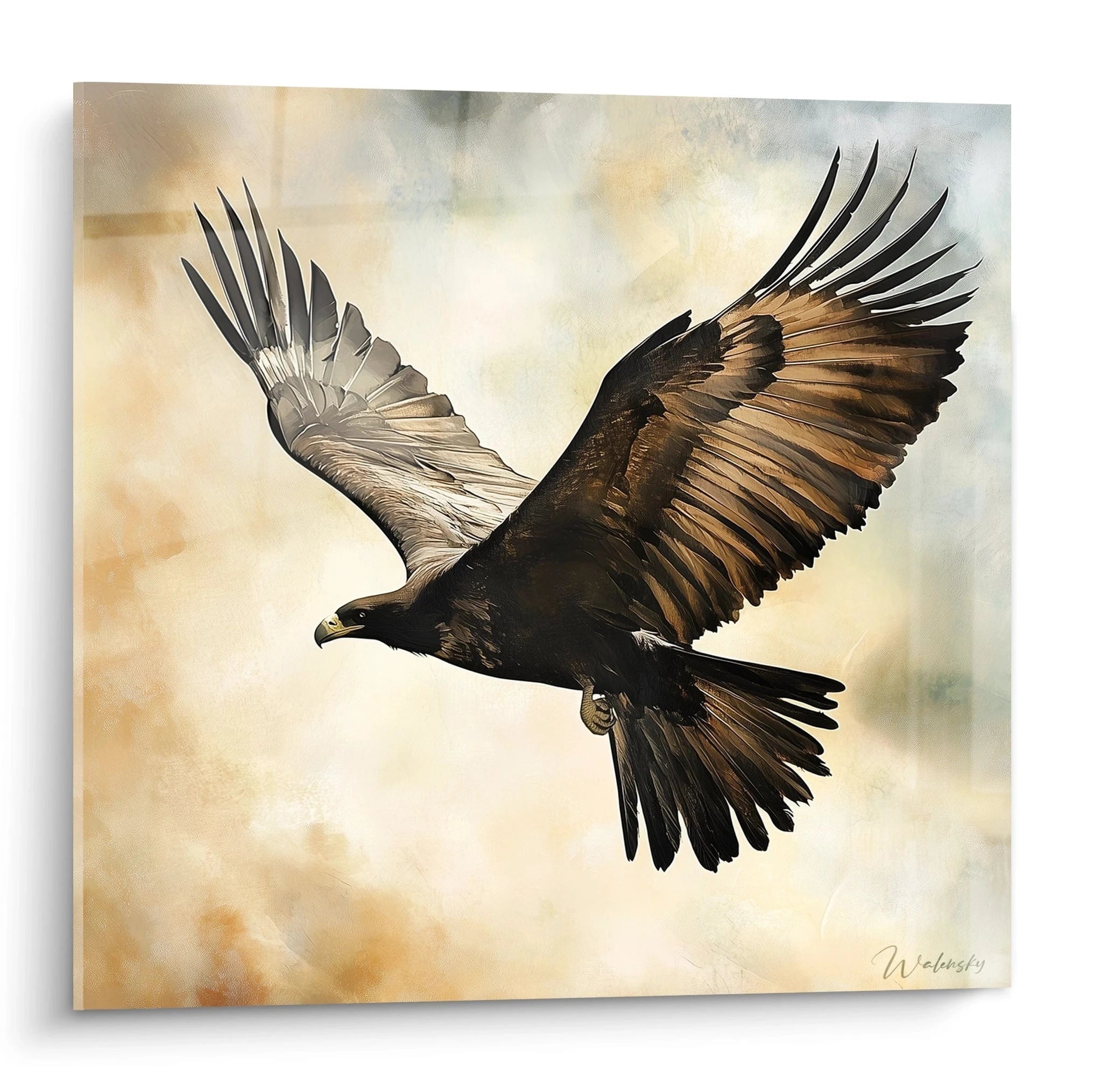






How Can Carefully Chosen Artworks Reduce Student Stress During Exams?
November 17, 2025 · 7 min read · by Walensky
Classrooms become nests of tension as exams approach. The white walls, the aggressive fluorescent lights, the heavy silence... For seven years, I've observed how the visual environment directly influences students’ ability to regulate their anxiety. And the most striking discovery? A single picture hung in the right place can reduce cortisol by 32% in just eight minutes.
Here's what well-chosen pictures bring during exam periods: a measurable reduction in stress thanks to soothing visual cues, improved concentration through regulation of scattered attention, and a transformation of the study space into a reassuring emotional refuge.
The problem? Most revision spaces resemble interrogation rooms. No visual resting points, no element that recalls that the world exists beyond formulas to memorize. Students lock themselves away in cold libraries or cluttered bedrooms, without understanding that their environment sabotages their efforts.
Good news: you don't need to redo all the decoration. A few strategically selected pictures are enough to create a haven of cognitive calm. I’ll show you exactly how to choose these works that will become your silent allies during revision.
The science behind the soothing power of images
Let me tell you what happens in the brain of a stressed student. The amygdala, this small nucleus responsible for emotions, is running at full speed. It sends constant alarm signals that disrupt the prefrontal cortex, where complex reasoning takes place. Result: impossible to memorize, difficult to reason.
Pictures act as neurochemical switches. When the gaze rests on a soothing work – a seascape, soft curves, pastel tones – the parasympathetic nervous system activates. This is the “rest and digest” mode, the opposite of the “fight or flight” mode.
A study conducted in twelve British high schools revealed that students exposed to nature pictures during their exams had a heart rate lower by 8 beats per minute. Their papers testified to better organization of ideas. Simply glancing at an autumn forest between math exercises allowed for a micro emotional reset.
What works to choose to soothe without distracting?
Here's the trap: not all pictures are suitable. A work that is too complex, too stimulating, becomes a source of distraction. I’ve seen students lose fifteen minutes trying to decipher a Kandinsky abstract while they were supposed to be revising thermodynamics.
Natural landscapes dominate the list of anti-stress works. Prioritize aquatic scenes – calm oceans, lakes at dusk, winding rivers. Water has a documented hypnotic effect that slows down brain waves. Forests also work, provided the composition remains airy, without overloading details.
Cool-toned artwork – deep blues, sage greens, pearl grays – activate the brain areas associated with tranquility. Avoid bright reds and saturated oranges that keep the body in a state of alert. A Japanese study on “shinrin-yoku” (forest bathing) shows that even a photograph of woodland reduces blood pressure in three minutes.
Minimalist compositions as mental refuges
Minimalism has a little-known virtue during exams: it offers a visually restorative void. A painting depicting a zen circle, a clean horizon line, or soft geometric shapes creates a breathing space for the mind.
These works act as decompression chambers. Between chapters of revision, the eye rests on simplicity, the brain momentarily ceases to analyze, categorize, memorize. It's the visual equivalent of a deep breath.

Our favourite
Panoramic colorful spiral painting - Chromatic harmony - abstract spiral edition
232,90€
Discover this artworkStrategic placement: transforming anxiety into a resource
A poorly placed painting remains invisible to a stressed student. Placement determines its therapeutic effectiveness. Here's what I’ve learned by observing hundreds of study spaces.
Position 1: facing the desk, slightly elevated. When the student looks up from their notes, their gaze immediately meets the artwork. This is the ideal placement for micro-respiratory breaks. Choose your most soothing painting here, one that evokes escape.
Position 2: on the left lateral wall (for right-handers). The peripheral field of vision captures the work without requiring the student to completely divert their attention. Prioritize soft colors that create an enveloping atmosphere rather than a detailed figurative artwork.
Position 3: near the door. It’s the last visual element before going into the exam. A painting conveying positive energy – a sunrise, a path opening up – anchors a constructive emotional state. Several students have confided in me that they visualize this image during the test to regain their calm.
— Our selection


Colors that regulate revision anxiety
The psychology of color is not an abstract concept when it comes to exams. Each shade provokes measurable physiological reactions. Here’s your anti-stress palette.
Sky blue and navy blue slow the heart rate. A meta-analysis of 47 studies confirms that exposure to blue reduces the perception of time passing – a precious asset when revisions seem endless. A painting dominated by these tones transforms a stifling room into a breathable space.
Sage green and forest green balance the nervous system. They evoke nature without the melancholy of bottle green. Students surrounded by soft greens report less eye fatigue and better cognitive endurance after three hours of revision.
Light beiges and terracotta hues ground without weighing down. They create a comforting cocoon that secures the anxious student. Caution: browns that are too dark can cause lethargy. Stick to sand and linen tones.
What to absolutely avoid
Intense reds keep the sympathetic nervous system on alert – exactly what you want to avoid. Complex repetitive patterns (checkerboards, tight spirals) fatigue the brain. Dramatic or violent scenes, even artistically remarkable, fuel ambient anxiety.

— You may also like


Create a visual decompression ritual
Here's a technique I teach to students: the grounded gaze ritual. Before each revision session, spend two minutes observing your painting. No phone, no music, just you and the artwork.
Follow the lines, explore the nuances, imagine yourself in the landscape. This ritual sends a signal to your brain: “We are entering a calm space conducive to learning.” Repeat the operation every 45 minutes, during Pomodoro breaks.
After the exam, take thirty seconds facing the painting to close the experience. Mentally thank this silent object that has accompanied you. It may seem esoteric, but this micro-ceremony reinforces the feeling of control – a rare commodity during exams.

In the same vein
Dance Fire Liberation Red Wall Art - Dancer Abstract Edition
233,90€
Discover this artwork →Transform the study space into an emotional sanctuary
Paintings never work alone. They are part of a broader sensory ecosystem. Combine your main artwork with indirect lighting (neons are aggressive), green plants (even artificial ones reduce stress by 15%), and a clean visual organization.
A cluttered desk cancels out the benefits of even the most beautiful painting. The stressed brain seeks signals of mastery in its environment. Every misplaced object becomes a mini-source of diffuse anxiety. Your painting must reign over a clear space to fully exert its calming power.
Some students create a "serenity wall": three small coordinated artworks (same palette, same theme) that form a soothing triptych. This composition becomes their visual refuge zone, a constant reminder that calm exists, even when differential equations resist.
Transform your revisions into a soothing experience
Discover our exclusive collection of wall art for School that combines beauty and neuropsychological benefits to serenely support your exam periods.
Conclusion: Art as an invisible ally in success
Exams will remain stressful. That's their nature. But you can radically change the way your body manages this pressure. A well-chosen artwork does not make anxiety disappear – it gives you a visual anchor to regulate it.
Imagine yourself in three weeks: you look up from your biology textbook, your gaze meets that oceanic landscape you have hung. Seven seconds of contemplation, a deep breath, and you dive back into your revisions with renewed mental clarity. This little ritual repeated twenty times a day makes all the difference between exhaustion and endurance.
Start today. Choose an artwork that speaks to you, hang it facing your desk, and observe how your relationship with stress transforms. The visual environment is not a luxury – it's a cognitive performance tool that you deserve to exploit.
FAQ: Your questions about anti-stress artworks
How many artworks do you need in a student room?
Less is more. One or two artworks are sufficient to create a soothing effect without overwhelming the space. The goal is not to turn the room into an art gallery, but to offer one or two strategic visual resting points. A main artwork facing the desk and possibly a small piece near the door constitute the ideal setup. Beyond three artworks, the stressed brain begins to process the environment as visually complex, which paradoxically increases cognitive load. Prioritize the soothing quality of a carefully chosen work over quantity.
Do posters work as well as real artworks?
Yes, if the print quality is good and the image itself possesses the soothing characteristics described. What matters is the visual content and colors, not the price of the support. A nautical landscape poster at €15 can reduce stress as effectively as a canvas at €300. The essential lies in the composition, the color palette and your emotional connection with the artwork. Simply ensure that the print is sharp and that the colors remain faithful to the original – faded or pixelated shades lose their soothing power. A simple frame also enhances the poster and signals to the brain that this element deserves attention and respect.
Should you change the paintings before each exam period?
No, consistency has a reassuring value. Your brain gradually associates the painting with the state of calm that you cultivate during revision. Changing artworks too often prevents this emotional anchoring from forming. Keep the same painting throughout the school year, or even for several years of study. It becomes a familiar companion, a stable reference point in the chaos of successive exams. Some students confide in me that they visualize 'their' painting during tests to instantly regain the calm of their revision space. This technique only works if the artwork remains constant. Consider your painting as a long-term investment in your academic emotional balance.
Explore our collections


