


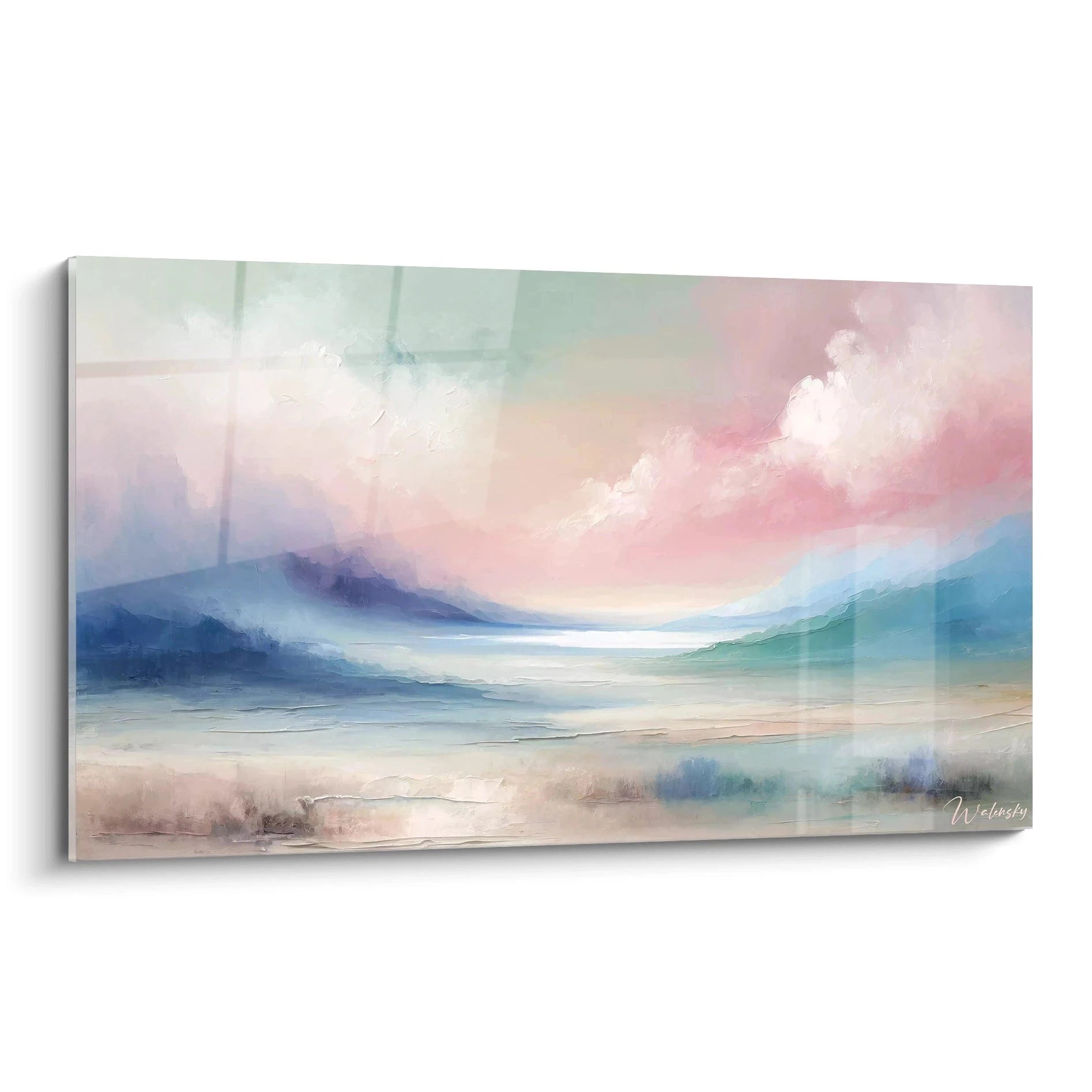

Why Avoid Framed Art in a Very Humid Kitchen?
November 24, 2025 · 11 min read · by Walensky
I received the call on a Tuesday morning. A client, distraught, had just discovered her favorite painting completely distorted in her kitchen. The solid oak frame, magnificent six months earlier, had warped to the point of causing the protective glass to fall off. What was under the frame? Black mold slowly eating away at the artwork. A scene I've unfortunately seen too often in my career as an art restorer.
Here's what a very humid kitchen does to wooden frames: progressive and inevitable deformation, the appearance of destructive molds, and irreversible deterioration of your favorite artworks. In fifteen years spent repairing damage caused by humidity, I’ve learned a simple truth: wood and humid environments are natural enemies, especially in this space where steam and temperature variations reign.
You may have invested in that beautiful framed painting with natural wood to warm up your kitchen. You imagined that touch of elegance above your countertop. But over the weeks, you notice subtle changes. The frame seems slightly veiled. Stains appear in the corners. And that strange smell...
Rest assured: understanding the mechanisms of degradation will allow you to effectively protect your wall decor. I'm going to explain exactly what's happening in your humid kitchen, why wooden frames are so vulnerable there, and above all, how to create an aesthetic culinary space without risking losing your favorite artworks.
Water vapor: the silent enemy of your frames
Every time you cook, you create a veritable invisible steam bath. A pot of boiling water releases up to 200 grams of humidity into the atmosphere per hour. Multiply that by your daily meals, and your kitchen becomes a real tropical greenhouse, with humidity levels that can rise to 70-80% during cooking.
Wood is a living material, hygroscopic by nature. This means it constantly absorbs and releases ambient moisture, like a breathing sponge. In a stable room, this phenomenon remains imperceptible. But in a very humid kitchen, it's another story. Wooden frames undergo repeated cycles of expansion and contraction, sometimes several times a day.
I have measured these variations in my workshop: an oak frame can swell by 2 to 3 millimeters in width after only one hour of exposure to 80% humidity. Imagine those constant micro-movements, day after day, month after month. Joints loosen, cracks appear, corners come apart. The frame gradually loses its structural integrity.
Wood species particularly sensitive
Not all woods react the same way. Pine, beech and untreated oak are the most vulnerable. These commonly used essences for wooden frames have open pores that trap moisture like a trap. Cheap plywood, often used for the back of frames, literally delaminates under these conditions.
Exotic woods are certainly more resistant, but even teak or iroko will eventually yield to constant excessive humidity. And above all, these expensive essences do not justify the risk in such a hostile environment.
The destructive cocktail: heat, grease and condensation
Humidity alone would already be problematic. But your kitchen combines three factors that turn your frames into perfect victims: the heat from cooking hobs, suspended micro-particles of grease, and condensation on cold surfaces.
Heat accelerates all degradation processes. It opens the pores of the wood, facilitating the penetration of moisture in depth. A painting hung near the stove is exposed to temperatures that can reach 40-45°C during cooking, then drop to 18-20°C at night. These repeated thermal shocks weaken the fibers of the wood and cause protective varnishes to crack.
Grease particles, invisible to the naked eye, settle everywhere in an active kitchen. They form a sticky film on wooden frames, creating a surface conducive to the development of microorganisms. I have seen molds develop exclusively on greasy areas of a frame, creating black marbling impossible to clean without damaging the wood.
Condensation: the point of no return
The most destructive phenomenon occurs during cooling. When the temperature drops after cooking, the humidity saturating the air condenses on the coldest surfaces. Frames, often hung against cooler exterior walls, become magnets for condensation.
This liquid water seeps into the smallest cracks, penetrates under the varnish, accumulates between the frame and the glass. It is at this precise moment that the damage becomes irreversible. The wood turns black, the glues dissolve, the fungi settle in. I have restored frames whose wood was literally rotten from the inside, while the exterior still seemed presentable.

The warning signs that every restorer recognizes
After fifteen years of saving damaged works, I can diagnose a humidity problem in seconds. Here are the alarm signals that should immediately alert you to your framed paintings in your kitchen.
The warping is the first visible symptom. The frame is no longer perfectly flat against the wall. It curves slightly, creating a space between the bottom of the frame and the wall surface. This veiling indicates that the wood fibers have absorbed moisture unevenly.
Dark stains in the corners or along the joints signal the beginning of fungal colonization. These marks usually appear in areas where water accumulates by capillary action. Once the spores are established, their removal becomes extremely complex without completely disassembling the frame.
The musty smell is a sign that the damage is already advanced. When you smell this characteristic damp basement odor when approaching the painting, molds have developed on the back of the frame, often invisible from the front. At this stage, the artwork itself is probably compromised.
The chalking of the varnish and cracking
A varnish that whitens or becomes milky reveals moisture infiltration under the protective layer. This phenomenon, called 'farining' in our trade, makes the frame dull and lackluster. The fine cracks that appear in a network are also characteristic of repeated wet-dry cycles.
I have photographically documented the evolution of an unprotected frame in a humid kitchen: in just three months, the first signs were visible. After six months, the damage required professional restoration. After a year, the frame was ready for the trash.
— Our selection


Why even treatments are not always enough
You might think that a good protective varnish or a waterproofing treatment will solve the problem. It's a tempting idea, but reality is more nuanced. Wood treatments offer temporary protection, not total immunity.
Marine varnishes or protective oils do create a barrier against moisture. But in an active kitchen, this protection wears off quickly. Thermal shocks, exposure to UV rays (even artificial), and especially grease splashes and vapors degrade the protective film progressively.
I conducted tests under real conditions: a frame treated with the best yacht varnish on the market lasted 18 months in a family kitchen before showing signs of degradation. That's better than an unprotected frame, certainly, but it remains insufficient for long-term protection. And above all, renewing the treatment involves regularly taking down and cleaning the painting – a constraint that few owners maintain.
The myth of the vitrified frame
Some believe that a completely vitrified frame, with glass on both sides, would be the miracle solution. In theory, the artwork and the frame would be hermetically protected. In practice, it's often worse. Humidity always seeps in through the joints, and once trapped inside, it can no longer escape. I have opened vitrified frames where the confined atmosphere had created a veritable terrarium of mold.
Condensation inside a sealed frame is particularly vicious. It forms directly on the artwork, creating halos and discolorations that are impossible to repair. In a very humid kitchen, this type of framing turns your painting into an artistic pressure cooker.

— You may also like


Elegant alternatives for your humid kitchen
Giving up wooden frames does not mean giving up aesthetics. On the contrary, many modern solutions offer superior durability without compromising visual appeal. After years of advising my clients, I have identified the most effective alternatives.
Brushed aluminum frames are my favorites for contemporary kitchens. Totally inert to humidity, they never warp and resist splashes perfectly. Their metallic finish brings a professional touch that blends beautifully into modern kitchens with stainless steel appliances.
High-density PVC frames imitating wood now offer astonishing realism. Manufacturers have made enormous progress: some models present veins and textures almost indistinguishable from real wood at first glance. The advantage? Absolute resistance to humidity, without any particular maintenance.
Prints on rigid supports (dibond, plexiglass, aluminum) constitute a radically different option. The artwork is directly printed or laminated onto an impermeable support, completely eliminating the need for a traditional frame. This minimalist approach is particularly suitable for kitchens with a clean design.
Rethinking the placement of your paintings
Sometimes, the simplest solution is to reposition your framed paintings in less exposed areas. A kitchen generally has different microclimates. The wall opposite the cooktops, for example, experiences much less steam and heat.
In my own kitchen, I've created a 'safe art zone' near the door, away from the sink and heat sources. This part of the room remains relatively stable in temperature and humidity. That's where I hang my wood-framed pieces, while works on synthetic supports occupy the more exposed locations.
Transform your kitchen without compromising your artwork
Discover our exclusive collection of Kitchen art that is perfectly resistant to humidity and permanently enhances your culinary space.

In the same vein
Orange Cocktail Wall Art - Art Deco Elegance - Art Deco Edition
213,90€
Discover this artwork →Protecting Your Existing Paintings: Emergency Solutions
If you already have framed paintings hanging in your humid kitchen, some measures can slow down degradation while waiting to find a definitive solution.
Improve ventilation in a targeted manner. A simple controlled mechanical ventilation or even a discreet fan directed towards the cooking areas can drastically reduce ambient humidity. I've observed differences of 20 to 30% in humidity rates in identical kitchens, solely thanks to better air circulation.
Systematically use the range hood during and after cooking. Extend its operation by 10 to 15 minutes after turning off the burners to evacuate residual steam. This simple gesture can halve your frames' exposure to moisture.
Create a safety distance. Even an extra 50 centimeters between a painting and a source of steam can make a huge difference. Projections and vapors quickly lose intensity with distance. If possible, avoid hanging frames directly above the sink or stove.
Regularly inspect your frames. Once a month, take down your paintings and examine the back of the frame. This is where the first signs appear. A simple wipe with a dry cloth can remove superficial moisture before it penetrates the wood. This five-minute routine can significantly extend the life of your frames.

More selected pieces
Red and Yellow Cocktail Glass Painting - Summer Evening - Cocktail Edition
233,90€
Discover this artwork →Visualize Your Protected and Beautiful Kitchen
Imagine walking into your kitchen tomorrow morning. The walls are decorated with inspiring works, compositions that tell your culinary story and reflect your personality. But unlike before, you know that these paintings will last through the years without degrading, without developing those worrying stains, without losing their luster.
You are preparing your meal in complete serenity. Steam escapes from the saucepan, but you no longer have that worried look when looking at your favorite painting. The materials you have chosen are designed for this environment. They fear neither humidity, nor temperature variations, nor the passage of years.
Your guests compliment your wall decoration. And you can explain to them, with the satisfaction of an informed choice, why your kitchen remains beautiful despite intensive use. You understand that protecting your paintings in a humid kitchen, is first and foremost choosing the right materials and the right locations.
Start today: inspect your current frames, identify the areas at risk in your kitchen, and gradually plan the transition to suitable solutions. Your works deserve to last as long as the culinary memories you create in this space.
Frequently Asked Questions About Paintings in a Humid Kitchen
Can I treat my own wooden frames to protect them from humidity?
You can indeed apply a varnish or protective oil to your existing frames, and this will offer temporary protection of 12 to 18 months in a moderately humid kitchen. Choose products specifically designed for damp environments, such as marine-grade polyurethane varnishes. Apply at least two coats, respecting the drying times. However, be realistic: this treatment will not transform an ordinary wooden frame into a permanent solution. In a very humid kitchen with daily cooking, even the best treatments require regular renewal. If your kitchen generates a lot of steam, consider this solution as a palliative while waiting to gradually replace your frames with truly suitable materials. The investment in time and products can quickly exceed the cost of a new synthetic frame.
How far from sources of steam can I hang a framed painting?
How to know if the humidity in my kitchen is dangerous for my wooden frames?
Invest in a digital hygrometer, a small device costing less than 15 euros that measures ambient humidity levels. Place it in your kitchen and monitor the values during cooking sessions. If the humidity rate regularly exceeds 65% and remains high for several hours after cooking, your environment is definitely hostile to wooden frames. A healthy kitchen should maintain humidity between 40 and 55% most of the time. Beyond 70%, molds find ideal conditions for development. A simple test without a device: observe your windows during and after cooking. If significant condensation forms on the panes and takes more than 30 minutes to disappear after ventilation, your humidity rate is probably too high for wooden frames. Another indicator: if you smell a persistent musty odor or notice fogging on wall tiles, your kitchen urgently needs better ventilation before hanging any wooden frame.
Explore our collections


