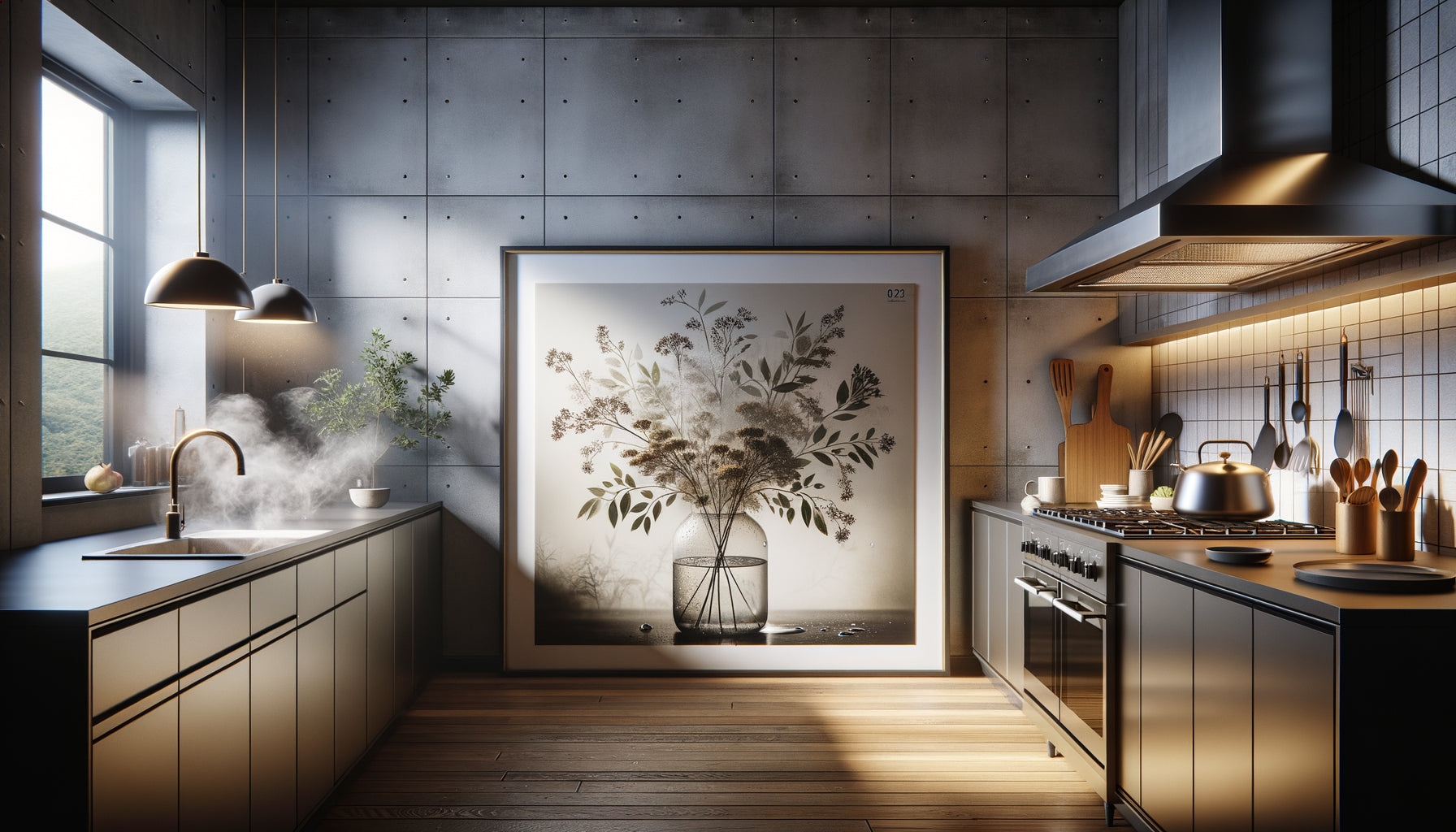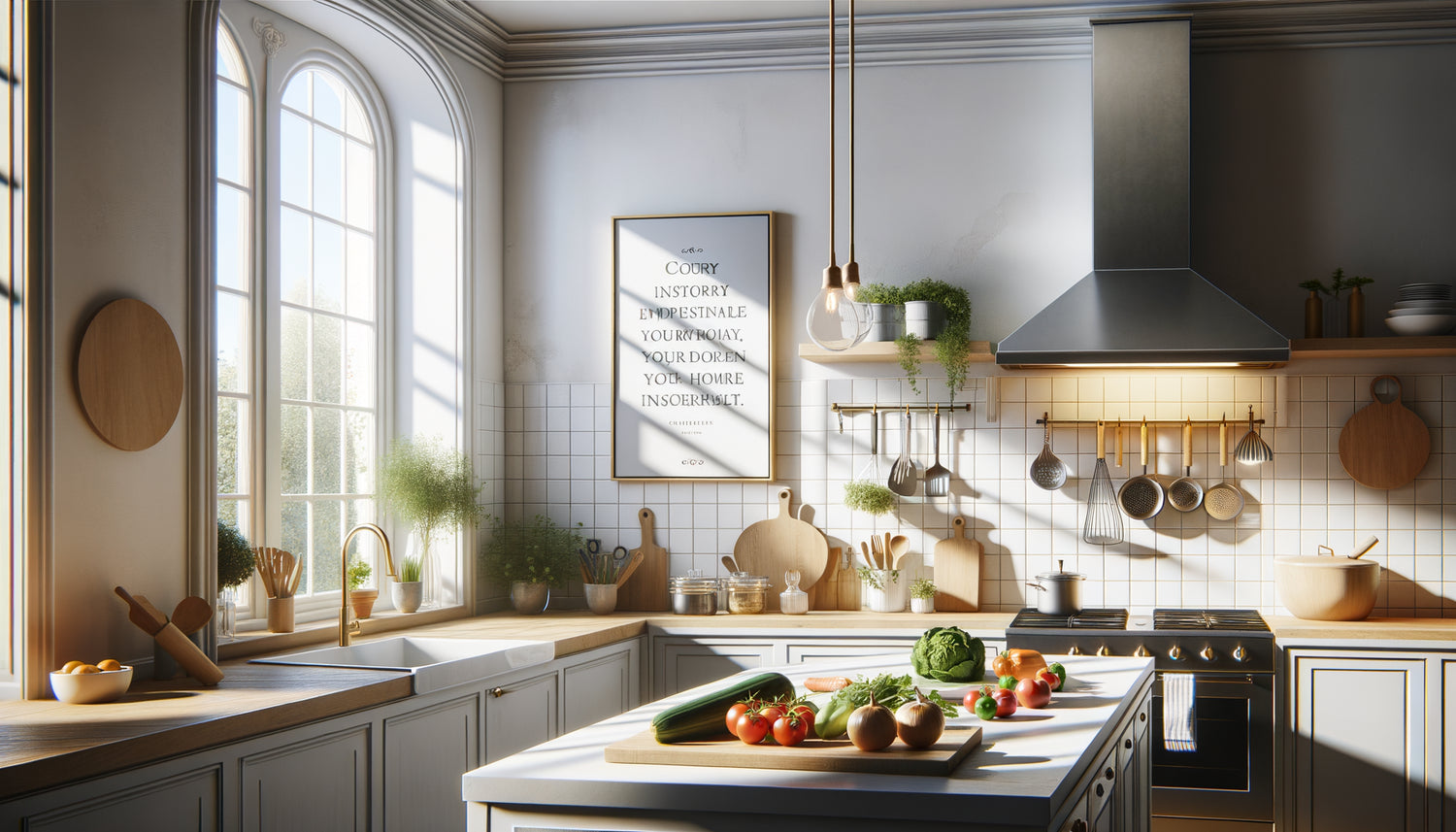
It's 6:30 PM. You open the refrigerator with that familiar question: what am I going to prepare for dinner tonight? Your gaze falls on a painting hanging on your kitchen wall: "The kitchen is a love story we share." Something happens. A spark. A smile. And suddenly, bringing back that old grandmother's recipe doesn’t seem so complicated. Do culinary quotes hung on the walls of our kitchens really have this mysterious power to push us to put on our apron? Here's what these paintings bring: they transform kitchen space into a place of inspiration, create positive mental anchors around the act of cooking, and reactivate our motivation through daily visual reminders. Because let’s face it, between marathon days, accumulated fatigue, and the temptation of ready-made meals, our culinary drive sometimes runs out of steam. But don't worry: there are simple psychological levers to rekindle that flame. I will reveal how a simple painting can become the discreet accomplice of your new cooking habits.
The invisible power of words on our walls
For ten years, I have accompanied clients in transforming their interiors. And I observed a fascinating phenomenon: those who hung paintings with culinary quotes in their kitchen gradually changed their relationship to meal preparation. Not overnight, of course. But week after week, something changed.
A quote like "Cooking is creating." doesn't order you anything. It doesn’t make you feel guilty. It rephrases the act of cooking as a creative activity rather than a domestic chore. This semantic shift is powerful. Our brains love the stories we tell ourselves. If your environment constantly whispers to you that you are someone creative in the kitchen, you begin to believe it.
Neuroscience confirms it: we are creatures of environment and habits. Our spaces shape our behaviors more than we think. A painting with a culinary quote acts as a constant visual reminder, a benevolent nudge that gently redirects our attention towards what matters.
When words become triggers for action
I met Sophie during an interior design project. She had hung in her kitchen a painting with this quote: "Happiness is apple pie cooling on the windowsill." Three months later, she confided to me that she now baked pastries almost every weekend.
Coincidence? Not really. Culinary quotes work as emotional triggers. They activate sensory memories: the smell of cinnamon, the crispness of a golden crust, the satisfaction of nourishing those we love. These evocations are not neutral. They short-circuit our tired rationality and awaken deep motivations.
A well-chosen artwork doesn't just decorate. It dialogues with you. It asks questions. It sows intentions. Every time your gaze crosses it, it reactivates a network of positive associations around the act of cooking. This is what is called in behavioral psychology 'environmental priming'.
The three types of quotes that change everything
Not all culinary quotes are created equal. Some inspire, others bore. After analyzing dozens of cases, I identified three particularly effective categories:
Evocative quotes: they appeal to the senses and memories. “The smell of fresh bread is the best alarm clock.” You see? You can almost smell it. These phrases create an immediate desire.
Empowering quotes: they elevate the act of cooking. “Cooking is offering a little bit of yourself”. They transform dinner preparation into a gesture of love, a meaningful contribution.
Playful quotes: they defuse tension. “The best recipes are born from mistakes.” They give permission to experiment, to fail, to have fun. This lightness is essential for those who fear cooking.

The psychology of daily visual recall
We make between 200 and 300 food decisions a day, often without even realizing it. In this incessant flow, our brain seeks decision shortcuts. An artwork with a culinary quote becomes one of these shortcuts.
Imagine: you are hesitating between ordering a pizza and preparing this vegetable soup. Your gaze falls on your tableau cuisine: “Nothing beats a homemade meal”. This sentence acts as a micro-commitment. It reconnects you to your values, to what you really want for yourself and your family. And suddenly, the soup wins.
This mechanism is called the mere-exposure effect. The more we are exposed to a message, the more it influences our behaviors, especially if it resonates with our deepest aspirations. Paintings with culinary quotes brilliantly exploit this principle: they are there, discreet but constant, whispering their encouragements day after day.
But be warned: for this to work, the quote must speak to you personally. A generic message will have no effect. However, a sentence that resonates with your story, your tastes, your vision of the kitchen? That can change everything.
How to choose the quote that will really inspire you to cook
All my clients ask me the same question: “Which quote should I choose?”. My answer always surprises them: the one that makes you react emotionally. Not intellectually. Emotionally.
Here's my protocol, tested hundreds of times: browse different culinary quotes. Note those that provoke a smile, a memory, a desire. Then ask yourself: “If I read this sentence every morning, how would I feel?”
A good quote should uplift you, not make you feel guilty. It should evoke pleasure, not duty. Avoid moralizing messages like “A real mother cooks for her children”. Instead, look for gentle inspiration: “The kitchen is the heart of the home.”
Also consider the visual style. A kitchen painting with modern and clean typography will not have the same effect as vintage calligraphy. The aesthetics must match your personality and your decor. Because an object you find beautiful, you look at it more often. And the more you look at it, the more it influences your behavior.
The strategic placement that multiplies the effect
A painting with a culinary quote poorly placed is an invisible painting. And an invisible painting has no power. Placement is not a detail, it's 50% of the effectiveness.
The ideal spot? Facing or next to your main work surface. Where your gaze naturally rests while you prepare, chop, mix. Avoid peripheral areas that you never really look at. The goal is for the quote to integrate into your daily field of vision, effortlessly.
Some even prefer several paintings: one near the stove, another near the refrigerator. This multiplication of contact points reinforces mental anchoring. Each quote can also carry a different message, creating a culinary narrative throughout the space.

The limits of the magic painting (yes, there are some)
Let's be honest: a painting with a culinary quote will not make you a Michelin-starred chef. It won’t replace learning basic techniques or magically give you free time. It would be dishonest to claim otherwise.
Tableaux function as catalysts, not complete solutions. They amplify an existing intention. If you have no desire to cook, no interest in gastronomy, a single painting is unlikely to change anything. But if you have that small spark simmering, that timid wish to better nourish your family, then yes, these quotes can blow on that ember.
The other limitation concerns habituation effect. After a few months, your brain may stop really "seeing" the painting. It becomes part of the decor, transparent. That's why some people regularly change their paintings, creating a rotation that maintains attention and freshness of the message.
Finally, be careful with quotes that create pressure: “A day without pastry is a lost day”. This type of message can generate guilt rather than motivation. Always prefer kind and permissive formulations.
Ready to transform your kitchen into a source of daily inspiration?
Discover our exclusive collection of wall art for Kitchen that awakens the desire to cook with carefully selected quotes.
Beyond the painting: creating a motivating ecosystem
Tableaux with culinary quotes work even better when they are part of a global coherence. Your entire kitchen should breathe the pleasure of cooking.
Combine your painting with other inspiring elements: glass jars that beautifully display your colorful ingredients, an aesthetic utensil holder, recipe books within reach. Each element reinforces the others, creating what I call a activating culinary environment.
Also think about lighting. A bright, welcoming kitchen is infinitely more appealing than a dark and functional space. Your painting with its quote will be all the more effective if it shines in an environment that celebrates gastronomy.
And don't forget: cooking more doesn't mean cooking complicated. The best culinary quotes value simplicity as much as sophistication. “The best dishes are the simplest” releases the pressure of perfection and allows you to start where you are.
Your kitchen tells a story: what will it be?
Imagine yourself in six months. You enter your kitchen, your gaze catches that phrase that speaks to you: “Each recipe is an adventure”. Without even thinking about it, you smile. You open the cupboard with curiosity rather than fatigue. You experiment with that blend of spices you dreamed of. You enjoy nourishing those you love.
This scenario is far from utopian. Hundreds of people have experienced it simply by changing their visual environment. Tableaux with culinary quotes are not passive decoration. They are daily invitations to become the version of yourself you want to be.
So yes, to definitively answer the question: these paintings can really motivate you to cook more. Not by magic, but through the subtle power of words and images to reorganize our priorities, awaken dormant desires, transform an ordinary gesture into a meaningful act.
Just start simple. Choose a quote that resonates with you. Hang it in a strategic location. And observe. You will be surprised at how much a single painting can change your relationship with your kitchen and, by extension, your daily life.
Frequently Asked Questions
Do paintings with quotes really work or is it just a placebo effect?
This is an excellent question that deserves a nuanced answer. Yes, there is a part of the placebo effect, but this does not diminish its actual effectiveness! In behavioral psychology, we know that our environments profoundly influence our decisions, often unconsciously. Paintings with culinary quotes create what is called "environmental cues": visual reminders that activate certain areas of our brain associated with pleasure, positive memories and motivation. Several studies on nudge and choice architecture show that small visual elements in our environment can significantly alter our behaviors. The “real” effect and the placebo effect ultimately meet: if you believe that this quote will inspire you, it will indeed inspire you. And frankly, if the result is that you cook more with pleasure, does it really matter whether it's "just" psychological? Our mind and our behaviors are intimately linked.
How long does it take for quotes to have an effect on my cooking habits?
The perception of time varies greatly from person to person, but I've observed a recurring pattern: the effect is generally gradual and cumulative. In the first few days, you consciously notice the artwork, you read the quote, it makes you smile. After two or three weeks, you don’t really “read” it anymore, but it continues to work in the background. That's where the magic happens: the message anchors itself in your subconscious. After one to two months, many report concrete changes: a more spontaneous desire to cook, less mental resistance at the stove, more experimentation. The important thing is not to expect a spectacular click. The effect is gentle, discreet, like a river that gradually shapes the landscape. And remember: effectiveness also depends on the quality of the quote chosen and its placement. A phrase that really speaks to you, well positioned in your daily field of vision, significantly accelerates the process.
What to do if I get used to the artwork and it no longer has an effect on me?
Habituation is indeed the main “enemy” of this type of environmental intervention, but it’s not a certainty! Several strategies can maintain the motivating effect. The first involves creating a rotation: having two or three different artworks that you alternate every two to three months. This change reactivates attention and renews the message. Second approach: move the artwork slightly. Our brain detects changes in position, which gives it more visibility. Third solution, more subtle: consciously associate your artwork with a ritual. For example, whenever you start cooking, take two seconds to really read the quote. This intentional connection strengthens mental anchoring. Finally, some people create “evolving galleries” with several complementary quotes, creating a richer visual narrative that is more resistant to habituation. And if, despite everything, the effect completely fades? It may be a sign that you have integrated the message and no longer need this external reminder. Your new cooking habit has become autonomous. Mission accomplished!