This morning, you noticed it again: that thin film of moisture beading on the wall in your hallway, right next to the bathroom. After your morning shower, as steam escapes and colonizes this passageway, you already imagine the damage to come. Acrylic binders resistant to humidity represent today the most reliable technical solution for these sensitive areas, without sacrificing the aesthetics of your interior.
Here's what high-performance acrylic binders bring to your humid hallway: durable protection against condensation that preserves your walls from mold, a decorative finish that does not crack or peel over time, and peace of mind in the face of daily humidity variations.
How many homeowners have repainted their hallway three times in two years? How many have seen these yellowish halos, unsightly bubbles or greenish spots synonymous with fungi appear? In these transitional areas between humid rooms and living spaces, choosing an acrylic binder becomes a durability issue as much as an aesthetic one. Water vapor doesn't warn: it silently seeps into unsuitable coatings.
Yet, the solution exists and is not science fiction. Current technologies offer acrylic binders specially formulated for these capricious environments. It just takes knowing the right references and understanding what distinguishes a truly high-performance product from an empty marketing promise.
In this article, we will explore together the technical characteristics that make all the difference, identify the most resistant formulations, and give you the keys to transform this problematic hallway into a healthy and elegant space for years to come.
Understanding the invisible enemy: humidity in hallways adjacent to bathrooms
Relative humidity in a hallway near a bathroom can rise up to 85% after a hot shower. This phenomenon creates a real thermal shock on the walls: hot steam meets colder surfaces and condenses instantly. This liquid water then penetrates the natural porosity of the supports.
Classic acrylic binders are not designed to handle this brutal alternation between dry and saturated. Their molecular structure gradually degrades: the paint film loses its adhesion, softens, and eventually cracks. It is in these microfissures that mold spores find the perfect environment to proliferate.
A humidity-resistant acrylic binder incorporates hydrophobic additives that radically change its behavior. These molecules create a microporous barrier: water vapor can pass through the film without accumulating, while liquid water remains blocked on the surface. This breathing of the support avoids trapped pockets of humidity.
The three families of high-performance acrylic binders
Styrene-acrylics: the smart compromise
This first category of acrylic binders combines pure acrylic resins and styrene copolymers. The result? Exceptional mechanical resistance to moisture with a contained price. These formulations support high humidity rates without losing their cohesion.
Their limit is in rooms directly exposed to water splashes, but for an adjacent hallway, these resistant acrylic binders offer largely sufficient protection. Their ability to let the substrate breathe avoids the vapor trap effect of traditional vinyl paints.
Pure emulsion acrylics: the professional reference
When it comes to maximum durability, acrylic binders 100% pure dominate the professional market. Their dense molecular structure creates an extremely cohesive film that resists repeated moisture-drying cycles for years.
These formulations often incorporate fungicides that prevent the development of mold on the surface. For a hallway near a bathroom, this is assurance of lasting protection. Their superior elasticity also absorbs natural microcracks in the substrate without cracking.
Siloxane acrylics: cutting-edge technology
At the top of the technological pyramid, acrylic binders enriched with siloxanes combine impermeability and permeability to water vapor. This apparent contradiction is precisely their strength: liquid water never penetrates, while vapor escapes freely.
These moisture resistant binders create a spectacular beading effect on the surface. Water literally slides over the wall without leaving traces. For hallways exposed to significant condensation, this technology represents the most durable investment.

The technical criteria for making the right choice
Faced with the shelves of specialty stores, how to identify a acrylic binder that is truly high-performing? Several technical indicators appear on the product data sheets of serious manufacturers.
The dry extract rate is the first criterion: it measures the proportion of solid matter remaining after evaporation of water. A durable acrylic binder displays a minimum of 35% dry extract, with the best formulations exceeding 45%. The higher this rate, the thicker and more durable the protective film will be.
The water vapor permeability is measured in Sd value: the lower this value, the better the coating allows the substrate to breathe. For a damp hallway, aim for an Sd of less than 0.5 meters. This characteristic prevents moisture accumulation between the substrate and the paint film.
The wet friction resistance according to EN 13300 classifies products from 1 to 5, class 1 being the most efficient. An acrylic binder adapted to your problem must imperatively display a class 1 or 2 maximum. This resistance guarantees that repeated cleaning of condensation traces will not damage the coating.
Finally, look for the explicit mention anti-mold or fungistatic. These specific additives prevent the proliferation of microscopic fungi even in the presence of persistent humidity. For a hallway adjacent to a bathroom, this biological protection becomes essential.
Surface preparation: half the success
Even the best humidity resistant acrylic binder will fail on a poorly prepared surface. This thankless step nevertheless determines 50% of the final success of your project.
Start by treating any existing mold with a suitable sanitizing product. Diluted bleach works, but professional quaternary ammonium-based solutions offer superior effectiveness without degrading substrates. Allow to dry completely before any application.
Light sanding of the old coating considerably improves the adhesion of the new acrylic binder. This micro-roughness multiplies the points of molecular contact. A simple grain 120 abrasive paper is sufficient: the objective is not to completely strip, but to create an optimal gripping surface.
Applying a special wet room primer represents a worthwhile investment. These adhesion primers already contain water repellent agents that prepare the substrate and reinforce the effectiveness of the acrylic binder finish. They also block old stain bleed-through.

Application and finishes: the gestures that prolong the lifespan
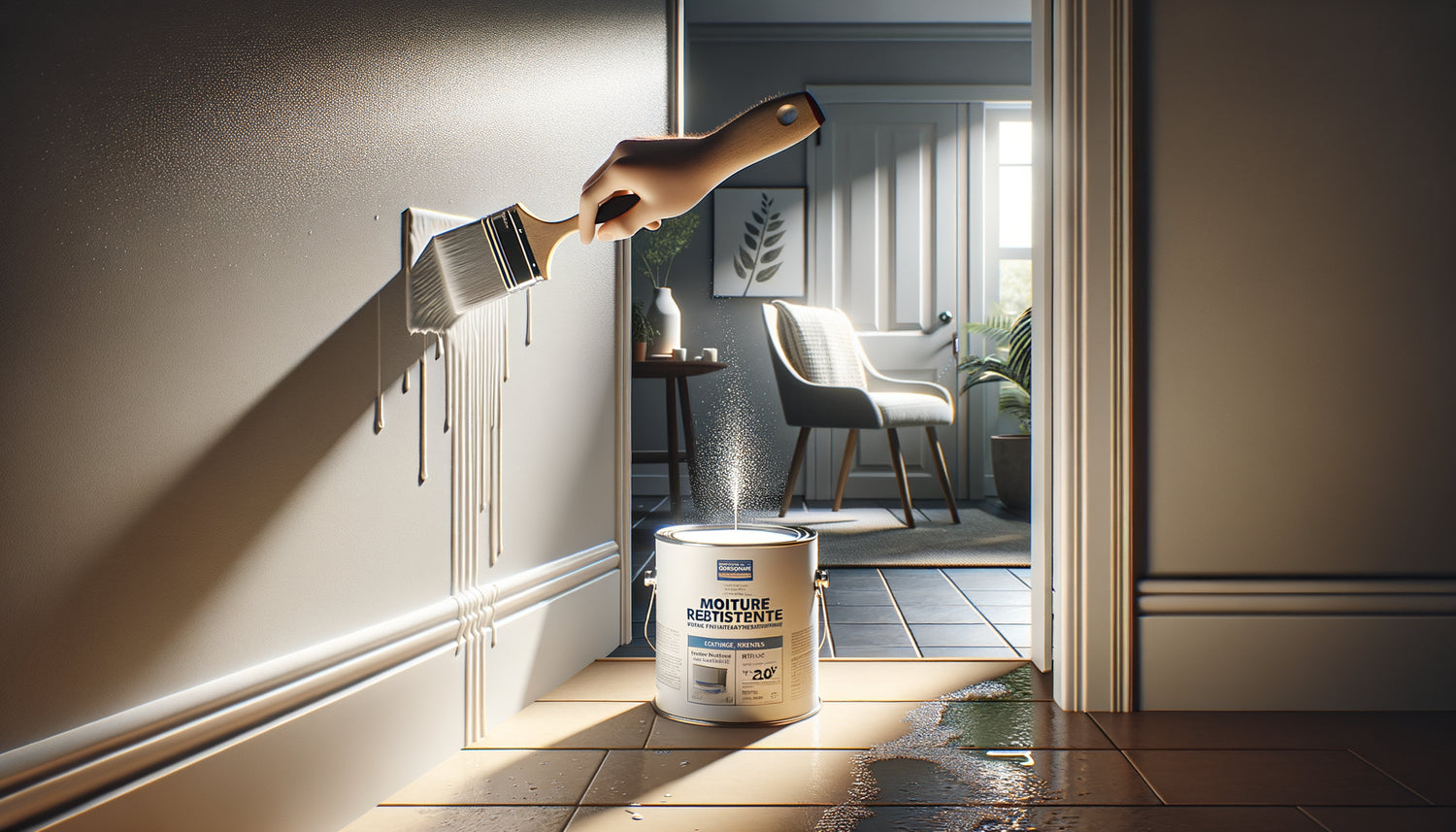
The application technique directly influences the performance of the resistant acrylic binder. A layer that is too thin does not offer the necessary protective thickness, while an excessive layer risks running and creating build-ups.
Opt for two medium-thickness layers rather than a single thick layer. This strategy allows the acrylic binder to dry gradually without trapping solvent. The drying time between coats should be strictly respected: generally 6 hours minimum for quality formulations.
The application temperature plays a crucial role: between 15 and 25°C, the acrylic binder develops all its properties. Below this, coalescence of particles remains incomplete; above it, rapid drying prevents proper penetration. Ventilate the hallway during work, but avoid direct drafts.
For areas particularly exposed near the bathroom door frame, consider a localized third layer of acrylic binder. These few square meters are subject to most of the water vapor: reinforcing their protection significantly extends overall durability.
The balance between technical performance and decorative aesthetics
A humidity-resistant hallway should not look like a technical room. Modern acrylic binders are available in all finishes, from deep matte to elegant satin.
Satin finishes offer the best compromise for these areas: they reflect enough light to visually enlarge the space while remaining washable. Their slightly smooth surface facilitates droplet drainage without leaving traces. The satin acrylic binder also better hides minor imperfections in the substrate than a gloss finish.
Light shades remain preferable in a poorly lit hallway, but some resistant acrylic binders now allow for more saturated colors without compromising breathability. Modern pigments no longer obstruct the microporosity of the film as they once did.
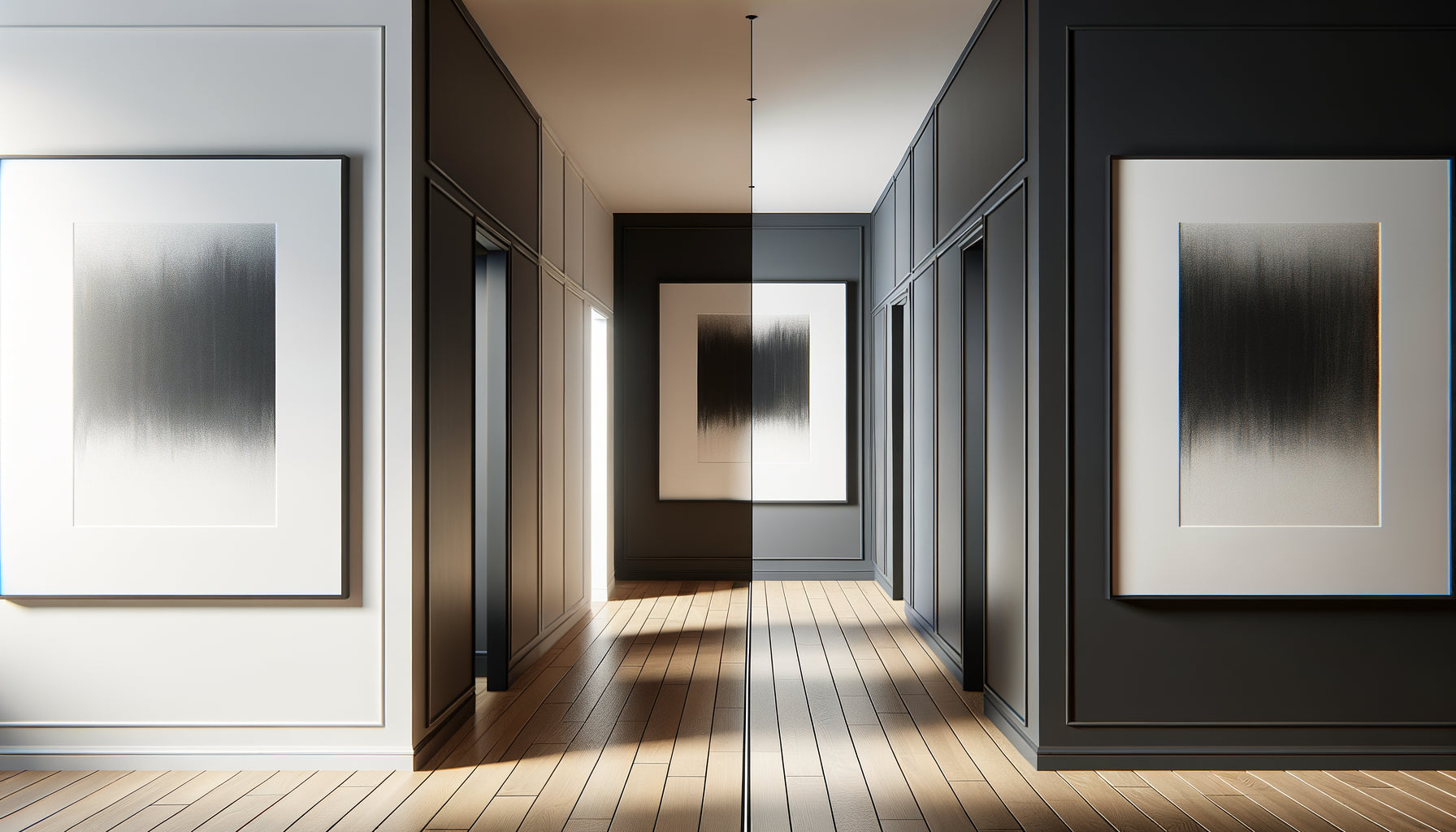
To create a decorative connecting thread between this technical hallway and the rest of your interior, consider pairing it with suitable artistic elements. Hallways become transition galleries that tell a visual story.
Transform your hallway into an elegant and protected gallery
Discover our exclusive collection of hallway art that perfectly resists humid environments while enhancing your passageways.
Maintenance and durability: extending the effectiveness of your protection
Once your hallway is protected by a moisture-resistant acrylic binder, a few simple gestures maximize its longevity. Preventative maintenance is always more effective than curative repairs.
After each shower, briefly open the bathroom door and the hallway door to create natural airflow. This rapid ventilation evacuates excess steam before it condenses on the walls. The acrylic binder, however efficient it may be, appreciates this help in managing hygrometry.
Regular cleaning with a damp cloth and mild detergent keeps the surface clean without attacking the protective film. Quality acrylic binders can withstand repeated washing for years. Simply avoid abrasive sponges and solvent-based products that would attack the resin.
Monitor for any cracks at the corners: they often signal structural movements in the building. Immediate filling with flexible acrylic sealant, followed by a localized touch-up of moisture-resistant acrylic binder, prevents moisture from infiltrating the support.
Also inspect the silicone joints around the bathroom door. Their degradation can create targeted moisture leaks that would exceed the capacity of even the best acrylic binder. Renewing these seals every 3 to 5 years is a sensible preventative maintenance measure.
Visualize the transformation: your hallway in 5 years
Close your eyes and project yourself into five years. This hallway that worried you so much today still bears its fresh hue, without halos or blisters. The walls remain perfectly healthy, the paint intact despite the thousands of showers taken since the work.
This serenity is not by chance: it stems directly from the enlightened choice of a moisture-resistant acrylic binder adapted to the task. Your initial investment, perhaps slightly higher than standard paint, will have saved you three stressful and costly repaints.
Moreover, you have created a healthy environment for your family. No mold spores in the air, no musty odor characteristic of sick walls. Just a bright hallway that harmoniously connects the rooms of your home.
The first step towards this transformation? Compare the technical characteristics of acrylic binders available at your local specialty store. Take the time to read product sheets and ask your questions to advisors. A successful project always begins with methodical preparation.
FAQ
What is the difference between special wet room paint and a moisture-resistant acrylic binder?
The term acrylic binder refers to the resin that forms the structural basis of the paint, i.e., the component that creates a protective film once the water has evaporated. A special wet room paint contains an acrylic binder formulated to resist humidity, enriched with hydrophobic and fungistatic additives. When choosing a paint for your hallway, check that its acrylic binder actually possesses these specific properties: not all acrylic paints are equal when it comes to moisture resistance. Standard formulations use inexpensive acrylic binders that do not support high levels of hygrometry. Always request the detailed technical data sheet indicating the precise type of acrylic binder used and its certifications for wet rooms.
How long does a moisture-resistant acrylic binder need to dry before it is truly effective?
The drying of a moisture-resistant acrylic binder takes place in two distinct phases. Surface drying occurs after 2 to 6 hours depending on ventilation and temperature: the paint no longer sticks to the touch. But complete polymerization of the acrylic binder, i.e., the definitive formation of the protective film with all its properties, requires 3 to 4 weeks. During this maturation period, avoid aggressive cleaning and limit exposure to intense humidity. Specifically for your hallway: paint during a period of good weather if possible, and space out very hot showers for the first 10 days. This patience allows the acrylic binder to develop its maximum resistance to moisture. After this delay, your coating reaches its optimal performance for years.
Can a moisture-resistant acrylic binder be applied over an old oil paint?
Yes, but with specific preparation that is essential. Water-based acrylic binders adhere poorly to very smooth and impermeable surfaces such as oil paint. The professional solution is to lightly sand the entire surface with grit 120 sandpaper to create a mechanical bond. Dust carefully, then apply a universal primer for difficult surfaces. This primer contains agents that chemically bridge your old oil paint and the new moisture-resistant acrylic binder. Without this step, your paint may peel off in large flakes from the first few weeks. The radical alternative is to completely strip the old paint, but this solution generates a lot of work and dust. The sanding + primer method offers an excellent compromise between performance and ease for your humid hallway.