I first noticed this phenomenon during a restoration at Versailles: a 17th-century painting depicting an open door, installed... right next to a real door. The visitor would stop, disoriented, instinctively searching which passage to take. This delightful confusion was no accident. It revealed one of the most sophisticated visual manipulations in art history: mise en abyme through painted passages.
Here's what paintings depicting doors bring to your interior: they create a symbolic depth that multiplies the perceived space, they generate a fascinating dialogue between reality and illusion, and they transform your wall into a narrative portal opening onto the imagination. More than just decoration, these works deploy an emotional architecture.
You may have felt this frustration: your walls seem to close off the space rather than open it up. Classic paintings certainly decorate, but they don't engage with the architecture of your living space. You are looking for something more intelligent, more intriguing.
Rest assured: paintings of doors and passages are not mere decorative gadgets. They belong to a millennial artistic tradition, from Pompeii to contemporary installations. And their symbolic power works even in a modern apartment.
I'm going to reveal how these works create a true mise en abyme and why they radically transform the perception of your space.
The painted door: when the image becomes a passage
Mise en abyme, this figure where the work reflects itself to infinity, finds in paintings of doors its most literal expression. A painting depicting a passage automatically creates a superposition of planes: your wall (physical plane), the canvas (artistic plane), and the represented passage (illusionist plane).
I have studied dozens of architectural trompe-l'oeil throughout Europe. The most successful do not simply reproduce a door: they create an ambiguity that is productive. Your eye hesitates. Is it a real passage? A window onto another space? This hesitation is precisely the moment when mise en abyme occurs.
The Flemish masters of the 17th century understood this: painting an open door in a domestic interior was inviting the viewer to imagine adjacent rooms, hallways, an entire invisible geography. The painting became a narrative portal.
The mirror effect of representation
Install a painting depicting a door in your hallway, near a real door. Observe what happens: the painted door becomes the symbolic double of the real door. One allows physical passage, the other mental passage. This duality creates a fascinating spatial mise en abyme.
The representation questions the very function of the passage. Why do we cross thresholds? What do we leave behind? Where do our doors lead us? The painting transforms a mundane daily gesture into a symbolic act charged with meaning.
The Three Levels of Symbolic Depth
In my restoration practice, I have identified three strata of meaning that passage paintings deploy. Understanding these levels will allow you to choose the artwork that resonates with your decorative intention.
First Level: Spatial Depth
This is the most immediate effect. A painting depicting an open door onto a garden, a staircase, or another room visually perforates your wall. Your space suddenly seems larger. This illusion works particularly well in narrow hallways or windowless rooms.
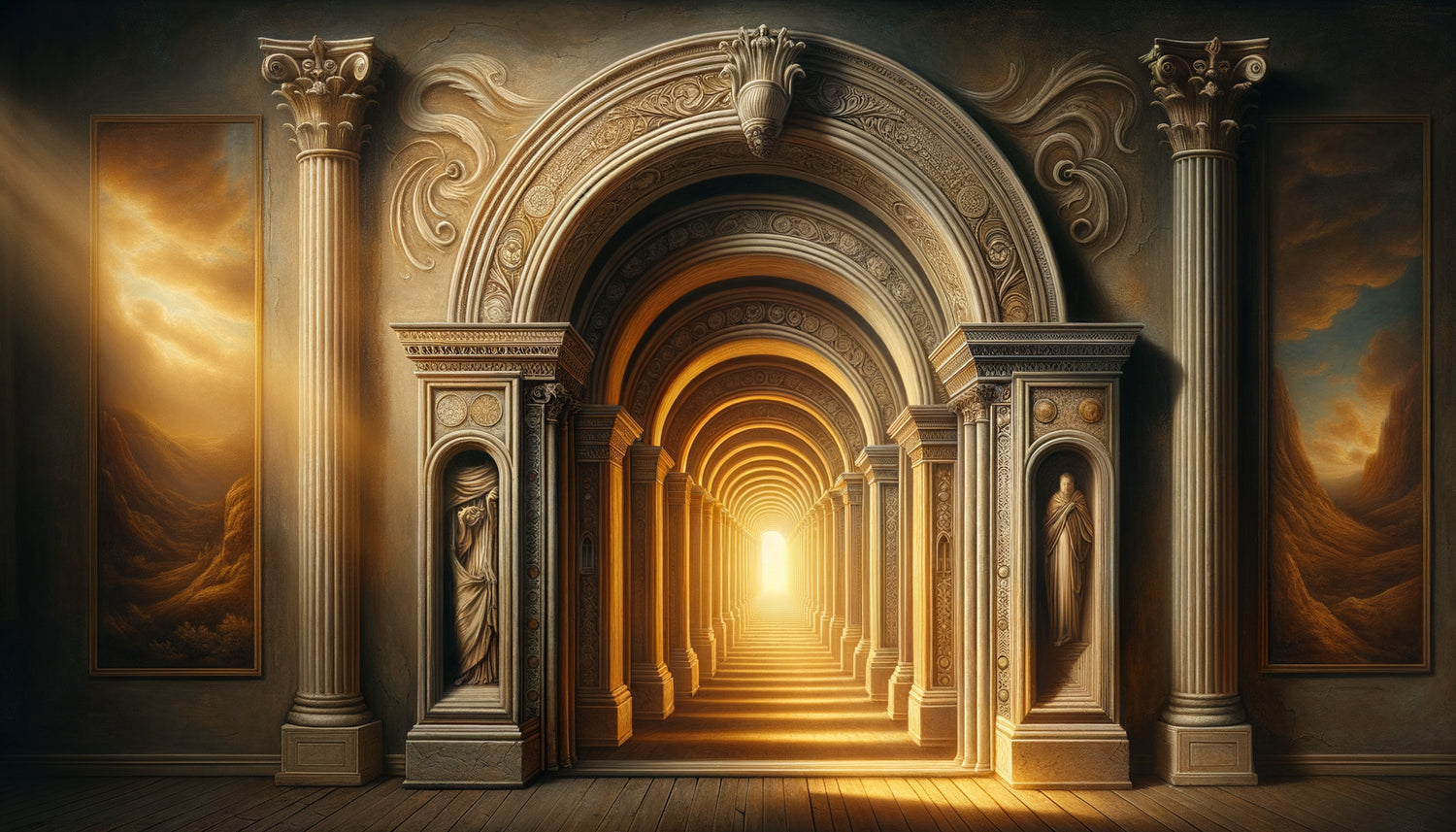
I installed a large format representing a Mediterranean arcade in a Parisian hallway with no natural light. The owner confided to me that the spatial oppression had disappeared. The painted passage created a visual breathing room, a mental escape.
Second Level: Temporal Mise en Abyme
Paintings of old doors, historical architectural passages, create a temporal superposition. Your contemporary interior dialogues with a fragment of the past. The depicted passage becomes a portal to another era.
This temporal mise en abyme works wonderfully in eclectic interiors. A Renaissance door painted in an industrial loft generates creative tension, a layering of times that considerably enriches the atmosphere.
Third Level: The Symbolism of the Threshold
This is the most subtle and powerful level. All spiritual traditions attach great importance to thresholds: places of transition between two states, between interior and exterior, known and unknown, conscious and unconscious.
A painting depicting a passage activates these symbolic resonances. It transforms your wall into a liminal zone, this intermediate space charged with potential. Each glance at this painting becomes a micro-experience of crossing, an invitation to change.

How Mise en Abyme Transforms Your Daily Perception
During a project in a Brussels townhouse, I was able to measure the concrete impact of passage paintings on the inhabitants. The owner had installed three formats representing doors in different rooms. Her testimony after six months was revealing.
She described a transformation of her relationship with space. The rooms seemed less closed off, less definitive. The paintings created psychological openings, suggestions of spatial continuity that changed the way she moved around and lived in her place.
This anecdote illustrates the real power of the mise en abyme created by painted passages. It's not just an aesthetic theory: it’s a daily experienced reality.
The constant invitation to mental movement
Unlike a landscape or portrait that fix the gaze on a stable subject, paintings of doors and passages contain an intrinsic dynamic. They suggest movement: someone could appear, you could cross this threshold, something is happening on the other side.
This suggestion activates your imagination continuously. Your brain instinctively completes what lies beyond the represented passage. The painting becomes a generator of narratives, of possible scenarios. It's this narrative activation that enriches your daily experience of space.
The visual codes that reinforce the mise en abyme effect
Not all door paintings create the same intensity of mise en abyme. Some visual codes significantly amplify the symbolic effect. Here's what I’ve learned by manipulating these works for fifteen years.
A partially open door works better than a fully open or closed door. It creates maximum ambiguity and invitation. It suggests that a passage is possible without revealing everything.
The light source coming from the represented passage (light from an adjacent room, exterior brightness) reinforces the illusion of depth. It creates a visual hierarchy between your real space and the painted space.
Threshold elements (visible door handle, step, detailed architectural frame) anchor the representation in a materiality that dialogues with your actual architecture. The more the painted passage resembles a real passage, the better the mise en abyme works.
Scale and strategic placement
A small format creates an intimate mise en abyme, like a secret window to elsewhere. A large format generates an immersive mise en abyme, capable of radically changing the perception of your room.
I found that placing a door painting opposite a real door creates the most powerful dialogue. The two passages respond to each other, creating a symbolic resonance that multiplies the effect. Your hallway becomes a gallery of thresholds, an architecture of possibilities.
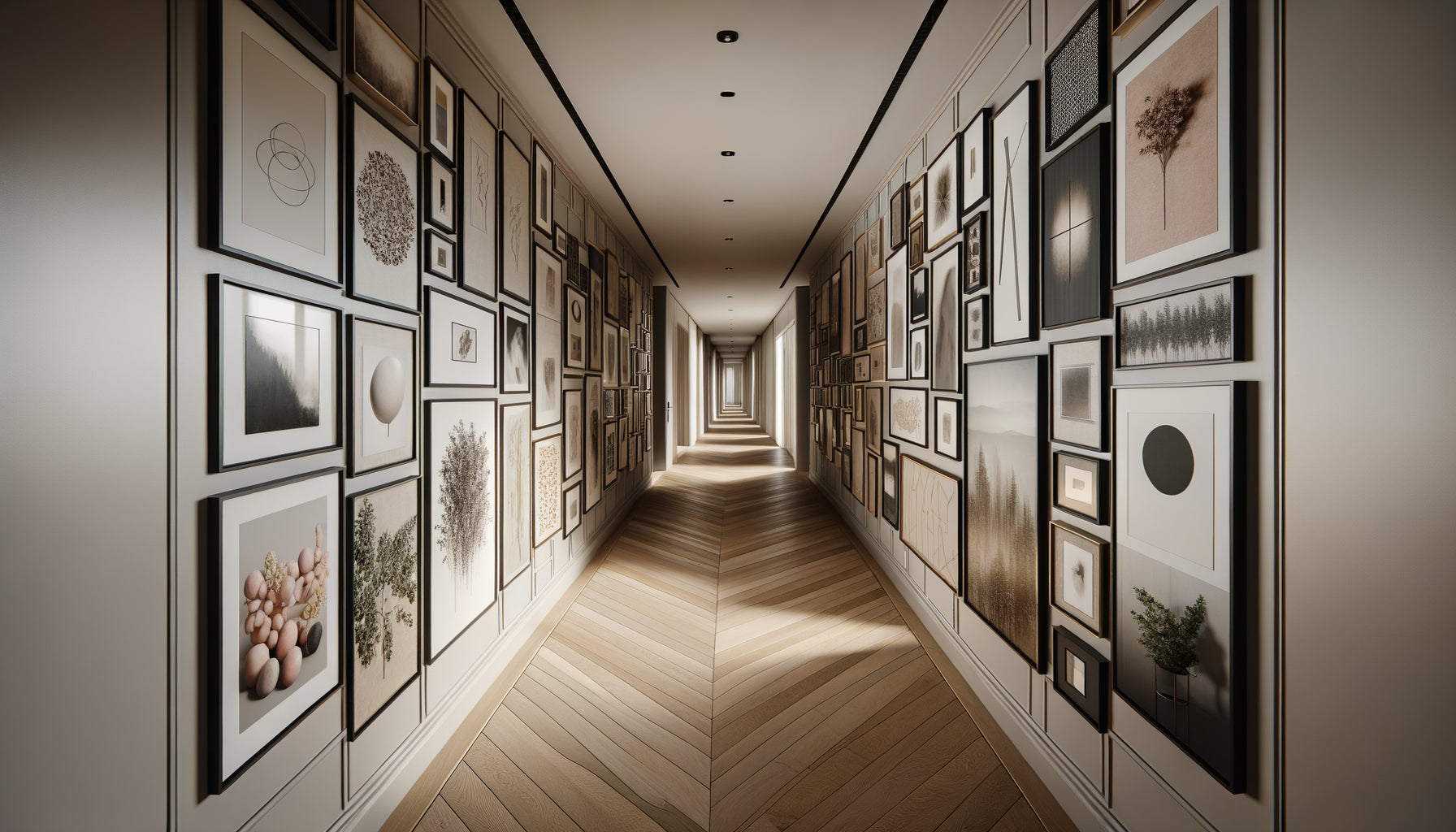
In a narrow hallway, prioritize placement at the end of perspective. The painted passage becomes a visual vanishing point, the apparent objective of your circulation. This installation creates maximum depth even in a constrained space.

Beyond Decoration: Towards Emotional Architecture
What fascinates me most about paintings depicting passages is their ability to transcend their decorative function. They become architectural elements in their own right, modifying the perceptual structure of your interior.
Traditional architecture organizes space with physical walls, doors and windows. Paintings of passages create an overlaid emotional architecture: they open perspectives that exist only in your perception and imagination.
This architecture of possibilities is particularly valuable in our constrained urban interiors. We cannot always physically enlarge our space, but we can multiply its symbolic dimensions. A well-chosen door painting does exactly that.
I have observed that people living with these works develop a particular relationship to their space. They speak of their interior as a place less closed off, more breathable, connected to elsewhere. The mise en abyme created by the painted passages generates this psychological openness.
Ready to transform your walls into symbolic portals?
Discover our exclusive collection of wall art for Hallway that creates this fascinating depth and multiplies the dimensions of your space.
Your space deserves this depth
Paintings depicting doors and passages effectively create a powerful symbolic mise en abyme. They superimpose planes of reality (physical wall, painted surface, represented space), multiply temporalities (your present, the depicted era, imagined futures), and activate the symbolic dimensions of the threshold.
This mise en abyme is not just an intellectual game for art lovers. It's a daily experience that enriches your relationship with your space. Each passage towards the painting becomes a micro-ritual, each glance a mental journey to elsewhere.
Start modestly if the concept intimidates you. A medium format in your hallway. Observe how your perception evolves over a few weeks. You will probably notice that your space seems to breathe differently, that the walls no longer close in the same way.
It is this subtle but real transformation that those who understand the power of painted passages seek: not to decorate, but to open their interior to unsuspected dimensions.
Frequently Asked Questions
Does a door painting work in a small space?
Absolutely, and it is even particularly recommended. In a small space, a painting representing a passage creates a valuable visual escape. The illusion of depth compensates for the physical constraint. I have installed medium formats (60x80 cm) in Parisian studios of 20 m² with spectacular effect: the space suddenly seemed to breathe. The key is to choose a bright passage (Mediterranean archway, door open onto a garden) rather than a dark passage that could weigh down. The painting becomes a mental window in your small universe, creating this mise en abyme which symbolically multiplies your square meters.
Is a particular style needed to create this mise en abyme effect?
No, mise en abyme works independently of artistic style. I have seen the effect work with classic hyperrealistic trompe-l'oeil, contemporary photographs of industrial doors, impressionistic watercolors of arcades, even abstract representations vaguely suggesting a passage. What matters is the suggestion of threshold and depth, not the realism of execution. A door sketched in a few lines can create a mise en abyme as powerful as an academic trompe-l'oeil. Choose according to your overall decorative universe: the symbolic dialogue between your wall and the passage represented will work whatever the aesthetics, provided that the intention of depth is present.
Where to place a door painting to maximize the symbolic effect?
The most powerful locations are those that create a dialogue with your actual architecture. First choice: in a hallway, at the end of perspective or facing a real door – the mise en abyme is maximal because the real and painted passages respond to each other. Second option: on a blind wall without windows, where the painting becomes the only visual opening in the room, compensating for the absence of natural depth. Third possibility: in a dead corner or alcove, transforming a residual space into an intriguing portal. Avoid placing your door painting on a wall already overloaded with real openings: the effect would be diluted. The painted passage must have the necessary visual space to deploy its symbolic dimension and create this emotional architecture that enriches your daily life.