


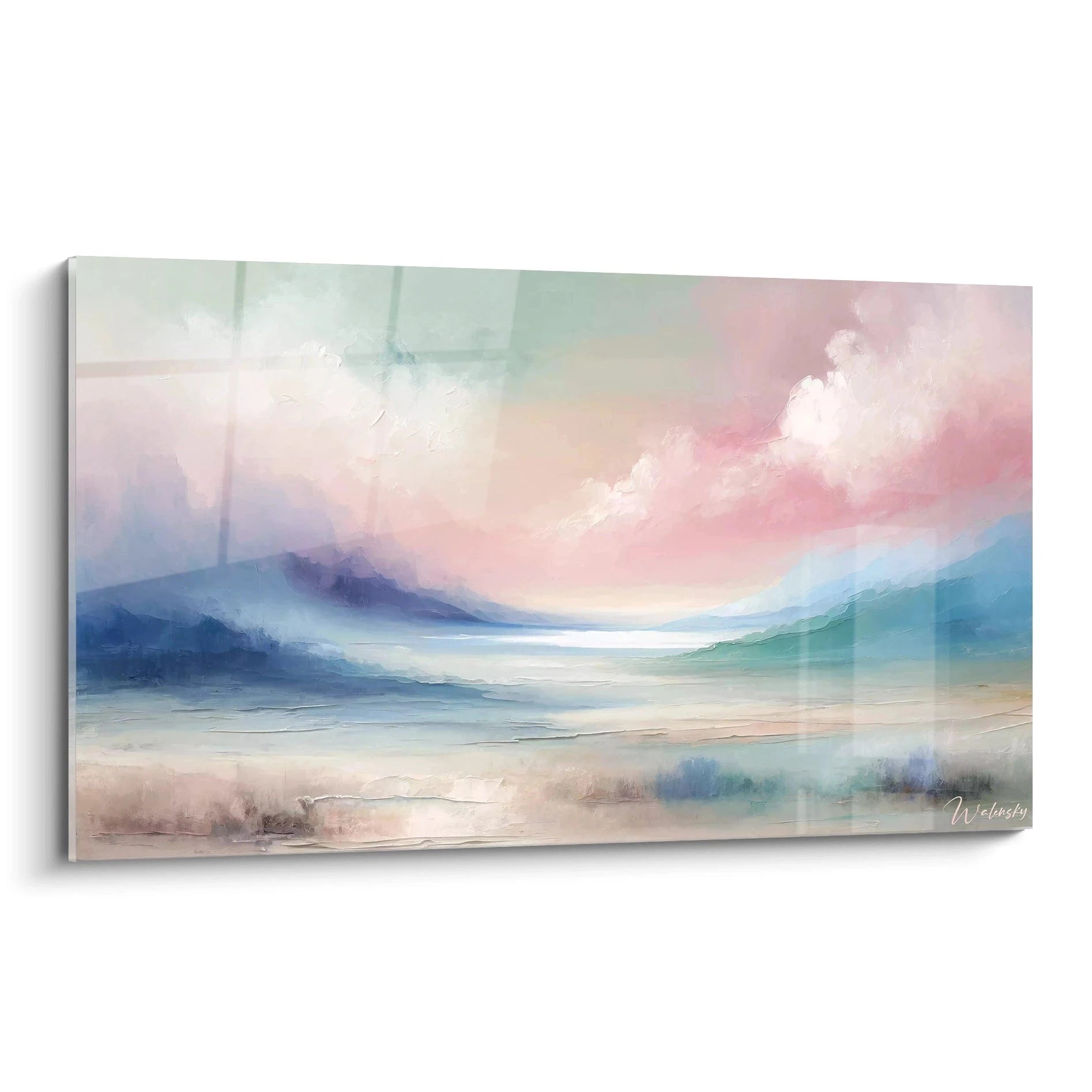

Protecting Your Wall Art from Seasonal Risks: Essential Practices
October 11, 2025 · 14 min read · by Walensky
The frustrating feeling of watching your artworks deteriorate despite all your efforts. The anxiety that rises when you realize that your decorative investment is deteriorating before your eyes, season after season.
You've already tried to protect them: changed their location, adjusted the lighting, even invested in a dehumidifier. But nothing works, seasonal variations continue their silent destruction.
It’s not your fault. Most advice you find talks about general conservation, but completely ignores the specific challenges of each season and their cumulative effects on your paintings.
By the end of this article, you will know exactly how to adapt your seasonal conservation strategy and permanently protect your wall art from all climatic risks.
Why are your paintings in danger right now?
Each change of season represents a major stress for your artworks. Contrary to popular belief, it's not the extreme conditions that cause the most damage, but the brutal transitions between seasons. It’s as if you were subjecting your paintings to repeated thermal shocks, season after season.
🏠 Revealing testimony: Marie, a Parisian collector, discovers in October that her €2000 abstract painting has micro cracks all over the surface. The culprit? The 15°C difference between her air-conditioned living room in summer and the autumnal heating, creating repeated canvas expansions.
Conversation with a decor expert
The golden rule of seasonal conservation: Anticipate transitions rather than correct them. Like a gardener who prepares his plants for winter, you can protect your paintings by adapting your environment 2 weeks before each change of season.

What Really Attacks Your Artwork (and It’s Not What You Think)
You might think it's humidity, sunlight, or dust. But the real enemies of your artwork are more insidious: seasonal adaptation shocks, the accumulation of material stress, and invisible micro-deformations.
The problem isn’t your home or your artwork – it’s the lack of a transition strategy adapted to each season.
Imagine your artwork as living beings acclimating. A sudden change is like plunging into ice water after a sauna: the shock is violent and leaves lasting traces.
The Invisible Enemy: Hidden Humidity Variations
Contrary to what we think, humidity doesn't just come from the bathroom or kitchen. Each season brings its own invisible sources of humidity: condensation on windows in winter, spring dew, summer evaporation from floors...
It’s like those water leaks in walls: you can’t see them, but they work constantly. Your artwork absorbs and releases this humidity constantly, creating micro-movements that fatigue the canvas and colors.
Result: subtle deformations that you attribute to "natural aging," when they are totally avoidable.
🔍 Revealing test: Place a hygrometer near your artwork for 48 hours. You’ll discover humidity variations of 15-20% between day and night, even in a "stable" room. These constant discrepancies explain a lot!
The Trap of Seasonal Lighting
We focus on the UV rays from summer sun, but we forget the variable intensity of our lighting depending on the seasons.
In winter, you turn on your artificial lights more often and for longer. In summer, intense natural light sometimes combines with electric lighting. It’s like cooking with stoves of variable intensity: same ingredient, different result.
These seasonal light accumulations accelerate discoloration invisibly but constantly.
Daily Micro Thermal Shocks
Your heating and air conditioning systems create different temperature zones in the same room, especially near exterior walls.
Your artwork therefore experiences microclimates that change with the time of day and season. It’s invisible to the naked eye, but materials react to these constant variations.
The impact: premature wear that you don't relate to these environmental factors.
5 warning signs that your artwork is experiencing seasonal stress:
- Canvas slightly bulging at the corners: Reveals an alternating humidity/dryness cycle that works the support
- Colors appear less vibrant in the morning: Indicates nighttime condensation that temporarily dulls pigments
- Frame "creaks" discreetly: Signals wood expansion due to temperature variations
- Dust adheres more at certain seasons: Reveals electrostatic charges related to variable humidity
- Reflections vary depending on the period: Indicates surface micro-deformations due to material stress
The trigger factor: the domino effect of seasons
The real problem isn't a specific season, but the accumulation of stresses from one season to another. Like an elastic band that is repeatedly stretched, your artworks lose their resilience over seasonal cycles.
The 72-hour rule: Major damage to a painting often occurs within the first 72 hours of a sudden environmental change. Protect this critical window and you eliminate 80% of the risks.
| ❌ Common misconception | ✅ Conservation reality | 💡 Simple explanation | 🎯 Practical benefit |
|---|---|---|---|
| You need the same temperature all year round | You need smooth and predictable transitions | Materials adapt if you give them time | Less stress, more natural conservation |
| Humidity comes from obvious sources | 70% of humidity is invisible and seasonal | Each season has its hidden sources of humidity | Targeted and effective protection |
| Damage is progressive and inevitable | 80% of damage occurs in a few critical days | Some periods concentrate all the risks | Protection focused on key moments |
| Conservation costs a lot in equipment | Intelligent adaptation is usually sufficient | Understanding cycles avoids major investments | Effective protection without breaking the bank |

Our favourite
Painting of a Face Painted Orange and White with Open Fan - Silver Round Earrings - Dia de los Muertos Edition
233,90€
Discover this artworkThe 4-season method for optimal protection
Rest assured, protecting your artworks is not complicated once you understand the logic. It's like learning to garden: each season has its specific gestures, but the whole forms a natural and logical cycle. Imagine yourself in 6 months, contemplating your paintings with the satisfaction of knowing that they are going through each season beautifully, protected by your new expertise.
🎯 Overview of your strategy: Spring (preparation and cleaning), Summer (active protection), Autumn (reinforcement), Winter (enhanced monitoring). Each season prepares the next, creating a virtuous circle of continuous protection.
Spring: The great awakening of your paintings
Spring is the ideal time to start on the right foot. Like a spring cleaning for your home, it's an opportunity to reset your storage conditions. You will immediately feel the satisfaction of bringing your works back to life after winter.
What you need for this season
- Digital memory hygrometer: A small device that records humidity variations over 24-48 hours. Look for a model with history because nocturnal variations are crucial. Avoid basic models that only give an instantaneous measurement - you would miss the real problems.
- Antistatic microfiber cloths: Specially designed not to create static electricity that would attract dust. The principle: the fibers capture particles without repelling them. A good cloth slides effortlessly and leaves no trace, even on delicate surfaces.
- Vacuum cleaner with soft brush attachment: To clean around frames without creating drafts. The brush attachment prevents scratches and helps to dislodge dust embedded in the frame's reliefs. The impact: a deep cleaning without risk.
Now let’s move on to putting your spring awakening into practice
Actions to take from the first sunny days
Complete hygrometric assessment: Place your hygrometer 50cm away from each artwork for 3 consecutive days. The goal is to measure actual variations, not just the average. Humidity peaks reveal hidden sources of winter condensation that persist.
⏱️ Time: 15 min setup + 3 days observation | ✅ Success when: Variations less than 10% over 24h | ⚠️ Attention: Measurements near windows are skewed by morning condensation - normal in spring
Gentle spring cleaning: First vacuum around the frame to remove accumulated dust, then gently wipe the microfiber cloth over the surface in circular motions. This step removes particles that may have become embedded during the winter heating period.
⏱️ Time: 5-10 min per artwork | ✅ Success when: Surface is clean without streaks or residue | ⚠️ Attention: Never clean in direct sunlight - products dry too quickly and leave marks
Lighting adjustment: Take advantage of the lengthening days to gradually reduce artificial lighting. Observe how natural light evolves in the room and adjust the orientation of your spotlights if necessary. The idea: go with the natural rhythm rather than fighting it.
⏱️ Time: 20 min observation + adjustments | ✅ Success when: Even lighting without overexposure areas | ⚠️ Attention: Spring reflections are more intense - check blind spots
✅ Validation of your spring preparation: Your artworks display sharp colors, the hygrometer indicates relative stability, and you feel that satisfaction of a job well done. If some details resist, it’s normal - spring gives you 3 months to perfect the balance before summer.
— Our selection


OUR RECOMMENDED PRODUCTS
Summer: Active protection against aggressions
Summer transforms your approach: you move from renovation to active protection. This is the season when your vigilance focuses on heat and light excesses. You develop protective reflexes that will become natural and reassure your daily life.
Summer Protection Strategy
Temporary UV filter installation: Install UV films on the most exposed windows or use filtering curtains during critical hours (11am-4pm). These protections reduce 80% of harmful rays while maintaining brightness. The effect is immediate on color preservation.
⏱️ Time: 30 min installation per window | ✅ Success when: Soft light without direct rays on the artworks | ⚠️ Attention: Avoid colored films that distort the perception of your paintings' colors
Daily thermal monitoring: Check the temperature near your paintings in mid-afternoon. If it exceeds 25°C, activate gentle ventilation or temporarily move the most sensitive artworks. It's like monitoring the cooking of a delicate dish: constant attention avoids accidents.
⏱️ Time: 2 min daily check | ✅ Success when: Stable temperature below 25°C even during hot hours | ⚠️ Attention: South-facing walls can be 5°C warmer than the ambient air
Autumn: Strengthening before winter
Autumn is your last chance before the rigors of winter. This is the time to consolidate your gains and prepare your paintings for the challenges of the cold season. You will feel the satisfaction of intelligent anticipation, like a squirrel preparing its reserves.
Strategic winter preparation
Pre-winter comprehensive inspection: Examine each painting from several angles of light to detect the first signs of accumulated fatigue: micro-deformations, uneven sheen areas, dust accumulation in reliefs. This inspection reveals weaknesses before they become problematic.
⏱️ Time: 10 min per painting | ✅ Success when: No new defects detected since spring | ⚠️ Attention: Minor defects detected now are easy to treat, unlike in winter
Winter location optimization: Move your paintings away from heat sources (radiators, fireplaces) that will soon be operating intensively. A minimum distance of 2 meters avoids thermal shocks. Like repositioning plants before winter: a preventative move is better than an emergency rescue.
⏱️ Time: 15-30 min per rearrangement | ✅ Success when: Distance respected and new exposure satisfactory | ⚠️ Attention: Check that the new location does not create new lighting problems
The gentle transition rule: Each change of environment for your paintings should spread over at least one week. Move gradually, adjust incrementally - your artworks will thank you for their newfound stability.
You now master the seasonal basics, but some expert secrets can transform your amateur approach into a true curator's expertise. These tips make the difference between "well protected" and "optimal protection".
🎯 Professional conservator tip: Create a 30cm buffer zone around each painting where you never place objects generating heat (lamps, electronics, plants). This invisible zone protects against disruptive microclimates and gives you an invisible but formidable safety margin.
Question from expert reader
"Am I risking too much by monitoring my paintings so much?"
I understand this concern - it's the dilemma of every attentive art lover. In reality, intelligent monitoring does not involve any direct manipulation of your artworks. You observe, measure and adjust the environment, not the paintings themselves. It’s like watching a plant grow: you look, water, move the pot if necessary, but never touch the leaves. Your benevolent attention is the best guarantee of their longevity.
🛡️ Reassuring advice: Establish an "eye-only rule": 90% of your monitoring is visual and at a distance. You will quickly develop an expert eye that detects subtle changes without ever needing to touch your artworks.
— You may also like


Seasonal pitfalls that destroy your efforts
Even with the best intentions, some typical mistakes can undo all your conservation efforts. I want to spare you these disappointments by alerting you to the most common traps I regularly see.
- 🌡️ The "thermal catch-up" trap: You return from summer vacation and immediately turn up the heating to compensate for the coolness. This sudden thermal shock does more damage than all natural variations combined. Increase the temperature in increments of 2°C per day - your paintings need to acclimatize gently. 💨 The "forced ventilation" error: Faced with humidity, you instinctively throw open the windows or turn on a fan. But creating violent drafts stresses your artworks more than the humidity itself. Prefer gentle and constant ventilation - like a light breeze rather than a storm. 🧽 The "seasonal cleaning" trap: Wanting to clean thoroughly with each seasonal change needlessly fatigues your paintings. A respectful cleaning in spring and ongoing monitoring are quite sufficient. Over-cleaning damages more than under-cleaning - patience is your best ally. 📍 The "preventive move" mistake: Constantly moving your artworks "to protect them" subjects them to more stress than the conditions they are fleeing. Once a good location is found, stability is better than excessive caution. Move only in case of real necessity.
- 🔍 The "over-monitoring" trap: Checking every detail daily can make you anxious and make you see non-existent problems. A weekly check is more than enough, except during critical seasonal transitions. The owner's serenity is transmitted to their works.
🚨 Early warning system - 4 weekly checkpoints: Uniform color brilliance (no dull areas), canvas flatness (no warping), frame cleanliness (no dust accumulation), fixing stability (no play in the hanging). A problem with any of these points = immediate investigation needed.
— In the same vein


Your conservation questions answered
The first benefits appear after 2-3 weeks: color stability, less dust, general sense of balance. But the real difference is measured over 6 months to 1 year: your artworks go through their first year of seasonal cycles protected and you notice the absence of usual degradation. It's a minimal time investment (15 min/week) for lasting benefit over years.
Absolutely not! 80% of the protection comes from your understanding and intelligent adaptation. A basic hygrometer (€15-20), suitable cloths (€10) and your attention are more than enough. Professional equipment is only necessary for very valuable collections or in extreme environments. Your know-how is worth all the gadgets in the world.
Old houses even have an advantage: their variations are generally gentler and more progressive than the shocks of modern systems! The essential thing is to understand the rhythm of your house and accompany its natural variations. Often, a few location adjustments and monitoring of critical periods are enough to create perfect conditions.
Canvas works are generally more tolerant than those on rigid wood. Recent artworks (less than 20 years old) adapt better than older ones. But with the right precautions, all styles can be effectively protected. The key is to tailor the intensity of your monitoring to the sensitivity of each piece - a personalized approach that respects each work.
First, don't panic! Most "problems" detected early are easily reversible. Document what you observe (photos, conditions at the time), stabilize the environment, and consult a professional if necessary. Your attentive monitoring ensures early detection, which is 90% of the solution. A problem detected quickly is never dramatic.
Your new expertise at the service of your artworks
In a few months, when you observe your perfectly preserved paintings despite seasonal changes, you will feel that deep satisfaction of a job well done. Your guests will notice the exceptional vibrancy of your colors, the perfection of your frames, that particular aura of works cared for with expertise. You will have gained this serenity of the connoisseur who knows his treasures are protected.
Beyond preservation, you will have developed an expert eye that will serve you for all your future artistic purchases. This fine understanding of materials and environments will give you a new confidence in your decorative choices and art investments.
The most difficult thing was to understand the hidden mechanisms - now that you master them, all you have to do is start observing your paintings with this new look. Starting this week, launch your first seasonal diagnosis and discover the pleasure of becoming the expert guardian of your works.
🌟 Your transformation starts now: You now have the know-how of an enlightened amateur conservator. Your paintings deserve this expert attention, and you have all the tools to offer it to them. The preservation of art is an art in itself - and you have just mastered it.
Also read: 🔍 Read more articles on art conservation
</div
Explore our collections


