You bought what you thought was a one-of-a-kind artwork for your living room, but three weeks later, you find it exactly the same in the window of a decor store. This feeling of disappointment washes over you instantly.
Your heart sinks imagining your guests recognizing this same work they've seen elsewhere. The exclusivity you were looking for disappears abruptly, replaced by the bitterness of having invested in a "fake unique" piece.
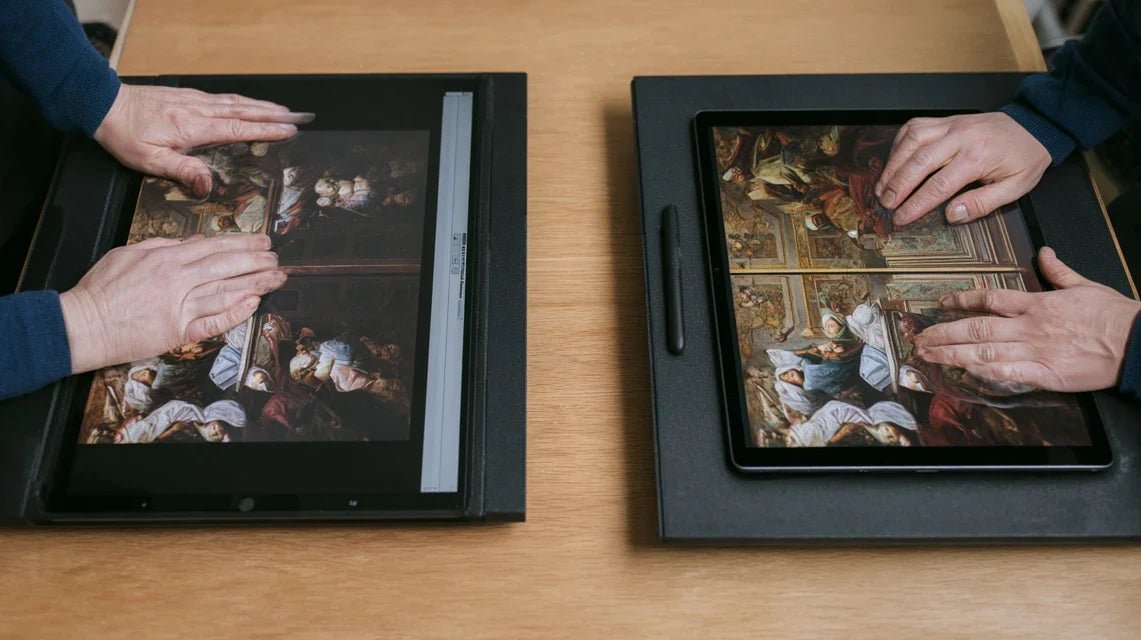
You took care with the details, compared prices, read descriptions. But how do you distinguish a true original creation from a cleverly presented industrial reproduction? Sellers use enticing terms like "limited edition" or "exclusive creation" without you being able to verify their authenticity.
This confusion is understandable because the decor industry deliberately mixes codes between true art and mass production. Modern presentation techniques make this distinction increasingly blurred.
By the end of this article, you will master the 7 infallible criteria to identify a truly unique painting and avoid the traps of disguised reproductions. You will regain confidence in your decorative choices and the assurance of owning an authentically exclusive work.
Why is visual exclusivity so difficult to identify?
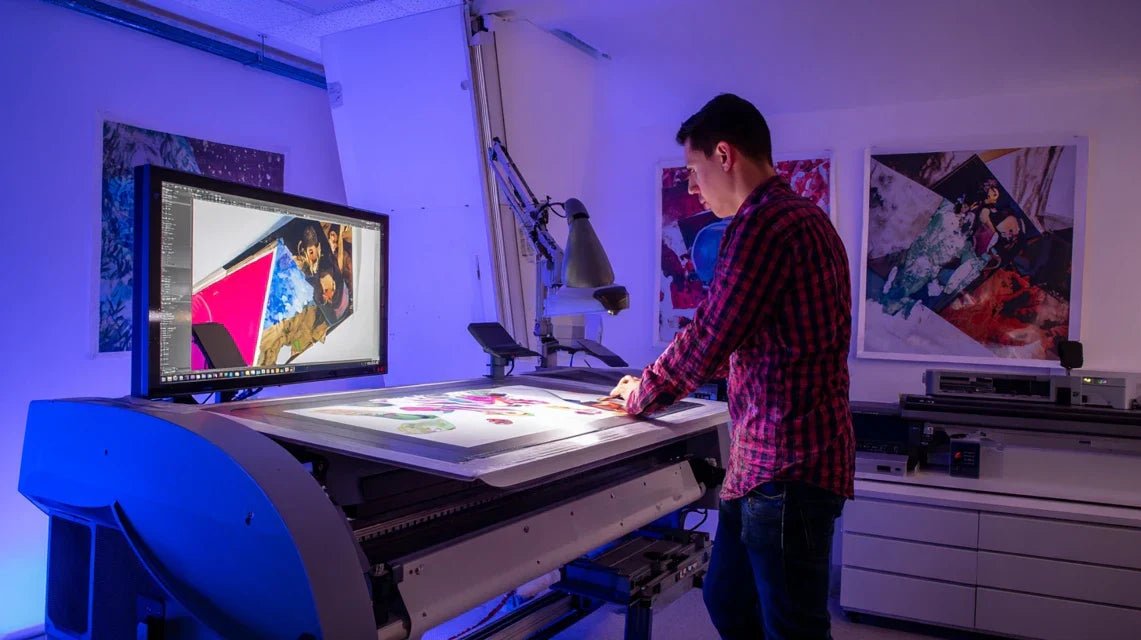
The explosion of high-definition printing technologies has revolutionized the decorative art market. Today, a reproduction can reach a near-identical visual quality to the original, making it impossible to distinguish at first glance. If you wait too long to develop this expertise, you risk missing out on genuine opportunities to acquire authentically unique pieces before they are discovered by other collectors.
🎨 Revealing testimony: Sarah, an interior designer, says: "I bought what I thought was an exclusive work by an emerging artist for €800. Six months later, I discovered the same 'creation' being sold in series on a decor website for €89. The artist didn't even exist - it was an invented name to enhance a simple digital print."
💬 Conversation with a decor expert
True exclusivity lies in the invisible details: Just as a diamond merchant can distinguish a real gem from a perfect imitation, you can learn to spot the technical clues that never deceive. By mastering these criteria, you will avoid 95% of commercial traps in less than 30 seconds of observation.
Decoding: what's really behind your hesitations
You may recognize yourself in these situations: you spend hours comparing artworks online without ever being certain of your choice, you hesitate to invest in a painting for fear that it will be too common, or you constantly postpone this important decor purchase due to a lack of confidence in your judgment.
What is really happening is that the decor industry has deliberately blurred traditional landmarks. Technical terms are distorted, presentations are standardized, and real information about the origin of artworks is drowned in seductive marketing. It's not a lack of knowledge that’s the problem, it’s the system that makes evaluation complex.
Imagine a market where all car sellers call their models "limited edition" without distinction between a real limited series and a standard production. That's exactly what's happening in decorative art today.
The confusion between "limited edition" and restricted production
Most buyers think that "limited edition" guarantees exclusivity. In reality, this mention can cover print runs of several thousand copies, simply because production will stop one day. This is the difference between limiting by authentic rarity and limiting by commercial strategy.
It's like the difference between a chateau wine produced at 500 bottles per year for generations, and a "limited" cuvée from a large group that produces 50,000 bottles but will stop after this year to launch a new range.
This confusion makes you waste time on fruitless searches and deprives you of the satisfaction of having a truly rare piece. Worse, it sometimes makes you pay the price of exclusivity for disguised semi-industrial production.
🔍 Immediate test: Ask the seller the exact number of copies produced and the justification for this figure. If the answer is evasive or if you are told about "a few copies" without precision, it's a warning sign. A real limited edition always comes with precise documentation.
Many reproductions are sold under the names of artists who do not actually exist or are commercial pseudonyms. The buyer believes they are investing in the work of a creator when they are acquiring a graphic composition created by a team of designers for a decoration brand.
This is comparable to "designer brands" in fashion that actually hide standardized productions. The name sounds artistic, the biography is seductive, but behind it lies a commercial machine.
As a result: you pay an artificial artistic premium and deprive yourself of the opportunity to discover real emerging talents whose works will truly increase in value over time.
The hidden standardization of "premium" supports
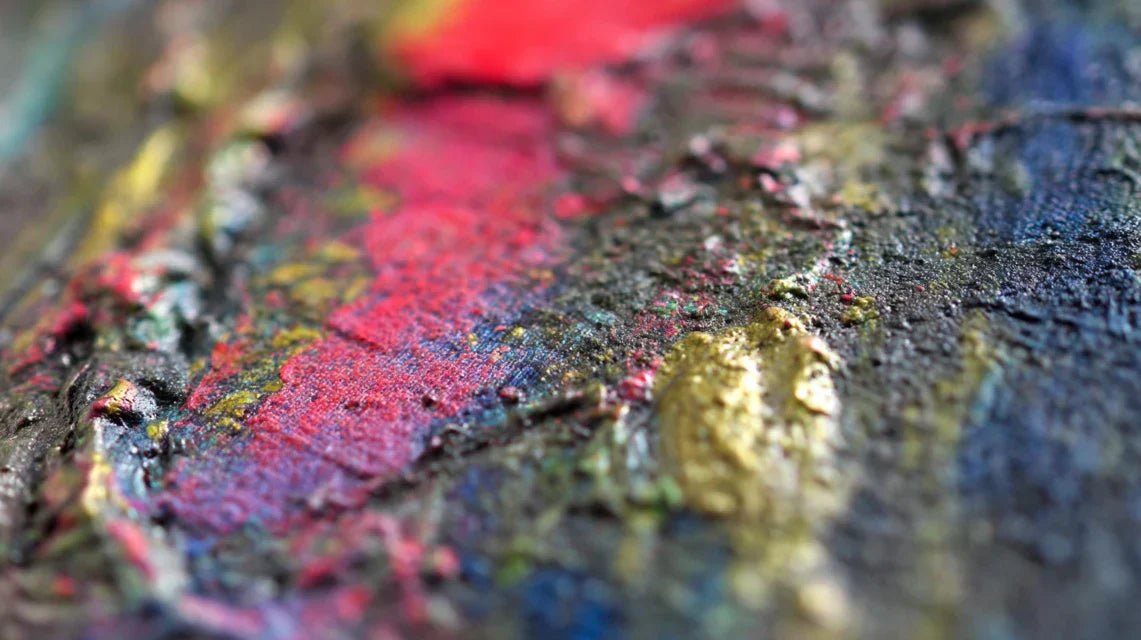
Even paintings presented as "hand-painted" or "on artist's canvas" can be enhanced reproductions. Modern techniques allow to imitate the texture of paint, the irregularity of the brushstroke, and even the natural aging of a work.
You can check this by observing very closely: a real painting always presents microscopic variations in thickness, areas where the brush has "caught" differently, visible color overlaps. A reproduction, even excellent, retains a detectable mechanical regularity.
This lack of knowledge exposes you to paying the price for manual creation for a mechanized production, and deprives you of the tactile and emotional satisfaction of real painted material.
🎯 The 3 signals that never lie:
- Nonexistent relief effect: Gently run your finger over the surface: a real painting presents perceptible variations in thickness to the touch, unlike printing which remains perfectly flat
- Too perfect signature: An authentic artist's signature always shows slight variations in pressure and fluidity, like your own handwriting varies depending on your state
- Evasive documentation: A seller who cannot provide precise information about the artist, the creation date, or the technique used generally hides a standard commercial production
The trigger factor: documented provenance
What really makes the difference between a unique work and a disguised reproduction is complete traceability of its creation. Like a domino effect, as soon as one element of this chain is missing (real identity of the artist, precise date, technique used, number of copies), all credibility collapses. You can identify it by systematically requesting this information: a serious seller provides it spontaneously and with pleasure.
Rule of authenticity: A truly unique work is always accompanied by a complete and verifiable story. If you cannot trace its journey from the artist's studio to you, question its authenticity. This verification takes only a few minutes but avoids lasting regrets.
| ❌ Common misconception | ✅ Market reality | 💡 Why this confusion | 🎯 Benefit of knowing |
|---|---|---|---|
| A high price guarantees originality | Price often reflects marketing more than rarity | Margins on reproductions can be enormous | Evaluate true value and negotiate with knowledge |
| A hand signature proves authenticity | Signatures can be printed or added mechanically | Printing techniques perfectly mimic handwriting | Examine the signature with the right technical criteria |
| Galleries only sell authentic pieces | Some galleries mix origins without clear distinction | The border between gallery and decor store has blurred | Choose specialized and transparent points of sale |
| "Limited edition" necessarily means rare | Can cover print runs of thousands of copies | No strict regulations on this mention | Ask for the exact number and its justification |
The foolproof method to identify true exclusivity
Now that you understand the mechanisms of market confusion, let's move on to the reassuring part: identifying authenticity becomes simple when you know the right method. Like an architect who checks the foundations before admiring the facade, you will learn to examine technical elements before letting yourself be seduced by aesthetics. The result? Total confidence in your choices and the satisfaction of owning truly unique pieces.
🎯 Overview of your expertise: In 3 progressive steps (Technical Observation, Documentary Verification, Provenance Validation), you will develop the expert eye that immediately distinguishes the authentic from the fake. Each step reinforces the previous one, and at the end, you will evaluate a work in less than 5 minutes with 95% reliability.
Step 1: The revealing technical examination
This first step lays the foundation for your expertise because technical details never lie. Like a doctor who examines before diagnosing, you will learn to "read" a work physically. Once this step is mastered, you will feel immediate satisfaction in detecting clues that 90% of buyers completely ignore.
🔍 What you need for this expertise
- A direct light source: Your smartphone's lamp is perfectly sufficient. It reveals the reliefs and textures that ambient lighting hides. Direct it at an angle onto the surface to reveal variations in thickness. Avoid overly powerful lights that dazzle and mask subtle details.
- Your fingers as detectors: Touch reveals what the eye does not always see. Gently pass your index finger over painted areas to feel reliefs and variations. Attention: Always ask permission before touching, and only do so with clean, dry hands.
- A jeweler's loupe (optional): Available in hardware stores for a few euros, it reveals the microscopic structure of brushes and the texture of the support. Look for a minimum x10 magnification. The investment is minimal compared to the purchase mistakes it will prevent you from making.
Let's move on to practical observation now
🎨 How to reveal the true nature of a work
Examine areas of thick paint: Look for impasto where the artist has loaded their brush. In a real painting, these areas form irregular reliefs, sometimes "peaks" of dried material. A reproduction remains perfectly smooth or shows an artificial uniform texture.
⏱️ Time: 2 minutes | ✅ Successful when: You can distinguish variable thickness areas from flat areas | ⚠️ Attention: Some reproductions add a texturing gel - a real painting shows natural variations related to the artist's gesture
Observe color transitions: In an authentic painting, colors blend imperfectly, with areas where shades remain distinct or create unwanted effects. A digital reproduction produces too perfect gradients, mathematically regular.
⏱️ Time: 3 minutes | ✅ Successful when: You spot "accidents" of mixing or charming irregularities | ⚠️ Attention: Do not confuse the artist's voluntary effects with the natural imperfections of the manual process
Scrutinize the signature with a loupe: A real signature slightly penetrates the pictorial layer, creates micro-reliefs and can even reveal the direction of the stroke. A printed signature remains on the surface and shows mechanical regularity in the thickness of the line.
⏱️ Time: 1 minute | ✅ Successful when: You perceive variations in pressure and the spontaneity of the gesture | ⚠️ Attention: Some forgers add a manual signature to a reproduction - check that the style corresponds to the rest of the work
✅ Technical step validation: Your eye now recognizes the signs of physical authenticity: natural relief, variations in material, charming imperfections of the human gesture. If you are still unsure, ask to examine another work from the same source for comparison. Congratulations, you have just developed 70% of the expertise needed!
OUR RECOMMENDED PRODUCTS
Step 2: Strategic documentary verification
Now that your senses detect the physical clues, let's move to the next level: validation by evidence. This step transforms your suspicions into certainties and gives you solid arguments against sellers. This is where your ability to avoid the most sophisticated sales traps truly comes into play.
📋 Documents that reveal everything
- The detailed certificate of authenticity: Not just a paper with a stamp, but a document specifying the technique, exact dimensions, creation date and history of the work. A real certificate even mentions the materials used (type of canvas, paint brand). Beware of generic or photocopied certificates.
- The verifiable biography of the artist: Full name, training, exhibitions, other known works. This information should be verifiable online or in art databases. An authentic artist always leaves traces of their professional journey.
- The seller's detailed invoice: It must precisely mention the nature of the work (original, reproduction, screen print...), dimensions and guarantees. An evasive invoice often hides a dubious origin of the work.
🔍 Methodical validation of evidence
Verify the actual existence of the artist: Search their name on the internet, in art databases, exhibition catalogs. A contemporary artist should have a digital presence, even minimal. Beware of biographies that are too perfect or "mysterious" artists without verifiable history.
⏱️ Time: 10 minutes | ✅ Successful when: You find independent sources confirming the existence and activity of the artist | ⚠️ Attention: Some sites create false biographies of fictitious artists - cross-reference multiple sources
Ask for the work's history: Where and when was it created? How did the seller acquire it? Were there previous owners? An authentic artwork always has a traceable history. Serious sellers gladly tell it with pleasure and details.
⏱️ Time: 5 minutes | ✅ Successful when: The story is consistent, documented and told with confidence | ⚠️ Attention: Stories that are too romantic ("found in an attic") often hide a common commercial origin
Step 3: Final value validation
You now master technical observation and documentary verification. This final step gives you total assurance in your acquisitions and the ability to assess whether the asking price corresponds to the actual value. This is the level of expertise that will allow you to unearth rare gems and avoid overvaluations.
💎 Expert valuation of value
Compare with other works by the same artist: Research prices for similar creations by the same author. Significant discrepancies should be justified by objective differences (size, period, technique). An abnormally low price may hide a reproduction.
⏱️ Time: 15 minutes | ✅ Success when: The price falls within a consistent range with the artist's market | ⚠️ Warning: "Good deals" that are too good to be true often are
Assess objective rarity: How many works by this artist exist? How often do you find them on the market? The more an artist produces and the more their works circulate, the less exclusive each piece is. An artist who releases 50 canvases per month cannot claim scarcity.
⏱️ Time: 10 minutes | ✅ Success when: You place the work within the artist's overall production | ⚠️ Warning: Distinguish total production from market availability - an artist can be prolific but their works may remain rare for sale
Rule of progression towards expertise: Master each step perfectly before moving on to the next. You are ready for the next step when you can simply explain to a friend why a work is authentic or questionable. Expertise is built up in successive layers, patience today avoids costly mistakes tomorrow.
You now have a solid foundation for evaluating authenticity. Let's discover the expert subtleties that will make you a formidable buyer, capable of detecting even the most sophisticated forgeries. These techniques give you a decisive advantage over 95% of other buyers.
🎓 Master technique: Ask to photograph the work with flash to reveal reflections. An authentic painting reflects light irregularly according to the thickness and texture of each area. A reproduction has a uniform sheen characteristic of printed surfaces. This trick instantly reveals the true nature of a work, even when all other clues are masked.
💭 "What if the work is beautiful but not really unique?"
"I found a magnificent painting that perfectly matches my decor, but I discover that there are several copies. Should I give up?"
I fully understand this dilemma! There's an important difference between absolute uniqueness and relative exclusivity. If the work really touches you and the price remains reasonable for a documented limited edition (say, less than 100 copies), it can perfectly enrich your interior. The important thing is to know exactly what you are buying and to pay the right price for this category. A beautiful assumed reproduction is better than a fake original.
🎯 Pro Tip: Ask the seller to show you a photo of the print certificate with your copy number. If it's truly limited, this information exists and the seller will proudly provide it. You’ll know exactly how rare your acquisition is.
Absolutely Essential Pitfalls to Avoid (Even Experts Fall For Them)
Before you embark on your first expert acquisitions, I must warn you about the most costly mistakes in the market. These traps are so well-constructed that they sometimes fool even experienced collectors. Knowing these dangers protects you and allows you to buy with confidence.
- 🚨 Relying on the seller's "verbal guarantees": Even with the best intentions, a seller can pass on incorrect information received from their suppliers. Promises like “it’s an original, I assure you” have no legal value. Always require written documentation and a detailed invoice. This precaution avoids disputes and gives you recourse in case of problems.
- 🚨 Buying under the influence of emotion: A painting can instantly seduce you, but experienced sellers know how to create this artificial urgency (“there’s another visitor interested”). Always allow yourself a minimum 24-hour reflection period for important purchases. Emotion is a poor advisor when it comes to artistic investment.
- 🚨 Neglecting exhibition lighting: Galleries use sophisticated lighting that enhances artworks and masks defects. A reproduction can appear sumptuous under these conditions. Always ask to see the artwork under natural or neutral lighting before deciding. Disappointment at home is common when discovering the work under standard lighting.
- 🚨 Confusing age with authenticity: A 20-year-old reproduction remains a reproduction, even if it has developed an interesting patina. The age of a work does not guarantee its origin or value. Focus on proof of authenticity rather than the apparent age of the support.
- 🚨 Underestimating the importance of the frame: An old and sumptuous frame can make a simple reproduction appear authentic. Resellers know this and sometimes invest more in framing than in the artwork itself. Always evaluate the work independently of its frame, which can be easily changed.
🔒 Your 4-point safety net: Before any important purchase, make sure you have: complete documentation of the artwork, a written cancellation period, the opinion of a trusted person on your choice, and the possibility of having the artwork appraised by a third party. If any of these elements are missing, postpone your decision. These precautions avoid 99% of buyer's remorse.
🎁 Special readers offer
Because you took the time to learn, enjoy 10% off your first order:
⏰ Valid for 72h after reading • Applicable on all our products
Expert advice: everything you really want to know
Your new expertise will transform your decorating choices
In a few weeks, when you walk into a gallery or discover a work online, your gaze will have completely changed. You'll instantly see the details that reveal authenticity, ask the right questions that impress sellers, and feel that deep satisfaction of knowing exactly what you’re buying. Your guests will notice this difference: you can always tell when a piece has been chosen with expertise.
This transformation goes beyond art: you've developed a critical eye and an analysis method that applies to all your important purchases. This ability to spot the genuine from the fake, to verify sources, to take a step back from sales arguments will serve you in many areas. Your confidence in your aesthetic choices will be permanently strengthened.
Now that you master these techniques, the hardest part is behind you. Start applying this analysis grid during your next visit to a gallery or art fair. Observe, question, verify - you'll be surprised how quickly these reflexes become natural. Your first expert purchase awaits!
🌟 Your expertise begins now: Every work you encounter from now on is an opportunity to perfect your eye. Don’t hesitate to put these techniques into practice - even on works that you don't buy. Expertise is forged through experience, and you now have the keys to distinguish the exceptional from the ordinary!