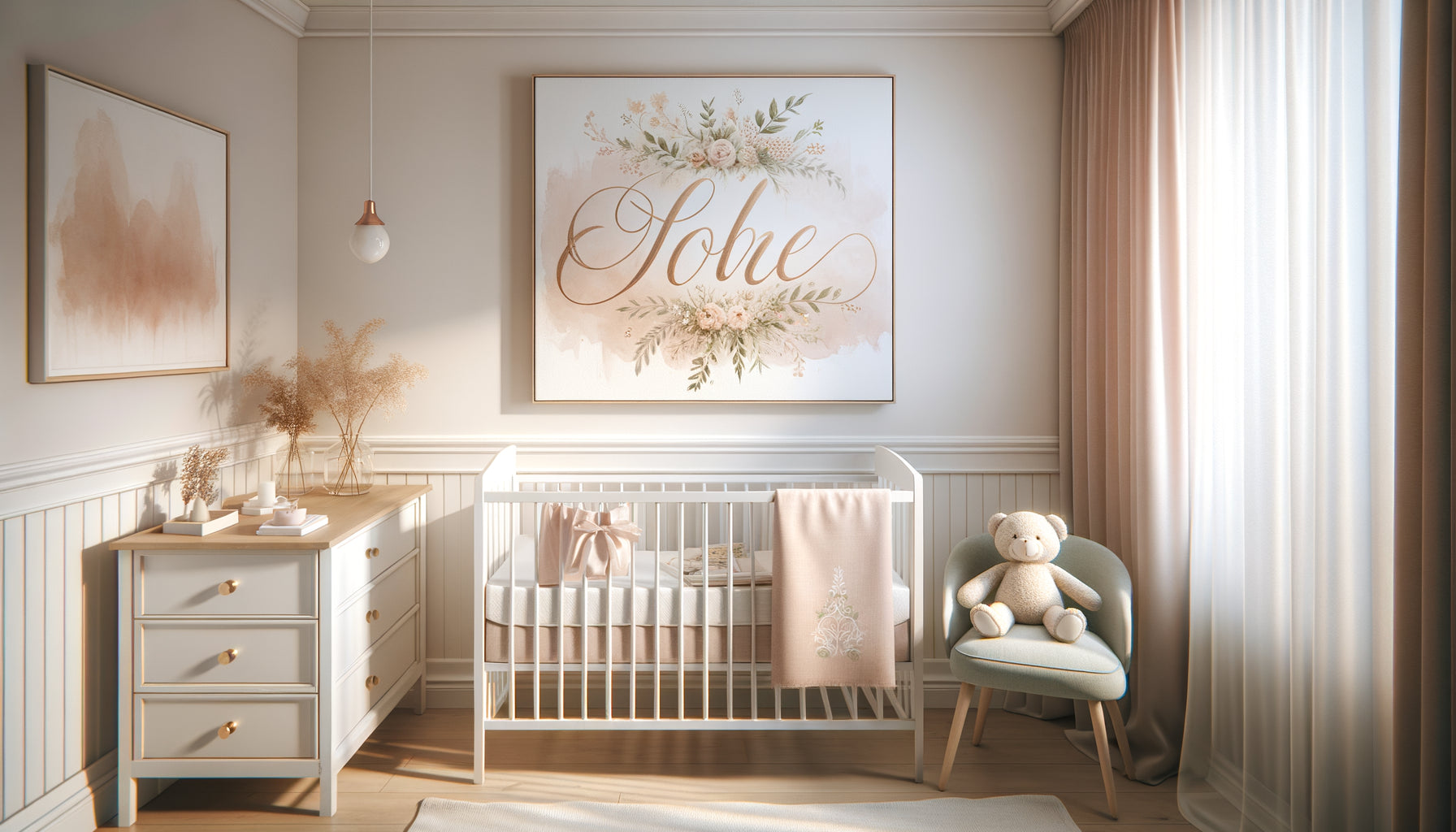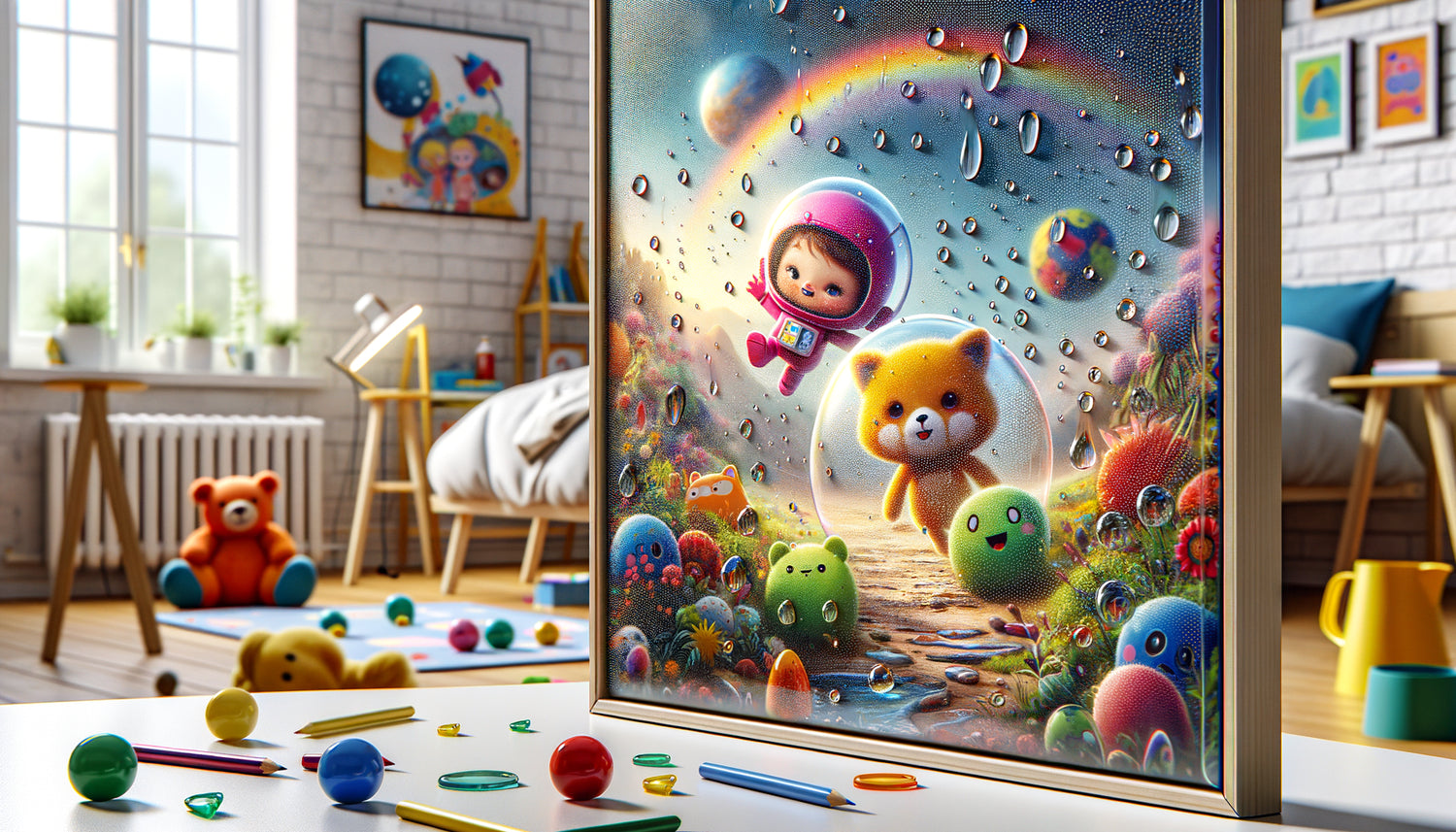
The red marker on the cream wall. The modeling clay crushed on the carpet. The grenadine glass spilled in full creative momentum. Every parent knows those moments when your heart stops for a second before realizing the damage. And yet, giving up decorating your children's room out of fear of disasters is depriving this space of its magic, of that inspiring atmosphere that accompanies their dreams and games.
Here's what adapted artworks bring to a child’s bedroom: durable decoration that lasts through the years without being damaged, peace of mind for you who no longer have to watch every gesture, and a stimulating visual universe that grows with your child. Because yes, there are now decorative solutions designed to withstand the joyfully chaotic realities of childhood.
The frustration is real: you finally find the perfect illustration, with soft colors and enchanting patterns. You proudly hang it above the desk. And three weeks later, a splash of watercolor paint or a chocolate-covered fingerprint ruins this harmony. Do you really have to choose between aesthetics and practicality?
Rest assured. Decorating a child’s bedroom can be both beautiful and resilient. It just takes knowing the right options, smart materials, and a few protection tips. In the lines that follow, you will discover how to select artworks that will beautify this precious space while surviving the daily adventures of your little explorers.
The materials that defy everyday splashes
In the world of bedroom art, not all supports are equal when it comes to dealing with mishaps. Simple paper, even high quality, remains vulnerable to moisture and stains. A simple contact with wet hands can leave indelible marks, distort the surface, or cause inks to bleed.
Plexiglas and aluminum stand out as champions of resistance. These modern supports offer a smooth, non-porous surface that can be cleaned with a damp sponge. A splash of orange juice? A quick wipe with a wet sponge is enough. Dirty fingerprints? They disappear without leaving a trace. These materials literally transform wall decoration into an indestructible element.
Prints on varnished canvas are also an excellent compromise. The protective varnish creates an invisible barrier that repels liquids and facilitates maintenance. Unlike raw canvas, which instantly absorbs any substance, varnished canvas allows you to react quickly before a stain settles in permanently.
For those who love authenticity, solid wood treated with a protective finish offers this natural warmth while guaranteeing exceptional durability. Wood-lacquered or varnished artworks resist light impacts and splashes remarkably well, while bringing that artisanal touch so appreciated in Scandinavian or bohemian inspired bedrooms.
The protective power of glass and framing
A frame is not just an aesthetic element. It's your first line of defense against everyday accidents. A glass-covered artwork benefits from maximum protection: the surface of the work itself remains completely isolated from splashes, dust, and curious little hands.
But not all glasses are created equal in a child's room. Acrylic glass (also called plexiglass) has a decisive advantage over classic mineral glass: in case of impact, it does not break into dangerous shards. This extra security changes everything when decorating a space where young, exuberant energies run, jump and play.
The frame itself deserves attention. Hermetically sealed frames prevent moisture and dust from seeping behind the glass. In a child's room, where humidity levels vary (between painting sessions, water games transported from the bathroom, spilled drinks), this seal preserves the work in the long term.
Secure hanging systems complete this protection. A securely attached artwork resists lost balls, pillow fights, and wild chases better. Choose fixings suitable for the weight of the work, and do not hesitate to use several anchor points for larger formats.

When location becomes your best ally
Even the most resistant artwork will benefit from being positioned strategically. Thinking about the optimal placement in the room multiplies its longevity while preserving its decorative impact.
Above the bed, as a headboard, is generally a safe zone. Few splashes reach this height, and the work remains visible without being in the path of daily activities. This is the ideal place for more delicate artworks or creations that you want to particularly preserve.
Conversely, absolutely avoid walls adjacent to the crafting or painting corner. If your child has a small creative desk, splashes are inevitable. It's better to reserve these areas for temporary DIY creations or washable panels rather than your finest artworks.
Hanging height also plays its role. Positioning works slightly higher than normal (about 10-15 cm above the child's eye level) naturally puts them out of reach of exploring fingers and table-height accidents. You can reserve lower locations for ultra-resistant elements such as metal or plexiglass prints.
Consider also the room’s circulation. Narrow hallways between the bed and wardrobe, passages to the door, are all areas at risk where bumps and friction are more frequent. Prioritize smaller, less fragile formats for these locations, or opt for wall compositions on robust supports.
The finishes and treatments that make a difference
Beyond the support itself, the applied finishes to a painting largely determine its ability to withstand daily aggressions. These invisible treatments make all the difference between an ephemeral decoration and a work of art that lasts through the years.
The protective varnish is the most common and effective solution. Applied in successive layers over a print or painting, it creates a smooth and impermeable surface. Modern varnishes offer different levels of gloss (matte, satin, glossy) while guaranteeing equivalent protection. This finish makes the painting washable with soapy water, eliminating the anxiety of stains.
Anti-UV treatments also deserve attention. In a child’s room bathed in natural light (which is desirable for their well-being), the colors of unprotected paintings can fade over time. An anti-UV treatment preserves the vibrancy of the shades, ensuring that oceans remain blue and forests stay green, year after year.
Some manufacturers now offer antibacterial coatings for artworks intended for children’s rooms. These invisible treatments limit the development of bacteria on the surface of the painting, a welcome plus in an environment where hygiene is particularly important.
Don't forget the back of the painting. A back protected by a rigid cardboard or backing board prevents dust from seeping in and protects the artwork from rear impacts. This often-neglected detail significantly extends the life of your wall decoration.

Themes that grow with the child
Investing in durable paintings only makes sense if the subject depicted also stands the test of time. Choosing timeless motifs rather than ephemeral cartoon characters ensures that your child will still appreciate their decor at 8 years old, and then at 12 years old.
Stylized animals, soft landscapes, geometric compositions with soft colors are safe bets. A minimalist fox, an abstract forest, graphic mountains: these visual universes appeal as much to toddlers as they do to pre-teens, simply with a different perspective.
Educational illustrations also offer this longevity. A pastel-toned map of the world, an artistic alphabet, the solar system represented with poetry: these artworks stimulate curiosity at all ages while resisting stylistic changes.
Opt for neutral and sophisticated color palettes: terracotta, sage green, greyed blue, soft mustard. These tones complement different furniture styles and evolve with your decor without requiring a radical change. A painting in bubblegum pink and bright purple may have less success when your child enters middle school.
Simple maintenance that preserves beauty
A durable artwork remains an artwork that deserves a minimum of attention. But rest assured: with the right materials, maintenance is reduced to a few simple gestures, spaced over time.
For protected surfaces (plexiglass, aluminum, glass, varnished canvas), regular dusting with a microfiber cloth is sufficient in 90% of cases. Once a month, this gesture takes just seconds and preserves the vibrancy of colors and prevents dust accumulation.
In case of splashes or stains, react quickly but gently. A slightly damp cloth soaked in lukewarm water, without harsh products, eliminates most accidents. On very resistant surfaces such as plexiglass or aluminum, you can add a drop of mild soap if necessary.
Absolutely avoid abrasive products or those containing strong alcohol, which can damage certain protective finishes. A non-ammonia glass cleaner is perfect for paintings under glass.
Occasionally inspect the wall fixings. Over time and vibrations (slamming doors, energetic play), hooks can loosen slightly. A semi-annual check and tightening if necessary ensure that your artworks remain securely in place.
Create a world that resists all adventures
Discover our exclusive collection of wall art for kids' rooms that combines timeless beauty and exceptional resistance to everyday splashes.
Transform the bedroom into a creative and serene haven
Imagine that morning when your child accidentally spills their bowl of chocolate. A few drops reach the wall. You calmly breathe, take a cloth, and in two passes, everything has disappeared. The painting above their desk, with its blue mountains and little explorer bear, still shines with its intact colors. No drama, no stress, just a small accident quickly resolved.
This is exactly the peace of mind that comes from artworks designed for the reality of children's bedrooms. You no longer have to constantly monitor, prohibit certain activities for fear of damage, or sacrifice beauty for practicality.
Start by assessing risk areas in your child’s room. Identify locations where the probability of projections is maximum, and those that are naturally protected. Then select your artworks accordingly: the most resistant ones for sensitive areas, your more delicate favorites for safe places.
Don't hesitate to involve your child in choosing patterns. A painting he or she has chosen, genuinely likes, will naturally be better respected. And even if there are accidents, these durable works allow his or her room to remain beautiful, day after day, adventure after adventure.
Frequently asked questions about artworks for children's rooms
Can you really clean a painting without damaging it?
Absolutely, provided the artwork is designed with a suitable material or finish. Prints on plexiglass, aluminum, or varnished canvas are easily cleaned with a damp cloth and warm soapy water. Paintings under glass also offer this ease since you clean the protective glass, not the artwork itself. The key lies in the initial choice of support: always prioritize options described as washable or water-resistant. Simply avoid harsh chemicals that could attack certain finishes, and you will enjoy a decoration that remains impeccable even after several cleanings. This ease of maintenance truly transforms the experience of decorating a child’s room: you know that an accident does not mean the end of your pretty decor.
From what age can we put real paintings in a child’s room?
There is no minimum age, but rather a question of judicious choice of material and location. From birth, you can decorate the room with artworks, provided you opt for safe options: acrylic glass instead of breakable mineral glass, solid wall fixings, hanging out of reach of toddlers. Prints on plexiglass or aluminum are particularly suitable for nurseries and young children's rooms as they pose no danger even in case of accidental detachment. As your child grows up and becomes more aware of his or her environment, you can gradually introduce more varied works. The essential thing is to adapt your choice to the level of turbulence in the room: a calm nursery will welcome more delicate options than a 4-year-old’s room where he or she actively plays all day long.
Do durable artworks always cost more?
Not necessarily, and that's great news for your decoration budget. A classic canvas painting framed under acrylic glass remains very affordable while offering excellent protection. Prints on aluminum or plexiglass, although slightly more expensive than a simple poster, represent a smart long-term investment. Rather than replacing several damaged posters, you invest once in a durable piece that lasts for years. Also consider that some durable artworks do not require framing (aluminum prints, monobloc plexiglass), which eliminates this additional cost. The economic calculation clearly favors sustainable options: a €50 artwork that lasts ten years costs less than five €15 posters replaced regularly. Not to mention peace of mind, which is priceless when decorating a children's space.