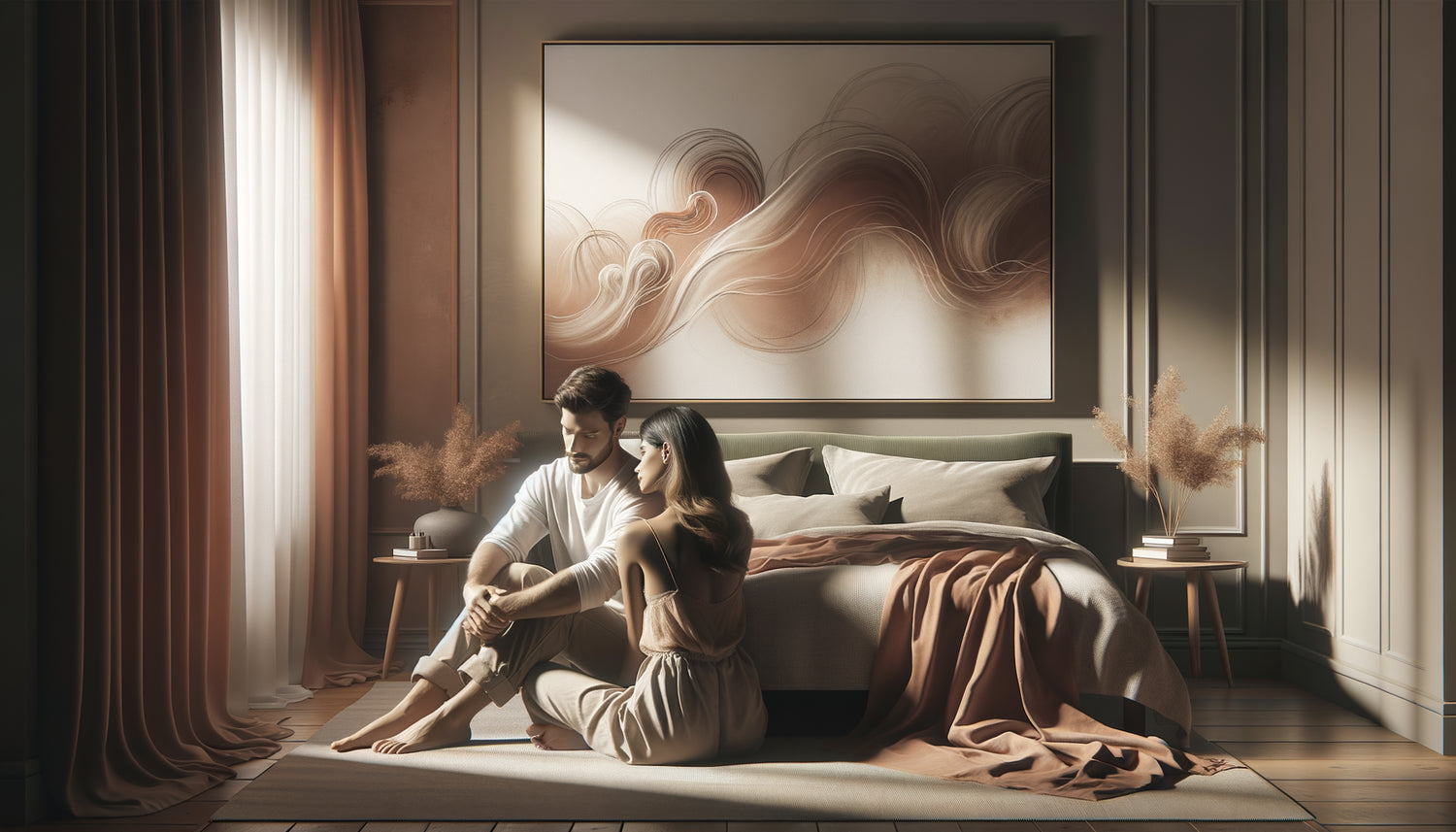
That night, returning home after hanging this abstract canvas with plum and gold hues above their bed, they felt something change. Not a major upheaval, but rather a new softness in the air. She lingered longer in the room, offered to dim the lights to better see the reflections. They talked, sitting on the bed, as they hadn't done in weeks. A painting isn’t just wall decor — it’s a silent catalyst that awakens attention, slows down time, creates a protective bubble around two people who love each other.
Here's what a well-chosen painting brings to your couple's intimacy: it creates an atmosphere conducive to confidences, transforms your bedroom into a personal sanctuary distinct from the rest of the house, and offers a visual anchor that constantly brings you back to the present moment, away from screens and daily worries.
Too often, our bedrooms resemble soulless hotel rooms or extensions of the office. We sleep in them, check our phones, do laundry. Couple's intimacy becomes a luxury we postpone until next weekend, the next vacation. We forget that the environment shapes our behaviors, our emotions, our availability to each other.
But rest assured: it’s not about revolutionizing your interior. Sometimes, a single painting is enough to recreate this magic. Art has this strange power to alter our perception of a space and, by extension, our way of living our relationships. Let me show you how to transform your bedroom into a true nest of intimacy through thoughtful artistic choices.
When the artwork becomes a silent witness to your story
Every couple has their rituals. Those stolen moments between busy days, those late-night conversations where you remake the world, those knowing silences that say more than a thousand words. A painting in the bedroom becomes the silent witness of these precious moments. Unlike functional objects that remind you of your obligations, a work of art expects nothing from you. It is simply there, present, creating an emotional backdrop for your couple's moments.
I have often observed how couples behave differently depending on their environment. In an impersonal bedroom, gestures remain mechanical and hurried. But facing a painting that resembles you — whether it be soothing, passionate or mysterious — something relaxes. Shoulders loosen. You take the time to look, comment, share an impression. This artwork becomes a magnificent pretext to slow down, to simply be together without an agenda.
The painting also creates a fundamental psychological demarcation. It signals: here begins our private space. This mental boundary, often underestimated, protects couple's intimacy from intrusions of the outside world. When you cross the threshold of your bedroom and your gaze meets this artwork chosen together, your brain instinctively switches to relational mode.
Colors that bring closeness: chromatic psychology at the service of love
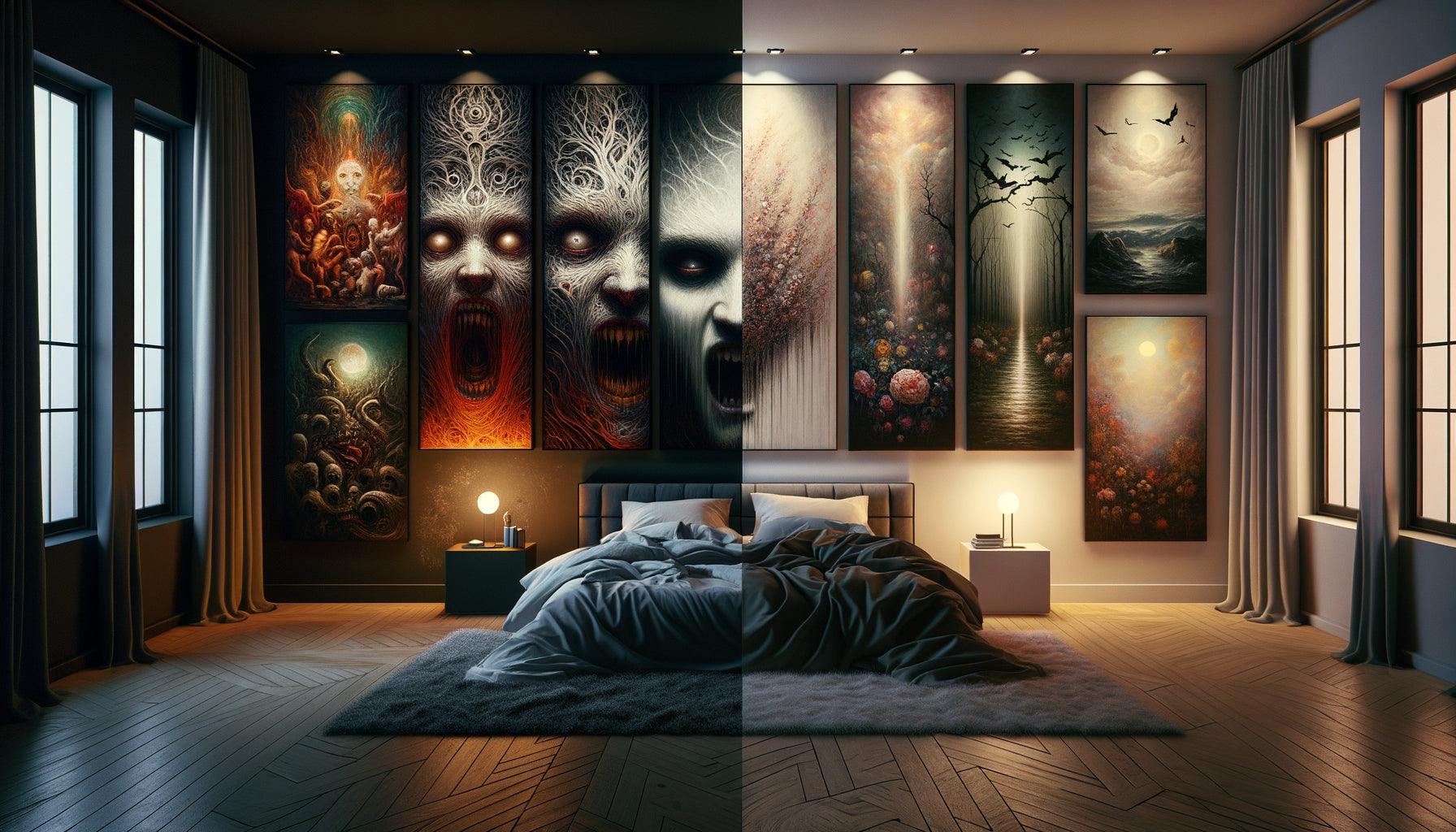
The hues you hang on your wall are not neutral. They directly affect your nervous system, hormone production, and emotional receptivity. A painting with warm tones — deep bordeaux, copper golds, powdery pinks — envelops the bedroom in a warmth that is almost tactile. These colors gently stimulate without aggression, invite physical proximity, evoke the warmth of a fireplace and prolonged embraces.
Conversely, paintings with cool palettes — midnight blues, turquoise greens, lunar grays — create a feeling of expansive calm. They are perfectly suited for couples seeking to regain serenity after hectic days. These shades soothe the chattering mind and facilitate deep conversations, those where one finally dares to address delicate subjects.
But the real magic happens with subtle combinations. A painting that combines soothing blues with touches of coral, for example, balances relaxation and vitality. It creates this paradoxical atmosphere so favorable to couple intimacy: calm enough to feel safe, lively enough to awaken desire and curiosity for each other.
The shared gaze test
Here's a revealing exercise: lie down together in your bed and observe your wall. How do you feel? If your gaze slides without catching, if you get bored after ten seconds, your painting is not fulfilling its mission. A work that nourishes intimacy must offer this visual richness that invites shared contemplation, these details that are gradually discovered and about which one can talk together.

Figurative or abstract art: what energy for your intimate space?
The debate between figuration and abstraction goes far beyond aesthetics. It touches on how a painting influences your relational space. Figurative works — dreamlike landscapes, embracing silhouettes, secret gardens — tell stories. They give your imagination a common starting point. Faced with a scene depicted, you can share your interpretations, project your desires, create narratives in two voices.
These figurative paintings excel at creating a narrative atmosphere in the bedroom. They transform your space into the set of your own love story. A Mediterranean landscape recalls that founding journey, a misty forest evokes those walks where you truly find yourselves, blurred silhouettes suggest the permanent dance between fusion and autonomy that characterizes lasting couples.
Abstract art, on the other hand, completely frees up interpretation. These shapes, colors, and materials that represent nothing specific become supports for emotional projection. Everyone sees what they feel, and it is precisely this freedom that stimulates exchanges. 'Do you see this red spot? It makes me think of...' These seemingly trivial conversations are actually valuable exercises in listening and sharing inner thoughts.
Abstract works also have this remarkable quality: they evolve with your mood. The same painting will speak to you differently depending on whether you are going through a passionate, serene or complicated period. This chameleon-like ability makes it a long-term companion of your relationship, which grows and transforms with you.
Strategic placement: where to hang to maximize connection
The location of your painting in the bedroom is nothing trivial. Above the bed, it becomes a focal point for moments of shared relaxation, those instants when you lie side by side before falling asleep or waking up. This central position makes it the symbolic guardian of your intimacy, a reassuring presence that watches over your nights.
Facing the bed, the painting is the first thing you see when you wake up and the last thing you see before sleeping. This privileged position makes it a powerful emotional anchor. Choose for this location a work that reflects your common aspirations, the energy you want to cultivate in your relationship. A bright landscape for optimistic mornings, an energetic composition to keep the flame alive, an intimate scene to strengthen your protective bubble.
On a side wall, visible from bed but not immediately within view, the artwork plays a more subtle role. It creates an interesting asymmetry that breaks up the monotony and offers a little extra character. This position is perfect for bolder paintings, those that bring a touch of unexpectedness without dominating the space.
The importance of height
A technical detail that changes everything: the center of the painting should ideally be at eye level when you are sitting on the bed. This height creates a natural dialogue with the work, facilitates effortless contemplation and harmoniously integrates art into your intimate routine.

When choosing a painting becomes an act of complicity
Selecting a painting for your bedroom together is more than just a decorative decision — it's an exercise in gentle negotiation, creative compromise, and mutual discovery. You will discover your partner’s hidden tastes, their associations of ideas, what truly touches them beyond appearances. These revelations strengthen the intimate knowledge you have of each other.
The process itself creates beautiful couple moments. Strolling together through a virtual gallery, commenting on the works, gently arguing about one choice or another, finally finding that painting that makes both of your eyes sparkle — all this weaves precious memories. The work ultimately hung will bear the imprint of this shared journey, enriching its meaning.
Some couples even choose to regularly change their paintings, marking the different seasons of their relationship. This artistic ritual creates emotional milestones, landmarks in a common history. 'Do you remember that seascape we had when we first moved in?' becomes a poetic way of celebrating the journey taken.
Beyond aesthetics: the painting as a relational ritual
The most connected couples I have met often developed rituals around their painting. One of them told me how they had made it a habit, every Sunday evening, to lie in silence for ten minutes facing their abstract work before sharing their feelings. This simple, almost meditative practice created an extraordinarily powerful space of shared vulnerability.
Others use their painting as a starting point for important conversations. When it is necessary to address a delicate subject, they begin by contemplating the work together, letting its energy soothe tensions before speaking. Art then acts as a silent mediator, reminding that beyond fleeting disagreements, there is this beauty they have chosen together.
The simple act of maintaining your painting — dusting the frame, adjusting the lighting, perhaps moving it slightly after rearranging — becomes a gesture of attention towards your intimate space. These small material cares are concrete metaphors for the care you take of your relationship itself.
Transform your bedroom into a sanctuary of intimacy
Discover our exclusive collection of paintings for bedroom that rekindle connection and celebrate your unique story.
Lighting: revealing the hidden magic of your artwork
A magnificent painting in poor lighting loses 80% of its emotional power. The lighting for your artwork deserves as much attention as its choice. Lighting that is too harsh kills the intimate atmosphere; excessive darkness makes art invisible. The balance lies in these soft and directed light sources that caress the canvas without attacking it.
Wall sconces with dimmer switches offer valuable flexibility. You can intensify the lighting to admire the details of the painting together, then dim it to create this twilight conducive to confidences. This luminous modulation transforms your bedroom into an intimate theater whose atmosphere you adjust according to your relationship needs.
Natural light also deserves consideration. A painting that captures the first rays of morning becomes a gentle awakener, an invitation to start the day in connection. Conversely, a work illuminated by the last embers of sunset creates this magical moment of transition between day and night, between activity and abandonment.
Imagine yourself in six months. You return after an exhausting week. As you push open the door to your bedroom, your gaze meets that painting that you have chosen together, a work that resembles you. Instantly, something unravels. Your partner joins you, places their hand in yours, and without even speaking, you know that you are in the right place. A painting is not just a decorative object — it's a guardian of your intimacy, a silent catalyst that transforms four walls into a relational sanctuary.
So start today. Explore together the styles that speak to you. Dare the work that makes your heart beat a little faster. And observe how this simple artistic choice awakens your attention for each other, slows down the passage of time, and enchants those couple moments that everyday life always threatens to erode.
Frequently Asked Questions
What type of painting is best for a couple's bedroom?
There is no single answer, as the best painting for your couple's bedroom reflects your common personality. However, prioritize works with harmonious tones rather than aggressive contrasts that can disrupt rest. Couples seeking peace often turn to soft landscapes, fluid abstractions or minimalist compositions. Those who want to maintain a passionate energy prefer warm colors, dynamic shapes, or even symbolic representations of human connection. The essential thing is that you BOTH like the work — a painting imposed by one creates a subtle but real dissonance in the intimate space. Take the time to explore together, without haste. The perfect artwork provokes this instinctive reaction: 'Yes, that's us.'
Can a painting really improve a couple's relationship?
A painting won't solve deep relational problems, let's be clear. But it undeniably creates favorable conditions for intimacy. By transforming your bedroom into an intentional space rather than a simple functional zone, art sends a powerful message: this place deserves attention, therefore our relationship deserves attention. This increased awareness changes behaviors. We tidy up a little more, we take care of the atmosphere, we take the time to really find ourselves there. The painting acts as a trigger for presence — it brings you back to the moment, away from screens and worries. Many couples testify to having rediscovered the habit of truly talking after redecorating their bedroom around a meaningful work. Art doesn't do the work for you, but it creates that conducive framework where connection becomes natural again.
Should you change paintings regularly or keep the same one for a long time?
Both approaches have their merits, and some couples combine the two intelligently. Keeping the same painting for a long time allows you to develop a deep relationship with the work — you discover new details over the years, it carries the memory of your different relational phases, it becomes a stable reference point in a changing world. This permanence reassures and anchors. Conversely, periodically renewing your artwork maintains a form of freshness, signals that your relationship is evolving, avoids the room becoming invisible through excessive familiarity. A balanced approach is to have a main painting that you keep for a long time, complemented by smaller works that you change as desired. Or else, to mark the major milestones in your life together with a new artistic choice, thus creating an emotional gallery of your story.