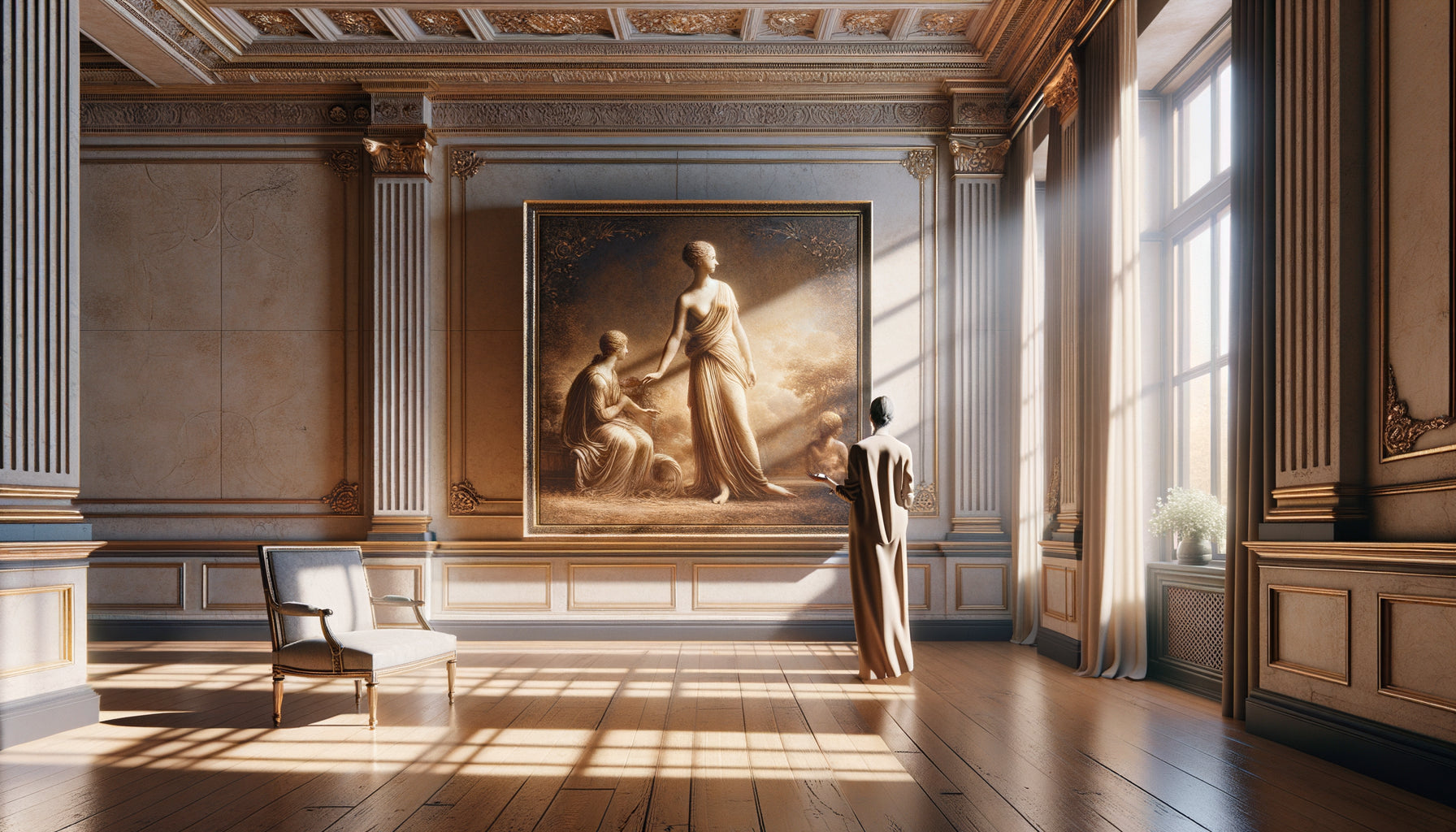
The other evening, at a vernissage in the Marais, a client confided in me that she had gotten rid of her Caravaggio reproduction from her bedroom, convinced that figurative classic artworks classic figurative no longer “had their place” in a contemporary interior. I was stunned. How could a fleeting trend invalidate centuries of emotional power?
Here's what classic figurative artworks bring to your bedroom in 2025: timeless narrative depth, an emotional refuge from hyper-connectivity, and sophistication that transcends passing trends. Far from being outdated, they embody the new luxury: that of permanence in a volatile world.
You may feel that your beautiful Renaissance portrait reproduction or that mythological scene which has moved you for years no longer fits with current minimalist trends. Magazines show sleek bedrooms with white walls, geometric abstractions, street art. You wonder if your sensitivity to classic figurative styles betrays a lack of modernity.
Breathe. True elegance never bends to temporary dictates. The most discerning collectors I have known for twenty years will tell you: classic figurative artworks cross eras precisely because they speak to something universal within us.
I'm going to show you why these works represent not a step backward, but a contemporary sophistication, and how to integrate them into a 2025 bedroom with assumed modernity.
Why classic figurative styles resist obsolescence
In my gallery, I have observed a fascinating phenomenon for three years: young thirty-something buyers are returning to classic figurative styles after being saturated with impersonal abstractions. A designer client recently explained to me: “I need faces, bodies, stories before falling asleep. Geometric shapes no longer tell me anything.”
Classic figurative artworks possess a rare quality in decor: narrative density. A portrait from the 18th century in your bedroom is not just a decorative element; it's a presence. This young woman with a melancholic gaze, this Tuscan landscape bathed in golden light, this biblical scene charged with dramatic tension: each work becomes a window to another temporality.
It’s precisely what our contemporary bedrooms need. Faced with the instantaneity of screens and the superficiality of social networks, classic artworks offer contemplative depth. They slow down time, invite reverie, create a mental sanctuary.
Classic figurative styles are not outdated. They are contracyclic, and that’s precisely what makes them relevant today.
The mistake that kills charm (and how to avoid it)
I have visited hundreds of bedrooms where classic figurative artworks seemed dated. But it was never the fault of the artworks. It was their contextualization.
The classic mistake? Creating a room-museum. Accumulation of academic reproductions, heavy gilded frames, floral wallpaper, neo-baroque furniture. The result resembles a poor staging of a provincial castle. Obviously, it looks dated.
The modern solution for integrating figurative works into a 2025 bedroom relies on a principle I call 'controlled contrast'. The classic work becomes spectacular precisely because it dialogues with the surrounding modernity.
Specifically:
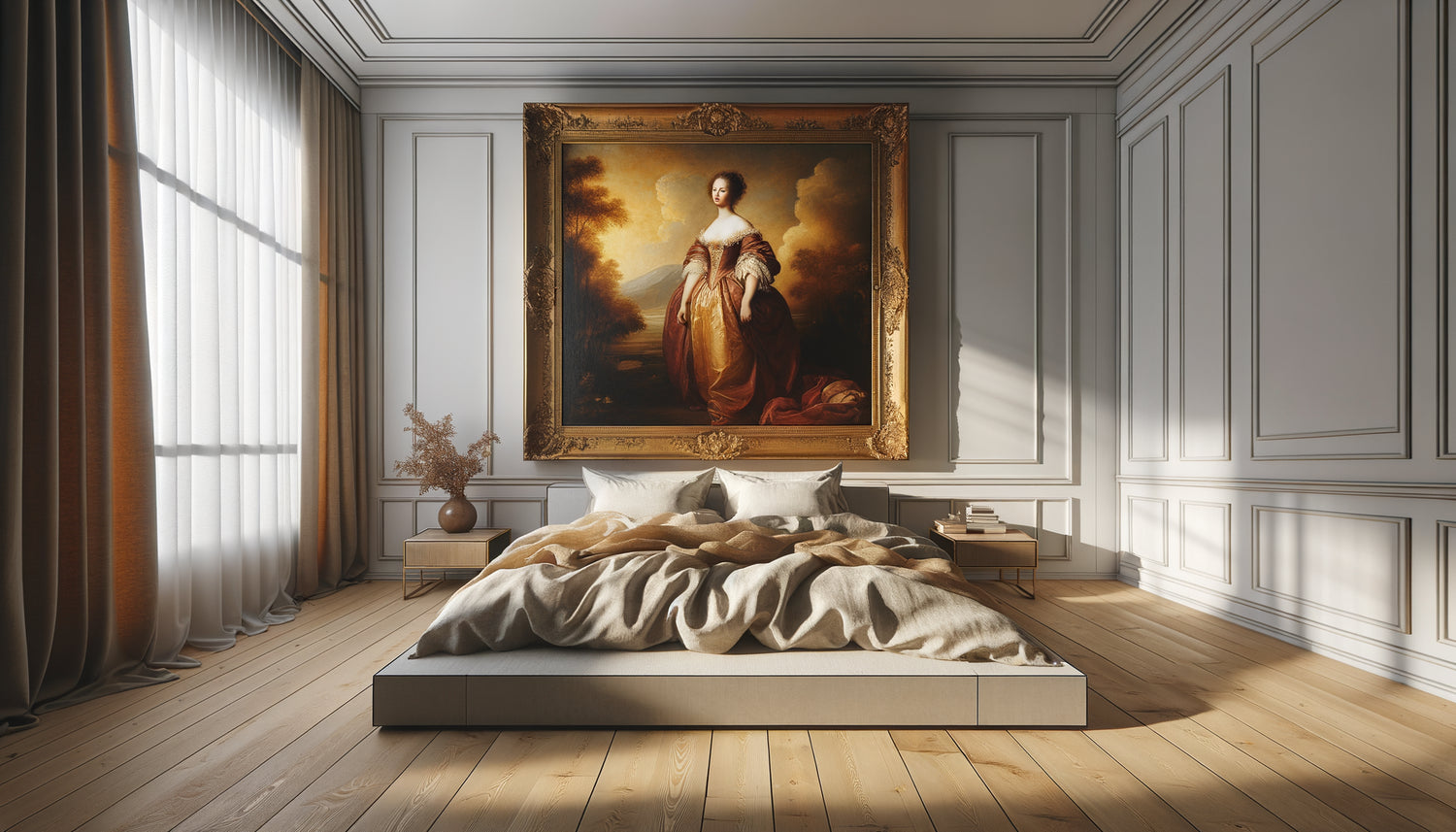
- A large Flemish portrait from the 17th century on a pristine white wall, without any other decoration
- A Renaissance mythological scene framed simply (light wood or matte black metal) above a minimalist headboard
- A classic still life paired with Scandinavian furniture with clean lines
- An academic nude in a bedroom with contemporary textiles (crumpled linen, structured velvet)
Classic figurative art does not require a historical setting to exist. On the contrary, it requires space and visual silence to unleash its narrative power.

Figurative works that work particularly well in bedrooms
Not all classic paintings are equal when it comes to creating the atmosphere conducive to rest and intimacy in a bedroom. After years of advising collectors on arranging their private spaces, I have identified certain types that are particularly relevant.
Contemplative portraits
Classic portraits create a soothing presence without being intrusive. Favor averted or pensive gazes over confrontational frontal portraits. A young woman reading, a philosopher immersed in his reflections, a musician absorbed in his instrument: these figurative works establish an atmosphere of introspection perfect for a bedroom.
Classic landscapes
Pastoral views, romantic seascapes, 17th-century Italianate landscapes have an immediate power of escape. These classic works function as mental windows, particularly valuable in urban bedrooms. The depth of the skies, the complexity of the twilight lights, the serenity of the compositions: all invitations to inner travel.
Still Lifes
Often underestimated, classic still lifes (Flemish vanitas paintings, Baroque floral compositions, Dutch table settings) bring a refined sensuality. Their discreet symbolism, their controlled opulence, and their play on textures make them sophisticated companions for a contemporary bedroom.
How to modernize the display without betraying the artwork
The display determines 70% of the success of a classic figurative work in a modern interior. I have developed some principles that radically transform perception.
The rule of generous scale: Forget small formats lost on large walls. A classic figurative work in a large format (minimum 80x100 cm) asserts a contemporary presence. It becomes an installation rather than a decorative souvenir.
Minimalist framing: The frame should disappear. Exit the complex gilded moldings. Opt for a thin frame made of light natural wood, matte black metal, or even the total absence of a frame for canvas reproductions. The contrast between the richness of the work and the sobriety of its setting creates a modern visual tension.
Strategic height: Contrary to popular belief, a classic work in a bedroom is better positioned slightly lower than in a living room. At eye level when lying down, it contributes to the intimacy of the space rather than dominating it.
Sculptural lighting: A discreet LED spotlight, an architectural reading lamp, or even LED candles: dedicated lighting transforms the work into a living presence. It no longer suffers from ambient light; it becomes a source of light itself.

The 2025 trends that rehabilitate classic figurative art
Far from being marginalized, classic figurative works are riding several underlying movements that redefine contemporary interior design.
Reflective maximalism is making a comeback after years of austere minimalism. But it's not about disordered accumulation: we prioritize a few strong pieces, full of meaning and history. A large classic figurative work becomes the focal point of an otherwise clean bedroom.
Slow decoration promotes investment in durable, emotionally significant pieces that transcend trends. Classic works, by their very nature timeless, perfectly embody this philosophy. They represent the antithesis of disposable decor.
Good taste eclecticism blends eras with boldness but coherence. The most influential interior designers now combine contemporary furniture and antique art with a confident freedom. A Baroque still life above a lacquered Japanese chest of drawers? Totally 2025.
Neo-romanticism reintroduces emotion, narrative, contemplative beauty into our interiors. Faced with the cold aesthetics of all things mineral and geometric, figurative classicism enchants our bedrooms again. It brings back the human, the living, the sensitive.
Create a dialogue rather than a decorative monologue
The ultimate sophistication in integrating classic figurative works is to create subtle visual conversations in your bedroom.
A client architect recently suspended a Renaissance Venus above her brushed brass contemporary vanity. The dialogue between the timeless sensuality of the goddess and the geometric modernity of the furniture creates a fascinating tension. Each element sublimates the other.
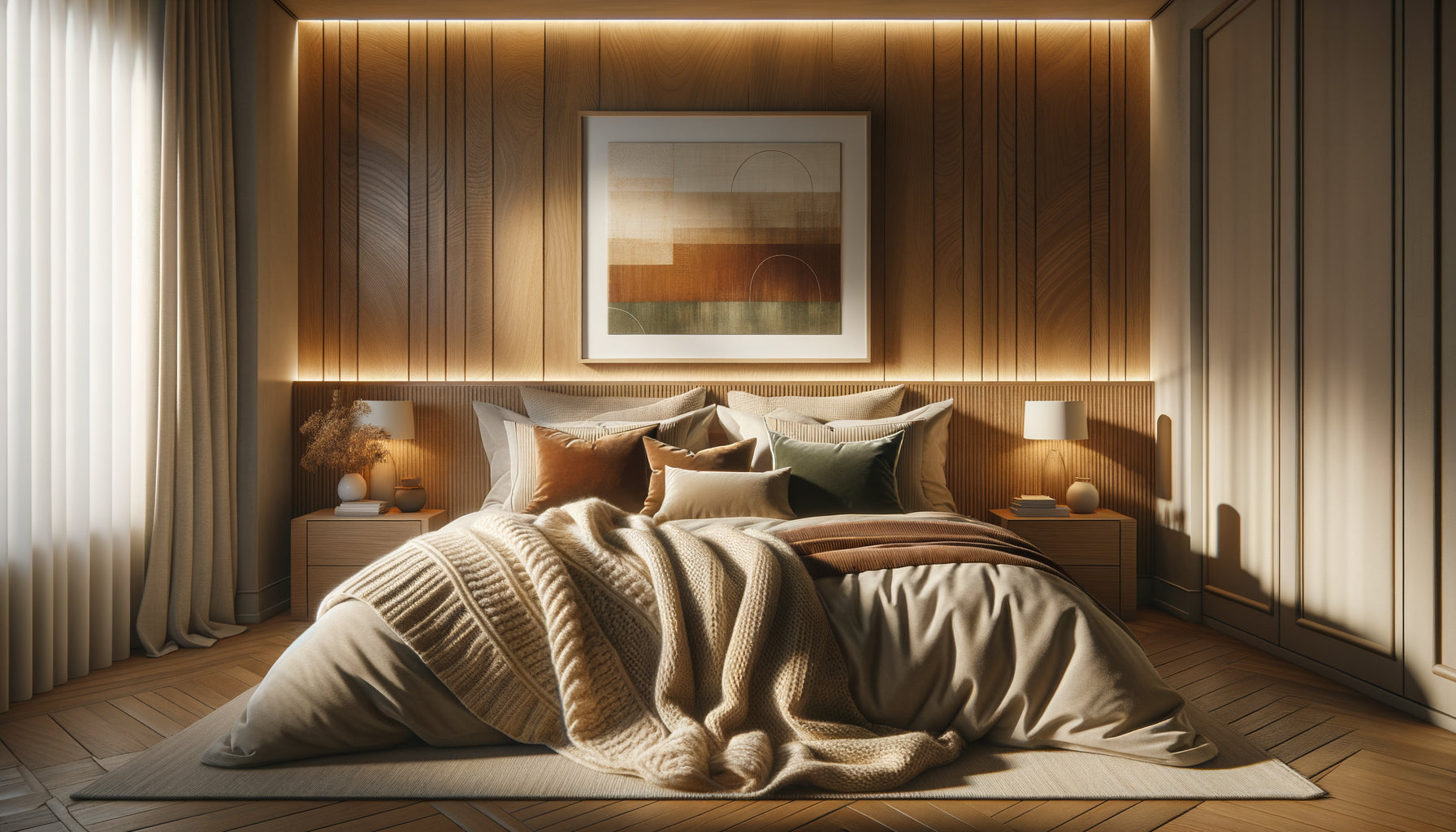
Think color correspondences: ochres, Sienese earths, deep blues from a classic painting can be found in your bed linens, a reading chair, a rug. The work then becomes the generator of the entire bedroom's color palette.
Consider formal echoes: the draperies of a mythological scene can dialogue with the folds of a linen curtain, the curves of a painted body with the roundness of a pendant light. These subtle correspondences create an organic harmony.
Classic figurative works in a bedroom in 2025 do not work in isolation. They orchestrate, they subtly direct the entire aesthetic of the space.
Your bedroom deserves a work that tells your story
Discover our exclusive collection of wall art for bedroom that combines the timelessness of classic figurative and contemporary sensibility.
True luxury: daring your aesthetic identity
At a recent auction, I observed a young couple arguing (gently) in front of a neoclassical portrait. He said: “It’s too classic, we’ll look like old people.” She replied: “That's the point, everyone does abstract minimalism these days.”
She was right. The real risk in decorating is not to appear dated, but to be interchangeable.
Classic figurative works in a bedroom in 2025 constitute an elegant act of resistance. Resistance to the uniformity of Instagram interiors. Resistance to the tyranny of seasonal trends. Resistance to the dictatorship of “new at all costs.”
Your bedroom is not a showroom. It’s your sanctuary, your mental refuge, the last truly intimate space in an overexposed world. It deserves artworks that deeply resemble you, not those that resemble recommendation algorithms.
If a romantic landscape transports you, if a Renaissance portrait moves you, if a mythological scene nourishes your nocturnal reveries, then these classic works have their place in your bedroom. Not despite the year 2025, but precisely for this year when we need anchoring, depth, and permanence more than ever.
Trends come and go. The beauty that touches your soul remains. It's as simple and radical as that.
So tomorrow morning, look differently at the reproduction that has accompanied you for years, or finally treat yourself to the figurative work that haunts your thoughts. Frame it simply, give it space, light, silence around it. And observe how it transforms not only your bedroom, but the quality of your mornings and nights.
True elegance never goes out of style. It reinvents itself with every gaze that inhabits it.