Last week, a collector confided in me that she had received a charcoal sketch from her husband for their wedding anniversary. She was destabilized: "Does this mean he considers our relationship unfinished?" Her question reveals the complexity and symbolic depth of such a particular artistic gesture.
Offering an unfinished painting or a sketch is more than just an artistic gift: it's an invitation to co-creation, a celebration of authentic imperfection, and a delicate metaphor for infinite potential. Far from being an incomplete present, it’s an aesthetic and philosophical choice that expresses trust, intimacy, and the beauty of the creative process.
In our interiors saturated with finished and perfect objects, the sketch questions our relationship to completion. We are conditioned to seek the final product, the accomplished work, the impeccable decoration. Offering an unfinished creation seems to transgress this tacit social norm. Yet, it is precisely this transgression that carries its richest symbolic charge.
Whether you're looking to offer a meaningful gift or hesitate to accept this perplexing present, let’s explore together the multiple dimensions of this fascinating symbolism that transforms the unfinished into a relational work of art.
The Unfinished as a Celebration of the Creative Process
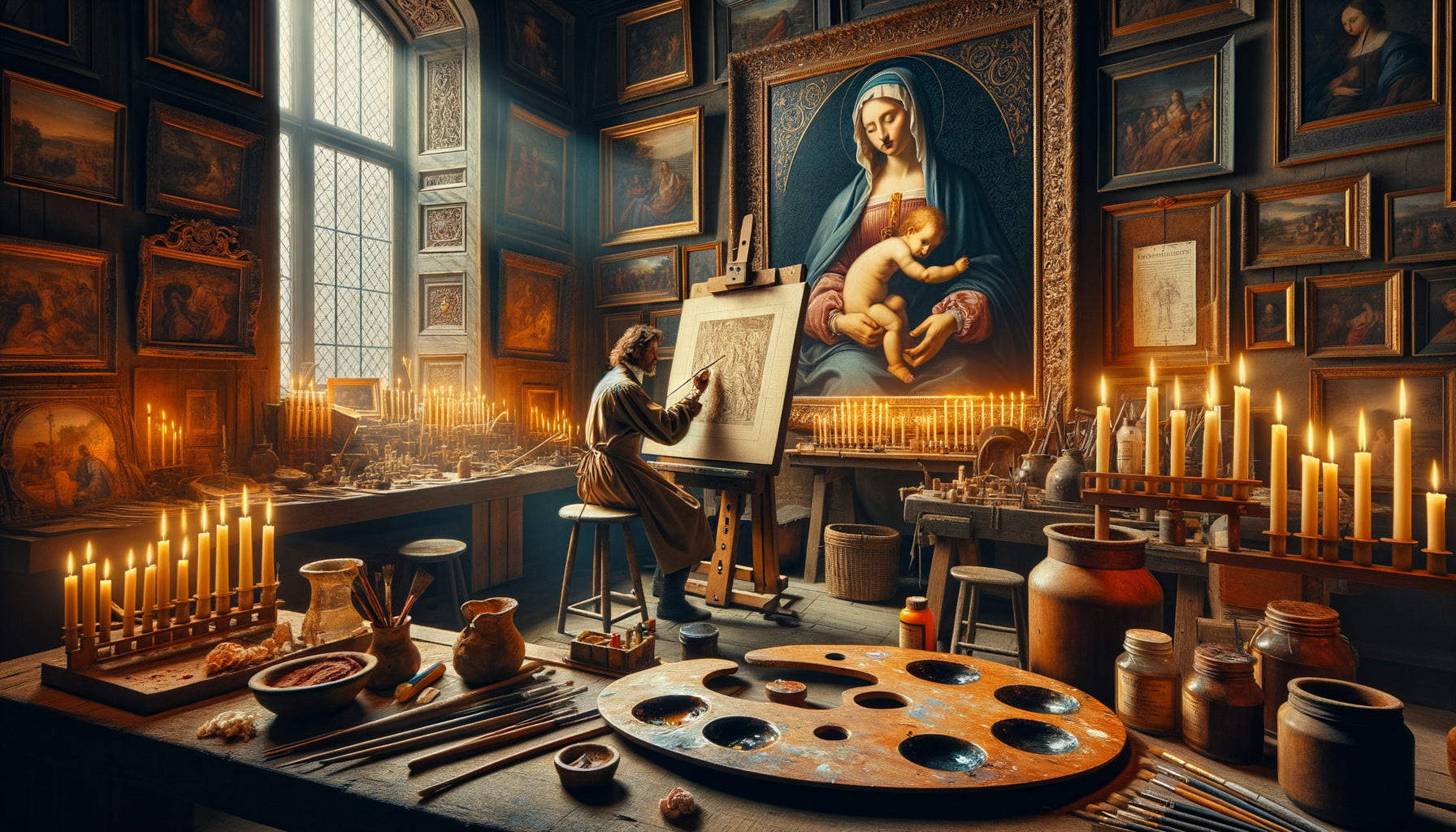
For centuries, sketches were jealously guarded in artists' workshops, considered trade secrets. The sketch reveals the thought process, hesitations, regrets – this creative intimacy that the finished work hides beneath its layers of glazing.
Offering a sketch is therefore sharing this privileged moment when an idea takes shape. It’s inviting the recipient behind the scenes of creation, offering them not a result but a story in the making. In my years spent with collectors, I have seen preparatory sketches by masters sometimes sell for more than some finished works, precisely because of this raw authenticity they embody.
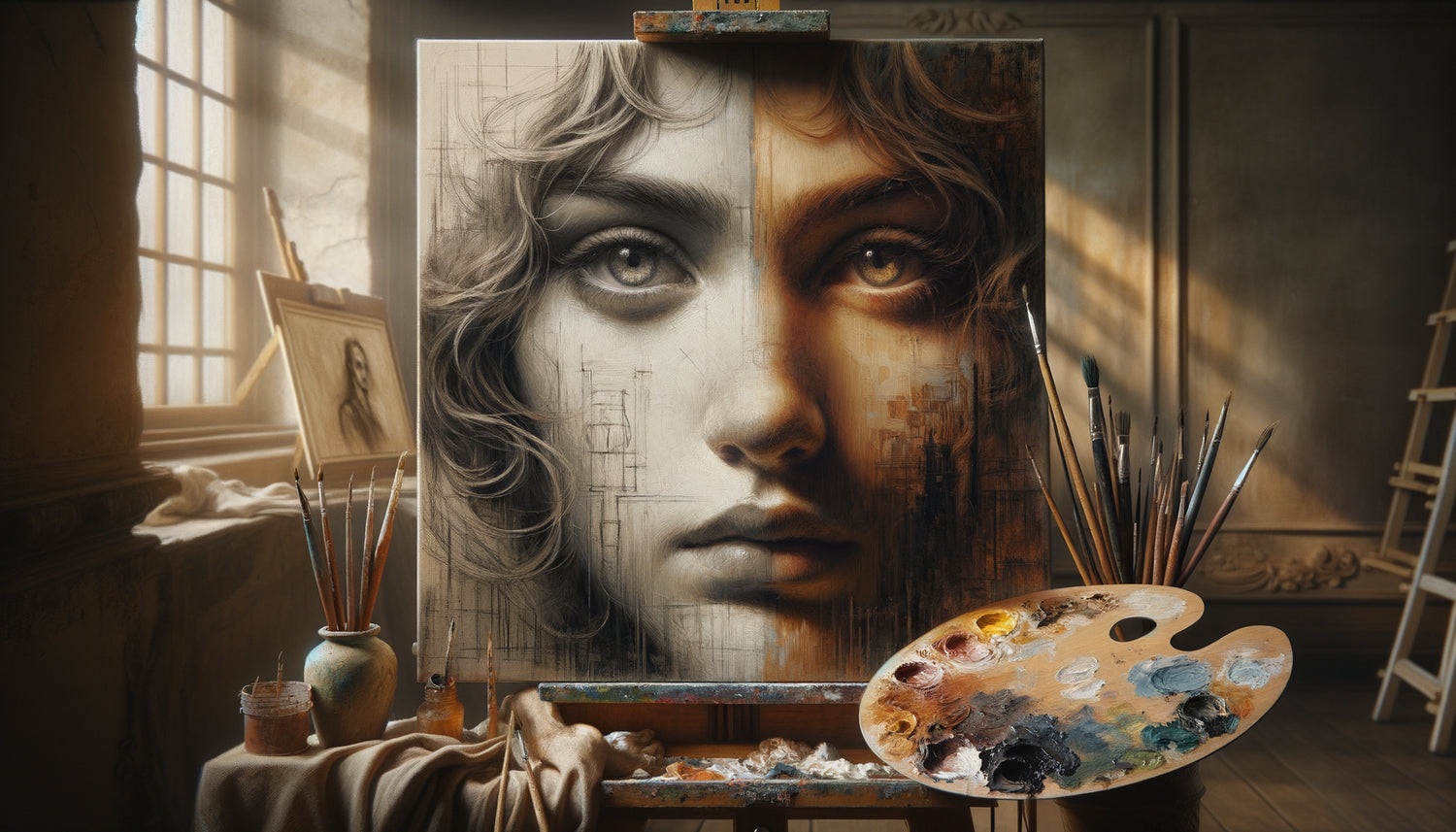
An unfinished painting retains the spontaneity of the first draft, that particular energy that often disappears in the finishing work. The nervous lines, the areas left in reserve, the visible superimpositions: all testify to an artistic truth that polishing erases. It’s offering the genesis rather than the culmination.
The Gesture That Values Authenticity
In a society obsessed with Instagram perfection, the sketch becomes an anti-conformist manifesto. It affirms that beauty also lies in the fragile, the provisional, the imperfect. Offering an unfinished work is saying to the other: "I see you beyond appearances, I value your humanity rather than your perfection."
This symbolism particularly resonates in deep romantic or friendly relationships. The sketch becomes a metaphor for a relationship itself perpetually under construction, never frozen, always alive. It expresses a confidence in the becoming rather than a fixation on what has been acquired.
An Invitation to Co-Creation and Imagination
Here's the most fascinating dimension of an unfinished painting: it actively solicits the imagination of its recipient. Unlike a finished work that imposes its complete vision, the sketch leaves open spaces that the gaze comes to inhabit differently each day.
I have observed collectors spending hours in front of sketches, imagining the multiple directions the artist could have taken. This imaginative participation of the viewer transforms passive reception into a creative experience. The work becomes conversation rather than monologue.
Offering a sketch is therefore also offering this freedom of interpretation. It's recognizing that the recipient is not simply a receiver but a co-creator of meaning. In some contemporary artistic cultures, artists deliberately offer unfinished works for the acquirer to complete them according to their sensitivity – transforming the gift into creative collaboration.
Infinite Potential as a Message of Hope
An unfinished painting carries within it all possibilities. It is not locked into a definitive form but still vibrates with all the directions it could take. This characteristic makes it a powerful symbol of hope and potential.
Offering an unfinished work to someone going through a period of transition – new professional start, move, birth – then takes on its full meaning. It's saying: “Your story is not written, everything remains to be built, and that’s wonderful.” The unfinished becomes celebration of becoming rather than regret for the unaccomplished.

Vulnerability as Proof of Intimacy
In the history of art, showing one's sketches has long been considered an act of extreme vulnerability. Revealing hesitations, mistakes, gropings: that exposes the artist in his human fragility, far from the mastery displayed by the finished work.
Transposing this gesture into a gift is therefore offering vulnerability – paradoxically one of the most precious gifts in our armored societies. It expresses deep intimacy: “I am showing you something unfinished, and therefore imperfect, because our bond is strong enough to welcome imperfection.”
I have witnessed moving moments where sketches exchanged between close friends sealed a new complicity. The unfinished becomes the language of trust, affirming that the relationship does not require a mask, no polished facade, but welcomes authenticity in its raw form.
Discreet anti-consumerism
From a more philosophical perspective, offering a sketch rather than a finished painting is also a subtle resistance to consumer culture. The unfinished object defies our obsession with the perfectly marketed product, packaged and ready to consume.
It reintroduces time, reflection, and acceptance of incompleteness. In an interior, a sketch dialogues differently with space: it does not impose itself but suggests, evokes, breathes. It invites the gaze to slow down, linger, and mentally complete what is physically missing.
How to welcome this symbolic gift in your interior
If you receive an unfinished painting or a sketch, the first question is often practical: how to integrate it into your decor? The answer lies precisely in its particular nature.
A sketch requires space – not necessarily physical, but visual. It is beautifully enhanced in a clean frame, with a generous mat that gives it air. Avoid overloaded frames that would compete with its organic simplicity. Favor neutral tones – off-white, pearl gray, matte black – which respect its unfinished character.
Location also matters. A sketch is best positioned in an intimate place rather than ostentatious: a bedroom, a personal office, a reading corner. It creates a contemplative atmosphere that does not go well with spaces for social representation. Place it at eye level, in a place where you can stop to observe it quietly.
Harmonious decorative associations
An unfinished painting wonderfully dialogues with raw and natural materials: crumpled linen, unvarnished wood, raw stone, artisanal ceramics. Avoid overly polished, too sophisticated environments that would create an uncomfortable contrast with its authenticity.
If you are composing a wall of frames, the sketch can play the role of visual breathing space in the middle of more accomplished works. It introduces an interesting dynamic, a pause in reading the wall, a projection space for the eye.
Ready to offer a gift full of meaning and authenticity?
Discover our exclusive collection of art to gift that celebrates the beauty of imperfection and invites contemplation.

The cultural codes of the unfinished around the world
The symbolism of the unfinished varies considerably according to cultures. In the Japanese tradition of wabi-sabi, imperfection is inherently beautiful. The unfinished is valued as a testament to the natural impermanence of all things. Offering a sketch in this cultural context is a highly refined gesture, expressing a deep understanding of transient beauty.
In classical Western culture, the unfinished has long been perceived negatively – synonymous with abandonment, failure or neglect. But since Romanticism and especially modern art, this perception has radically transformed. Michel-Ange’s non-finito, initially accidental, are now celebrated as masterpieces of expressive power.
Offering a sketch today is therefore also to position oneself culturally as someone who values contemporary sensitivity to the authentic, the processual, the living. It is a discreet but eloquent marker of cultural sophistication.
The message according to the relationship
The meaning of an unfinished painting offered also varies depending on the type of relationship. Between lovers, it evokes a shared history still being written, the refusal to freeze the relationship in a definitive form. Between friends, it suggests the complicity of those who understand each other beyond words. From parent to child, it conveys the idea that becoming is more important than being.
In a professional context – a retirement, a completed collaboration – the sketch takes on a particular melancholic dimension: it honors the unfinished work, projects still in suspense, while recognizing that some stories remain beautiful precisely because they are not closed.
Transforming the unfinished into a living ritual
Some collectors I have accompanied have developed a fascinating practice: that of living with the sketch as an evolving work. Without necessarily modifying it physically, they allow their perception of it to transform over time, sometimes documenting their successive interpretations in a notebook.
This approach transforms the unfinished painting into a contemplative companion, an object that grows with us rather than a finished product that would remain identical. Perhaps this is the most beautiful symbolic dimension of this gift: it invites a living relationship with art, far from static possession.
The sketch can also become a starting point for conversations – with oneself, with visitors who question this particular work. It generates narrative, exchange, reflection. In this sense, it fully accomplishes its function as a work of art: not to passively decorate, but to actively stimulate thought and sensitivity.
Conclusion: the praise of the provisional as wisdom
Offering an unfinished painting or a sketch is ultimately giving a philosophical gift disguised as an artistic object. It is transmitting a discreet wisdom: that life itself is a perpetual sketch, that completion is an illusion, and that beauty often lies in the shadows and uncertainties rather than in polished certainties.
In your interior, leave room for the unfinished. Welcome this visual breath, this space of projection, this invitation to mentally complete what is physically missing. You will discover that an unfinished painting is not an incomplete gift, but on the contrary an infinite present, which renews itself with each look.
The next time you contemplate this sketch on your wall, remember that it offers you the most precious of gifts: permission to be yourself unfinished, therefore living, therefore in progress.
FAQ: Your questions about the symbolism of unfinished paintings
Is it impolite to offer an unfinished painting?
Absolutely not, provided that the gesture is intentional and thoughtful. An unfinished painting or a sketch offered consciously carries a rich and sophisticated symbolism. The key lies in how you present the gift: explain why you chose this particular work, what it evokes for you, how its unfinished character resonates with your relationship. The unfinished becomes impolite only if it is perceived as an oversight or negligence – but when it is assumed as an aesthetic and philosophical choice, it on the contrary testifies to a great delicacy of spirit. In contemporary artistic and intellectual circles, offering a sketch is even considered a particularly refined gesture, revealing a deep understanding of art beyond its simple decorative function.
How to frame a sketch without betraying its unfinished character?
Framing a sketch should respect its raw and spontaneous nature. Opt for simple, clean frames – natural wood without varnish, matte black or silver metal, or even the complete absence of a frame if the work is on rigid paper. The mat plays a crucial role: choose a wide, neutral-colored mat (off-white, pearl gray, natural linen) that gives the artwork breathing space. Absolutely avoid gilded, ornate, or overly present frames that would create an uncomfortable contrast with the simplicity of the sketch. The glass should be anti-reflective to preserve the visibility of delicate lines. Some collectors even choose to fix the sketch directly to the wall with discreet clips, accentuating its provisional and living character. The goal is for the frame to serve the artwork without ever dominating it, to protect without imprisoning.
Does a sketch have value in interior decoration?
A sketch has immense decorative value, precisely because it brings what finished works cannot offer: lightness, breathability, and an invitation to the imagination. In contemporary decorative trends that value minimalism, authenticity, and raw materials, a sketch fits perfectly into place. It works beautifully in clean Scandinavian-style interiors, wabi-sabi atmospheres, or softened industrial spaces. Its unfinished character prevents visual saturation and creates resting areas for the eye. Economically as well, sketches by recognized artists can have significant market value, sometimes higher than completed works, because they testify to an authentic creative process. But beyond monetary value, a sketch enriches an interior by introducing a narrative and contemplative dimension, transforming the space into a place of reflection rather than simple decoration.