


Should You Gift an Artwork Alone or with a Decorative Accessory?
January 15, 2026 · 9 min read · by Walensky
I’ve seen too many beautiful paintings end up wrapped in standard gift wrap, offered alone, without context. And I've observed the same scene repeating: the recipient smiles politely, hangs the artwork... then lets it stand alone on a bare wall for months. Not because of a lack of enthusiasm, but due to a lack of inspiration to showcase it properly. It was at that precise moment that I understood something essential.
Here’s what an artwork accompanied by a decorative accessory brings: an instant staging that reveals the full potential of the work, a tenfold increased gift intention that transforms the offering into a true decorative experience, and above all, a concrete starting point for the recipient. But be warned, this rule is not absolute. Some paintings deserve to reign alone, in all their minimalist splendor.
You hesitate before this dilemma: should you really add an accessory or risk overloading your gift? This question hides a legitimate anxiety: that of wanting to offer more than just an object, but a true decorative emotion. Rest assured, after observing hundreds of successful art gifts and a few memorable failures, I’m going to reveal exactly when and how to accompany a painting to maximize its impact.
The solitary painting: when simplicity becomes power
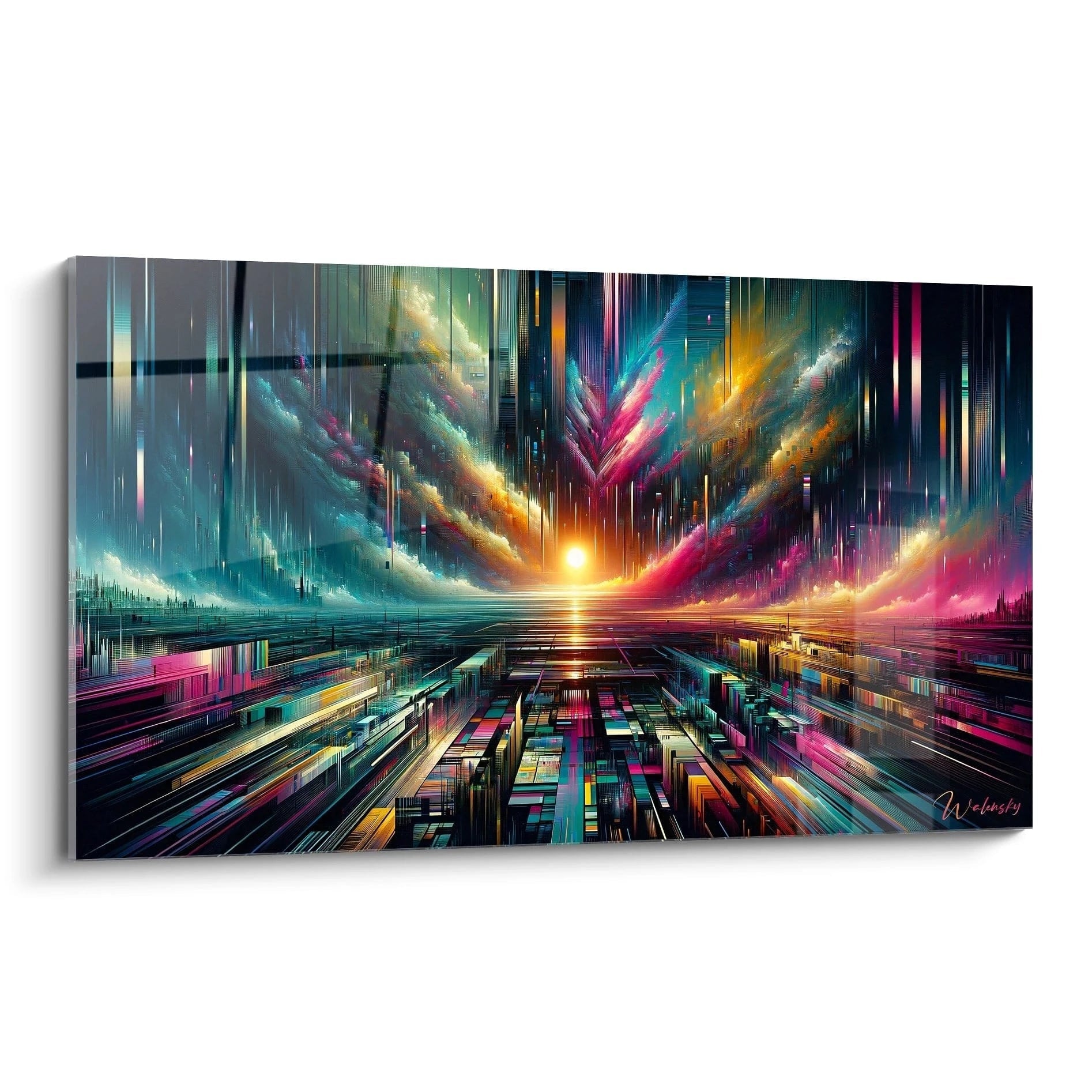
Some works possess such an affirmed presence that they naturally reject any company. I am thinking in particular of large abstract formats, these monumental pieces that occupy space with authority. Offering a 120 x 80 cm painting accompanied by a small vase would be like serving a grand cru in a mustard glass: the intention is laudable, but the result lacks harmony.
The rule I apply systematically: if the painting exceeds 100 cm in its largest dimension, it is self-sufficient. Its frame becomes its only accessory, its internal composition creates its own decorative universe. In this case, focus all your energy on the presentation of the gift itself: careful packaging, a personalized card explaining why you chose this particular work.
The minimalist works follow the same logic. A clean black and white painting, a geometric composition, a black and white photograph: these creations already embody a complete decorative philosophy. Adding an accessory would contradict their very essence. The recipient will immediately understand the intention: you are offering them a visual breathing space, not a ready-to-use decorative set.
The perfect alliance: when the accessory reveals the painting
Now, let's look at the other side of this question. I have noticed that medium-sized paintings (between 40 and 80 cm) greatly benefit from a well-chosen decorative companion. Why? Because they instantly create what I call a decorative scene: a corner table, an entrance console, a wall shelf suddenly comes to life.
Here are my winning combinations tested and approved: a vegetal artwork accompanied by a handmade ceramic planter. A seascape with a scented candle with iodine notes. An abstract work in warm tones with a wool plaid in the same shades. The accessory doesn't just complement the painting: it tells the same story in another language.
This approach radically transforms the recipient's experience. Instead of asking themselves 'where will I hang this artwork?', they immediately visualize a complete staging. The artwork naturally finds its place because you have already suggested its decorative ecosystem. It’s the difference between offering ingredients and offering a recipe that is already composed.
Trios that always work
If you want to create maximum impact, take it to the next level with a harmonious trio. My favorite formula: artwork + functional accessory + living element. For example, a floral artwork accompanied by a design vase and a small bouquet of dried flowers. Or, an urban landscape with a book on architectural photography and a candle with woody scents.
What makes this approach particularly effective is that you create different levels of reading. The painting visually dominates, the functional accessory anchors the composition in everyday life, and the living element (plant, flowers, or even ambient fragrance) adds a sensory dimension. The gift becomes an , not just a decorative object.

Our favourite
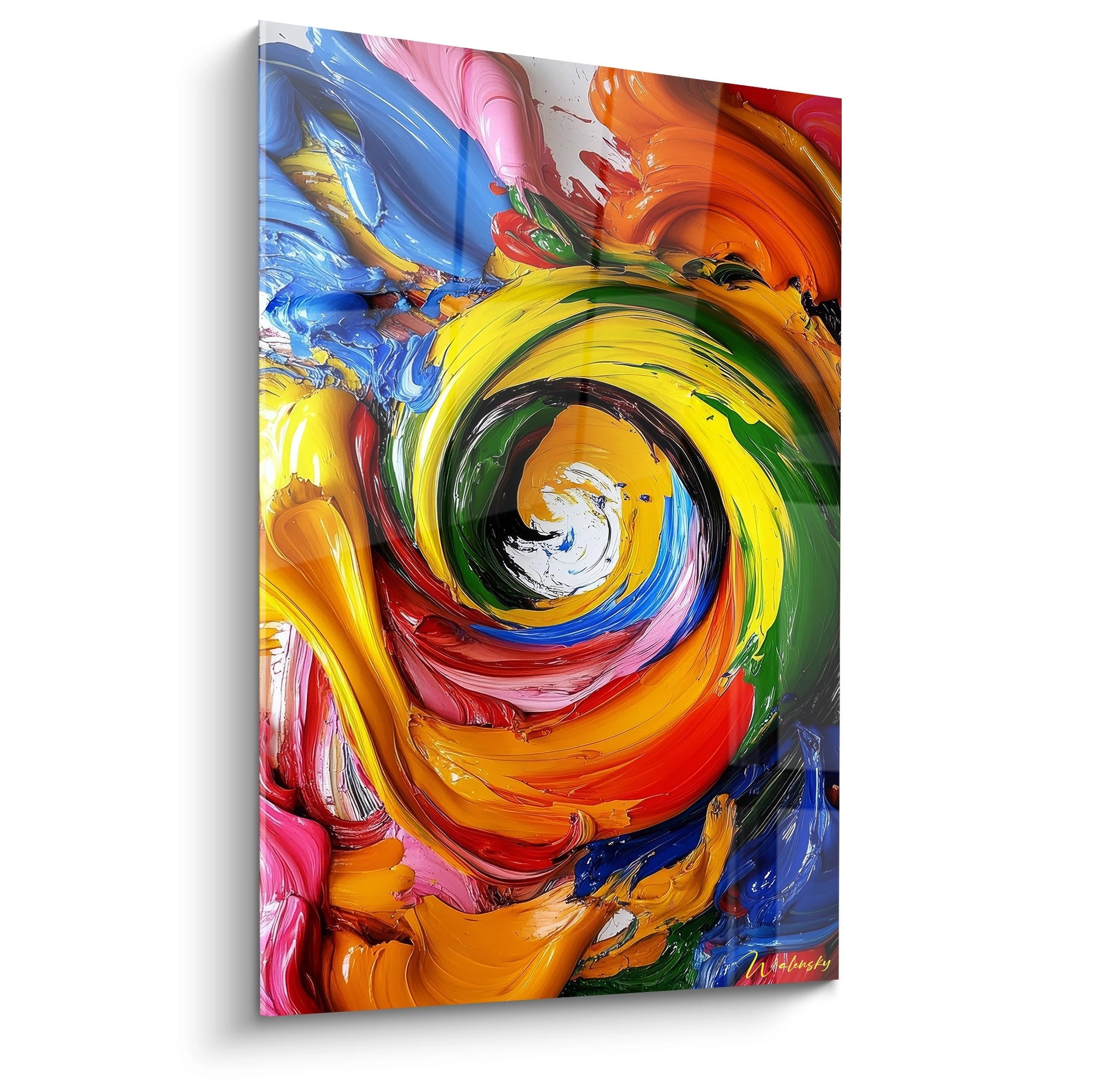
Cosmic Spiral Silhouette Wall Art - Interdimensional Journey - Abstract Spiral Edition
233,90€
Discover this artworkThe psychology of the accompanied gift
Let's be frank: offering an artwork with an accessory sends a powerful subliminal message. You implicitly say: 'I thought beyond the object, I imagined how you could integrate it into your daily life.' This attention to detail is deeply felt, especially in an era where so many gifts seem chosen at random.
I have found that decorating novices particularly appreciate this approach. They receive not only a work of art, but also a tacit guide, a design proposal. You save them the anxiety of the decorative blank page. The accompanied artwork becomes a starting point for redecorating an entire space, a catalyst for inner transformation.
Conversely, if you are giving a gift to an established art enthusiast or someone with a very defined decorative style, the artwork alone may be preferable. These people already have their own vision and mental associations. They will appreciate the freedom to integrate the work according to their personal inspiration. Knowing your recipient becomes key to this decision.
— Our selection


Mistakes to Absolutely Avoid
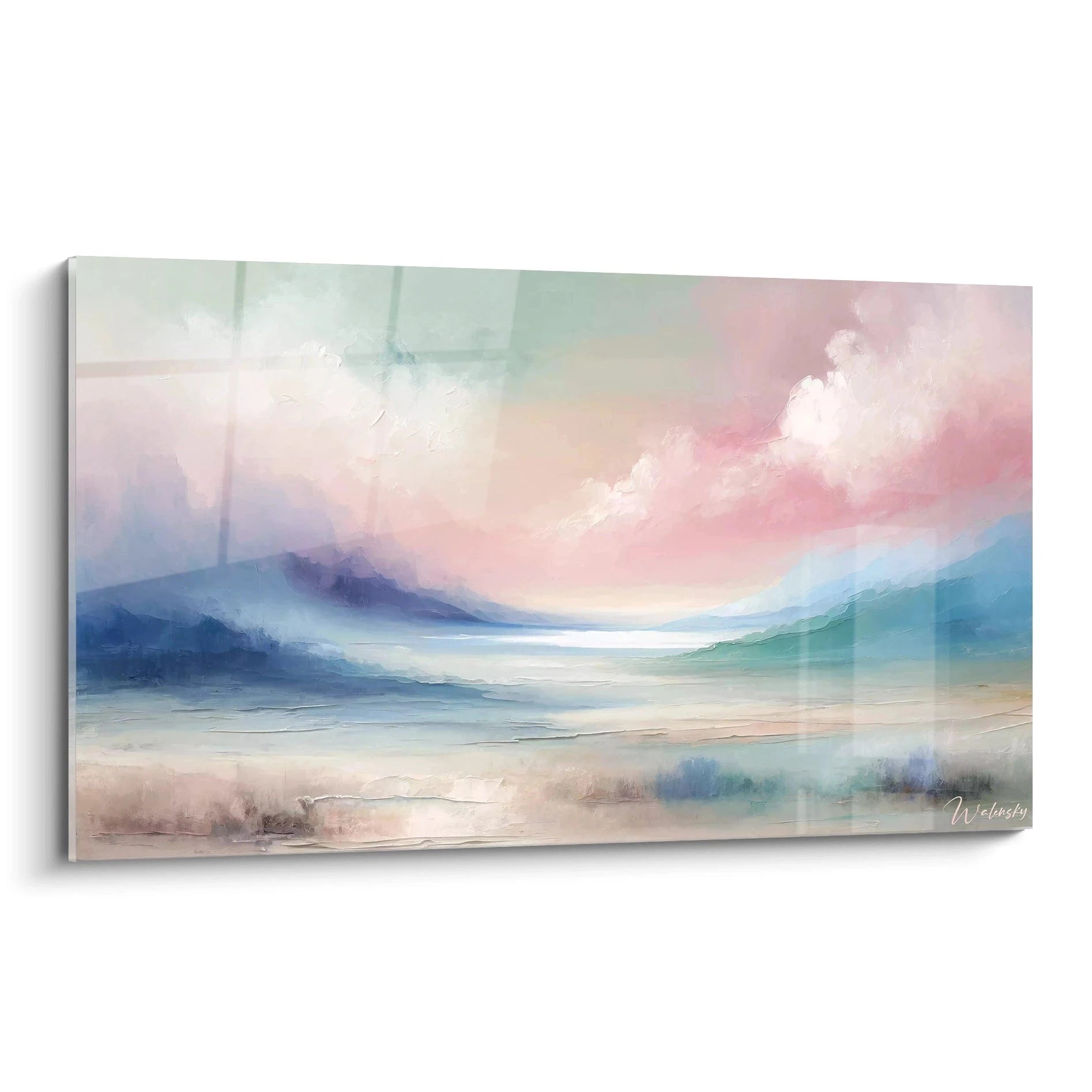
After observing some memorable failures, here are the classic pitfalls. The first mistake is an accessory that overshadows the artwork. I've seen a magnificent watercolor landscape offered with such an imposing vase that it became the centerpiece. Rule of gold: the accessory should always remain visually in the background. Its size should never exceed one-third of the artwork’s size.
The second frequent error is stylistic inconsistency. A contemporary painting paired with a rustic accessory creates an unpleasant dissonance. The eye instinctively seeks harmony. If your painting features clean lines and muted colors, avoid baroque or overly colorful accessories. Coherence does not mean monotony, but aesthetic dialogue.
The third trap is a purely decorative accessory without function. A small object that serves no purpose and only clutters up generally ends up in a closet. Always prioritize useful accessories: candles, vases, cachepots, decorative baskets, design pocket mirrors. The gift lasts over time because it naturally integrates into everyday life.

How to Choose the Perfect Accessory According to the Artwork's Style
Let's now decipher associations by decorative universe. For a botanical or floral painting, opt for natural materials: terracotta cachepot, woven basket, or even seeds to plant in a pretty sachet. The idea is to extend the vegetal theme beyond the frame.
With an abstract painting with bright colors, choose a monochrome accessory that allows the composition to breathe. A matte white vase, a black candle, a small art book with a clean cover. The accessory becomes a soothing counterpoint that highlights the chromatic intensity of the work.
For marine or coastal artworks, sensory associations work wonders: a scented candle with marine notes, a smooth sea pebble as a zen accessory, or even a small hourglass filled with fine sand. You create a multi-sensory coherence that reinforces the emotional impact of the painting.
Urban or architectural paintings pair perfectly with design and functional accessories: a minimalist clock, a designer wall key holder, or a small mirror with geometric lines. The contemporary aesthetic of the painting extends to the object, creating a coherent urban ensemble.
Budget: how much to invest in the accessory?
A pragmatic but essential question: how much to spend on the accessory? My recommendation based on experience: between 15% and 25% of the price of the painting. If you are offering a painting for €200, allow between €30 and €50 for a quality accessory. This proportion maintains the visual hierarchy while ensuring accompaniment worthy of the main work.
Avoid accessories that are too cheap, which would betray the quality of the painting. But there is no need to aim for absolute high-end either. A well-chosen object, even accessible, will always have a better effect than a luxurious accessory inconsistent with the artwork. Relevance takes precedence over price.
Ready to offer more than just a painting?
Discover our exclusive collection of paintings to offer that transform every interior into a personal gallery, with our suggestions for decorative pairings to create unforgettable gifts.
— You may also like


The final presentation: the packaging that enhances the whole
You have chosen the painting, selected the perfect accessory... remains the crucial step of presentation. A gift as thoughtful deserves packaging worthy of it. My favorite technique: present the painting and its accessory separately but coordinated, in matching packages with a common ribbon that symbolically connects them.
This staging creates a double moment of discovery. The recipient first opens the painting, experiences an initial emotion, then discovers the accessory and immediately understands the overall intention. This gradual reveal amplifies the emotional impact of the gift. Add a card subtly explaining your choice of pairing, and you create a memorable souvenir.
For very special occasions, do not hesitate to add an inspiration photo: an image showing how the painting and accessory could be arranged together. This does not stifle the creativity of the recipient, but offers them a reassuring starting point. Many people appreciate this visual suggestion, especially if they lack confidence in their sense of decoration.

So, alone or accompanied: your informed decision
Following this exploration, you now have all the elements to decide. The answer is never binary: it depends on the artwork itself, its recipient, and the message you want to convey. A powerful large format or a assertive minimalist work will shine alone. A medium-sized painting, especially given to someone who is just starting out with decor, would infinitely benefit from being accompanied by a harmonious accessory.
Visualize the scene: your friend opens your gift, discovering not only an artwork that moves them but also all the elements to immediately create a complete decorative corner. In the days that follow, they send you a photo of the entire setting, exactly as you had imagined. This shared satisfaction, this decorative success, is precisely what you offer by consciously choosing whether or not to accompany your painting.
Start by observing the artwork you have chosen. Listen to what it tells you. Does it want to reign alone or does it call for a companion? Then think about who will receive this gift. Do they need creative freedom or guided inspiration? The answer will naturally emerge from this double listening.
Frequently Asked Questions
Can we offer multiple accessories with a single painting without overloading?
Yes, provided you respect the rule of the harmonious trio: one main accessory (vase, important candle) and two smaller, more discreet secondary accessories (small book, decorative stone). The ensemble must remain visually balanced, with the painting as the undisputed focal point. I recommend arranging the accessories at different heights to create visual rhythm without clutter. Also consider the function: three useful objects integrate better than a purely decorative accumulation. The ultimate test: if you remove an element, the whole should remain coherent.
How do I know if the recipient would prefer to receive the painting alone?
Observe their current interior. A very minimalist style with few decorative objects suggests a preference for simplicity: offer the painting alone. Conversely, an already richly decorated interior with accumulations of objects indicates that an accessory will be appreciated. Another clue: their previous gifts. Do they keep the packaging and small attentions or do they only keep the essentials? People with very defined decorating styles (decorators, architects, collectors) generally prefer to choose their own associations. If in doubt, prioritize simplicity: a beautifully wrapped painting alone will never disappoint.
What type of accessory should I choose for a painting whose future location is unknown?
Choose nomadic and versatile accessories that work in any room. A quality scented candle finds its place everywhere, from the living room to the bedroom. A small design vase adapts to all spaces. Avoid accessories too specific to a room (soap dish, desk tidy). Favor neutral colors (white, black, beige, terracotta) which harmonize with most interiors. Natural materials (ceramic, wood, linen) also cross all decorative styles. This universal approach ensures that your accessory will be used and appreciated, wherever the wall art is ultimately hung.


