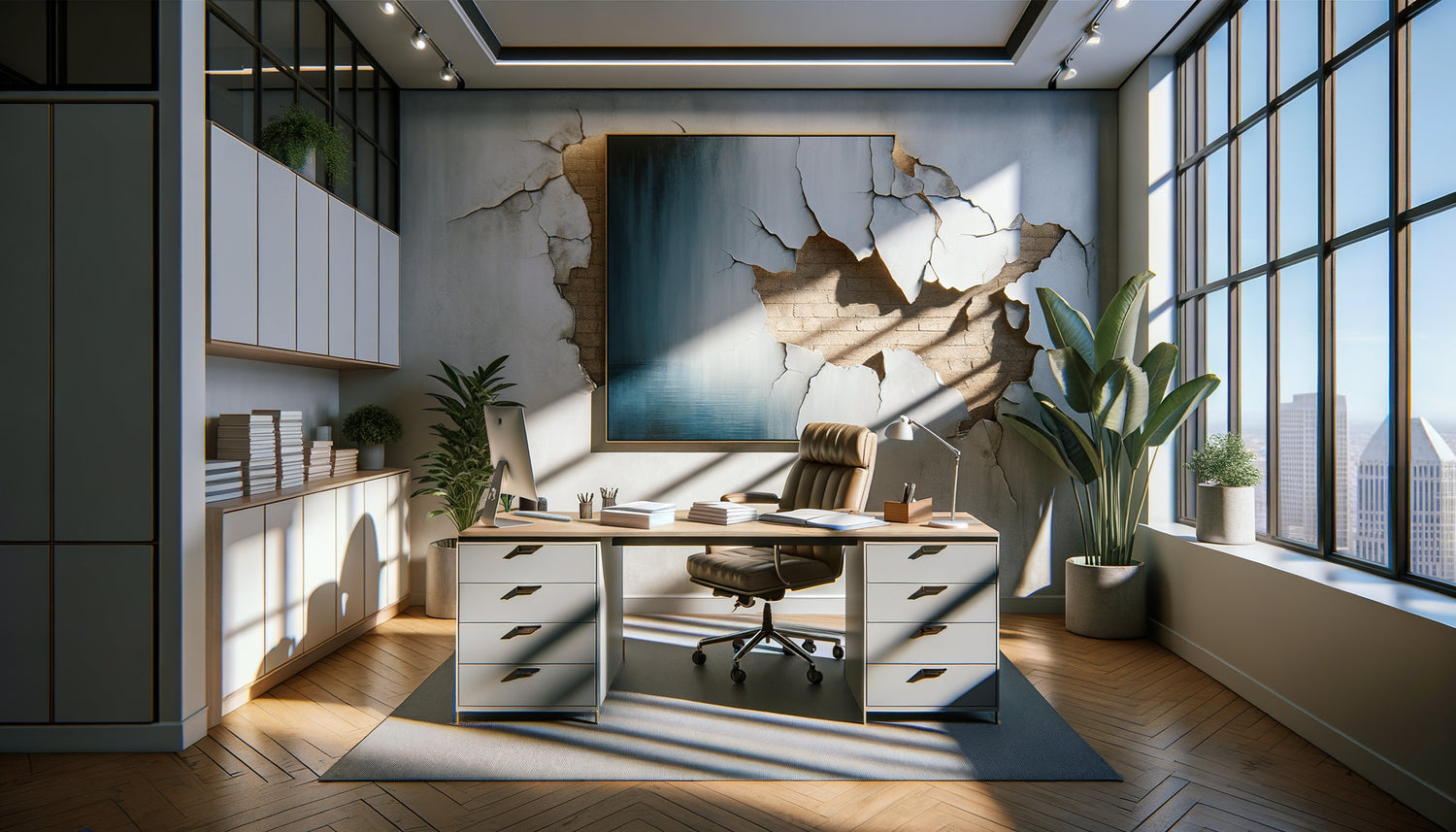
That unsightly crack running along the wall of your waiting room. That damp stain you notice every morning when opening your practice. Those architectural imperfections that alter the professional image you want to project. In a medical, paramedical or legal office, every detail counts to inspire confidence in your patients or clients. And sometimes, the most elegant solution is not to multiply costly renovation work, but to transform this constraint into a decorative opportunity.
Here's what a well-chosen painting brings to your practice: it elegantly conceals wall imperfections, instantly improves the atmosphere of your professional space, and transforms an architectural defect into a soothing focal point. The right painting becomes that centerpiece which naturally diverts the eye while enhancing your work environment.
You may have already considered repair work. You consulted quotes for painters, imagined plasterboard solutions. But between budgetary constraints, intervention deadlines and temporary closure of your practice, the project remains pending. Meanwhile, this damaged wall continues to tarnish the overall atmosphere of your space.
Rest assured: wall art offers an immediate and transformative alternative. A properly sized and strategically positioned painting does not simply hide a defect, it completely reinvents the perception of your space. It's a solution I have accompanied in dozens of practices, with results that consistently exceed initial expectations.
I will guide you through the essential principles for choosing this painting that will transform your constraint into a decorative asset, while preserving the professional and soothing atmosphere indispensable to your activity.
The rule of proportions: when size erases imperfection
The first mistake I consistently notice? Choosing a painting too small to effectively mask a damaged wall. A timid format paradoxically draws attention to what surrounds it, revealing precisely what you want to hide.
The fundamental rule: your painting should cover at least 60 to 75% of the width of the area to be masked. If the crack or damp stain extends over 120 cm, aim for a painting at least 80 to 90 cm wide. This dimensional generosity creates a sense of presence that naturally captures the eye, diverting attention from peripheral imperfections.
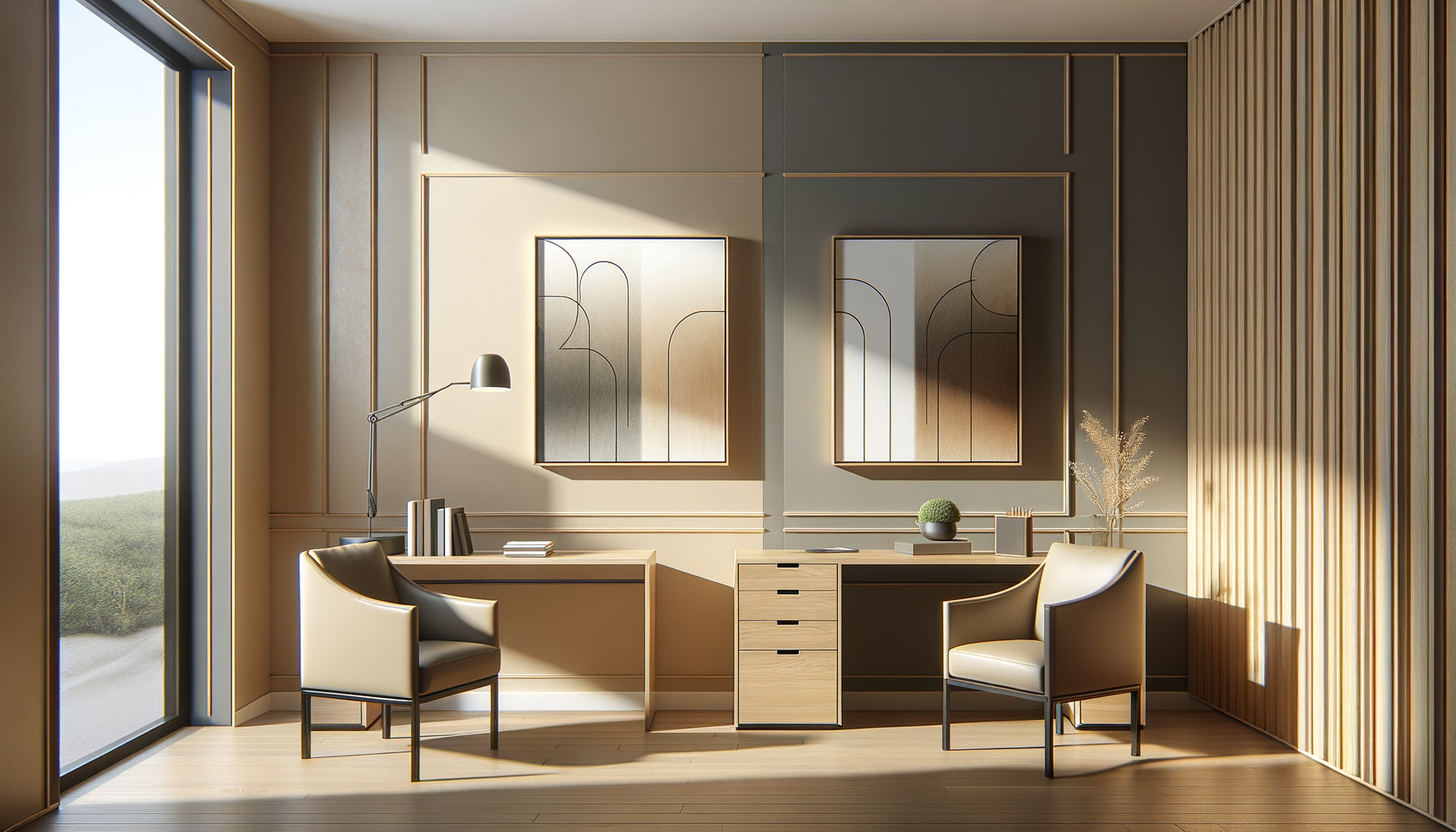
For a damaged wall in a waiting room, prioritize panoramic formats which impose themselves horizontally. A triptych or diptych offers a particularly clever solution: the fragmented composition generates a visual dynamism that completely diverts attention from the wall itself. The eye focuses on the dialogue between the panels rather than on the wall support.
In more intimate consultation rooms, an imposing vertical format can transform a damaged area into a true architectural element. A 120 x 80 cm painting creates that reassuring and structuring presence which totally redefines the space, visually erasing the defects of the wall.
Playing with depth: the illusion that makes you forget the wall
A painting doesn't just mask itself by its surface, but by the perceptual depth it generates. This psychological dimension transforms a problematic wall into a visual window to another soothing world.
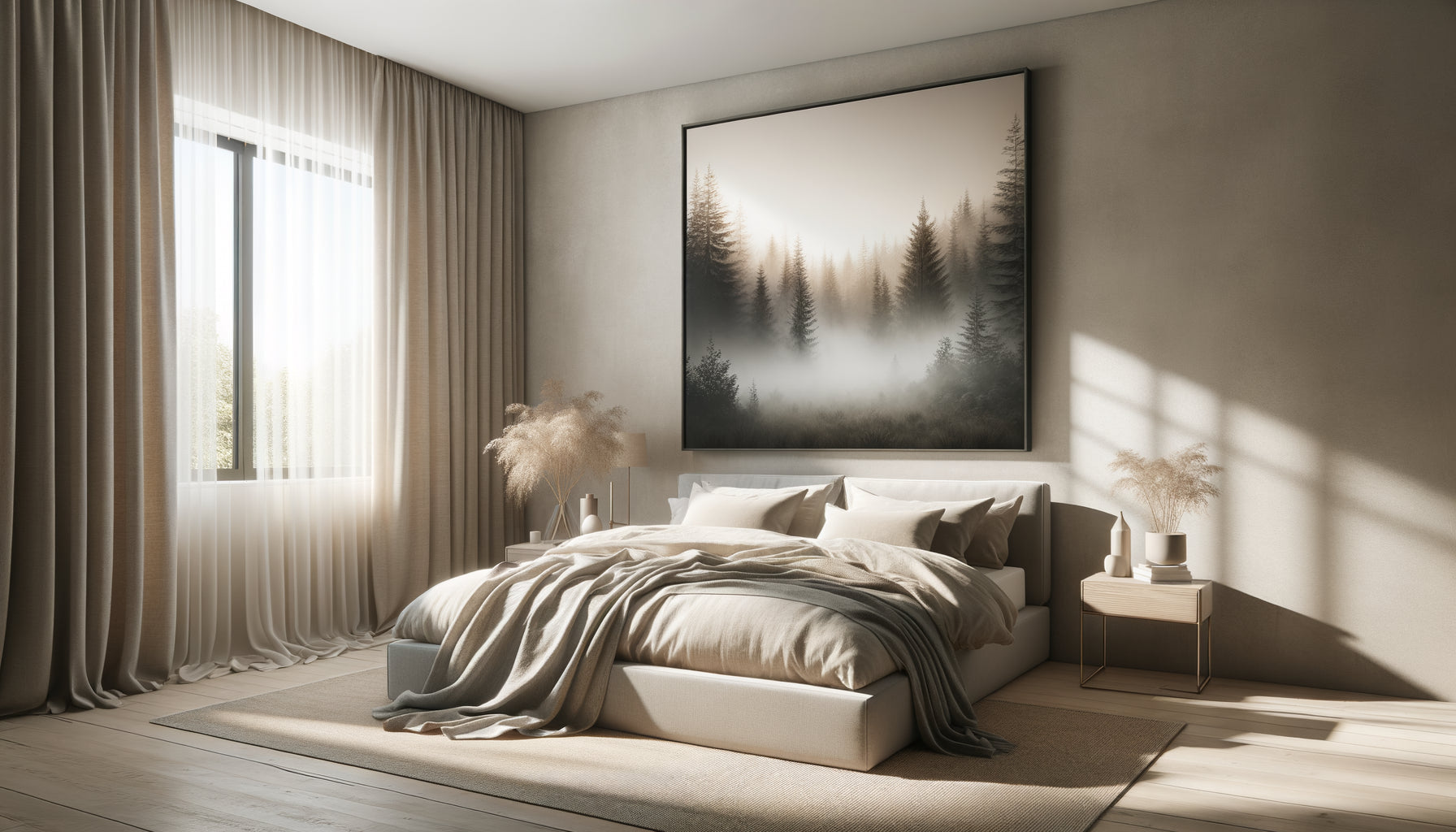
Compositions with natural perspective work remarkably well in a study. A seascape opening onto the horizon, a mysterious forest whose trees create a depth of field, a path leading into a Zen garden: these subjects literally dissolve the perception of the wall. The brain no longer sees a flat surface with its defects, but a three-dimensional space that invites contemplation.
Textures as a visual strategy
Works with strong visual texture constitute another remarkably effective strategy. A painting with pronounced reliefs, a canvas with generous impasto or a mixed composition integrating materials creates such a visual richness that the eye doesn't even seek to analyze the underlying wall condition.
This approach works particularly well to mask areas with surface irregularities. The play of light and shadow generated by the reliefs of the painting creates an autonomous visual spectacle that completely eclipses any imperfections in the wall.

The psychology of colors to divert attention
In a study, the chromatic choice of a painting does not only respond to aesthetic criteria. It is a calculated visual strategy to create a magnetic focal point that naturally diverts attention.
Saturated and deep colors act like visual magnets. A deep ocean blue, a rich emerald green, an elegant aubergine purple: these tones capture the eye and hold it, preventing any wandering towards peripheral areas of the wall. In a waiting room with light walls, a painting with intense colors creates this contrast that immediately focuses attention.
Conversely, if your damaged wall has dark stains or grayish damp spots, prioritize a painting with light and warm tones. Golden beiges, creamy whites, bright pastels create a visual radiance that absorbs surrounding defects into their soothing halo.
The power of subtle gradients
Gradual gradient compositions offer a particularly clever solution for irregularly damaged walls. A painting that gradually transitions from dark to light, warm to cool, creates a fluid visual movement. This gentle chromatic transition guides the eye hypnotically, preventing it from lingering on the irregularities of the wall surface.
Strategic framing: when the frame becomes architecture
The choice of frame is never a secondary detail, especially when masking a damaged wall. The frame creates a clear psychological boundary between the artwork and its environment, reinforcing the effect of concealment.
For a wall with localized imperfections, a wide and structured frame acts as a visual barrier. A frame 8 to 12 cm wide in solid wood or brushed aluminum adds 15 to 25 cm to the total covered surface area. This peripheral extension can make the difference between partial concealment and complete coverage of the problematic area.
Frames with sophisticated finishes also draw attention to themselves rather than the wall. A patinated gold frame, a deep matte black frame, a brushed champagne aluminum: these quality finishes give the painting an autonomous architectural presence that asserts itself in space.
For tighter budgets or minimalist contemporary aesthetics, the thick framed canvas without frame (3 to 5 cm deep) creates an elegant floating effect. This modern solution visually detaches the artwork from the wall, creating a play of shadows that naturally masks peripheral irregularities.

Soothing themes: art that heals before it cures
In a practice, the painting does not only fulfill a decorative or concealing function. It actively participates in the therapeutic atmosphere of your space. This psychological dimension should guide your thematic choice.
Natural landscapes dominate for a scientifically validated reason: they reduce stress, lower blood pressure and promote a mental state conducive to consultation. An autumn forest, a beach at sunset, a snow-capped mountain: these natural scenes transform your damaged wall into a virtual window overlooking a restorative environment.
Gentle abstract compositions work remarkably well in modern offices. Intertwined organic shapes, flowing movements evoking water or wind, minimalist compositions with clean lines: these abstract works offer a support for contemplation without imposing a specific narrative. Each patient projects their own sense of calm onto it.
Themes to absolutely avoid
Some subjects, however aesthetically pleasing they may be, are counterproductive in an office. Avoid compositions that are too busy or chaotic, which generate excessive visual stimulation. Ban anxiety-inducing themes: storms, stressful urban scenes, aggressive representations. And beware of works that are too personal or controversial, which could alienate part of your patient base.
Accent lighting: when light erases imperfections
A perfectly chosen painting can have its effectiveness multiplied by strategic lighting. This technical dimension is often neglected, yet it radically transforms the perception of space.
A directional LED strip positioned above the painting creates a luminous halo that concentrates attention on the work while plunging the peripheral areas of the wall into a soft shadow. This theatrical technique naturally diverts the eye from imperfections towards the illuminated area.
Adjustable recessed spotlights offer a more architectural solution for offices with a suspended ceiling. Two symmetrical spotlights create balanced lighting that enhances the colors of the painting and generates an autonomous luminous presence, visually detaching the work from the supporting wall.
For installations without electrical work, lateral LED wall lights are an elegant alternative. Positioned on each side of the painting at a 45-degree angle, they create cross-lighting that reveals the textures of the work while masking the irregularities of the wall with a subtle play of shadows and light.
Transform your architectural constraint into a decorative asset today
Discover our exclusive collection of wall art for Medical Offices that combines soothing aesthetics and generous dimensions, perfectly suited to elegantly mask wall imperfections while enhancing your professional space.
Your wall transformed, your office sublimated
That wall you were worried about now becomes an opportunity. The opportunity to create a soothing focal point in your waiting room. The opportunity to install a work that reflects your professionalism and attention to the well-being of your patients. The opportunity to transform an architectural constraint into a structuring decorative element.
Imagine your patients entering your office. Their gaze immediately rests on this imposing painting with calming colors. They no longer see an imperfect wall, but a harmonious professional space where every detail has been thought out for their comfort. This positive first impression already influences the quality of your therapeutic or professional relationship.
Start by accurately measuring the area to be masked. Add 20 to 30% to determine the ideal dimensions of your painting. Identify the chromatic dominants of your office to choose complementary or contrasting tones. And take the time to visualize the desired effect: discreet concealment or assumed transformation into an architectural focal point.
Your wall is waiting for one thing: to become the backdrop of a work that will completely transform the perception of your professional space.
Frequently asked questions about choosing a painting to hide a damaged wall
What is the minimum size of a painting to effectively mask a damaged area of 100 cm?
To effectively mask a damaged area of 100 cm, aim for a painting at least 70 to 80 cm wide, or 70 to 80% of the problematic surface. This proportion ensures that the painting naturally catches the eye and diverts attention from peripheral imperfections. If you add a large frame of 8 to 10 cm, you gain an additional 16 to 20 cm of total coverage, bringing concealment close to 100 cm. Remember that height also plays a crucial role: a generous vertical format (e.g., 120 x 80 cm) creates an architectural presence that completely erases the perception of the wall itself. In an office, this dimensional generosity is never excessive; on the contrary, it helps to create that reassuring professional atmosphere that your patients subconsciously seek.
Is it better to have a painting with or without a frame to hide a damaged wall?
A framed artwork generally offers better concealment thanks to the additional covered surface and the clear visual border it creates between the work and the wall. A frame of 8 to 12 cm width easily adds 15 to 25 cm to the total coverage, which can make all the difference in completely masking a problematic area. The frame also creates a psychological separation that prevents the eye from wandering towards surrounding imperfections. However, a canvas artwork with a thick frame (3 to 5 cm deep) without a frame can work remarkably well in a contemporary aesthetic, especially if you add accent lighting that creates shadows masking peripheral irregularities. In a modern cabinet with clean lines, this minimalist solution combines effective concealment and stylistic consistency. The choice ultimately depends on your budget and the overall atmosphere of your professional space.
What colors of artwork to prioritize to divert attention from a dark damaged wall?
To divert attention from a damaged wall with dark areas (dampness, stains, dirt), prioritize artworks with bright and warm tones that create a powerful visual contrast. Golden beiges, creamy whites, light pastels (sky blue, mint green, powder pink) generate a visual radiance that literally absorbs the surrounding defects into their soothing halo. A seascape with light sand tones and bright turquoise works particularly well, as does an abstract composition with gradients of white and gold. Conversely, avoid dark tones which would create a visual continuity with the damaged areas, paradoxically attracting attention to the entire wall rather than just the artwork itself. In a cabinet, these light colors have the additional advantage of generating an airy and positive atmosphere, reinforcing the feeling of cleanliness and professionalism essential to your image.