A few months ago, during a dentist appointment, I noticed she had transformed her office. Gone were the anatomical posters and generic prints. In their place was a series of black and white architectural photographs that gave the space an unexpected sophistication. When discussing with her after the treatment, she confided in me that this decision had radically changed the atmosphere of her practice – and especially, the state of mind of her patients.
Here's what black and white prints bring to a medical office: a tangible reduction in anxiety thanks to their soothing simplicity, a reinforced perception of professionalism, and decorative versatility that adapts to all care spaces.
You probably know that a medical office shouldn’t look like an impersonal airport waiting room or a stark hospital hallway. But between hygiene standards, budget constraints, and the desire not to visually overload the space, choosing the right wall decoration becomes a real puzzle. Many practitioners simply give up decorating, leaving their walls bare or with advertising calendars.
Rest assured: creating a professional and warm atmosphere doesn’t require design training or a colossal investment. Black and white prints represent this elegant solution sought by so many healthcare professionals who are aware that the care environment directly influences the well-being of their patients. I will show you exactly why this chromatic choice works so well in medical spaces.
Why does monochrome naturally soothe medical anxiety?
During my collaborations with psychologists specializing in therapeutic architecture, I learned something fascinating: our brains process monochromatic images differently. Unlike colorful artworks that intensely stimulate our emotional circuits, black and white prints create a form of visual neutrality that allows the nervous system to regulate more easily.
In a medical office waiting room, where patients often arrive with a high emotional load – apprehension, pain, worry – this chromatic sobriety acts as a visual balm. A minimalist black and white landscape doesn’t require emotional interpretation. It simply offers a soothing visual anchor, a mental breathing space.
I observed this phenomenon in a cardiology practice where the practitioner had installed black and white abstract photographs in his examination room. Patients spontaneously confided to me that they felt less overwhelmed than in other more visually cluttered medical offices. This voluntary simplicity unconsciously communicates a message: here, we take care of you without sensory aggression.
Does black and white really strengthen professional credibility?
Absolutely. And it's not just a subjective impression. In our collective unconscious, monochrome evokes rigor, precision, expertise. Think of historical medical clichés, scientific photographs, classic anatomical diagrams – all steeped in this black and white aesthetic.
A black and white painting in a doctor's office therefore creates a visual continuity with these cultural references of seriousness and competence. Without being pompous or intimidating, it signals that you pay attention to detail, that your environment is thought out, mastered. This implicit perception of professionalism influences the trust that patients place in you.
In a physiotherapy practice where I recently advised on decoration, we opted for stylized anatomical representations in black and white – clean lines evoking the movement of the human body. The feedback was immediate: patients perceived more of the practitioner's biomechanical expertise, simply because the visual aesthetic reinforced the coherence of the professional identity.
A neutrality that transcends generations
One of the major challenges in a medical practice? Visually satisfying an extremely diverse patient population. Your patients are 8 years old or 80 years old, come from various cultures, have radically different aesthetic sensibilities. Black and white paintings possess this unique ability to universally appeal without ever shocking or displease. Their timelessness crosses generations effortlessly.

What types of black and white visuals work in care spaces?
Not all monochrome paintings are equally suitable for the atmosphere of a medical practice. After arranging about fifteen medical spaces, I have identified four particularly effective categories.
Minimalist natural landscapes come out on top: a misty forest, a clean shoreline, mountains on the horizon. These visuals evoke contemplation and inner calm – exactly the state sought before a consultation. In a doctor's office waiting room, a black and white seascape can literally slow down the heart rate of anxious patients.
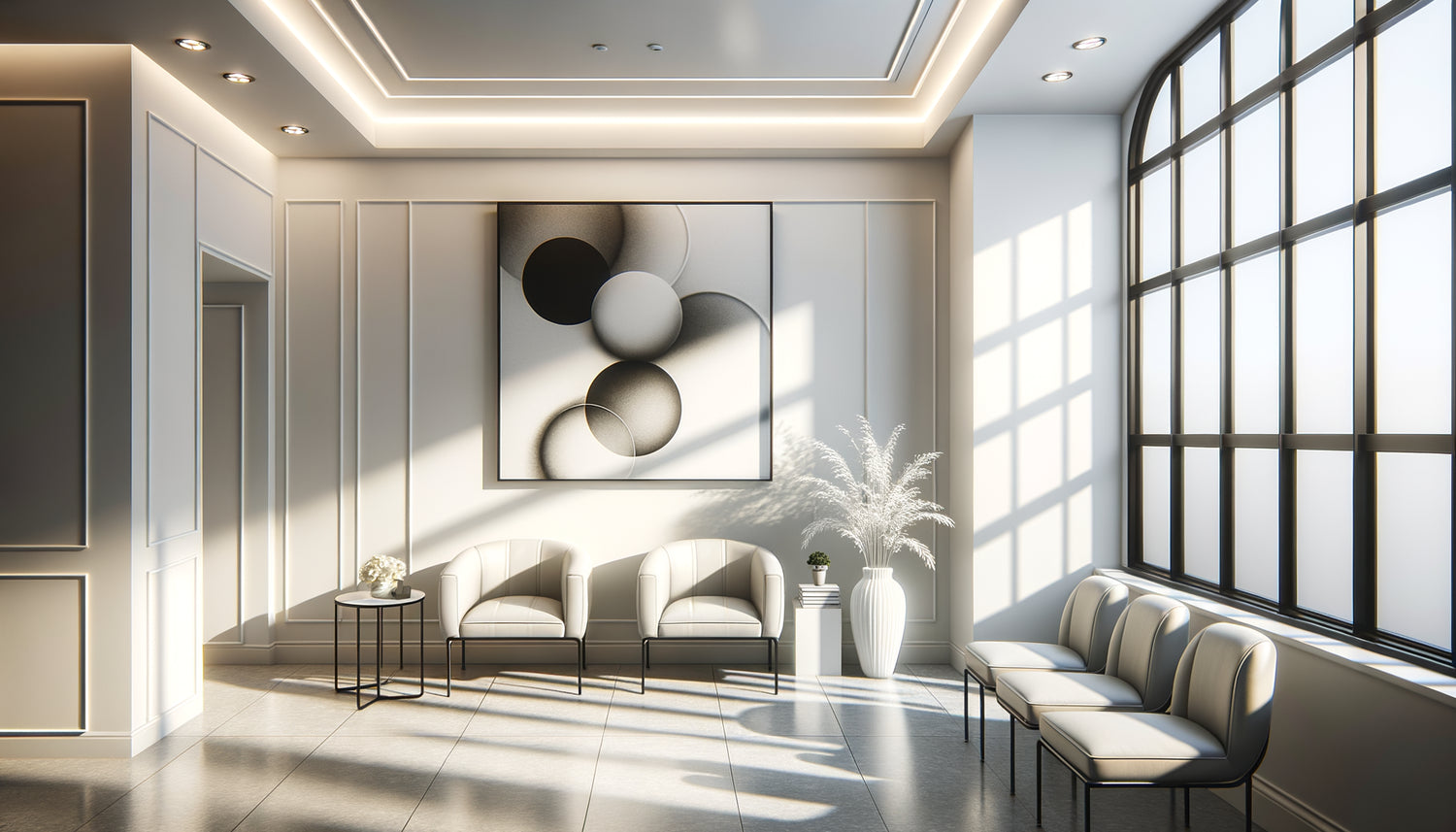
Geometric abstractions work remarkably well in modern spaces. They bring architectural sophistication without imposing a specific emotional interpretation. A stressed patient can project their own meaning onto these shapes, creating a soothing visual dialogue.
Architectural photographs – spiral staircases, symmetrical facades, urban perspectives – add a structured dimension that evokes order and mastery. Particularly suited to dental and surgical practices where technical precision is valued.
Finally, stylized botanical representations: monstera leaves, cherry branches, graphic herbariums. Black and white transforms these natural elements into elegant, refined compositions that retain their soothing organic dimension without the visual overload of color realism.
How to harmoniously integrate these paintings into your medical space?
Location makes all the difference between a cold-feeling medical practice and a space that breathes warm professionalism. Here's what my experiences in the field have taught me.
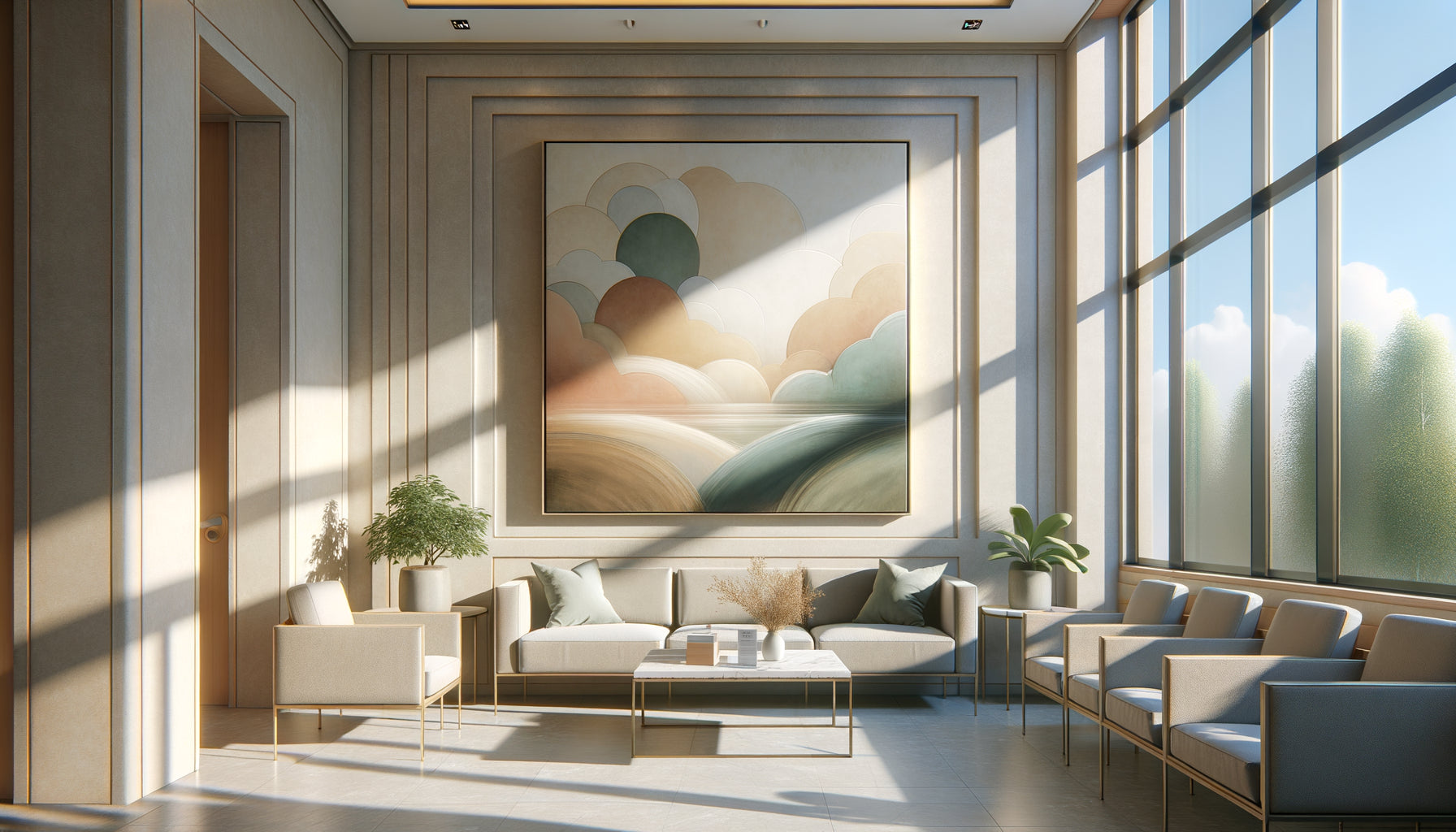
In the waiting room, prioritize a large format facing the seats. This black and white painting naturally becomes the focal point, offering patients a visual anchor during their wait. Absolutely avoid overloading: one or two paintings are more than enough. Multiplying works creates the opposite effect of what is sought – visual agitation rather than tranquility.
In consultation rooms, position your painting within the patient's field of vision when they are seated. I have noticed that many patients look away from the practitioner during waiting or discomfort moments. A black and white painting offers them this discreet visual refuge.
The importance of frame and format
Matte black or light wood frames work ideally in a medical practice. Avoid gilding and ornate frames that create a dissonance with contemporary medical aesthetics. As for the format, prioritize generous dimensions (60x80 cm minimum) for waiting areas, and medium formats (40x60 cm) for examination rooms where wall space is often limited.
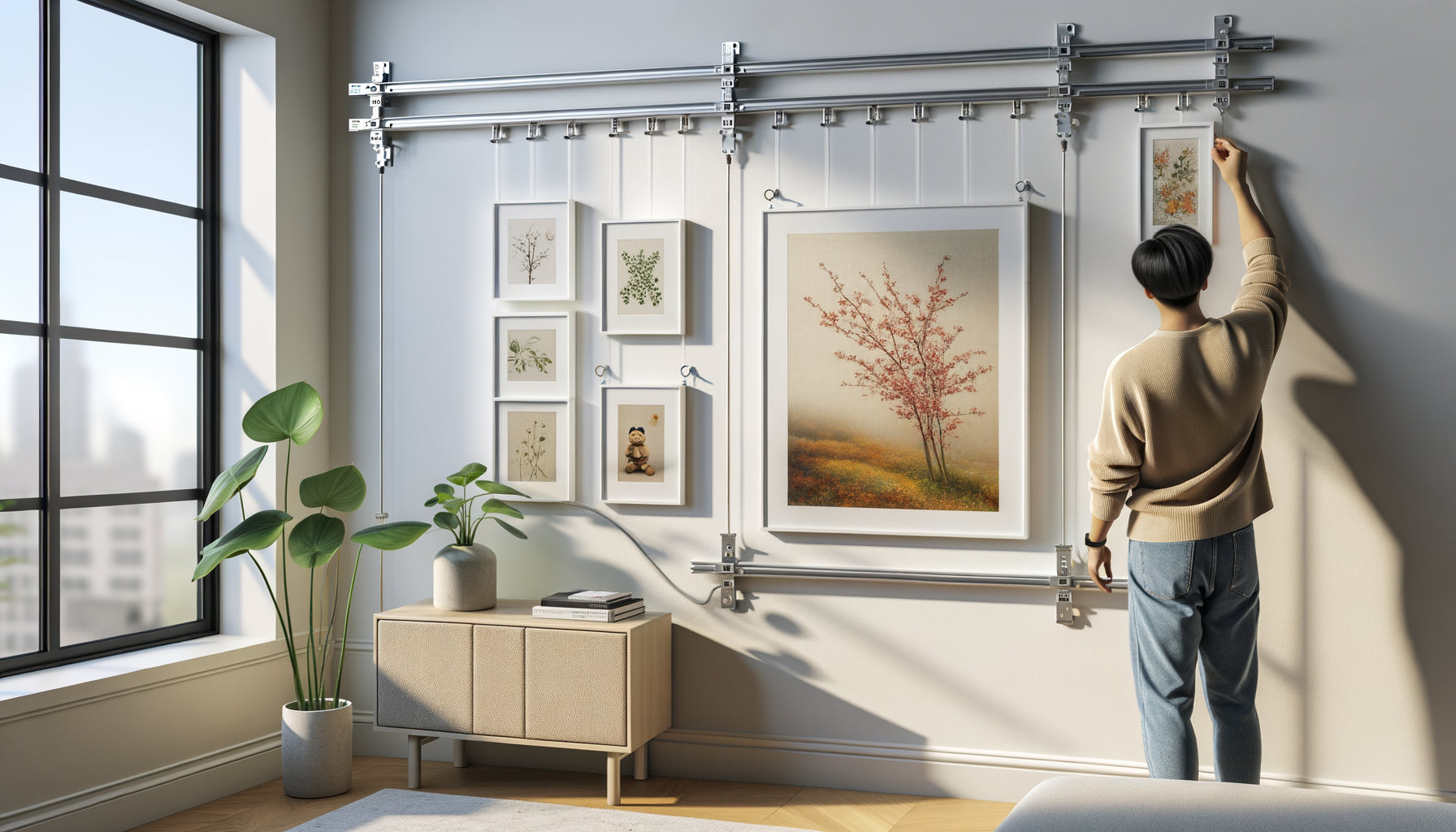
Also pay attention to hanging height: the center of the painting should be at eye level of a seated person, or about 120-130 cm from the floor in a waiting room. This visual ergonomics maximizes the desired soothing effect.

Does monochrome oppose a warm atmosphere?
This objection consistently comes up in my discussions with practitioners: 'Isn't black and white too cold?' The short answer: absolutely not, if you understand how to create balance.
Black and white paintings don’t make a doctor’s office austere – it’s the empty white walls and soulless metal furniture that create that coldness. In reality, the monochrome frames and enhances the touches of warmth you add elsewhere: a beige throw on an armchair, green plants, warm lighting, wood in the furniture.
I saw this principle beautifully illustrated in a pediatrician’s office where the practitioner had installed three abstract black and white paintings on the main wall, while retaining colorful cushions and toys in the children's area. The contrast worked wonderfully: parents appreciated the visual sophistication, while touches of color reassured the children. Black and white created the elegant base on which warm elements could express themselves without visual cacophony.
Beyond aesthetics: measurable psychological impact
Allow me to share something that deeply marked me. A psychiatrist I was helping to decorate her office told me that after installing contemplative black and white photographs, several patients spontaneously confided in her that they felt 'safer' in her space.
This is not anecdotal. Research in environmental psychology confirms that visual simplicity reduces cognitive load. In a medical office where patients already arrive in a state of stress or vulnerability, reducing aggressive visual stimuli frees up mental resources for the therapeutic relationship itself.
Black and white paintings participate in this sensory ecology. They decorate without distracting, embellish without invading, professionalize without intimidating. This subtlety is precisely what makes their strength in care spaces.
Ready to transform the atmosphere of your medical space?
Discover our exclusive collection of paintings for Medical Office that combine professional elegance and patient well-being.
Creating your visual signature in monochrome
Ultimately, choosing black and white paintings for your medical office is not simply a decorative decision. It’s a statement of intent about your practice: you create a thoughtful, soothing environment where every detail counts. You communicate that the well-being of your patients begins as soon as they walk through your door.
The next time a patient enters your space, they probably won't immediately realize your artistic choice. But their nervous system will record this elegant sobriety, this visual harmony. They will feel welcomed into a professional place where care is taken – of medical skills and human experience.
Start simply: one painting, one wall, one space. Observe the transformation. You will be surprised at how much this monochrome touch redefines the entire atmosphere of your medical practice. Because ultimately, caring also begins with the environment in which this care relationship unfolds.