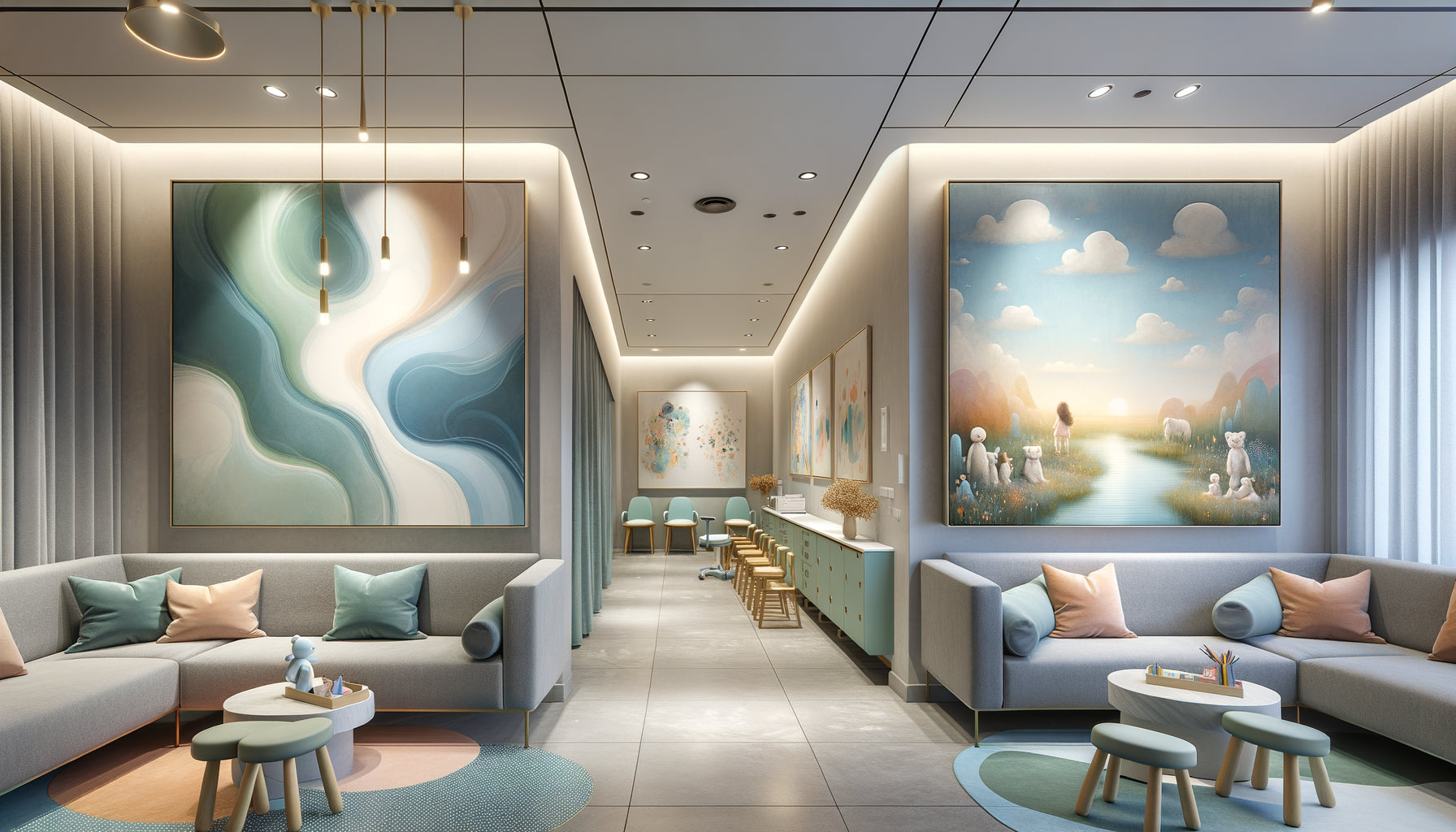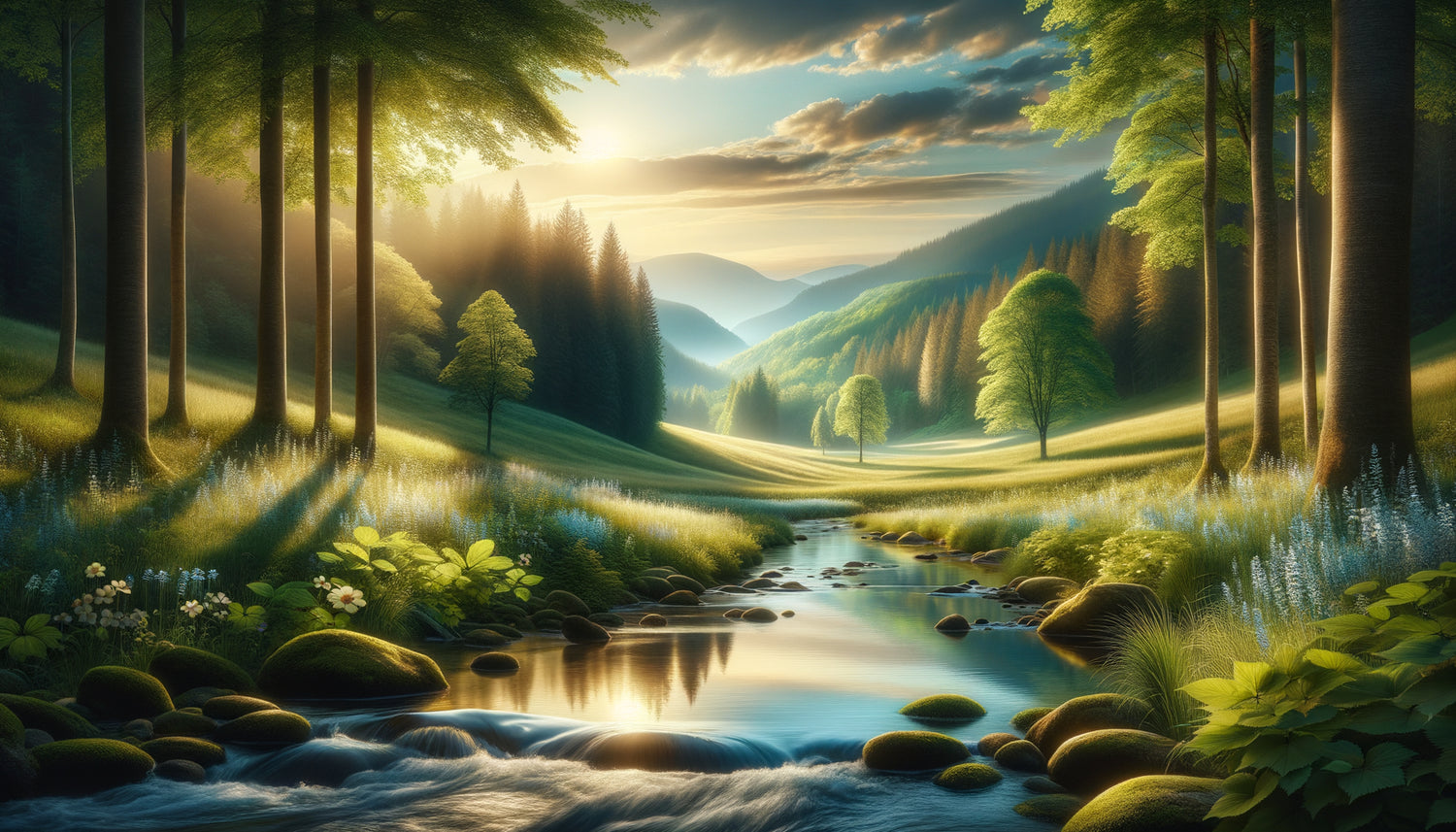
The silence of a waiting room. The buzzing neon light. The white walls reflecting harsh light. Then this small consultation room, aseptic and cold, where stress rises with each second preceding the exchange with the practitioner. I have spent twelve years transforming these medical spaces into true havens of peace, working hand in hand with psychologists, physiotherapists and general practitioners. What if I told you that natural scenes can reduce patient anxiety by 30 to 40% before even the start of the consultation? Here's what natural landscapes bring to a consultation room: an immediate decrease in heart rate, regulation of breathing, and an atmosphere conducive to confidence and care. Many practitioners are still hesitant, fearing they will lose their professional credibility with overly personal decor. Rest assured: it's not about turning your practice into an art gallery, but about strategically integrating visual elements that speak to our primitive brain, the one that instinctively soothes itself in front of certain natural compositions. I am going to reveal which scenes actually work, and why.
Calm water: the first visual anxiolytic
In all the practices I have arranged, water scenes remain the undisputed champions of soothing. A lake at dawn, the surface of a pond reflecting the sky, a river with gentle curves crossing a peaceful valley. Why this remarkable effectiveness? Our brain instinctively associates calm water with safety, life and hydration. It is an ancestral reflex engraved in our DNA for millennia.
I installed a large-format representation of a Finnish lake three years ago in the practice of a psychologist specializing in anxiety disorders. She told me that her patients now begin their sessions with significantly lower tension levels. Some even ask her to prolong the initial silence for a few seconds, simply to contemplate this bluish expanse before addressing difficult subjects.
Tones play a crucial role: prioritize deep blues and water greens, which naturally slow down heart rate. Avoid overly dynamic ocean scenes with imposing waves – they generate excitement rather than relaxation. The water must be contemplative, almost meditative.
Forests and undergrowth: the protective immersion
After water, forest scenes constitute the second pillar of soothing therapeutic environments. But beware: not all forests are equal in a consultation room. Woods that are too dense, too dark, can evoke confinement rather than protection. What you are looking for is the balance between vegetation cover and filtered light.
The most effective compositions show a path gently winding between the trees, creating a natural perspective that invites the eye to travel. This visual depth produces a fascinating effect: it offers mental escape, a psychological breath in a space often perceived as confined. A Nantes osteopath confided in me that since he installed a large photograph of a Norman beech forest, his tense patients relax more quickly on the treatment table.
The dominant green tones – from light green to moss green – have recognized properties in chromotherapy: they balance the nervous system and promote recovery. In a consultation room, where the goal is to quickly establish a relationship of trust, these natural scenes create a neutral and benevolent emotional ground.

Why meadows and fields work differently
Here's a secret that few medical decorators know: scenes of open meadows have a radically different impact depending on the orientation of the office. A field of lavender or a flowering meadow bathed in soft light generates a feeling of optimism and openness – perfect for a pediatric consultation or a family medicine practice.
These horizontal landscapes, with a low horizon line, mentally widen the space. In small urban consulting rooms, where every square meter counts, this visual trick transforms the perception of the place. I recently advised a midwife to install a Scottish meadow scene at dusk: the softness of the rosy and mauve hues creates a cocooning atmosphere particularly suited to prenatal consultations.
However, be careful about timing: meadows that are too bright, with saturated colors, can be too stimulating for some practices. For end-of-day appointments, when patients arrive exhausted, prefer softer compositions, with the golden lights of late afternoon.
Distant mountains: the therapeutic perspective
The scenes of mountains on the horizon constitute a category apart in the design of consultation rooms. Unlike imposing massifs that can intimidate, mountain ranges seen from afar, shrouded in light mist or bathed in morning light, offer what I call the perspective of hope.
These compositions work particularly well in psychotherapy practices or for the support of chronic illnesses. They subconsciously symbolize the path to be taken, visible but accessible. A Lyon-based psychiatrist specializing in depressive disorders explained to me that his painting depicting the Swiss Alps at sunrise regularly served as an anchor point in his sessions: "It's as if my patients project their therapeutic journey onto this distant mountain – it is there, present, but does not overwhelm them."
The key lies in the balance between sky and earth: a sky occupying two-thirds of the composition amplifies the feeling of space and possibilities. Pastel shades - pale blues, soft pinks, diluted purples - maintain a serene atmosphere without tipping into melancholy.

Japanese gardens: architected serenity
Let's now talk about a sophisticated but devilishly effective category: scenes of Japanese zen gardens. Unlike wild landscapes, these meticulously ordered compositions speak to another part of our psyche - the one that seeks control, harmony, perfect balance between nature and human intention.
In a consultation room, a Japanese garden with its carefully arranged stones, calm pond, mosses and maples creates an atmosphere of active contemplation. It's not surrendering to nature, but harmonious collaboration with it. This nuance is crucial for some patients who need to feel they maintain a form of control over their situation.
I equipped the practice of an acupuncturist with a large photographic reproduction of Ryoan-ji Temple in Kyoto. The imperfect symmetry, clean lines, and vegetal minimalism resonate perfectly with his practice: precision, energy balance, respect for natural cycles. His patients consistently report a feeling of “inner order” before the treatment even begins.
How to choose THE scene adapted to your practice
After twelve years of experience, I have developed a simple method for selecting the ideal natural scene. Start by identifying the predominant emotional state of your patients upon arrival: acute anxiety? Chronic fatigue? Physical pain? Existential questioning? Each state responds differently to visual stimuli.
For anxiety: prioritize calm water and luminous undergrowth. For fatigue: opt for soft prairies with golden lights. To accompany pain: choose distant mountains offering a perspective. For deep questioning: structured gardens or forests with paths work wonderfully.
Also consider the patient's position in the room. If they are lying down, the painting should be visible from that position without straining their gaze. If they are sitting facing you, place the natural scene in their peripheral vision – it will affect their unconscious mind without monopolizing their conscious attention.
Size is enormously important: a small frame gets lost on a white wall. To truly create a virtual window to nature, aim for a minimum of 80x60 cm, ideally 100x70 cm or larger. Immersion must be sufficient for the brain to "plunge" into the scene for a few seconds.
Transform your consultation room into a complete therapeutic space
Discover our exclusive collection of wall art for medical offices that integrates these principles of natural serenity into compositions specifically designed for care environments.
The subtle alliance: multiplying scenes or staying focused?
A question consistently arises: should you install several natural scenes or focus attention on a single major composition? My recommendation after dozens of setups: a strong main scene + a discreet living plant element.
Multiplying paintings dilutes the impact. Your consultation room is neither a museum nor an art gallery. The goal is to create a soothing visual anchor, not complex aesthetic stimulation. A single quality landscape, well chosen and properly positioned, will be enough to transform the atmosphere of your space.
However, adding a real green plant – a small bonsai tree, a fern, bamboo – creates a subtle dialogue between representation and reality. This living touch amplifies the effect of the natural scene without competing with it. The eye instinctively makes the connection, and the brain relaxes even further.
Some practitioners have asked me if they could alternate scenes according to the seasons. It's a nice intention, but I advise against it: your regular patients create an emotional bond with your decor. This calming lake, this protective forest become reassuring landmarks. Changing them disrupts this therapeutic anchoring process.
Conclusion: nature as a silent therapeutic partner
Natural scenes in a consultation room are not mere decorative elements. They constitute veritable complementary therapeutic tools, working silently on your patients' nervous systems long before you exchange the first word. Calm water, luminous forests, gentle meadows, distant mountains and Zen gardens – each of these compositions speaks to a different dimension of our universal need for tranquility.
Start by observing your patient population this week: what is their dominant emotional state? Then imagine the natural scene that could welcome them, reassure them, prepare them for care. This seemingly trivial choice can radically transform the quality of your consultations. Nature possesses this rare power: it soothes without ever imposing itself. It's now up to you to open the door of your practice to it.
FAQ : Your questions about natural scenes in consultation rooms
Are natural scenes suitable for all medical specialties?
Absolutely, but with important nuances. Aquatic and forest scenes work universally – from pediatrics to geriatrics, from physiotherapy to psychiatry. However, some specialties benefit from more targeted compositions: luminous meadows excel in pediatrics and family medicine, distant mountains in psychotherapy and support for chronic diseases, Zen gardens in alternative medicines (acupuncture, osteopathy, naturopathy). The key is to align the scene with the majority emotional state of your patients and the atmosphere you want to create. A dermatologist will not have the same needs as a psychologist specializing in trauma, even if both can benefit from a well-chosen natural scene. Observe your practice for a few weeks to identify the type of serenity your patients need most.
What size canvas should be favored for a small consultation room?
It's a fascinating paradox: in a small room, you need even more of a canvas large enough to create this famous “virtual window” to the outside. I recommend a minimum of 80x60 cm, even in a reduced space of 9-12 m². The classic mistake is to choose a small format for fear of visually cluttering – result, the painting gets lost on the white wall and accomplishes no therapeutic effect. A large format well positioned actually expands the mental space, especially with horizontal scenes like meadows or lakes. Favor the wall facing the patient (if he/she is seated) or on the side within his/her peripheral field of vision (if he/she is lying down). In very small urban spaces under 9 m², a 70x50 cm format remains acceptable, but do not go below – you would lose the immersive effect essential to trigger the brain's soothing response.
Should I prioritize photography or painting for my natural scene?
Both work remarkably well, but they speak to different sensory registers. High-quality photography offers immediate realism – the brain instantly recognizes the scene and activates its calming mechanisms without cognitive detour. It's my first choice for classic medical offices where scientific credibility remains central. Painting or artistic illustration, on the other hand, creates a poetic distance that is perfectly suited to more holistic or psychotherapeutic practices – it leaves more room for the patient’s personal interpretation. The key lies in the quality of the print and support: avoid cheap posters that yellow and warp. Opt for canvas prints stretched over frames or high-definition prints under acrylic glass. Sharpness, color richness, and durability are investments that pay off handsomely by improving the patient experience for years.